Sorry for the long delay in posting, but moving and setting up shop have kept me from my blogging duties. Classes start next week, so I am quite busy. Nonetheless, I have just finished Sophie's World--a book that as a philosopher I am often asked about. I decided it was finally time to read it so I could offer an educated opinion. The following is my brief review:
For the most part, the history of philosophy offered in Sophie’s World is sound, though of course often overly simplified. Such simplification is expected and acceptable in a book of this size and for its intended audience. It is at its best in the classical and medieval periods. As we get into the 18th and 19th centuries, there are some disappointing and questionable choices. There is altogether too much attention given to Marx and Freud, while nothing is remarked about John Stuart Mill or John Locke (his political thought). A reader might get the impression that existentialism was the dominant philosophy of the 20th century and not the analytic tradition that actually does dominate, for better or for worse, the Anglo-American world. The thinkers of great importance for this tradition: Moore, Russell, Wittgenstein, are not mentioned at all. This absence is ultimately forgivable because the book was written by a Scandinavian for a Scandinavian audience. Still, the reader should be aware that philosophy in the English speaking world goes in a very different direction than the direction that Alberto takes Sophie.
The story itself is not all that interesting. There is little in the way of characterization and the mystery and fantasy elements are too forced. Sophie can be annoying in the way a 15 year old know it all can be annoying. The adults, other than Alberto, are hardly more developed than the adults of Charlie Brown. And for all the fantastic elements in the book, the hardest to believe is that Sophie’s mother lets her daughter gallivant around with a 50-year old stranger.
I do not think this is not a book for a seasoned philosopher or really any adult reader. It is just a bit too childish. I would probably recommend it, however, for a young adult interested in learning about philosophy. But, then again, if that young adult were precocious enough to be interested in philosophy at that age, I would rather just hand him something by Plato or Aristotle.
Saturday, August 25, 2007


Sunday, July 29, 2007
Back from Italy, now to Illinois
As my loyal readers will have noticed, for the last two weeks and change there have been no posts. I was on holiday with my wife in Italy and returned last night after 22 hours of travel time. Good to be home, but we move to Rockford, IL on Friday, so no rest. Still going through my inbox...
Harry Op-Ed
My op-ed on Harry Potter, "Harry and the grouches" was published in the Ottawa Citizen on July 20, 2007. The op-ed takes on some of the criticisms that Harry Potter is just for kids and that it has nothing of lasting value to offer our culture.
Sunday, July 08, 2007
Thoughts on the Last Harry Potter
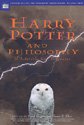
In the last few days, I've exchanged emails about Harry Potter and Philosophy with Tim LeBon, author of Wise Therapy. I thought I would post some of my thoughts that I shared with Tim on the upcoming release of Harry Potter and the Deathly Hollows. [Edit: Read Tim LeBon's blog entries that incorporate my comments and the comments of Ed Kern and Tim Morris.]
Regarding Snape, obviously, we won't know for sure until we see the last book, but I think ultimately Snape is redeemed. As you said, if Snape turns out to be truly a death eater, then Dumbledore has been made quite the fool. Snape has been the red herring in each of the books, and I think he's still the red herring. Then again, Dumbledore has admitted to making mistakes (at the end of Bk V where he takes some of the responsibility for Sirius death and for placing Harry into more trouble than Dumbledore expected). Moreover, maybe the biggest red herring of them all is that Snape really is evil. As the saying goes, the best hiding place is in plain sight. This scenario is, I think, unlikely. It would end the series on such a sour and malevolent note.
Which leads to the question of whether Harry will die. Harry's death would also end the series with a malevolent feel. Moreover, I think it would be in sharp contrast to almost everything in the series. This series is fundamentally a story about moral development; it is a story about Harry becoming a responsible and mature adult. His death is not the logic progression here. The logical end is his independence and the flowering of his power. Harry's development towards independence has been a central theme: from escaping the Dursleys to losing Sirius and now Dumbledore. I think we will see Harry take full control of himself and his powers and take his place in the adult world.
JKR has left it so that she can really do anything. There are 700 some odd pages left and a lot can be revealed that can up-end the best predications. From a fan point of view as well as philosophical/artistic point of view, I don't want to see Harry die. I say personally because I like Harry and I like happier endings. I say philosophically because I don't think killing the hero of the story is consistent with the kind of story of moral development and growth that JKR has been telling. I say artistically because the ultimate point of art is to uplift our souls, provide us with strength, and give us insight into our selves and to our lives. I don't see how Harry's death would serve those ends.
But if Harry must die, I don't want him to die in some grand sacrificial manner that casts him as some kind of Christ-like figure. Such an ending would be personally unsatisfying, but also against the grain of the whole series. The imagery and symbols have largely been drawn from classical and pre-Christian culture and so pasting a specifically Christian symbol on to it at the end would be incongruous.
If I had to guess, I'd say Hagrid is going to get killed. I suspect possibly a Weasley family member(Percy?) and maybe even a Dursley family member (Petunia?) But these are really just guesses, hunches.
Ultimately, however JKR close the series, the path she takes us on to that end will be more important than how it ends. Whether Harry lives or dies, whether Snape is evil or not, what will matter is if these last 700 pages tell the story in the way that makes it so when the end comes it is what we will need to see.
Wednesday, July 04, 2007
sciQ Interview
As co-editor of Harry Potter and Philosophy, I was interviewed by sciQ, a young adult focused science magazine in Austria. Here's the interview:
http://sciq.agindo.info/film/index.cfm?useid=565
If they post an English language version, I will post that link as well.
http://sciq.agindo.info/film/index.cfm?useid=565
If they post an English language version, I will post that link as well.
Monday, July 02, 2007
Islamic Fanatic Provides Key Insights
A truly fascinating article by a former member of the British Jihad Network. The author elaborates on why it is that Muslims join terrorist groups and why they attack.
While I count myself a libertarian in political outlook, I generally run more 'interventionist' than most libertarians. Regarding the current war on Islamic terrorism, I have found myself often in sharp disagreement with many libertarians over the causes of the conflict. Most libertarians argue that the primary cause is American foreign policy, indeed many go so far as to blame American foreign policy for 9/11 and other attacks. I disagree. While I am very critical of American foreign policy on many fronts, I do not believe that is the primary cause of Islamic hatred of the West. The cause, I believe, of this hatred and thus the conflict is the radical Islamic view of the West as decadent, materialistic, and secular. I think this article bears this out.
I also direct you to David Kelley's "The Assault on Civilization" for a more elaborate explanation of Islamic hatred of the West.
Wednesday, June 13, 2007
Disturbing New from Tufts
I just recently learned, for FIRE's website, about a disturbing incident at Tufts University. A student-run publication, The Primary Source, was disciplined by the Committee on Student Life for the following two pieces that ran in The Primary Source magazine:
A Christmas Carol that lampoons race-based admission: http://www.thefire.org/index.php/article/8041.html
A piece on Islamic Awareness week:
http://www.thefire.org/index.php/article/8043.html
Outraged at this lamentable display of injustice and politically correctness, I penned the following email to Tufts President Lawrence Bacow and Barbara Grossman, the chair of the Committee on Student Life.
Though I have given money over the past few years, it hardly amounts to anything substantial, so I don't expect anything more than a form response. I hope that the pressure that FIRE and the ACLU is putting on Tufts will let cooler and more rational heads prevail.
Update [6/15]: I received a nice response from President Bacow. In the email, he wrote the following, promising, comment: "I disagreed strongly with the substance of the Primary Source message, I also came out squarely against censorship of the Primary Source largely for the reasons you have expressed. I have been very consistent in my comments both in response to this issue and the Christmas Carol parody that the appropriate response to offensive speech is more speech, not less."
A Christmas Carol that lampoons race-based admission: http://www.thefire.org/index.php/article/8041.html
A piece on Islamic Awareness week:
http://www.thefire.org/index.php/article/8043.html
Outraged at this lamentable display of injustice and politically correctness, I penned the following email to Tufts President Lawrence Bacow and Barbara Grossman, the chair of the Committee on Student Life.
Dear President Bacow and Professor Grossman,
As a gift-giving Tufts Alum, I was greatly disturbed to hear about the Committee on Student Life's April 30, 2007 decision on The Primary Source. The decision to punish the student run publication for its two satirical pieces is a grave and profound disregard for free speech and intellectual independence.
I am not a conservative and often found myself in disagreement with material published in The Primary Source. Nonetheless, I think it is important that student publications be at liberty to publish any non-libelous material they see fit. When a publication publishes something offensive or disturbing, this allows an object lesson for students to learn about the diversity of viewpoints and beliefs that exist on campus and in the world and to learn tolerance of this diversity. It also allows students to counter viewpoints that they disagree with in a peace manner. This too provides a lesson of how to respond to those we disagree with in a civil society. Rather then always run to courts to complain about harassment, one learns to counter viewpoints with a positive message of one's own. In the case of the Muslim students, they could have used this incident as vehicle to educate the Tufts community about Islamic history and the differences between moderate Muslims and extremists. This kind of intellectual engagement and interaction is what a liberal arts education is all about.
While the Christmas Carol is certainly in bad taste, there is an important difference between satire of policies of the university and a racially motivated attack on other students. The carol picks out no individual student for ridicule or attack nor is it even targeted at black students. It is targeted at the policies of the university. This makes the punishment of the students look to be more of an issue of stifling speech in order to protect the university from criticism.
I am in many ways more deeply concerned about the punishment of The Primary Source for the The Islamic Awareness Week piece. No where in the news reports or releases about this incident does anyone claim that the quotations and events referred to in the piece were factual incorrect or fabricated. It cannot be an issue of harassment or intimidation to publish disturbing yet factually correct reports. I am not surprised that the Muslim students who filed the case against The Primary Source were angered and embarrassed by what was published, but to punish The Primary Source is a form of shooting the messenger. It serves to stifle independence of thought and belief on campus.
If this is the policy of Tufts, then it is no longer the great liberal arts institution that I thought it was. Moreover, I am not comfortable providing monetary support to a school that no longer values individual liberty nor intellectual independence.
Sincerely,
Shawn Klein, Class of 95
Though I have given money over the past few years, it hardly amounts to anything substantial, so I don't expect anything more than a form response. I hope that the pressure that FIRE and the ACLU is putting on Tufts will let cooler and more rational heads prevail.
Update [6/15]: I received a nice response from President Bacow. In the email, he wrote the following, promising, comment: "I disagreed strongly with the substance of the Primary Source message, I also came out squarely against censorship of the Primary Source largely for the reasons you have expressed. I have been very consistent in my comments both in response to this issue and the Christmas Carol parody that the appropriate response to offensive speech is more speech, not less."
Thursday, June 07, 2007
Stossel for President
John Stossel is a great voice for liberty, and one of the few in mainstream media. Based off of one of his "Give me a break" segments on 20/20, he wrote up an op-ed about gas prices and profit.
This is what he wishes oil company execs. would say in response to criticism about their profits:
The last bit about taxes versus profit is really interesting. (read more here) First, because so few people know or think about that. Second, most people don't seem to care. The government takes more of their money, but they criticize the oil company profits. There's really an absurd kind of envy going on.
I also think people think that they'll get a piece of the taxes, but the profits just go to the oil company. Well, more likely the profits benefit people in many more ways than they imagine.
First, the profits go to the shareholders (dividends and increasing stock prices) and through mutual funds and pensions, a lot of 'regular folk' are shareholders in oil companies and so benefit from the profits.
Second, even if one is not a shareholder, each of us benefits greatly from a strong stock and capital market: either because we own stock in other companies or because we like to buy stuff from companies and these companies are largely made possible by a strong stock and capital market.
Third, a lot of profit gets invested back into research and development that ultimately makes gas cheaper and cleaner.
This is what he wishes oil company execs. would say in response to criticism about their profits:
"What are you complaining about? What do you think we do with our profits? Buy fancy cars and homes? Well, we do, actually, but nearly all the money goes to looking for more oil and following environmental rules that you want us to follow. You should want us to make more profit. Anyway, we make less profit per gallon than your beloved government takes in taxes."
The last bit about taxes versus profit is really interesting. (read more here) First, because so few people know or think about that. Second, most people don't seem to care. The government takes more of their money, but they criticize the oil company profits. There's really an absurd kind of envy going on.
I also think people think that they'll get a piece of the taxes, but the profits just go to the oil company. Well, more likely the profits benefit people in many more ways than they imagine.
First, the profits go to the shareholders (dividends and increasing stock prices) and through mutual funds and pensions, a lot of 'regular folk' are shareholders in oil companies and so benefit from the profits.
Second, even if one is not a shareholder, each of us benefits greatly from a strong stock and capital market: either because we own stock in other companies or because we like to buy stuff from companies and these companies are largely made possible by a strong stock and capital market.
Third, a lot of profit gets invested back into research and development that ultimately makes gas cheaper and cleaner.
Good stuff at Positive Liberty
A very good post from Jason Kuznicki at the Positive Liberty blog. It is a response to criticism that libertarians are essentially corporate/big business shills. Two main points that Jason raises against this view:
1) libertarians argue for policies that make possible increased prosperity for everyone, not just the wealthy.
2) libertarians argue for policies that restrict any individual or groups of individuals (corporations) from making use of the power of government for their own gain.
In short, while many of the policies advocated by libertarians would benefit corporations and 'the wealthy', they also help the 'little guy'(and arguably to a much greater extent). And the justification of such policies are not in order to benefit either group as such, but to allow the greatest extent of individual liberty.
Like many of the posts at Positive Liberty, there is a lot of other very interesting and good thoughts in Jason's post. Read it.
Update 6/7/07 7:40pm: Timothy Sandefur, also at Positive Liberty, has an equally good follow up post. Refering to libertarianism, "We look toward something new–toward the future, not the past. Our ideas are new and untried paths to wealth and peace, and we ought to advocate them in precisely those terms."
Tuesday, June 05, 2007
40 Years Later
I might as well keep the Israeli theme going...
Today marks the 40th Anniversary of the Six Day War between Israel and the Arab countries. Israel, facing a massive, unprovoked attack from Egypt and Syria, struck first on the morning of June 5, 1967 and quickly devastated the Egyptian air force. Over the course of the next six days, Israel pushed Egypt over the Suez Canal, Syrians off the Golan Heights, and the Jordanians over the Jordan River. In this dramatic victory, reality and perceptions changed in the Middle East forever. Israel was no longer seen as just a spry, little country fighting the good fight. It was mighty. To paraphrase Capt. Malcolm Reynolds: They had done the impossible, and this made them mighty.
Israel also took control of territory (nearly quadrupling its size) filled with a hostile and growing population of Arab Palestinians. Israel never intended to keep these territories or rule its people. They were offered to be returned on June 19, 1967 in exchange for peace. The Arab League's response was: "no peace with Israel, no recognition of Israel, no negotiations with it." Few in Israel today think that most of these territories will remain a part of Israel permanently. Israel did annex the Golan Heights and East Jerusalem (to create a united Jerusalem). While many would give up the Golan for peace, Jerusalem, as always, is different and a much more complicated issue.
When I was living in Israel in 1993, it was a time of great hope. Peace was finally coming. Peace got sidetracked since then, for any number of reasons. The future does not look hopeful now...though sometimes that is when the greatest breakthroughs can occur.
For a thoroughly researched and detailed day by day account of the war, including what led to it, I highly recommend Michael Oren's excellent Six Days of War: June 1967 and the Making of the Modern Middle East
Here a couple of interesting links (some may require registration):
Q&A with author and scholar, Michael Oren (Jerusalem Post)
Forty Years On (The Economist)
No Pyrrhic Victory by Bret Stephens (Wall Street Journal)
Arab armies planned to destroy Israel by Steve Linde (Jerusalem Post)
What if Israel Had Turned Back by Tom Segev (NY Times)
The Heavy Burden of Victory by Jonathan Tobin (Jewish World Review)
Monday, June 04, 2007
Fighting the British Boycott of Israel
Since I am on a little kick here of defending Israel, I thought I'd mention the following.
The ADL has started a campaign against the efforts for the British Journalist and Academic boycott of Israel. In addition to a letter that you can sign (click here to sign the letter), they are running a series of anti-boycott ads. Click here to see a PDF version of one of their print ads. The basic gist of the ads is that to single out Israel for a boycott while ignoring brutal and ruthless regimes like Iran or Sudan is a form of antisemitism.
Criticism of Israel can be an important part of social and political discourse, but it is the failure to appreciate the context that is the antisemitism. Israel is a democratic country that values freedom, individual rights, and religious pluralism. It often fails to meets its own ideal, but at least it has these ideals, unlike Iran, Sudan, and countless other countries where differences are not tolerated, rights are not recognized let alone respected, and where the very work that journalists and academics engage in can land you in jail or worse.
The moral inversion of singling out Israel and not countries that are by far and away much worse is why this boycott is rightly called antisemitic.
A related anti-boycott page: An Open Letter to the People Known as Members of Britain's University and College Union
Sunday, June 03, 2007
Don't let facts get in the way
Sunday's Arizona Republic printed a viewpoint article, "Questions remain over 1967 attack on U.S. intelligence ship 'Liberty'". The author, Mark Genrich, leaves out many facts in this near-slanderous piece. I submitted a letter to the editor which I've posted below:
For more information on the Liberty:
The Jewish Library's Myth and Facts article on the Liberty.
Michael Oren's excellent account of the 1967 war, Six Days of War, provides a detailed account of the incident.
Update: Letter published!
To the Editor:
With all due respect to the servicemen on the USS Liberty, the tale of an Israeli intentional attack is preposterous. Contrary to Mr. Genrich’s viewpoint article (June 3, 2007), there have been a number of official U.S. investigations, including the US Navy Court of Inquiry and House Armed Services Committee, concluding that this was a tragic mistake. No reason is ever given by these conspiracy theorists for why Israel would intentional attack an American ship.
At the time, the U.S. announced that it had no vessels within a hundred miles of the coast and the USS Liberty was directed not to approach within a hundred miles. Nonetheless, likely because of communication failures, the USS Liberty was attacked fourteen miles from the coast. Israeli forces had reported being shelled from the sea and had concluded that this unidentified ship was responsible. Once the Israelis released this was an American ship, they immediately apologized to American officials both in Israel and in the Washington. Also not mentioned in the article is the fact that Israel quickly and willingly paid reparations to the US and the families of the victims.
Sincerely,
Shawn Klein
For more information on the Liberty:
The Jewish Library's Myth and Facts article on the Liberty.
Michael Oren's excellent account of the 1967 war, Six Days of War, provides a detailed account of the incident.
Update: Letter published!
Saturday, June 02, 2007
Lipstick Jihad
The Israeli journal, Azure, has an interesting review of two books on Iranian youth culture: Lipstick Jihad: A Memoir of Growing Up Iranian in America and American in Iran by Azadeh Moaveni and Warring Souls: Youth, Media, and Martyrdom in Post-Revolution Iran by Roxanne Varzi. Each of these books, according to the review, provide insight into the complexity and paradoxes of the Iranian youths. Iran, ruled by a click of dictatorial theocrats, is largely inhabited by disaffected and alienated young men and women who want nothing more than to drink alcohol, have sex, and listen to rock music.
The hopeful elements presented in these books are that the youth appear to want liberty and to dislike the authoritarian regime. This holds the promise of new Iranian revolution that could oust the current repressive and dangerous regime. Whether this can happen before Iran must be bombed to prevent it from going nuclear is an important question.
A most disheartening element,however, appears in the review. According to one of the authors reviewed, Varzi, there is a deeply ingrained reliance on authority and little individualism. She describes how even in simple social activities like a ski trip or party, there was "nothing that was done spontaneously or from individual initiative. The group was always consulted; everyone participated once the activity was decided on, and there was always somehow a de facto leader (chosen usually for age and experience) whom everyone deferred to." This is hardly promising. Even if a revolution could occur, it could very well usher in just a different authoritarianism. Nonetheless a more secular authoritarianism might be preferable to the maniacal, death-obsessed Islamic authoritarianism already in power.
The review has piqued my interest enough to add these to my amazon wish list.
Friday, May 25, 2007
Who Needs Philosophy?
As I will soon be losing my web site at MCC, it was time to start up a new website for my classes. To that end, I've started www.whoneedsphilosophy.com. This site is for my students to find out more information about their classes, their instructor, and philosophy in general. Others are welcome to peruse the site as well.
Thursday, May 24, 2007
The Evil Competition: Nazis and Communists
Stephen Browne has an interesting post , distributed as a column by The Atlasphere, that wonders why Nazis are the epitome of evil while the Soviets and Communist Chinese have body counts that are orders of magnitude larger. Hitler is the ultimate way to call some one evil, but Stalin, Lenin, or Mao are not. This is something that I have wondered myself. I am disgusted by the college students I see wearing t-shirts with Che, Mao, or Lenin on them. Are they just stupid and ignorant or something much worse?
I posted a comment to Stephen Browne's blog along the following lines (I forgot to copy and paste it and the comment is awaiting approval, so I am rewriting from memory).
I wonder if part of the reason that the Nazis are seen as worse, as more evil, than the Soviets, etc., is the systematic, methodical plan to kill entire races of people. The communists had their camps and mass executions, but they generally only murdered their perceived enemies and those that were deemed beyond 'rehabilitation' or 'reeducation'. They didn't target, to my knowledge, people solely because they were Jewish, gay, gypsie, etc.
Another aspect of this is that the Nazis had no qualms about murdering children. They actively targeted and killed children of all ages. (1.5 million Jewish children were murdered by the Nazi's during the Shoah). To my knowledge, the communists usually didn't target children for execution. (not to imply that children weren't murdered by the Soviets/Chinese/etc.)
I think for many people in comparing the Nazis with the Soviets/Chinese/etc. considerations of intentions and goals are trumping the body counts.
Ultimately, both the Nazis and Communists were and are evil. There is a certain point where trying to make distinctions like "more evil" no longer makes sense.
Wednesday, May 02, 2007
Rockford Bound
I am very pleased to announce that I have been offered and have accepted the job at Rockford College. Rockford is a small, private liberal arts college in Rockford, Illinois. It's about 90 miles NNW of Chicago.
I'll be teaching a 4-4 load from a mix of different classes. The fall slate is Intro to Philosophy and upper-division sections of Ethical Theory and Business Ethics.
[update 5/2/07 4.19pm] Rockford has produced this flyer announcing my hire!
I'll be teaching a 4-4 load from a mix of different classes. The fall slate is Intro to Philosophy and upper-division sections of Ethical Theory and Business Ethics.
[update 5/2/07 4.19pm] Rockford has produced this flyer announcing my hire!
Thursday, April 12, 2007
What's Wrong with Contemporary Philosophy?
[cross-listed at SUPHI]
Here's an interesting article that attempts a diagnosis of contemporary philosophy and why it seems not to progress or hold much external sway.
http://ontology.buffalo.edu/smith/articles/What'sWrong.pdf (Hat tip Stephen Hicks)
I am sympathetic to the points made in the article, in particular regarding analytic philosophy. Analytic philosophy has, in its current academic form, largely become irrelevant, esoteric, and insular. What used to be -- and still is billed as such -- the quest for asking and answering "The Big Questions" has become overly concerned with technical terminology and peculiar puzzles.
Can you really imagine Aristotle at the Lyceum worrying about whether it is a logical possibility for a cat to give birth to an elephant? I recall several times thinking in a seminar: "if we resolved this _fill in the blank_ puzzle, definitely and once for all, what difference does it make?"
Saturday, March 31, 2007
Scholarly Notes: Gersonides
April's column for Or Adam:
Continuing our tour of early Jewish philosophers, this month we will look at Levi ben Gerson (also known as Ralbag or Gersonides). Born in 1288 in Provence, Gersonides was an important and influential figure in medieval Jewish philosophy. He died in 1344.
Like Philo and Maimonides before him, Gersonides attempts to reconcile Greek philosophy with Jewish theology. Unlike the earlier thinkers, however, Gersonides had robust knowledge of mathematics and astronomy. Norbert Samuelson says of Gersonides: “he could arguably be considered the most important astronomer in Christian Europe before Galileo” (228). He brought this knowledge to bear on his philosophical thinking, giving it an empirical and scientific basis lacking in the earlier synthetic adventures. He criticizes Maimonides for trying to stay neutral on cosmological questions and he argues that astronomy and reason can provide definitive answers.
Heavily influenced by Maimonides and Aristotle, Gersonides sees reason as the ultimate arbiter of truth. He believed that the Torah and reason could not conflict; but where they apparently did, one needed, according to Gersonides, to interpret the Torah in a way compatible with reason. Humans, using their faculty of reason, can gain knowledge and understanding of the universe and there is nothing, according to Gersonides, that is in principle out of reason’s reach.
Like Philo and Maimonides, Gersonides believes in God and the Torah. But their attempts at synthesis are what make these thinkers important for secular humanism. The continual and ruthless injection of reason into attempts at understanding the world paves the way for secular humanism. Gersonides, with his consistent and rigorous rationalism, expands the scope of reason and science in grasping the truths of existence and thus, quite unintentionally, limits the scope of faith and the supernatural.
Sources: The Stanford Encyclopedia of Philosophy and Jewish Philosophy: An Historical Introduction by Norbert Samuelson.
Tuesday, March 27, 2007
The New Kiekekaard

Cow and Boy is a relatively new strip and has quickly risen to one my favorites. It's got a Calvin & Hobbes feel, but instead of a stuffed tiger, it's a talking cow.
Saturday, March 24, 2007
SUPHI: Discussion Question: Origins
Over at Suphi, I posted the following discussion question:
My response was:
I am often amazed at the different ways that individuals have come to philosophy. Some from a novel or movie, others through religion, many through a philosophy course, and even a few from coming across and reading actual contemporary philosophy on their own.
So I am curious: What inspired your desire to learn more about and study philosophy? Was it a book(s)? What book(s) and why? Did you arrive here from some other path?
My response was:
I was a voracious reader from a young age and novels where my entrance point to philosophy. Some of the earliest novels I read that got me thinking, with hindsight, more philosophically were: Atlas Shrugged by Ayn Rand, The Catcher in the Rye by J.D. Salinger, and Brave New World by Aldous Huxley. I read these first (I’ve read each of these at least three times) between 11-14 years-old. The first reads were, for the most part, over my head. Nonetheless, they started me thinking about the way the world was: the nature of good and evil, the influence and danger of authority and power, and how individuals relate (or fail to) to each other. These are themes I still think about and struggle with to this day.
My freshman year at Tufts, I took an introduction to philosophy class where we read Plato, Descartes, and Quine. (Yes "two dogmas" during my first semester of college!) I hated my teacher, so I got somewhat turned off to academic philosophy and ended up an English major. By my junior year, I had reread all three of the above novels again and my interest in philosophy re-emerged. I took several more philosophy courses and the rest, as they say, is history.
Subscribe to:
Posts (Atom)