Monday, May 25, 2026

Review: Moscow X: A Novel

Moscow X: A NovelMoscow X: A Novel by David McCloskey
My rating: 3 of 5 stars

Three stars feels a bit harsh to me, but four stars also seemed too generous. Like in his first novel, Damascus Station, McCloskey does a great job describing the spycraft as well as creating the ever-present sense of dread and doom to life in Russia. However, I never really connected to the characters. Hard to put my finger on why, but they felt a bit flat to me. The characters in Damascus Station felt that way as well; so maybe that's McCloskey's style. It's far more about the spycraft and the action; in that way it feels more like any interchangeable, indistinguishable spy thriller out there: you watch/read it, enjoy it, but move on and forget about it.

View all my reviews

Review: Always Outnumbered, Always Outgunned

Always Outnumbered, Always OutgunnedAlways Outnumbered, Always Outgunned by Walter Mosley
My rating: 5 of 5 stars

In this collection of stories, Mosley introduces the readers to Socrates Fortlow. He’s an ex-con now living in LA. The stories fit together and are told in sequence, more like chapters in a novel than stand-alone stories – but also not quite a novel.

Socrates is not out there seeking redemption for his past so much; he is trying to live by a code and be a better person than he had been. This is not to say that he does not feel guilty: he acknowledges his crimes, knows he was wrong, but he’s not trying to undo the past or make up for this crime. In the stories, he helps out people in the neighborhood: not from a place of seeking redemption for his past wrongs, but to do right by the present. The stories depict his struggles with the difficulties of being poor, black, and an ex-con in LA. The stories are compelling; some are smaller, day in the life kind of stories; others hit hard: both emotionally and intellectually. The themes range from basic human respect and dignity to racial injustice to religion and dying.

As a collection of short stories and not Mosley’s more typical mystery-detective fair, there is something smaller and more intimate about the book. But at the same time, it dives deep into tough questions. If you enjoy Mosley’s writing, you should read this.


View all my reviews

Saturday, May 16, 2026

Review: Inquisitor: Rise of the Red Blade

Inquisitor: Rise of the Red Blade (Star Wars)Inquisitor: Rise of the Red Blade by Delilah S. Dawson
My rating: 4 of 5 stars

Inquisitor: The Rise of the Red Blade sets for itself a difficult task: portraying the fall to the dark side of the protagonist: the author must keep us connected to the main character, Iskat, as she turns from a Jedi into an Inquisitor. On the whole, Delilah Dawson accomplishes this: though the Iskat’s rationalizations for her evil become more twisted and disconnected from reality as she descends into the dark side, there is a sympathy that remains(and possibly a spark of light). She does not start out as an evil monster, she is misguided, confused, and insecure. She is tempted by the power and façade of agency/freedom that dark side offers her. The reader knows she is wrong and has become evil; but Iskat rationalizes it all to herself: the Jedi are the ones, she tells herself, who lied and betrayed her and the Republic. But that’s all a cover for her own revenge and her growing sadistic pleasure she takes in torturing and killing Jedi.

The exploration of the psychology of the Jedi who fall to the dark side is fascinating: the complex ways we make small choices that lead us down paths of wrongdoing and evil. Iskat is not fully honest with herself; and the Jedi, in well-meaning ways, are not completely honest with her either. She doesn’t take responsibility for her own situation and shortcomings; and the Jedi, again in well-meaning ways, facilitate this. All together these small evasions of reality lead her down her path. It is not inevitable not her destiny; it is her choices. She has many opportunities to avoid this fate; but she chooses to stay on the course she is on. She grows to accept and own this path; she comes to relish it.

That said, the epilogue undoes a lot of this. The book would have been better and far more interesting if it had just stopped before the epilogue. It was largely unnecessary and gives the character some small bit of a redemption that she has not really earned. The mutual love and connection between Iskat and Tualon provides some basis for this, but it is just not developed enough to make it earned.

On the whole, it’s an interesting and engaging read. The narrator is good and the sound effects and music add context and color without being overbearing.


View all my reviews

Thursday, May 14, 2026

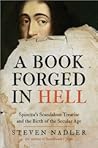
Review: A Book Forged in Hell: Spinoza's Scandalous Treatise and the Birth of the Secular Age

A Book Forged in Hell: Spinoza's Scandalous Treatise and the Birth of the Secular AgeA Book Forged in Hell: Spinoza's Scandalous Treatise and the Birth of the Secular Age by Steven Nadler
My rating: 5 of 5 stars

Steven Nadler is one of the foremost Spinoza scholars – certainly in terms of presenting Spinoza to an audience beyond academia. I’ve gained much by reading Nadler’s expositions, interpretations, and analyses of Spinoza’s work. In A Book Forged in Hell, Nadler takes us into the Theological-Political Treatise. One of things Nadler does so well is situate Spinoza in his own time and the history of philosophy: and here we see how Spinoza’s radical treatise on religion, the state, and freedom of thought fits within the social, religious, political, and philosophical milieu of his own time. While in many ways the most radical, Nadler shows us that Spinoza is not an isolated thinker in terms of the kind of critique and philosophy he is putting out there. What makes Spinoza unique was his bringing together the threads that others were pulling on into a single, integrated work that would resound through the ages.

Nadler is more focused on the intellectual and cultural history of the moment (and how that moment responded to Spinoza), but he does discuss the ideas of the work and how Spinoza’s discussion in the TPT fit within his broader philosophical project. That said, do not expect a chapter-by-chapter breakdown or a fully worked out extraction of the arguments.

A worthwhile read for those interested in Spinoza or the Enlightenment roots of political and intellectual liberty.


View all my reviews

Sunday, May 03, 2026

Review: Harry Potter and the Order of the Phoenix

Harry Potter and the Order of the Phoenix (Full-Cast Edition)Harry Potter and the Order of the Phoenix by J.K. Rowling
My rating: 5 of 5 stars

The full cast performances of the Harry Potter series just gets better and better. OoP takes the series to the next level; and hearing it play out with the full cast gives it a deeper emotional resonance than I even remember from when I first read it.

The voice actors are all great. No one can replace the Alan Rickman, but even the actor for Snape has grown on me.

View all my reviews