I found this article by way Arts and Living Daily. It is an interesting--and darkly funny--take on the Arab/Muslim response to the tsunami: from the paltry amounts donated to paranoid ponderings about a US/Israeli conspiracy to destroy the Muslim world.
Friday, January 14, 2005


Thursday, January 13, 2005
Natural Law Lecture Six
Aristotle’s Clarification of “Nature”
Ahh! The teacher of teachers. The great Aristotle. In this lecture, Koterski turns to Aristotle and his ideas that have influenced natural law. The focus in this lecture is first on Aristotle’s four causes, his theory of change, and our reasoning abilities.
Natural Law Lecture Five
Greek Ideas of Nature and Justice
Tuesday, January 11, 2005
A World Without Israel
Here is an interesting article from Foreign Policy that imagines what the world might be like with no Israel. In a world without Israel, Josef Joffe asks, "Would the economic malaise and political repression that drive angry young men to become suicide bombers vanish? Would the Palestinians have an independent state? Would the United States, freed of its burdensome ally, suddenly find itself beloved throughout the Muslim world?" The answers are an emphatic no.
Natural Law Lecture Four
Principles of Natural Law Theory
This lecture largely focuses on the nature of personhood and its relation to natural law theory. Koterski explains that the concept of person is essential in all varieties of natural law theory. Natural law depends on there being a natural kind, in particular, a natural kind of humans. Because of rationality, humans are different, different in kind, than other animals—thus the well-known definition of man as the rational animal. We share with animals an animal nature: we have physical bodies that require nutrition, can grow and decline, can reproduce, and are able to take action. Importantly, like all animals, we have a pattern of development towards a mature individual. But humans also have rationality, which animals lack, and so require a different category.
This lecture largely focuses on the nature of personhood and its relation to natural law theory. Koterski explains that the concept of person is essential in all varieties of natural law theory. Natural law depends on there being a natural kind, in particular, a natural kind of humans. Because of rationality, humans are different, different in kind, than other animals—thus the well-known definition of man as the rational animal. We share with animals an animal nature: we have physical bodies that require nutrition, can grow and decline, can reproduce, and are able to take action. Importantly, like all animals, we have a pattern of development towards a mature individual. But humans also have rationality, which animals lack, and so require a different category.
Koterski more explicitly raises the issue of what might be called the marginal cases. Are non-paradigmatic humans (infants, senile, etc.) fundamentally different than the paradigmatic humans (what Koterski calls the normal case)? Koterski argues that natural law theory considers both to be, from a moral point of view, the same. And it is here that a new concept is needed: personhood.
Koterski develops the concept of person by tracing its historical roots back to Boethius—the 6th century Roman philosopher. Boethius defined person as “an individual substance of rational nature.” Adapting the term person from the theatrical notion of persona—the role or character played, Boethius wanted a term to convey accountability and responsibility based on the rationality of the agent.
Monday, January 10, 2005
Natural Law Lecture Three
Law, Nature, Natural Law
This lecture starts with a lengthy discussion of definitions and the different ways of formulating definitions. He mainly focuses on definition as genus and species identification. He also discusses definitions that are focused on the part to whole relationship, on a thing’s structure, or on a thing’s function or use.
Saturday, January 08, 2005
Natural Law Lecture Two
The General Nature of Ethics
The next section of the lecture focuses on how natural law can meet the ideals that were laid out in lecture one: objectivity, universality, and intelligibility. Objectivity, he argues, will come from the basing of ethics on our natures as human beings. By asking what kind of beings we are and what our typically activities are, we can find an objective basis for ethical principles. The universality of natural law will come from a similar source in that if all humans share a common nature, the moral principles will be universal across this common nature. Lastly, intelligibility can be found because, it is claimed, one with an open and reasonable mind should be able to discover and understand human nature.
Next are the objections to natural law (and indeed morality itself): relativism, subjectivism, and skepticism. He doesn’t try to answer these concerns here, promising that these will be answer as he argues for natural law.
A natural kind is a “group that can be objectivity distinguished from another group on the basis of some property.” To be a difference in kind, the trait or property “is present in some degree in every member of the group and is totally lacking in other instances.” Differences in degree are differences along some dimension that all members of the group share. He uses water and salt as an example. Water and salt are different in kind—they are two different natural kinds. They each have a natural structure that gives rise to certain properties that all members of one group have and the other totally lacks. But liquid water, ice, and water vapor are different in degree—they possess related properties based on an essentially similar structure.
More on Palestinian "Moderate"
Apparently, Abu Mazen/Mahmoud Abbas is a Holocaust denier. In FrontPageMag.com article prior to Abbas' appointment as Prime Minister in 2003, Rafael Medoff cites a 1983 book penned by Abbas: The Other Side: The Secret Relations Between Nazism and the Leadership of the Zionist Movement. In this book Abbas apparently doubts that the Nazi's murdered 6 million Jews, disputes that gas chambers were used to murder Jews, and claims these were a product of a Zionist conspiracy.
The Return of DDT
Here's a surprising op-ed from the NY Times by Nicholas Kristof advocating bringing back DDT in Malaria torn countries. While recognizing that DDT hasn't been shown to be dangerous to humans, he does perpetuate the myth(if indeed it is a myth) that DDT caused the death of bird species. This is, after all, the NY Times.
Friday, January 07, 2005
Abbas, "The Moderate"
Charles Krauthammer on why Mahmoud Abbas is not the Palestinian moderate that everyone has declared him to be and that he offers more of the same.
Thursday, January 06, 2005
Proletarian Expropriation, or Rationalizing Theft
This is just plain bizarre. Proletarian expropriation is defined in the blog entry as a "form of civil disobedience intended to represent a form of protest against a disproportional raise of prices and despite stagnating or lowering personal income."
In other words, stealing.
Civil disobedience can be a powerful tool used to undermine and then repeal unjust laws. But these loons are going into stores and restaurants and not paying for the goods and services because they think the prices are too high. But, thankfully, they make sure to leave a generous tip to the waiter. After all, he's part of the Proletariat I guess.
The ridiculous thing about this is that thinkers take this crap seriously, as if there were a real issue here. The blog entry at TransAtlantic Monthly has several paragraphs considering the legal ramifications, likely court responses, and whether this stealing is okay if the folks redistribute to those in need.
I should note that the blog entry is from a Serbian and all the episodes of proletariat stealing that are mentioned take place in Italy. Those wacky Europeans still think communism is going to make a comeback I guess. Though, I could see this happening in San Francisco.
In other words, stealing.
Civil disobedience can be a powerful tool used to undermine and then repeal unjust laws. But these loons are going into stores and restaurants and not paying for the goods and services because they think the prices are too high. But, thankfully, they make sure to leave a generous tip to the waiter. After all, he's part of the Proletariat I guess.
The ridiculous thing about this is that thinkers take this crap seriously, as if there were a real issue here. The blog entry at TransAtlantic Monthly has several paragraphs considering the legal ramifications, likely court responses, and whether this stealing is okay if the folks redistribute to those in need.
I should note that the blog entry is from a Serbian and all the episodes of proletariat stealing that are mentioned take place in Italy. Those wacky Europeans still think communism is going to make a comeback I guess. Though, I could see this happening in San Francisco.
Wednesday, January 05, 2005
Natural Law Lecture One
Philosophical Approach
The first lecture of Natural Law and Human Nature was good. Koterski starts this series off in an unusual, but effective, way. He presents three cases to show the history and importance of the natural law tradition. The first case is Sophocles’s Antigone. I am not going to recount the story, but essentially Antigone defies her king’s direct order not to bury her brother properly. In her defense, she cites a higher law above the king. She appeals to Zeus and to justice as overriding Crion's order.
Next, Koterski discusses the
Lastly, Koterski discusses civil rights and Martin Luther King. MLK (and other civil rights activists before and after him) appealed explicitly to the natural law tradition in his defense of civil disobedience.
Given the range of time, culture, custom, and beliefs of these three stories, Koterski is trying to show us that natural law has a long and storied tradition that goes beyond any particular culture or even religious belief.
Koterski ends the first lecture with an appeal to philosophy. He tells us that this lecture series will subject the concepts of law, nature, and human nature to serious philosophical scrutiny. He tells us further that he is guided in his analysis by three philosophical ideas: objectivity, universality, and intelligibility. Objectivity in that he will try and appeal to evidence and argument in ways that are compelling and not mere subjective opinion. Universality in that he is aiming at a justification that applies to every kind of human being. Intelligibility in that these concepts should be ones that readily understandable.
Natural Law and Human Nature
In the spring semester, I am taking a seminar on positive law. It looks to be very interesing, in particular because there will only be about 7-8 students, all philosophy graduate students and a few law students. So the quality of discussion should be high.
As a way of preparation, I took out from the library The Teaching Company's "Natural Law and Human Nature" by Father Joseph Koterski. No doubt there will be some religious overtones to Koterski's lectures, but I listened to his Ethics of Aristotle course and that was very solid.
My over ambitious goal is to blog summaries of the lectures after I listen to them. Hopefully,
I won't stop at Lecture One.
As a way of preparation, I took out from the library The Teaching Company's "Natural Law and Human Nature" by Father Joseph Koterski. No doubt there will be some religious overtones to Koterski's lectures, but I listened to his Ethics of Aristotle course and that was very solid.
My over ambitious goal is to blog summaries of the lectures after I listen to them. Hopefully,
I won't stop at Lecture One.
Putting Humans First
I am about half way through Tibor Machan's Putting Humans First. I've wanted to read it since it came out, but since he will be coming to speak to the Arizona Objectivists on 1/15 I thought it time to read it.
No surprises so far. It's a straightforward, pleasurable read. I am not sure its very convincing to someone already convinced of animal rights. Surprisingly, the book, so far, doesn't spend all that much time (part of the first chapter) on showing the faulty reasoning of the other side. And going by the table of contents, it won't. It is actually much more positive. Machan goes through the reasoning behind human rights and thereby shows why such reasoning can't be reasonably applied to animals. The book might have been more persuasive (again I am not finished yet) had it spent more time going through the problems with the argument on the other side.
But as I am in total agreement with Machan on this issue (see my piece on animal rights), the book is a pleasure to read.
No surprises so far. It's a straightforward, pleasurable read. I am not sure its very convincing to someone already convinced of animal rights. Surprisingly, the book, so far, doesn't spend all that much time (part of the first chapter) on showing the faulty reasoning of the other side. And going by the table of contents, it won't. It is actually much more positive. Machan goes through the reasoning behind human rights and thereby shows why such reasoning can't be reasonably applied to animals. The book might have been more persuasive (again I am not finished yet) had it spent more time going through the problems with the argument on the other side.
But as I am in total agreement with Machan on this issue (see my piece on animal rights), the book is a pleasure to read.
Yet Another Attempt
I am trying, yet again, to committ myself to blogging regularly. My plan is to blog something everyday--no matter how trivial or uninteresting it might be. Hopefully I will develop the habit in this way. One idea is to comment on stuff I am reading or listening to (as in the Teaching Company)
Thursday, September 16, 2004
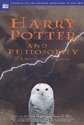
Harry Potter and Philosophy
 It's out! Harry Potter and Philosophy is now available. I haven't yet seen it my local Borders yet, but the online bookstores Amazon and BN.com have it. And you can get it from the publisher: Open Court
Sunday, August 29, 2004
Paul Hamm and the Gold
I am deeply frustrated by this whole debacle. I see it as really quite simply. Paul Hamm won the gold medal fair and square and all this talk about him giving back the gold is absurd. The FIG,the South Korean team, and the media should stop their haranging of this tremendous and heroic athlete.
I don't know about gymnastic judging or the specific rules, and so can only go by what I hear commentators say. But from what I understand, yes, the judges miscalculated the starting valuing of the South Korean's parallel bars. However, they also didn't take two mandatory deductions. The miscalculation would have added a 1/10 th to his score, but the deductions would have subtracted 2/10ths, leaving the South Korean with a score 1/10 lower. I am not sure, but given the closeness of the competition, this might have even dropped him from the bronze. So, the last person who should want a review of the tapes and re-scoring should be the South Korean!
Moreover, whose to say that even if the South Korean's score was adjusted up 1/10th in the parallel bars, he would have won the gold? He very well might have, but he might also have relaxed a bit too much thinking he had a good lead, and that could have caused him to do worse on the high bar. Or he might have tightened up or got more anxious realizing he was up for the gold, and this could have caused him to do worse on the high bar. Other competitors could have entered the high bar rotation with different expectations and competited differently, resulting in a different scores.
The point is that once play resumes, a call can't be changed. The call is one factor that determines later results and can't be changed without negating those results. This is why Football doesn't allow instant replay once play resumes. And why the Court of Arbitration rarely rules on field-of-play decisions. Going back and changing a call in the middle of game is not fair or right because we can't know the repercussions on the game or competition had that call been made differently on the field-of-play.
There was an appeal procedure available to the South Korean team during play. They should have checked the scoreboard before the next competitor and protested then. That's fair, and that's the place for it. The next day is just being a spoiled sport.
All this talk of showing good sportsmanship should be directed at the South Koreans, not Paul Hamm. He is a great sportsman, competiting hard and great when the chips are down. (Let's not forget how well the South Korean Young did under the stress of a booing crowd after the disputed Russian score on the high bar!)
Paul Hamm earned the gold and deserves the gold.
I don't know about gymnastic judging or the specific rules, and so can only go by what I hear commentators say. But from what I understand, yes, the judges miscalculated the starting valuing of the South Korean's parallel bars. However, they also didn't take two mandatory deductions. The miscalculation would have added a 1/10 th to his score, but the deductions would have subtracted 2/10ths, leaving the South Korean with a score 1/10 lower. I am not sure, but given the closeness of the competition, this might have even dropped him from the bronze. So, the last person who should want a review of the tapes and re-scoring should be the South Korean!
Moreover, whose to say that even if the South Korean's score was adjusted up 1/10th in the parallel bars, he would have won the gold? He very well might have, but he might also have relaxed a bit too much thinking he had a good lead, and that could have caused him to do worse on the high bar. Or he might have tightened up or got more anxious realizing he was up for the gold, and this could have caused him to do worse on the high bar. Other competitors could have entered the high bar rotation with different expectations and competited differently, resulting in a different scores.
The point is that once play resumes, a call can't be changed. The call is one factor that determines later results and can't be changed without negating those results. This is why Football doesn't allow instant replay once play resumes. And why the Court of Arbitration rarely rules on field-of-play decisions. Going back and changing a call in the middle of game is not fair or right because we can't know the repercussions on the game or competition had that call been made differently on the field-of-play.
There was an appeal procedure available to the South Korean team during play. They should have checked the scoreboard before the next competitor and protested then. That's fair, and that's the place for it. The next day is just being a spoiled sport.
All this talk of showing good sportsmanship should be directed at the South Koreans, not Paul Hamm. He is a great sportsman, competiting hard and great when the chips are down. (Let's not forget how well the South Korean Young did under the stress of a booing crowd after the disputed Russian score on the high bar!)
Paul Hamm earned the gold and deserves the gold.
Tuesday, August 24, 2004
How Voters Vote
The New Yorker has an interesting article on how voters vote: The Unpolitical Animal.
Some of the theories about what motivates (if anything) individuals to vote for whom is quite scary. The most striking idea discussed is that only about 10% of the electorate actually have anything close to a coherent political philosophy. And about 20% hardly have what one could call political views and make their voting decisions on gut.
The article also discusses how many voters have little understanding of the views they do hold--that they don't see how some views like being in favor of lower taxes excludes other views like increased social services or that when the polling question is rephrased the answer given is often in contradiction with the previous answer.
Roger is right!
Some of the theories about what motivates (if anything) individuals to vote for whom is quite scary. The most striking idea discussed is that only about 10% of the electorate actually have anything close to a coherent political philosophy. And about 20% hardly have what one could call political views and make their voting decisions on gut.
The article also discusses how many voters have little understanding of the views they do hold--that they don't see how some views like being in favor of lower taxes excludes other views like increased social services or that when the polling question is rephrased the answer given is often in contradiction with the previous answer.
Roger is right!
Monday, August 09, 2004
Hicks' Explaining Postmodernism
Here's a quick review I posted at Amazon.com for Stephen Hicks' Explaining Postmodernism

When speaking with a colleague about this book, he was surprised to find out that Postmodernism has such a storied history including the likes of Immanuel Kant and Bertrand Russell. And many readers also will be surprised to see the intellectual pedigree that Postmodernism boasts. Of course, Dr. Hicks isn't arguing that Kant or Russell were Postmodernists--but what he does in this quick and highly readable book is to show how Postmodernism evolved out of the ideas and historical trends of the last few hundred years in philosophy. Tracing the development of various ideas in epistemology and politics, Hicks finds the roots of Postmodernism in Kant, Rousseau, and other Counter-Enlightenment thinkers. The primary thesis of this book is that "the failure of epistemology made postmodernism possible, and the failure of socialism made postmodernism necessary." The history of modern epistemology has, by and large, failed at defending reason as one's means of knowing the world. The failure of socialism, both economically and morally, lead to, as Hicks calls it, a "crisis of faith" among many in the Left. In order to maintain their belief in the superiority of socialism over capitalism, many theorists used the failures of epistemology to eschew reason, reality, and truth. One now no longer has to deal with the evidence that shows the superiority of capitalism. Thus, we end up with the nihilistic, skeptical, and relativistic Postmodernism dominating much of academia and the political left.
Dr. Hicks is able to condense abstract and complicated ideas for a non-philosopher to understand without losing the essence of the ideas. He competently and clearly presents the ideas and positions without ever degenerating into ad hominem or resorting to polemics. As such, I highly recommend this wonderfully written and highly readable work to anyone--philosopher or not--with an interest in the history of ideas or an interest in understanding postmodernism.
When speaking with a colleague about this book, he was surprised to find out that Postmodernism has such a storied history including the likes of Immanuel Kant and Bertrand Russell. And many readers also will be surprised to see the intellectual pedigree that Postmodernism boasts. Of course, Dr. Hicks isn't arguing that Kant or Russell were Postmodernists--but what he does in this quick and highly readable book is to show how Postmodernism evolved out of the ideas and historical trends of the last few hundred years in philosophy. Tracing the development of various ideas in epistemology and politics, Hicks finds the roots of Postmodernism in Kant, Rousseau, and other Counter-Enlightenment thinkers. The primary thesis of this book is that "the failure of epistemology made postmodernism possible, and the failure of socialism made postmodernism necessary." The history of modern epistemology has, by and large, failed at defending reason as one's means of knowing the world. The failure of socialism, both economically and morally, lead to, as Hicks calls it, a "crisis of faith" among many in the Left. In order to maintain their belief in the superiority of socialism over capitalism, many theorists used the failures of epistemology to eschew reason, reality, and truth. One now no longer has to deal with the evidence that shows the superiority of capitalism. Thus, we end up with the nihilistic, skeptical, and relativistic Postmodernism dominating much of academia and the political left.
Dr. Hicks is able to condense abstract and complicated ideas for a non-philosopher to understand without losing the essence of the ideas. He competently and clearly presents the ideas and positions without ever degenerating into ad hominem or resorting to polemics. As such, I highly recommend this wonderfully written and highly readable work to anyone--philosopher or not--with an interest in the history of ideas or an interest in understanding postmodernism.
Subscribe to:
Posts (Atom)