Saturday, August 10, 2013

Review: Stone of Tears


Stone of Tears
Stone of Tears by Terry Goodkind

My rating: 4 of 5 stars


I like the world Goodkind has created. It is rich with characters and an intriguing mythology. I liked the first book, but I like the second book better--maybe because I am familiar with the world, so I can get deeper into the story itself. The story focuses on several interesting themes: self-acceptance and self-awareness, responsibility and consequences for choices, and value-hierarchy. The development of the characters and the way their choices drive the plot keeps me thoroughly engaged in the world. Lastly, I love Gratch.


View all my reviews

Wednesday, July 24, 2013

Review: Frozen Heat


Frozen Heat
Frozen Heat by Richard Castle

My rating: 3 of 5 stars


These Castle books are fun, but also somewhat confusing: it is hard not to see the characters from the TV show as the characters in the book. There are many parallels between the books and the show but there are dissimilarities as well. It is sometimes hard to keep straight.

The books on their own are good, but not great. This one gets stronger near the end. The beginning sort of meanders a bit and feels like a mundane Castle episode. Things take off as more of the plot is revealed.


View all my reviews

Sunday, July 14, 2013

Review: Riders of the Purple Sage


Riders of the Purple Sage
Riders of the Purple Sage by Zane Grey

My rating: 3 of 5 stars


This wasn’t what I expected. I didn’t come in with a clear idea of what to expect, maybe I was expecting something more like a movie western or even more like Parker’s Cole and Hitch westerns (my only previous literary westerns). In some ways it was more of romance than western. Stylistic, I didn’t like how much the narrator tells the reader about what the characters are thinking or what their motivations are.

Nevertheless, I liked it. It is beautiful book; it is worth the read just for the description of the landscape of Utah alone. The Mormon and Non-Mormon conflict is interesting and raises several issues that are worth more examination and thought.


View all my reviews

Tuesday, July 09, 2013

Review: The Grasshopper: Games, Life and Utopia


The Grasshopper: Games, Life and Utopia
The Grasshopper: Games, Life and Utopia by Bernard Suits

My rating: 4 of 5 stars


"The Grasshopper" is unique philosophy monograph. It is part narrative, part dialogue, part treatise. It is also humorous and easy to read. It, quite self-consciously, plays off elements from Socratic dialogues, the New Testament, and Aesop’s fables. Though I don’t agree with many of its philosophic conclusions, the work, overall, is successful at pulling all these elements off. That is, I enjoyed reading it and found it enlightening.

The main focus of the book is an extended discussion of the definition of the concept of “Game.” While in some ways, it is a meant as an answer to Wittgenstein’s famous claim that one can’t define “game,” it is more philosophically rich than that. Suits’ discussion is really more an analysis of the meaning of life. The Grasshopper’s main philosophical claim seems to be that in Utopia, all meaning in life would come from some kind of game-playing. By Utopia, he means a state of life where all activity is purely and totally voluntary and no instrumental activity is necessary. Suits argues that the only activities in such a utopia would games (or other forms of play).

I think Suits is wrong here, for several reasons. Without going into detail (I hope to write a long blog fleshing this out), his use of Utopia is irrelevant. The life he imagines here is impossible, and even if it were, such beings living that life would be nothing at all like human beings. So, whatever we might learn about such a utopian life is meaningless for the life human beings live. His accounting of play as “all of those activities which are intrinsically valuable to those who engage in them” is far too broad (This sweeps in things like one’s career) (146). His distinction between instrumentally and intrinsically valuable activities is too constrained and too sharp (it leaves no room for mixed activities or constitutively valuable activities). So while I agree that game-playing and more generally play itself are important, even central, aspects of human life, I disagree that is the only intrinsically valuable (whatever that means) human activity.

My main quibble (and it might be more than a quibble) with Suits’ definition of games is the idea that “the rules prohibit use of more efficient in favor of less efficient means” (54). It is a quibble if by less efficient he really means obstacle-making. I do think all games involve rules that place certain kinds of obstacles for the players to overcome, surmount, or play around. These obstacles often mean that only less efficient means for achieving the goals/ends of the games are available. So my concern is that the focus on efficiencies is non-essential. The essence is obstacle-making, not efficiency reduction--even if these end up being co-extensive. I am not sure they are co-extensive; hence, my concern that this is more than a mere quibble.


View all my reviews

Saturday, June 29, 2013

Review: A Storm of Swords


A Storm of Swords
A Storm of Swords by George R.R. Martin

My rating: 4 of 5 stars


There were parts of book three that dragged a little, several hundred pages of characters wondering around in Westeros with not much development. But the last few hundred pages were better as the action heated up. There are several surprises in the characters and plot that are seemingly par for the course for Martin. I was disappointed in the way one character met his end (anti-climatic) and sad to see a few other characters get killed off. I am warming on a few others that I didn't like previously.

The trend has been that characters with the most integrity are killed off, while the vile, treacherous ones live on. That changes a bit (only a bit) here, but it does worry me about the long term plot direction. I am interested and engaged enough to want to see how some of the remaining "good" eyes end up (as well as the bad guys get their comeuppance --- like Aryn I have a list!)


View all my reviews

Wednesday, June 19, 2013

Man of Steel: Heroic Individualism (Spoilers)

[SPOILER ALERT]

I thoroughly enjoyed the new Superman film. It’s exciting, thrilling, beautiful, funny, and even at times sweet. The special effects were amazing. The fight scenes were out of this world.

The way they told the story was clever and creative. The Superman origin story is well-known and familiar. This film doesn’t deviate from the story we all know: Superman is sent from Krypton by his scientist parents to save him from the imploding planet. But the details and the how are told in a way to make it refreshing rather than a rehashing. Krypton itself is a fascinating and intriguing world. The hints, bits, and pieces provided about its history, culture, and people help provide greater context to the plot. (Caveat: for fans of the graphic novels, these may not be new at all, but I have not followed the graphic novels so it was all new to me.)

This is more than just another superhero story: the good guy fights the bad guys. What this movie does is show us why these are the good guys and bad guys: each side is motivated and guided by contrasting moral principles.

General Zod is not some psychotic maniac whose motivates are beyond comprehension nor is he just a megalomaniac setting out to rule the world (followed by evil laugh). He is driven by (what he sees as) the greater good of Krypton and its race of people. He is doing what he is doing as a way to preserve his race. Individuals are mere means to ends to the greater good of Krypton. There is little to suggest this is mere cynical cover for just wanting to rule. He is dedicated to the truth and importance of what he is doing. He is a committed collectivist.

This is in stark contrast with Jor-El. He and Lara conceived Superman (Kal-El) and sent him to Earth. Superman is sent to earth to save him and by extension continue Krypton, but it also so that Kal-El can choose his own path in life. Every aspect of life is controlled on Krypton. Reminiscent of Brave New World, each person is artificially conceived and genetically modified to be ideal for a specific role and station in life. There is no individual choice or self-direction. Jor-El and Lara see this as part of the demise of Krypton and seek a new way for their child. Superman is naturally conceived and birthed so that he may choose the man he will become and not have it decided for him.

The adult Superman we see is similarly guided by individualism. At the end of the movie, he tells the US general that he (Superman) is here to help when needed, but it will be on his own terms. He will not be dictated to and will not (indeed, cannot) be controlled by others.

Lois Lane is also, fittingly, her own individual. She is strong-willed, courageous, and ambitious. When her editor tells her to drop the story of an alien amongst us, she continues to investigate. When he refuses to run her story, she finds a way to get it out into the public anyway. When faced with danger, she responds bravely and competently. No damsel in distress is she.

What makes this movie so great is not just the exciting action or amazing special effects; it is the clear theme of individualism versus collectivism. The message is clear: the root of greatness and civilization is the free individual and each individual ought to be free to direct his or her life in peaceful ways.

A few random thoughts:
  • I liked that there wasn’t a Lex Luther character to complicate the plot, but that there was LexCorp stuff in the background. I am sure we will meet Lex in the sequel.
  • The “liquid steel” computer displays on Krypton were very cool. They also allude to the idea of Superman being the Man of Steel.
  • The fight scenes were a bit overdone. Lots of flying threw buildings that were probably unnecessary. Still, they were visually stimulating and provide that comic-book feel.
  • There is a brief scene were a young Clark Kent is reading Plato’s Republic. Yay Philosophy! (though Aristotle’s Nicomachean Ethics would have been a better choice.)
  • I liked the use of flashback to tell the story of Clark. This way the backstory gets told, but isn’t rushed through so we can get to the current action.
  • One of the things I disliked about the 2006 movie was the Christ imagery they used to depict Superman. The new movie does not engage in this except in one instance where Superman is briefly in a cross stance. No offense to Christians, but Superman is not a Christ figure. He might be a god-like figure here to help save us from evil, but he is not here to be sacrificed and die for our sins (the latter I take to being essential to being a Christ figure). Also, Superman was created by two Jewish guys. If anything, Superman is more of a Golem figure than a Christ figure. (A golem was a mystical Jewish super-strong creature created to defend the Jewish community from attack and injustice.)
Update 6/20: I forgot to mention this additional thought about the movie.
  • The 2006 movie shied away from the American connection to Superman with its infamous: "Truth, Justice, and all that" line. The new movie is not jingoistic, but it doesn't disconnect Superman from his American ideals. This Superman is proud of being an American: he tells the general, who's concerned that Superman would act against America, that "I'm from Kansas. It's about as American as it gets." Superman creators Schuster and Siegel created Superman as an American icon, as a hero to represent the ideals of "truth, justice, and the American way". They were children of Jewish immigrants assimilating and celebrating the principles of America: individual freedom and liberty, fighting tyranny, and a commitment to justice. The new movie stays true to Superman's roots by celebrating Superman's American-ness rather than, out of some PC concern or, worse, a rejection of these ideals, hiding this. 

Thursday, June 13, 2013

Review: The Confessor


The Confessor
The Confessor by Daniel Silva

My rating: 5 of 5 stars


An exciting, intriguing thriller focused on the Vatican and the Shoah. I like Allon as spy thriller hero. The use of art restoration as a metaphor for Allon adds an element not often seen in spy thrillers. The self-reflection about his past and the way it affects him also adds an interesting element. This particular story was well-crafted and exciting with several twists. I don't want to give away any spoilers, but I will say the ending (epilogue really) could have been its own book; Silva didn't need to tie up that end.


View all my reviews

Monday, June 10, 2013

Review: Introduction to the Philosophy of Sport


Introduction to the Philosophy of Sport
Introduction to the Philosophy of Sport by Heather Lynne Reid

My rating: 4 of 5 stars


Reid’s text does exactly what the title says: introduces the philosophy of sport. She covers the main stays of the discipline: the leading thinkers, the primary themes, and the central arguments. It does not go into great detail in any of these; the goal seems more to lay out the main elements and leave readers with enough context and direction to pursue particular issues on their own.

I have my quibbles with particular arguments: both in terms of presentation and content. Nonetheless, I think Reid presents and sticks to the standard main line of philosophy of sport. I think it could serve quite well as the primary text for an introductory level philosophy of sport class.


View all my reviews

Friday, June 07, 2013

Review: Robert B. Parker's Wonderland


Robert B. Parker's Wonderland
Robert B. Parker's Wonderland by Ace Atkins

My rating: 5 of 5 stars


I like what Ace Atkins is doing. He is staying true to the characters, the style, and the overall feel of the Spenser series, but he is also nudging the series forward. I was curious what Parker would have done with Z when he introduced the character. But, since Z was left under-developed and without a history, Atkins can and is using him to explore the Spenser-verse in a new ways. Most significantly for the series going forward are the developments with Vinnie and Gino Fish.

As I said in my first Atkins review, this is Spenser and his world, but is also not Parker. That is a neat trick and real testament to Atkins ability. He has managed to continue Spenser without merely engaging in mimicry. Atkins is not quite as witty as Parker was, but Atkins brings a richer level of description. It may just be that I had grown so comfortable and familiar with Parker’s plots, but I am less sure (in a good way) about where the story is going to go with Atkins.


View all my reviews

Sunday, June 02, 2013

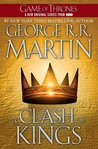
Review: A Clash of Kings


A Clash of Kings
A Clash of Kings by George R.R. Martin

My rating: 5 of 5 stars


A worthy follow-up volume to the first book. Just as cruel and dark, yet a few more glimmers of hope here. The GOT world is not a happy one; it is treachery on top of spite on top of barbarism. It is ruled by men and women who are either petty or evil, and often both. But what draws me into these stories is the small embers of integrity, honor, and goodness that poke through this darkness. There is great action, wonderful world-building and myth-making, and gripping suspense; GRRM is a master story teller. But I am not sticking around for that alone. The strength of character by those worthy of admiration (few indeed) is what ultimately, I think, holds these books together.


View all my reviews

Sunday, May 12, 2013

Review: Transfer of Power


Transfer of Power
Transfer of Power by Vince Flynn

My rating: 4 of 5 stars


An exciting thriller. Rapp is great hero; though not that distinguishable from other heroes in this genre. Flynn does a great job of painting the weasel characters as well as getting into the minds of the terrorists.


View all my reviews

Monday, May 06, 2013

Review: Zoe's Tale


Zoe's Tale
Zoe's Tale by John Scalzi

My rating: 5 of 5 stars


This is a retelling of The Last Colony from a different character's point of view. In TLC, the story is told from John Perry's viewpoint. He is, well at least in terms of his physical body, a middle-aged veteran of the Colonial Defense Forces. Zoe is his 17 year old adopted daughter. Scalzi does a great job of retelling the same story from a different point of view without losing the tension of the plot. Even more admirable is how well he captures Zoe. It feels like a different story told from her vantage point instead of Perry's, and not just because some of the events don't overlap. Her way of seeing the world is different and so we see the world differently as well. In many ways, I actually liked it better than TLC.


View all my reviews

Review: The Last Colony


The Last Colony
The Last Colony by John Scalzi

My rating: 4 of 5 stars


I really enjoy this world and Scalzi's writing. His characters are witty and interesting, the action is fast-paced without being overbearing, and the plot is rich.


View all my reviews

Wednesday, May 01, 2013

Classical Liberalism and Evolution Publication

My friend and former fellow graduate student at ASU, Stephen Dilley, has published a new book (out today):  Darwinian Evolution And Classical Liberalism: Theories in Tension. This collection "canvasses an array of thinkers from the past to the present as it examines fundamental political, philosophical, ethical, economic, anthropological, and scientific aspects of the ferment between Darwinian biology and classical liberalism." The publisher, Lexington Books, has more detailed information.

My friend Timothy Sandefur and I contributed chapters to this volume as part of the "Alternative Perspectives" section. As one might guess from the title and description, the book, for the most part, takes at best a skeptical eye towards biology and evolution (Clarification note from Stephen: "their contributions focus on a compatibility claim -- is Darwinism compatible with classical liberalism? -- rather than a critique of Darwinian evolution"). I do not share that skepticism; evolution is a well-established scientific theory (read: fact). My contribution, along with Timothy's, dispute that there is any tension between the ideas of classical liberalism/libertarianism and the contemporary understanding of biology.

I think Stephen has pulled together an interesting and thought-provoking book. It is a sign of his deep commitment to intellectual honesty and philosophical inquiry that he made sure from the start of his project to include and encourage critical and dissenting voices from his own view.

Here is an abstract of my chapter.
Volitional Consciousness and Evolution: At the Foundations of Classical Liberalism
By Shawn E. Klein
Classical Liberalism is a view that the only justifiable restraints on the actions and choices of individuals in political orders are ones necessary to preserve individual liberty. Central to this view of liberty is the individual being left free from coercive interference from other individuals and society as a whole. This view presumes the idea that the individual is, firstly, able to choose his ends and actions, and secondly, that the individual is the best judge of these. Thus, the individualism of classical liberalism presupposes a view of human consciousness that is volitional: capable of engaging in choice and individual self-direction. If this view of human consciousness is in conflict with the physical casual and evolutionary accounts of the world, then classical liberalism would seem to have serious problem. Therefore, I argue that the correct conception of volitional consciousness is consistent with the physical causal and evolutionary accounts of the world. Presenting a conception of volitional consciousness that makes the best sense of our introspective experience and knowledge of the world, I then show how such a volitional consciousness is consistent with causality and biological evolution.

Congratulations to Stephen!

Saturday, April 27, 2013

Review: Summer of '49


Summer of '49
Summer of '49 by David Halberstam

My rating: 3 of 5 stars


Many great anecdotes and quotes, but altogether something of a disappointment. I never got into a good flow with the narrative. The accounts of the games were often flat. I was not surprised to find out that Halberstam is a Yankee fan; the book is about 70% about the Yankees and DiMaggio in particular. I wanted, obviously, more about Sox.


View all my reviews

Saturday, March 23, 2013

Review: Hank Greenberg: The Hero Who Didn't Want to Be One


Hank Greenberg: The Hero Who Didn't Want to Be One
Hank Greenberg: The Hero Who Didn't Want to Be One by Mark Kurlansky

My rating: 4 of 5 stars


A quick, but interesting biography of Hank Greenberg--the first major Jewish baseball star. The book focuses quite a bit on the contrast of Greenberg’s own secularism with his fame as Jewish athlete. Greenberg was a hero to Jews in America in the 30s and 40s (and beyond), not just for being a great baseball player but for sitting out a regular season game against the Yankees because it fell on Yom Kippur. This was not from a need for religious observance, but from a connection to his family and culture. For many, this is perplexing: if he wasn’t religious, why would he care about playing on Yom Kippur. A similar question arises a generation later when Sandy Koufax does the same thing. It points to the difficult and complex nature of what it means to be a Jew in America…far beyond this review and the book. Kurlansky is not out to try to solve that enigma.

Kurlansky tries to do justice the Greenberg “myth”: he is not out to debunk or discredit Greenberg, but he also wants to get the story correct. The game with the Yankees was not one that really mattered (it was a regular season game and the Tigers had all but wrapped up the pennant), and though hurt, Greenberg said he would have played on Yom Kippur the following year against the Cubs during the World Series. (One wonders what would have happened to the Greenberg narrative had he played.) Kurlansky’s point is that Greenberg was a complex guy who balanced his love of baseball and his desire to win with his commitments to his family/roots and his recognition of the role he played in the public eye as a famous Jew. It was a struggle that he dealt with his whole life, and only in his later years did he, by most accounts, become comfortable in his role as a Public Jew. Kurlansky quotes Greenberg’s unpublished autobiography: “I find myself wanting to be remembered not only as a great baseball player, but even more as a great Jewish ballplayer. I realize now, more than I used, to how important a part I played in the lives of a generation of Jewish kids…” (143).

After his playing days, Greenberg moved over to the management and ownership side of the game. He lived a full life beyond baseball. Kurlansky writes “baseball was not the goal of Greenberg’s life; it was just a tool for achieving his goal” (143).


View all my reviews

Sunday, March 10, 2013

Review: The Fountains of Paradise


The Fountains of Paradise
The Fountains of Paradise by Arthur C. Clarke

My rating: 4 of 5 stars


Clarke centers this novel around the fascinating idea of building a tower into space (to replace rockets). While I definitely enjoyed the story and found myself engrossed in it, the characterization was at a minimum. This took away from the overall novel for me. The story, in fact, centers much more around the tower and the mountain it is to be built on; they are really the central characters. Notwithstanding my criticism on this front, they are worthy enough to be the focus. I did especially liked the interludes that provided the context for the story. There is also an interesting sub-motif about religion, science, and how mankind (especially on these issues) might be affected by alien contact.


View all my reviews