Saturday, August 29, 2026

Review: Power, Faith, and Fantasy: America in the Middle East, 1776 to the Present, Library Edition

Power, Faith, and Fantasy: America in the Middle East, 1776 to the Present, Library EditionPower, Faith, and Fantasy: America in the Middle East, 1776 to the Present, Library Edition by Michael B. Oren
My rating: 5 of 5 stars

Oren takes on a huge challenge with this book. Essentially, he gives a history of the US through its interactions with the Middle East. From the founding through the Civil War and then the World Wars, the Cold War, and the War on Terror, the US’s relationship with the Middle East provides essential context for developments in the US as well as in the world.

The main themes of the book are, first, that the US has always been involved in the Middle East and that this relationship is partly defining of much of how the US sees itself in the world. Second, that this relationship is a mix of hope and idealism for a greater peace and prosperity throughout the region but inevitably undermined, partly, by the US’s lack of real understanding of the Middle East. This leads to a constant wavering on policy and approaches. We see the same patterns play out from the Barbary Wars to the Gulf Wars to today’s Iran War.

The first part of the book deals with the early Republic and how the early conflicts with the Barbary States were, at least in part, the impetus for the need for and adoption of the Constitution. The Articles of Confederation did not give the national government the capacity to respond to this threat and the new Constitution would and did (in the eventual Barbary Wars). It also shows the differences that remain to this day in the way that the US and European powers tended to deal with the Middle East.

The next part of the book looks at the way missionary and trade work in the Ottoman Empire brought “regular” Americans increasingly into contact with the peoples of the Middle East. It explores early Christian Zionism and the role that had in affect US policy. These interactions set up the mutual perceptions of each other as well as the foundations for later relationships. The US begins to flex its naval might at times in patterns that are repeated in (or at least rhyme with) contemporary conflicts. The focus then shifts into the way the US Civil War affected the Middle East, especially Egypt (as a cotton producer) and the US relations in the region.

The next part of the book explores the US involvement in the lead up to and fighting of the First World War. Wilson’s hope for self-determination for all peoples of the region was mixed with Wilson’s ineffectiveness at the negotiating table. Because the US didn’t join the war against the Ottomans, they ended up having little say in what happened in its dissolution. This of course sets up much of the later conflicts in the region through the mandate system, new states that are formed, and the local perception of the Western powers.

The next part of the book deals with the WW2 and post war situation: this explores the unstable admixture of realpolitik and idealism of US foreign policy. The US relationships with Israel, Saudi Arabia, Egypt, Iran, and other emerging countries – all colored by the Cold War.

The last part of the book sort of speed runs through contemporary history. As the author notes, there is little new to add. While the first part of the book provides insight and analysis that is novel and underexplored, this part is well-trodden by hundreds of books. So the author is trying to provide more context rather than any new analysis. Much of this to show how the early patterns repeat again and again.

Overall, though at times the book might have dragged as it dives into little details, it is an excellent book. It is well-researched, unbiased, in-depth, and explores parts of US and Middle East history that are not well-known and not well appreciated. For anyone thinking about trying to understand the current events in relation to the Middle East, it is essential.


View all my reviews

Sunday, August 23, 2026

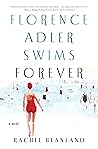
Review: Florence Adler Swims Forever

Florence Adler Swims ForeverFlorence Adler Swims Forever by Rachel Beanland
My rating: 4 of 5 stars

The premise of the novel is a bit preposterous but then like many a preposterous premise; it actually happened! After Florence drowns (revealed in the description so not a spoiler), the mother determines that they must keep this from Fannie, Florence's older sister, who is bedridden in the hospital during her third trimester of an at-risk pregnancy. Fearing the news would endanger the baby and the mom, the family, lead by the mother, determine to keep tragedy secret until the baby is born. It is a bit hard to believe that any one would think to do this or go along with this, but, it is in fact based on Beanland's own family history. While the story is, according to Beanland, fictionalized, the core premise: the drowning, the at-risk sister, and the hiding of the truth are true.

I wavered back and forth with most of the characters: in the end, I came to like them, or at least, better understand where they were coming from. The tragedy and the subsequent lying warped and affected all the characters. Some of what I didn't like about this or that character was really the subtle reflection of that warping.

I thought the author did a great job of depicting 1930s Atlantic City. The added tension from trying to get Anna's parents out of Europe captured aspects of the American Jewish experience of this time.

There were small notes here and there that were off. The best example of this was a scene were shellfish was served at a meal. That in itself is hardly worth mentioning, but the author made note of the dish, but didn't have any of the characters respond in any way to this fact. This was odd to me. Not that they ate it, but that there was nothing about the violation of kashrut. Given the role in other parts of the book for halacha (Jewish Law), this was out of place. Unlike a book a like The Chosen, the Jewishness of the story is really more of a backdrop rather than anything that is really all that essential to the characters or the plot.

Gussie and Stuart were definitely my favorite characters. Stuart, as the only main character that was not Jewish, plays an interesting role in the story. I keep coming back to the idea that teaching your child to swim is one of things the Talmud explicitly says parents are responsible for doing. The father does teach Florence to swim initially, but it is Stuart who becomes her coach and trainer. And then Stuart teaches Anna. I am not sure there is anything to this or not, but I thought it was curious.

Isaac, well, Isaac was just a shit.

I think there were some missed opportunities for some deeper exploration of the way Jews deal with grief and birth and family, but it is still a good and engaging story.


View all my reviews

Sunday, August 16, 2026

Review: Heart of a Stranger: An Unlikely Rabbi's Story of Faith, Identity, and Belonging

Heart of a Stranger: An Unlikely Rabbi's Story of Faith, Identity, and BelongingHeart of a Stranger: An Unlikely Rabbi's Story of Faith, Identity, and Belonging by Angela Buchdahl
My rating: 5 of 5 stars

Rabbi Buchdahl's memoir weaves together personal experiences and family background with broader lessons and insights. Each chapter ends with a Dvar Torah, a commentary drawn from Jewish liturgy, texts, and wisdom, that gives a way of seeing Rabbi Buchdahl's experiences in our own lives and experiences. The memoir covers the backstories of her parents and how they met, how they ended up in Washington state, and how Rabbi Buchdahl came to the rabbinate. The second half of the book then covers Rabbi Buchdahl's adult professional life and experiences, ranging from how she came to be at Central Synagogue to the pandemic and October 7.

A theme of the book, captured in the title, is that we all, to some extent, have the heart of a stranger. Or to borrow from Billy Joel: "we all have a face// that we hide away." We can be strangers to each other and to ourselves. Buchdahl connects this to Judaism: Jews for so much of our history have been strangers in the land's of others. Much of Jewish thought is about how to live as strangers in strange lands, but also to apply those lesson to our lands: to treat the strangers in our amidst better than we have better treated. This is the lesson, I think, that Buchdahl wants to teach us. Since we we are all at different times and different way strangers, to others and ourselves, we have to make sure to treat the stranger, in others and ourselves, better.

View all my reviews

Wednesday, August 12, 2026

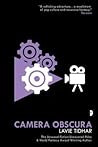
Review: Camera Obscura

Camera Obscura (The Bookman Histories)Camera Obscura by Lavie Tidhar
My rating: 5 of 5 stars

This was a fascinating, creative, genre bending story. It's steampunk, horror, scifi, alt-history, thriller, and a detective story. Tidhar weaves a pastiche from literature, history, and mythology into something entirely new. It's a bit gruesome at times but overall a lot of fun. I am sure there were many references I missed. Some where obvious, others I knew must be a reference but didn't recognize, and I am sure others that just flew right by.

I picked this up at a used bookstore because I recognized the author's name, but I didn't realize it was book 2 of series until I already started it. My "orderist" predications where tested! Don't worry book 1 has already been ordered.

View all my reviews