Sunday, February 21, 2016

Review: Dance Hall of the Dead

Dance Hall of the Dead Dance Hall of the Dead by Tony Hillerman
My rating: 4 of 5 stars

I first read this years ago in a college class on Detective Fiction. But since I've decided to read the Leaphorn series from the start and I barely remembered the plot, I reread this one. This is really the first Leaphorn novel, since in Blessing Way he is more of a secondary character. But here we see the full-blown detective. He is logical, patience, and precise. He is tapped into and understands the more mystical aspects of his culture, but it is not clear to what extent he accepts those beliefs. They are, it seems, just one more tool to help him understand and make sense of the crime he is trying to solve. The landscapes are beautifully described-- I find myself often going to google maps to look for the mesas and washes he talks about. The plot is good, though a bit predictable (that maybe me remembering aspects from previous readings though). Like Spenser, Leaphorn has a need, or rather an obligation of sorts, to rescue young people. Leaphorn in some ways fails, and one can see the weight of that failure on him. Yet, there is no despair here; just determination to continue.

View all my reviews

Review: Jubal Sackett

Jubal Sackett Jubal Sackett by Louis L'Amour
My rating: 5 of 5 stars

A beautiful continuation of the Sackett family. This one focuses on Jubal, one of Barnabas' sons. Jubal has gone west, eventually crossing the Mississippi and the Great Plains into the Rockies. There is a lot of wandering and pondering by Jubal punctuated by different battles with enemies he has picked up along the way. Much of the focus is on his relationship with the Native Americans. He respects them, but foresees the troubles that will be coming their way. L'Amour, though, recognizes the complexity of the Native American tribes and doesn't fall into the trap of the 'noble savage' or the 'white devil'. I wish L'Amour had lived to tell the story of Jubal's children. The next Sackett book jumps ahead to the 19th century and we never, to my knowledge, come back to the age of Barnabas and his sons.

View all my reviews

Saturday, January 30, 2016

Review: A Spectacle of Corruption

A Spectacle of Corruption A Spectacle of Corruption by David Liss
My rating: 4 of 5 stars

This was an exciting, fun read. An interesting look into what it might have been like in London in the 18th century. Employing the classic genre move of having the detective hero solve the crime in order to exonerate himself, we get a crash course in English politics and law of the time. Liss does a good job of capturing the language and the style of the times (or at least appearing to--I am not an expert in 18th century England and so I am sure he doesn't get it all correct. But it has the feel of something authentic).

The ending was a bit too quick and things got tidied up too conveneniently, but otherwise the plot was well done--it was not predicatable or obvious. The characters were intriguing and fun.

View all my reviews

Wednesday, January 27, 2016

Review: Mindset: The New Psychology of Success

Mindset: The New Psychology of Success Mindset: The New Psychology of Success by Carol S. Dweck
My rating: 4 of 5 stars

I was a little disappointed in the book. While I think the mindset framework is very helpful: for me personally, for my professional life as teacher, and for being a parent, the book itself was far too much anecdote and not enough on how to change one's mindset. This might not be fair: after all, it's a book not a therapy session or workshop. But the book is presented as somewhat of a guide to help one change, so it's not entirely unfair of me to criticize it because it doesn't do enough on this front.

The last chapter is really the only place that Dweck gives some practical advice. The remaining chapters are, more or less, here's some people in a domain that have fixed mindsets and see how that holds them back. Then, here are some people in the same domain that have growth mindsets and see how they soar. These anecdotes are often quite interesting, entertaining, and informative. They help you see the mindset in action; but they don't, as anecdotes establish the validity of mindsets, and they don't provide a lot in the way of advice for making a sustained changed to your own mindset.

That said, I think understanding how one can be in fixed mindset at times and how this can hold one back is very important. The awareness of this alone can help change the way you approach a dilemma, conflict, or problem.

View all my reviews

Thursday, January 14, 2016

Review: Blood of the Fold

Blood of the Fold Blood of the Fold by Terry Goodkind
My rating: 3 of 5 stars

I liked the first two books in this series a lot. They were highly creative and original. The plot was driven by character choices and tied into their values. This one, however, fell short of the high mark. There were still interesting and imaginative aspects to the setting and the storytelling; and I liked most of the characters, but there was something missing here. There was too much of Richard and other characters reacting on instinct and not really knowing what they were doing. The antagonists were less interesting. The overall story here was more plodding and unclear than the earlier novels. The secondary characters were far more interesting --and in many ways more important to the plot -- than Richard and Kahlan. Gratch maybe Goodkind's best character.

I like the series, but I don't love it and I don't know if it is worth 6 or 700 pages.


View all my reviews

Tuesday, January 12, 2016

Review: The Evolution of Everything: How New Ideas Emerge

The Evolution of Everything: How New Ideas Emerge The Evolution of Everything: How New Ideas Emerge by Matt Ridley
My rating: 4 of 5 stars

Ridley’s new book is a great synthesis of a lot of the ways that evolutionary processes are at the heart of everything. Using Lucretius and his De Rerum Natura as his guide, he runs through human history and development. He covers religion, the internet, money, government, and much more. He illuminates the fundamental connections and underlying principles at work across such disparate domains.

Ridley argues that there is a general theory of evolution—biological evolution being the special theory—that explains how all things evolve. This general theory of evolution is, in essence, the view that everything is, too some significant degree, the result of emergent, unplanned, undesigned, and inexorable processes. Things develop gradually through modification and selection. He presents example after example of how bottom-up processes play the essential role in human progress and development and top-down structures are so-often ineffectual or damaging.

He uses the metaphor of creationists and evolutionists to identity whether top-down or bottom-up animates one’s view of the world. A creationist is one who thinks that top-down structures and processes are the way things work and progress. Whether in biology, economics, or the internet, if one things there has to be a designer to bring order to the system, then one is a creationist. On the other side, an evolutionist recognizes that order and design are not identical. These systems are, for the most part, self-organizing and without a design or designer.

If I had one criticism, it was that he tended to underplay the role of individuals. I think he is overreacting to the “Great Man of History” view. While there is – at least in retrospective – an inexorable march of history, I think that certain figures made choices that where not inexorable and would have, counterfactually, changed history if the choice was different or they had not existed. Yes in the 1900s, there were lots of people circling around something like the Theory of Relativity—but I don’t think anyone in the first part of 20th century would have come up with Relativity other than Einstein. There was something about his personality, his skill set, his life that put him a position to identity when he did. And if Relativity isn’t discovered until the 1940s—the 20th century is much, much different. Similarly with someone like Steve Jobs. He had a unique vision of technology and the personality and drive to implement it. I am not sure anyone else had that vision and/or the skill set to make it happen.

I liked the book, but I am in the choir here and Ridley is largely preaching to those like me. I don’t think many “creationists” would find the book convincing – at least across the board. They might acknowledge emergent systems in biology but not economics and politics (or vice versa). Ridley isn’t so much engaging in sustained persuasive argument against creationists. He is, in my view, more setting out to synthesize and bring together into one space the various ways evolutionary processes are at work across human experience. This is not a ground-breaking, path-blazing book. It’s a step back and integrate what we know book.


View all my reviews

Thursday, December 10, 2015

Review: The Blessing Way

The Blessing Way The Blessing Way by Tony Hillerman
My rating: 4 of 5 stars

I've wanted to read the first Leaphorn mystery for a long time. My biggest surprise was how little it actually involved Leaphorn. The story really revolves around Bergen McKee: an anthropologist who specializes in Navajo culture. According to Wikipedia, Hillerman wrote the novel with McKee as the main character and Leaphorn's character was secondary. Obviously he and his editors realized that there was something there with Leaphorn and continued the series with him as the central character.

The story itself was interesting with the usual twists and turns of the genre. The unique aspect of a Hillerman story is the authentic feel of the Navajo culture and people as well as the colorful and beautiful descriptions of the countryside. I spent a lot of time looking up and checking the different locations on Google maps!


View all my reviews

Saturday, November 28, 2015

Review: The Human Division

The Human Division The Human Division by John Scalzi
My rating: 4 of 5 stars

This installment of The Old Man’s War series offers a look at the Colonial Union and this universe from a different perspective. Previous books have mostly been from the point of view of the CU soldiers (or ex-soldiers). Here the main characters are diplomats. Wilson is a military guy, but his job isn’t fighting, it’s technology and he’s attached to a diplomatic mission. The conflict, then, that structures the plot is different. It’s not direct violent conflict with alien races but the conflict between the characters (of various species) and what they don’t know. That is, the plot revolves mostly around the characters dealing with situations where what they know (or thought they know) is rapidly changing and they need to improvise. It makes for intense and engaging story-telling.

The characters are well drawn and each chapter pops. In part this is because each chapter (or episode) was written as a stand-alone piece, albeit with Scalzi always intending it as a novel. So each chapter can stand on its own, but also fits into the bigger picture. The overall mystery of the novel is not solved here – I presume (hope) it is in the next book.

Although I thoroughly enjoyed the book, it doesn’t offer much in terms of breaking new ground either in terms of the universe or in terms of wider science-fiction. In regards to the former, we don’t learn that much more about the CU, Earth, the Conclave, or other species in this universe. In regards to the latter, just about the only thing interesting is the brain in the box (I won’t say more to avoid spoilers). But we have to wait until the next book, I think, to learn more about that.

If, like me, you like the universe of The Old Man’s War and Scalzi’s writing style, you will enjoy The Human Division as well.


View all my reviews

Saturday, November 21, 2015

Review: In the Beginning

In the Beginning In the Beginning by Chaim Potok
My rating: 5 of 5 stars

In The Beginning is quite different in style than Potok’s earlier novels. The story is told through -somewhat non-sequential flashbacks. We see a lot of David as a young boy, but then it moves quickly through his adolescent years. He is brilliant, bookish, and intellectually rebellious—though in a quiet and confident way. It shifts back and forth from great narrative and descriptive detail to more emotional impressions. It is a lot in David’s head – sometimes when he sick with fever or lost deep in daydreams.

The overall mood of the novel is melancholy. There are moments of joy and happiness, but a lot of sadness and loneliness. It is beautiful in many ways; painting an impressionistic picture of American Orthodox Jewish life in early middle part of the 20th century.

Potok’s novels take me into a world both familiar and utterly foreign. It is a deeply Jewish world, but it’s not my Jewish world. Potok stirs in me a desire to know more about this Orthodox world, a (ever so slight) regret that I didn’t grow up and live in this world filled with Torah and Talmud. At this same time, I am repulsed by this closed, ghettoized world; one so fearful and disdainful of different knowledge and ways. I think this tension is at the heart of Potok’s novels. Be it Danny Saunders (The Chosen), Asher Lev (My Name is Asher Lev), or David (In The Beginning), the main character always straddles and struggles with this gap between the Yiddish, Orthodox world and the secular world. He wants to keep and maintain this world he knows and loves, but there is too much in him—a desire for more than what the insular Orthodox world can offer—for him to stay. He does not want to reject the past, but he also knows that life requires moving forward…to a new beginning.


View all my reviews

Sunday, October 25, 2015

Review: The Warrior's Path

The Warrior's Path The Warrior's Path by Louis L'Amour
My rating: 4 of 5 stars

This novel picks up with Sackett's sons, mainly Kin. It stretches far and wide, from New England to Jamaica and into the hills of Carolina. In doing so, we see a little of what the early settlement of the Americas was like.

The story follows fairly standard lines: it's a little bit knight-errant; a little bit western; and a little bit adventure. Kin and Yance are much like their father: honorable, swashbuckling, and smart. And they find the women to match. Like their father, loyalty and integrity inspire great friendships.

I would have liked a little more with Henry and the Catawba. Interesting characters that were not utilized or developed enough--at least here.

View all my reviews

Tuesday, October 20, 2015

Review: Portrait of a Spy

Portrait of a Spy Portrait of a Spy by Daniel Silva
My rating: 5 of 5 stars

Daniel Silva is easily one of best spy-thriller novelists out there. Gabriel Allon is a character of great depth and integrity. I thoroughly enjoy these novels; they never fail to entertain and engage me. This one is no different; I was even moved to tears towards the end. That said, there is a certain formulaic aspect and it is getting harder to believe the set-ups that keep bringing Allon back into the espionage world. But that is standard for the genre and it’s quite minor.

One of the things Silva does very well is humanize his villains. By that, I don’t mean what is sometimes meant: that he makes them morally gray or mixed good and bad. They are evil; there is no question. By humanize, I mean he doesn’t just put them out there as caricatures or mysterious monsters. They are people with real motivations and traits but they have chosen the path they are on.

Silva also avoids caricatures of Muslims and Arabs; they are just as often heroes/good guys in the books (as is very much the case here) as they are the bad guys.

I hope and wish there are few Allons out there for real; I’d feel a lot safer. Hell, just one would be good.


View all my reviews

Review: Einstein: His Life and Universe

Einstein: His Life and Universe Einstein: His Life and Universe by Walter Isaacson
My rating: 5 of 5 stars

Between the way Isaacson puts together the story of the life and Edward Hermann's reading of it, this was a wonderful listen. I do think it might have been better to read--the science was hard to follow on the audio at times. Reading those sections would have helped. That said Hermann is so fantastic at bringing the words alive, that I felt like I got to know Einstein. I even shed tears when he died. Isaacson does a great job with balancing the human being with the icon: I feel like I got a good picture of who Einstein was and how he approached life. I have always respected and admired him (who doesn't?) but I do so even more -- warts and all. Einstein's independence and individuality shine through; his love of and willingness to fight for individual freedom is sincere and deep (I wish he would he have seen that such freedom is just as important in the economic as the scientific sphere, but no one is perfect and given the time period I don't fault him to much there).

I was fascinated by his early interest in Judaism and then how that faded but then returned in a fashion later in life. His battles with antisemitism both in Europe and the US were intriguing. The FBI under Hoover was disgrace in the way they treated Einstein.

All in all, I recommend this highly, though I think reading it rather than listening might be better.


View all my reviews

Monday, October 12, 2015

Review: A Dance with Dragons

A Dance with Dragons A Dance with Dragons by George R.R. Martin
My rating: 5 of 5 stars

Martin is a like your college girlfriend(or boyfriend as the case may be). He entices you, thrills you, keeps teasing you, makes you so mad and angry, frustrates you, disappoints you, and yet you can't stay away and want more.

Book 5 returns to my favorite characters. Book 4 was too focused on secondary characters and story lines. Here we get the main characters. It moves with a much quicker pace and moves the world forward. Yet, not fast enough. There is just too much dilly-dallying; too many different story lines. Let's get Dany on those dragons and off to Westeros to save the world already!!

This world is terrible. It is dark and ugly and mean. The few bits of promise, integrity, and honor get snuffed out in awful ways. Yet....there is this persistent sense of hope underlying it all and that's what keeps me coming back.


View all my reviews

Wednesday, September 02, 2015

Review: To the Far Blue Mountains

To the Far Blue Mountains To the Far Blue Mountains by Louis L'Amour
My rating: 4 of 5 stars

I listened to the audio book of Sackett's Land and loved it. I decided to read this the old fashioned way (since I am listening to Einstein on audio already). Overall, I enjoyed it. Barnabas is a great character: he is smart, honorable, swashbuckling, and daring. He is quite philosophical in his pondering of why he is so compelled to push to the next frontier. However, the story sort of petered out at the end. I would have liked to see more of Barnabas and his life in America. Mostly we see the battle scenes, but I would have like more interaction with the Native Americans. We get glimpses, but there were a few too many "my how the time flies" sections to speed through the decades. I will continue to read more in the series. I look forward to seeing how the sons do in beyond the mountains. L'Amour is a master.

View all my reviews

Sunday, August 09, 2015

Review: His Excellency: George Washington

His Excellency: George Washington His Excellency: George Washington by Joseph J. Ellis
My rating: 5 of 5 stars

Ellis gives us a thoroughly enjoyable, readable, and interesting biography of Washington. It dispels many of the myths and legends, and gives us a more accurate – and thereby more heroic – picture of the truly indispensable man. Of all the founding fathers, Washington is the one who I believe was indispensable. Jefferson, Madison, Franklin, and others are incredibly important and their contributions crucial to this nation’s founding and its prosperity. But Washington, from his victories on the battlefield to his political leadership, was a major part of things from the beginning to the end of the revolutionary era. It’s impossible to imagine anyone else leading the Continental Army to its improbable victory. It’s also hard to see who else could have led the country in its first eight years: keeping the country out of European wars and focused on its own domestic development into a nation. His deliberate decision to walk away from power not once, not twice, but thrice is beyond historical precedent. Washington was a man of powerful ambitions and a clear vision of what the United States need to become – but he was also a man of deep convictions and virtue and knew when to step aside.

Ellis does a masterful job of showing us Washington’s ineluctable role in the American Revolution and founding. Much of this is familiar to students’ of American History but brought together with Ellis’s straightforward prose and his insight into Washington’s motivations, development, and deliberation bring Washington into view in way that shows him to be more interesting and more important than we might remember from the textbooks.

I knew, as anyone schooled in America should know, that Washington freed his slaves upon his death. Ellis, though, shows how Washington’s views on this troubling aspect of our history evolved from acceptance to ambivalence to abomination. He unfortunately missed a few opportunities to do more to bring about the end of slavery. Washington’s pragmatism and realism prevented him from acting more directly on the matter (believing as he did that such moves would likely break apart the nascent nation), but his desire to see the end of slavery was real and not merely a deathbed after thought.

I did not know anything about Washington’s longstanding efforts to reach an equitable, peaceful, and fair arrangement with the native peoples of America. He clearly had deep respect for the tribes and worked hard to secure their rights to tribal lands. Sadly, his efforts failed—one wonders how different history would have played out had he been successful on this front.

I highly recommend this biography to anyone interested in American History. I have already place Ellis’s author work: Founding Brothers on my to-read list.


View all my reviews

Thursday, July 30, 2015

CFP (Reason Papers): Philosophy of Play

Reason Papers: A Journal of Interdisciplinary Normative Studies (of which I am a co-editor) is soliciting contributions for a Spring 2016 symposium on normative issues in play. The journal invites submissions that explore the nature of play; its developmental importance; and its role in human lives, values, and societies. We are also interested in explorations of the relationship between play and other human activities (such as other recreational activities, education, or work), structured vs. unstructured play, and children’s play vs. adult play.  Submissions are due by February 1, 2016.

The CFP at Reason Papers.

Information on Submitting.

Friday, July 24, 2015

Review: The Left Hand of Darkness

The Left Hand of Darkness The Left Hand of Darkness by Ursula K. Le Guin
My rating: 4 of 5 stars

This is an intriguing book. I wouldn't say I loved it but I am glad I read it. It is a slow book to get into; it builds as you read it. It is not boring, just takes some getting used to and gets better as you get more familiar with the world and the characters. As my friend Mike put it: it is a slow burn.

 Le Guin has created a unique and alien world. That's what is so intriguing about it, but also what makes it hard to get into. The world-building is subtle and slow; the concepts of this culture and the differences with our world are not baldly stated and taken for granted. They are meted out and hinted it; it takes a bit to get the feel for it. It feels, as it should, somewhat alien. Note: this is not a criticism of the work. Such a manner of storytelling can be quite rewarding. Nevertheless, I think this partially explains the slow-going of the story telling in the first half of the book. Also, the story-telling can be somewhat off putting as the narrative shifts around a bit between characters and between first and third person. It is not always clear, at first, who is talking or from whose point of view the story is being told. Except for the two main characters, there is not much characterization.

The secondary characters are quite sci-fi-y; that is, somewhat stereotypical characters with little eccentricities to serve to distinguish them from the other characters. They appear on the stage when needed and then disappear.

 It deals with some fascinating themes: the most famous is sex and gender and its socio-cultural role. She also plays with how we deal with culturally traditions and taboos. In a deeper way, the book is about the relation of people: friends, family, strangers, races, nations, worlds.

View all my reviews

Wednesday, July 01, 2015

Reason Papers Announcement

As some of my readers are aware, I recently joined Reason Papers as co-editor. I’m very excited about this opportunity!

Here’s a little about the journal from Reason Papers’s website:
Reason Papers is a peer-reviewed scholarly journal appearing online twice a year. It features full-length Articles and Discussion Notes, along with Symposia, Book Reviews, and Review Essays. Our Fall 2011 issue inaugurates a new section of the journal, “Afterwords,” devoted to brief commentaries on contemporary issues, including original translations from non-English sources. 
As a “journal of interdisciplinary normative studies,” Reason Papers publishes work whose content is “normative in the philosophical sense.” As an interdisciplinary journal, Reason Papers’s mission is guided by an ideal of disciplinary integration that extends beyond philosophical reflection on normative concepts. We welcome work in any academic field, as long as it meets the relevant standards of rigor for the fields it discusses, and as long as its normative implications are clear or made explicit.
If you are interested in submitting to the journal, please read the Submissions information: http://reasonpapers.com/submissions/ 

We also have lots of opportunities for book reviews as well. See our list of books for which we are looking for reviewers: http://reasonpapers.com/booksforreview/

Wednesday, May 20, 2015

CFP: Studies in Philosophy of Sport

Call for Book Proposals for new series: Studies in Philosophy of Sport

The Studies in Philosophy of Sport series from Lexington Books encourages scholars from all disciplines to inquire into the nature, importance, and qualities of sport and related activities. The series aims to encourage new voices and methods for the philosophic study of sport while also inspiring established scholars to consider new questions and approaches in this field.

The series encourages scholars new to the philosophy of sport to bring their expertise to this growing field. These new voices bring innovative methods and different questions to the standard issues in the philosophy of sport. Well-trodden topics in the literature will be reexamined with fresh takes and new questions and issues will be explored to advance the field beyond traditional positions.

Proposal Information

The series publishes both monographs and edited volumes. The “philosophy of sport” should be construed broadly to include many different methodological approaches, historical traditions, and academic disciplines. I am especially interested in proposals from scholars new to the discipline of philosophy of sport (either because they are from a discipline other than philosophy or they are philosophers new to the study of sport). Click here for proposal guidelines.

If you have an idea for a book but are not ready to submit a complete proposal at this time, please still email me (sportsethicist@gmail.com) to discuss your idea.

Thursday, April 30, 2015

Review: Thrown


Thrown
Thrown by Kerry Howley

My rating: 4 of 5 stars


I am not sure this book is for everyone, but I found it engaging and thought-provoking. It is a funny and original book that looks at the world of mixed-martial arts fighting. I hesitate to say an insider’s view, since the author is not a fighter. She is what she calls a space-taker: not quite a groupie, not quite an assistant, not quite a beat writer, but some weird mix of all three. She ‘space-takes’ with two fighters making their way through the lower levels of MMA fighting. She follows them because she is obsessed with finding an ecstatic, pure, out-of-body experience induced by the brutality and violence of the fight.

It is beautiful in moments as she captures the sublime aspects of sport and spectatorship. It becomes a little clichéd at others times with its disparagement of mundane jobs and boring family life. It is also, at times, a little too impressed with itself and also a bit overwrought in places. But, then, that is part of the point I think: the juxtaposition of philosophical musings about Nietzsche, Schopenhauer, and phenomenology with fights in run-down gyms in Iowan backwaters. For the most part this works and is a big part of the draw (especially for a philosopher of sport like myself). But there were times it was a little forced.

These are minor flaws. The book is definitely worth reading if you are interested in sport, spectacle, MMA, or phenomenology.


View all my reviews

Friday, April 10, 2015

Review: The End of College: Creating the Future of Learning and the University of Everywhere


The End of College: Creating the Future of Learning and the University of Everywhere
The End of College: Creating the Future of Learning and the University of Everywhere by Kevin Carey

My rating: 4 of 5 stars


This was not quite the book I thought it was going to be. It is focused on the history of higher education and not education policy or proposals. It tells the story of the particular circumstances that gave rise to the contemporary hybrid American university (one part research institute, one part liberal arts, one part practical education/training) and shows how those circumstances are changing (mostly due to technology). With these changing conditions, Carey argues, the hybrid model is starting to come a part. Technological advances are exposing the faults and cracks of higher ed and educational entrepreneurs are exploiting those opportunities. Eventually, a critical mass of new models will emerge and college as we know it will end.

What will the future look like? Carey's vision of of the University of Everywhere is aspirational and ideal. He's not offering a proposal or any detail. He sees a future where technology breaks up the hybrid universities. Technology will make what is a scarce resource, widely available and nearly free. What he calls your educational identity will be more under your control and direction (not housed on transcript somewhere in the ivory tower). Education won't be 4 years in one location: it will be lifelong and every where.

Using his experience taking an intro biology course online at MIT edX and interviews with different educational entrepreneurs, Carey presents the bits and pieces that are chipping away at the foundations of the ivory tower (the different ways people are offering online classes, using technology for education, and experimenting with alternative ways of credentialing). Each one of these pieces is exploiting a problem in the hybrid model and as they become more numerous and more successful, the hybrid model is breaking down.

I am glad Carey discusses the credential issue. That is the key to the breakdown of the hybrid model. Once employers and others can make use of credentialing systems that are as good as (even better than) a college diploma, the edifice of much of higher ed will come crashing down. As Carey notes, Harvard and MIT will be just fine. The state universities, community colleges, and small colleges (like Rockford U) that depend so much on (1) current tuition and (2) vast numbers of students whose primary aims are credentials for jobs not education will lose their market and their revenue. Though the disruption will be difficult and scary, and I don't know what will emerge, I think a higher ed system with more models and more competition will lead to a system that is more effective, more accessible, and more affordable. In this respect, I agree with Carey.

I am, though, much more skeptical about the technology; it is earlier than we think. It is hard to see how the intimate seminars of upper-level, advanced classes in most of the liberal arts and sciences can be taught online with the current level of technology. I think there is a lot that can be done and will eventually be done, but the dynamic, face-to-face chewing of ideas in a shared inquiry of a seminar is not (yet) replicable in discussion forums, chat rooms, or google hang outs. An Intro to Bio may work great -- as it seemed to for Carey at MIT edX, but what about a senior level seminar on the economics of Shakespeare's plays?

Though it wasn't what I expected, I learned a lot about the history of education and educational technology. Carey weaves in anecdotes into his history and interviews that make the book interesting and compelling.


View all my reviews

Saturday, April 04, 2015

Review: Moscow Rules


Moscow Rules
Moscow Rules by Daniel Silva

My rating: 5 of 5 stars


Another great Allon novel. The twist here is that instead of fighting Islamic terrorists, he goes up against Russian agents and arms dealers.


View all my reviews

Tuesday, March 24, 2015

New Book: Steve Jobs and Philosophy: For Those Who Think Different

My new book, Steve Jobs and Philosophy: For Those Who Think Different,will be out in late-April. You can pre-order on Amazon.com.

You can read the Preface

Table of Contents:
I. The Crazy One
1. The Reality Distortion Field of Steve Jobs by James Edwin Mahon
2. Counter-Culture Capitalist by Carrie-Ann Biondi
3. The Anti-Social Creator by Terry W. Noel
4. What Pixar Taught Millennials about Personhood by Kyle Munkittrick

II. The Troublemaker
5. How Can We Make Entrepreneurs by Stephen R. C. Hicks
6. The Visionary Entrepreneur by Robert F. Salvino
7. But Steve Jobs Didn't Invent Anything! by Ryan Krause and Owen Parker
8. What Does Market Success Show? by William R Thomas

III. The Rebel
9. Marley and Steve by Jason Walker
10. The Noble Truths of Steve Jobs by Shawn E. Klein and Danielle Fundora
11. Two Sides of Think Different by Robert White
12. The Moral Perfectionist by Jared Meyer
13. Does Apple Know Right from Wrong by Jason Iuliano

IV. The Misfit
14. Close Your Eyes, Hold Your Breath, Jump In by Paul Pardi
15. Does Steve Jobs Live and Work for You? by Alexander R. Cohen
16. Jobs and Heidegger Square Off on Technology by Christopher Ketcham
17. Simplicity is the Ultimate Sophistication by Dennis Knepp


Monday, January 26, 2015

Deflate-Gate Media Appearances

Who knew under-inflated footballs would cause such a stir! Over the last week, I’ve had a number of media appearances related to this issue. I’m trying to get a post out soon (this coincided with the first of class so I’ve had to attend to my ‘real’ job). Here’s the list of my ‘deflate-gate’ appearances (check out SportsEthicist.com for updates to this list):

ESPN The Classroom, Marist College Center for Sports Communication. 1220 ESPN. January 24, 2015. Web (podcast): http://espntheclassroom.podomatic.com/entry/2015-01-24T09_33_16-08_00

Huffpost Live “The Latest on Deflate Gate” January 23, 2015. Web: http://live.huffingtonpost.com/r/segment/deflate-gate/54bfe93078c90a13b500019f

CNN Newsroom with Carol Costello. January 23, 2015. Transcript: http://transcripts.cnn.com/TRANSCRIPTS/1501/23/cnr.04.html Video Archive: http://archive.org/details/CNNW_20150123_150000_CNN_Newsroom_With_Carol_Costello#start/2040/end/2100

 Maese, Rick. “Patriots, Bill Belichick walk, sometimes cross, line between competitiveness and cheating” Washington Post, January 22, 2015. Web: http://www.washingtonpost.com/sports/redskins/patriots-bill-belichick-walk-sometimes-cross-line-between-competitiveness-and-cheating/2015/01/22/e4152bf4-a271-11e4-91fc-7dff95a14458_story.html

 Spewak, Danny. “Science Claims Deflategate Was No Accident!” WGRZ, Buffalo, NY. January 22, 2015. Web: http://www.wgrz.com/story/sports/2015/01/22/sports-science-for-the-patriots/22184649/

Alesia, Mark. “Sports ethics experts analyze Belichick, ‘DeflateGate'” Indianapolis Star, January 22, 2105. Print A1; A6. Web: http://www.indystar.com/story/sports/nfl/colts/2015/01/22/sports-ethics-deflategate-bill-belichick-new-england-patriots-indianapolis-colts/22153199/

Monday, December 29, 2014

Review: The Secret Servant


The Secret Servant
The Secret Servant by Daniel Silva

My rating: 5 of 5 stars


Another great Allon novel from Daniel Silva. While the last novel in this series left me wanting a little more, this one hit all the right notes. It had all the usual features of a spy thriller and these were all well executed by Silva. I especially enjoyed the unexpected humor in the denouement. One thing that makes this series so interesting is the way Silva gets into the minds of Allon and his foes. The terrorists are rarely just evil caricatures; Silva gives space for acknowledging that some of their gripes are legitimate—while giving no quarter to their methods. He also shows you the psychic damage to Allon for being like his namesake, the angel of judgment. Killing, even when justified and necessary, leaves a mark. This novel, involving both the Americans and the British, highlights the ineptitude of the West in dealing with Islamic terrorism.

---Spoiler Alert---

Shamron is clearing dying; it'll be interesting to see what Silva does with Allon as he loses this guiding figure in his life. Also, I am curious to see how the marriage with Chiara plays out.


View all my reviews

Saturday, December 27, 2014

Review: The Blessing Of A Skinned Knee: Using Jewish Teachings to Raise Self-Reliant Children


The Blessing Of A Skinned Knee: Using Jewish Teachings to Raise Self-Reliant Children
The Blessing Of A Skinned Knee: Using Jewish Teachings to Raise Self-Reliant Children by Wendy Mogel

My rating: 2 of 5 stars


I was disappointed in this book. I loved the title and the idea of it; it’s been on my ‘to-read’ list for a while. But it wasn’t really what I expected. Don’t get me wrong, there are many good and interesting ideas. Mogel connects worthwhile parental advice to Jewish wisdom and teaching. However, this connection seemed somewhat superficial. The parental advice is mostly conventional and typical of parenting books. The Jewish teachings often felt like an afterthought.

Two other aspects of the book led me to an overall negative review. First, Mogel is a clinical psychologist and uses her cases and experiences to illustrate her advice. That is fairly typical for books like this, but nonetheless, it is too anecdotal for me. I would have liked the anecdotes to be more grounded in some data.

Second, the religiousness of the book was surprising and put me off. Now, with a book with a subtitle of “Using Jewish Teachings to Raise Self-Reliant Children”, I shouldn’t have been surprised. But I was. As a secular Jew, I see the value of Jewish teachings without a lot of God-talk. I expected something more along the lines of using Talmudic teachings or other forms of Jewish wisdom to illustrate points. Mogel, though, goes beyond this towards advising particular religious practices as part of her parental advice. I don’t want to overplay this. Mogel wasn’t proselytizing or making constant references to God. This aspect was more subtle and something that I was more sensitive too.

There is some very good advice in these pages. In particular, her advice on the need to avoid overindulging and overprotect children is important and she offers some practical tips to help parents on this front. But overall, I am not comfortable recommending this book without the caveats about my concerns raised above.


View all my reviews

Wednesday, December 10, 2014

Review: Wool Omnibus


Wool Omnibus
Wool Omnibus by Hugh Howey

My rating: 5 of 5 stars


Wool is a creative and original post-apocalyptic dystopian work that is gripping, unpredictable, and thrilling. The story mainly takes place in the Silo: a self-contained, underground city of 150 stories. As far as the inhabitants know, this is the entirety of existence. Speaking of anything beyond this is prohibited. The why of this taboo and the existence of the Silo is slowly explained through the book's five parts.This mystery and the impact it has on the characters is the driving force of the story.

While there are plenty of ideas in play: freedom vs control; liberty vs security; facing uncomfortable truths vs ignorance is bliss; fate vs choice; justice vs the collective good; and the obvious allusion to Plato's Cave, these don't overpower the characters and the story. Like all great sci-fi, the characters are dealing in world that is in many ways distant from our own but still we know them and their concerns.

Howey is a great story teller; looking forward to reading much more of him.


View all my reviews

Wednesday, November 26, 2014

Review: What the Buddha Taught with Texts from Suttas & Dhammapada


What the Buddha Taught with Texts from Suttas & Dhammapada
What the Buddha Taught with Texts from Suttas & Dhammapada by Walpola Rahula

My rating: 5 of 5 stars


This book is a solid and straightforward overview of the basic philosophic tenets of Buddhism. The text itself is relatively short (less than 100 pages), but it is not simplistic. Rahula explains the main points and directs the reader to the sources for these ideas. For the most part, it doesn’t get into more esoteric details or points of dispute between different branches of Buddhism. He does indicate a few points of disagreement over interpretations, but leaves that more for the reader to go and explore on his own. Rahula explains the ways that Buddhist ideas have been misinterpreted or misunderstand by Western thinkers and he tries to correct these errors. The latter half of the book contains translations of original sources for those interested. This is definitely a good starting place for people interested in Buddhist ideas.


View all my reviews

Review: How Adam Smith Can Change Your Life: An Unexpected Guide to Human Nature and Happiness


How Adam Smith Can Change Your Life: An Unexpected Guide to Human Nature and Happiness
How Adam Smith Can Change Your Life: An Unexpected Guide to Human Nature and Happiness by Russ Roberts

My rating: 5 of 5 stars


Russ Roberts’ new book on Adam Smith is part introduction/summary and part self-help. Roberts takes a fresh look at Smith’s The Theory of Moral Sentiments to see what we can learn about how to make our own lives better. Along the way, we are introduced to Smith’s ideas of morality, economics, and human nature.

While I am familiar with Smith’s TMS and his approach to morality, I am no expert and the refresher of key elements and ideas was most welcomed. To understand Smith, one needs to return to him again and again. Like many profound thinkers, his insights seem obvious once you get them, but before that you need to go back to Smith many times to grasp what he is getting at.

Roberts takes Smith’s insights and applies them to how one lives his or her own life. How should we think about the pursuit of material wealth and good? How do we treat loved ones, strangers? And what does that treatment say about us?

One of the more interesting sections is where Roberts looks at what an understanding of Smith can tell us about making the world a better place. He doesn’t focus on grand gestures or big plans. It is more about the little things we each do every day: smiling at the store clerk, being honest and trustworthy, or being good at one’s work. All of these are things that are good to do, and they also help make the world better. Appealing to Smith’s idea that social norms and civilization evolves out of the aggregation of all the actions we all take, the more good actions we do, the better the world gets. We show other people what counts as goodness. We encourage other people to good. We reinforce our own habits of acting well. Conversely, when we do bad things – even small, seemingly minor things – we make the world a little worse.

Roberts also examines the “Adam Smith Question”: how to reconcile the apparent (and I think seriously overplayed) inconsistencies between TMS and The Wealth of Nations (WN). The latter is supposedly focused on humans as self-interested actors while the former focuses on the so-called altruistic virtues of love, sympathy, and justice. Roberts’ response is that TMS is about how we interact with those we know and care about it: our personal interactions. WN is about our market and commercial interactions which are mostly with strangers and usually are one-off. Smith isn’t using a different theory of human nature; he is focused on understanding human nature in different contexts, so the focus is different. The nice way Roberts sums this up is: “Love Locally, Trade Globally.”

This is a quick, easy read; worthwhile for anyone interested in Smith, morality, and those interested in how to live better in their own lives. Warning: it’ll make you want to go and read Adam Smith.


View all my reviews

Monday, November 10, 2014

Review: Roast Mortem


Roast Mortem
Roast Mortem by Cleo Coyle

My rating: 2 of 5 stars


I was disappointed with this contribution to the Coffeehouse Mystery series. What draws me to these novels is the fun of the mysteries built around connections to coffee. And that's where this volume really fell short. Sure there was some nice descriptions of espresso crema, but the story didn't really have anything to do with coffee. The other aspect of the book that was less appealing for me was that I just don't care about the romantic relationship between Quinn and Claire. It's a little too much Harlequinn for my taste. It'll be a while before I come back to the Blend for a taste.


View all my reviews

Friday, October 03, 2014

Review: The Fantasy Sport Industry

I recently reviewed The Fantasy Sport Industry: Games within Games (Routledge Research in Sport, Culture and Society) by Andrew C. Billings and Brody J. Ruihley for the Nordic Sport Science Forum.
The central idea of Andrew Billings and Brody Ruihley’s book, The Fantasy Sport Industry¸ is that fantasy is a game-changer. It is a game-changer in the way sport is covered by and represented in the media. It is a game-changer for the fans and how they consume sport. Indeed, it is potentially a game-changer for the very sports on which these games are based.

Fantasy Sports have been around for several decades. They started small, the domain of, so the stereotype goes, geeky guys in their basements. But these games have expanded exponentially in the last twenty years. Something like thirty five million North Americans play fantasy sport in some manner: that’s more than the numbers of people who play golf, watch the American Idol finale, or own iPhones (Berry, 2; Billings and Ruihley, 5). Fantasy is now a regular and frequent feature of the broadcasts and news reports of sporting events. Networks such as ESPN have dedicated programs for fantasy. There is even a TV sit-com centered on the members of fantasy football league called, appropriately enough, The League (of which this reviewer confesses he is a big fan). Much of all this revolves around Fantasy Football, but there are fantasy leagues for all the major professional sports (indeed there are fantasy leagues for non-sporting activities as well: Fantasy Congress and Celebrity Fantasy to name two).

Given all this interest, it is no surprise that fantasy has become big business with billions of dollars in revenue. Billings and Ruihley set out to provide a much needed look at this growing industry. The first chapter provides the overall context. The authors discuss the philosophical question of just what makes something a fantasy sport and breaks down the basics of how fantasy games are played. They demonstrate the popularity and growth of fantasy and through this ask the main question of the book. Why do people play fantasy? This raises the important follow-up question: what effect does fantasy have on all the ways we normally consume and understand sport?
You can read the rest of the review: http://idrottsforum.org/klesha_billings-ruihley141003/

Saturday, August 09, 2014

Review: The Haunted Mesa


The Haunted Mesa
The Haunted Mesa by Louis L'Amour

My rating: 4 of 5 stars


This was not what I expected at all, but I really enjoyed it. I picked this up because I enjoy western films and wanted to read some westerns. I've read Robert Parker's Virgil Cole mysteries, but I wanted to read some of the classic western authors. I've read a Zane Grey and so I figured L'Amour would be a good next try. Yes, it takes place in Utah and involves Native Americans and a few cowboys, but it is more fantasy/sci-fi and takes place in the 1980s. It's also a mystery as you (along with the protagonist) try to figure out just what is going on. I really liked the narrative voice and the characters. The main character, Mike Raglan, has some interesting musings about the Anasazi, native Americans, and the growth and death of civilizations.

There were times were it felt a bit repetitive (Raglan goes over the same set of circumstances in his mind). Also, there were times where the plot seemed to jump: I sometimes checked to make sure I didn't miss a page. Not much is every explained about the workings of the passages (And so it's more fantasy than sci-fi in my view).


View all my reviews

Tuesday, July 29, 2014

Review: Be the Solution: How Entrepreneurs and Conscious Capitalists Can Solve All the World's Problems


Be the Solution: How Entrepreneurs and Conscious Capitalists Can Solve All the World's Problems
Be the Solution: How Entrepreneurs and Conscious Capitalists Can Solve All the World's Problems by Michael Strong

My rating: 3 of 5 stars


I was primed to love this book. I admire the main author, Michael Strong, and the previous work he has done (both in terms of his writing and activism). Others I respect have recommended the book as well. However, though there are great things about the book, I was left somewhat disappointed.

I like the ideas in the book: many of them are important and essential for human progress and development. The goals of the authors are worthwhile and idealistic.

Nevertheless, I was hoping for more focus and specifics on the different entrepreneurs and the kind of things they did to help alleviate and deal with different kinds of problems. There was some of that, but not nearly enough.

The chapters were uneven. Some had great nuggets of insight but others were either too foofy or too new-agey. The best parts where the ones that focused on real entrepreneurs and their work. The weaker parts where the attempts at pop psychology and self-help that made up the chapters on the FLOW vision.


View all my reviews

Monday, July 28, 2014

Review: The Third Option


The Third Option
The Third Option by Vince Flynn

My rating: 4 of 5 stars


This is an intriguing and gripping thriller. Rapp is a great hero, although as I have written before, he is not all that distinguishable (at least at this point) from other heroes in this genre. In the first half of the book, it drags a bit at points. The story took a little bit to find itself before it takes off. Dr. Kennedy is a character I'd like to see and expect to see developed more. The development of the main antagonist--one that feels like a multi-book antagonist--is interesting. It sets up a compelling dynamic between the protagonists and antagonists. So much so that I am starting immediately on the next book.


View all my reviews

Thursday, July 24, 2014

Review: Pebble in the Sky


Pebble in the Sky
Pebble in the Sky by Isaac Asimov

My rating: 3 of 5 stars


I enjoyed this last in the Galactic Empire trilogy. It has similar faults to the previous two (primarily the thin characters and weak female characters). The plot here was also too fantastical with the time-travelling and the 'mind touch' thing. (It is interesting that Asimov has written several works involving a kind of ESP.)

Asimov again and again uses the plot device of one set of characters interacting coincidentally while another set of characters perceive these interactions as planned or conspiratorial. These latter characters then act in ways that make their suspicions self-fulfilling. It can be clever, but reading too many Asimov stories in a row makes it a bit too formulaic.

Nevertheless, the novel was fun and interesting.


View all my reviews

Saturday, July 12, 2014

Review: The Messenger


The Messenger
The Messenger by Daniel Silva

My rating: 4 of 5 stars


I continue to love this series and its characters. Nevertheless, while I enjoyed this novel, it lacked a certain something. There was a lot of set up and then a quick resolution. Still, Gabriel is a fascinating character and Silva's storytelling draws me in.


View all my reviews

Review: BAD DEEDS


BAD DEEDS
BAD DEEDS by Robert Bidinotto

My rating: 5 of 5 stars


I loved Bidinotto’s first novel, Hunter, but Bad Deeds just might be better. It’s hard to put my finger on precisely why. It is exciting and well-plotted. The protagonists and antagonists are well-drawn, interesting, and realistic. One thing that I liked better in Bad Deeds is that it didn’t have as much of the romantic story line. Don’t get me wrong, the relationship between Hunter and Annie develops and grows and is an important part of the plot. In the first novel, it felt a little over-bearing for my personal taste. I think Bidinotto hit a better balance here.

If one enjoys the thriller genre (writers such as Brad Thor, Vince Flynn, Daniel Silva, etc.), then one will definitely love Bad Deeds.


View all my reviews

Wednesday, June 11, 2014

Review: Free Market Fairness


Free Market Fairness
Free Market Fairness by John Tomasi

My rating: 4 of 5 stars


When Tomasi’s book first came in 2012, it got a lot of attention in libertarian circles. He challenged a lot of preconceived notions about libertarianism, fairness, and justice. Tomasi sets out in this book to create a kind of hybrid between the commitments typically associated with libertarians (and/or classical liberalism, market liberalism, etc.) and the commitments normally tied to what he calls High Liberalism (welfare liberalism, modern liberalism, egalitarian liberalism, etc.).

A more provocative way to put what Tomasi gives us in this book is a Rawlsian libertarianism. I over simply here, but Tomasi essentially takes the core premises of Rawls’ conception of justice as fairness and uses it to defend a kind of libertarianism. Or rather, he argues that a proper understanding of what is required by justice as fairness and the moral premises behind it is best realized in a regime that thoroughly protects economic liberty (alongside—and for similar reasons—political liberty). Further, the demands of social justice are best met under such a system as well.

Whatever you might ultimately think about the overall argument (and I remain skeptical though sympathetic), you have to give Tomasi credit for engaging in this huge revisionary project. At worst, it is an engaging and enlightening exercise to see what might happen if you accept Rawlsian starting points but add to it the moral importance of economic liberty. It’s an interesting way to learn about and further one’s understanding of Rawls (as well as economic liberty). At best, Tomasi has put forward a program the reunites the divided liberal house and sets it a more solid moral foundation.

Ultimately, I don’t think Tomasi’s project is successful on the latter account. This is because I do not think the moral foundations upon which the project is based are the correct ones. Nevertheless, the book is worth a read by anyone interested in liberty or justice. If you more libertarian minded, you will get a presentation of the modern liberal point of view that is fair, charitable, and clear. This better prepares you to understand the philosophical viewpoint that you are up against without misrepresentation or oversimplification. If you more in the Rawlsian vein, you ought to read it because it will challenge many of the ways you might think about justice as fairness and related ideas. Either way, you may not come to agree with Tomasi but you will most certainly learn something.


View all my reviews

Tuesday, June 03, 2014

Review: Happier: Learn the Secrets to Daily Joy and Lasting Fulfillment


Happier: Learn the Secrets to Daily Joy and Lasting Fulfillment
Happier: Learn the Secrets to Daily Joy and Lasting Fulfillment by Tal Ben-Shahar

My rating: 5 of 5 stars


Ben-Shahar presents the reader with a straight-forward, quick book that lays out the highlights of research into happiness and into what make us happy. The book, though, is more practicum than theory. Each chapter has exercises that help the reader put these ideas into action. I read the book straight through first and will go back to do the exercises. But already the insights that Ben-Shahar discusses have helped me to think differently about the nature of happiness and its relation to aspects of one’s life (such as work or the future).

Ben-Shahar's uses his own life experiences, hypothetical cases, and metaphors to concretize the theory. I particularly liked his quadrant of the rat-race, hedonism, nihilism, and happiness. This captures more of the nuance of what kind of life (or rather one's perspective on life) is more likely to lead to happiness.

Ben-Shahar's advice is practical and doesn't rely on quick fixes or some formula. It's intellectual work. It's about thinking about one's values and the hierarchy of those values: find out what is important and how to balance these in your life. It is also about finding the balance between past, present, and future. Living in the past or living for the future is not a recipe for happiness. One needs to be present, but can't forget their past or their future either. None of this is easy to do: but the pay off of a happy, fulfilling life is worth the work.


View all my reviews

Wednesday, May 28, 2014

New Boston Sports Pod Episode: Red Sox in Free Fall!

In this episode of the Boston Sports Pod, Joe and I try to figure out what is going on with the Red Sox and their slide into last place. We close with a look at the surging Revs. http://bostonsportspod.libsyn.com/episode-4-red-sox-free-falling-and-more

You can subscribe to the podcast on iTunes.

Sunday, May 18, 2014

Boston Sports Pod: Episode 3: Bruins: Looking Back and Moving Forward

In this episode, Joe and Shawn discuss what happened in the Bs playoff series loss to the Canadiens. What does it mean for the team's legacy? How did this happen? And what do the Bs do now?

Episode 3: Bruins: Looking Back and Moving Forward

Previous Episodes:
Episode 2: Bruins Playoffs, Patriots Draft, and Liverpool
Episode 1: Bruins and Habs, Red Sox, and more

You can (and should!) subscribe to the podcast on iTunes: https://itunes.apple.com/us/podcast/boston-sports-pod/id874144253

Thursday, May 15, 2014

Review: Robert B. Parker's Cheap Shot


Robert B. Parker's Cheap Shot
Robert B. Parker's Cheap Shot by Ace Atkins

My rating: 5 of 5 stars


This is the third Ace Atkins Spenser; and it may be the best one. Atkins does a great job of mimicking Parker’s style and pacing, but adds some depth and subtle to the story. With Parker, it was never really a who-dunnit. It was more about how Spenser would react and what he would do. There would be a conflict among the goals Spenser had and he would use his code to resolve it. Atkins maintains that, to a degree, but also adds more of a mystery (red herrings and unexpected twists). I hope that Atkins keeps the Spenser code in focus. It is essential to what makes Spenser, Spenser. Spenser isn’t just some wisecracking detective. He is the embodiment of an autonomous moral code.

I especially like how Atkins writes Hawk and Z. There seems to me to be a little more texture here with these characters. This is especially the case with Z, since he was under developed when Parker passed. In general, Atkins is aware of and committed to the Spenser Universe. He references older cases and characters in very natural ways. These may just be shout-outs to the fandom, or they might be signals of future developments (e.g. Rachel Wallace).

At times, however, Atkins does seem to overdo or over use Spenser’s sarcasm. Some of the Pearl the Wonder Dog comments feel forced. But these are minor quibbles. Atkins has been the perfect writer to continue the Spenser-verse and I hope he stays on.


View all my reviews

Wednesday, May 14, 2014

Review: Reality Is Broken: Why Games Make Us Better and How They Can Change the World


Reality Is Broken: Why Games Make Us Better and How They Can Change the World
Reality Is Broken: Why Games Make Us Better and How They Can Change the World by Jane McGonigal

My rating: 4 of 5 stars


The most surprisingly thing about this book is that it is many ways a self-help book. It discusses games in the context of how game-playing (and understanding games) can help make one’s life better. In the closing paragraphs, McGonigal says: “Games don’t distract us from our real lives. They fill our real lives: with positive emotions, positive activity, positive experiences, and positive strengths” (354). Much of the book is explaining and defending these claims.

The first half of the book was much more interesting and engaging for me. McGonigal discusses how games affect individuals: their work, their happiness, their relationships. The games she brings in here seemed appealing. It made me want to go and play some of them. Typically the games where not in any way designed with these positive effects in mind; they were just games that had these results.

McGonigal also sees games as a way of changing the world and solving various kinds of large scale problems. This last part of the book was less convincing and less engaging. Maybe it’s because the games here seemed too contrived or the results too unrealistic, I am not sure. But in any case, something was missing in her discussion here that made me skeptical of the ways games (qua games) could be used to solve real global crises.


View all my reviews

Tuesday, May 06, 2014

The Boston Sports Pod: Episode One: Bruins and Habs, Red Sox and More

Joe and I have started a new podcast: The Boston Sports Pod. Two long-time Boston sports fan talking all things Boston sports.

The first episode is up: Episode One: Bruins and Habs, Red Sox, And More. Joe and I discuss the first two Bruins and Habs playoff games, the struggling but improving Red Sox, the Patriots' draft needs, and close with updates on the Revolution and Liverpool.

You can (and should!) subscribe to the podcast on iTunes: https://itunes.apple.com/us/podcast/boston-sports-pod/id874144253


Saturday, April 26, 2014

Review: Saving Mars


Saving Mars
Saving Mars by Cidney Swanson

My rating: 4 of 5 stars


A surprisingly well-done YA sci-fi series. It's a mix of a coming-of-age, save the world, fight the power story. It's pretty well paced with a good mix of action, back story, and character development. While it doesn't really dwell on these, it raises issues about mind-body relation, differing cultural norms, security and privacy, and authority and autonomy.


View all my reviews

Sunday, February 23, 2014

Second Call: Steve Jobs and Philosophy

I am still looking for a few more papers to include in Steve Jobs and Philosophy. This volume is part of Open Court's popular Pop Culture and Philosophy series. 
  • Papers must focus on topics or ideas that are significantly connected to the life, work, and/or cultural impact of Steve Jobs. 
  • Submit abstracts of 300 words to: sklein@rockford.edu 
  • Direct any questions about possible topics to: sklein@rockford.edu 
  • Completed paper due: May 9, 2014 (or thereabout)
  • 3,000-word philosophy papers written in a conversational style for an intelligent lay audience 
I have most topics already covered, but there are few topics that are important for including in the volume.
  • Ethical and/or Epistemological issues of creativity (related to how Jobs sought to inspire and cultivate creativity and innovation at Apple, NeXT, and Pixar)
  • Epistemological issues in intuitionism and its role in Jobs’ thinking. (How does Jobs' focus on intuition relate to -- or does not relate to -- philosophical approaches to intuition?)
  • Philosophical lessons learned by failure and success (Jobs is successes were preceded by flops: Lisa before the Mac; Newton before the Ipad; Jobs getting pushed out and then returning to lead Apple to even greater success) 
  • Some thing on the Apple Fanboy/girl phenomenon. 
  • The juxtaposition of Jobs’ counter-culture attitude and his capitalistic success. In particular, how does this mix highlight how conventional left-right/liberal-conservative dichotomies actual fail to capture most people?

Please contact me if you are interested in any of these or any other topic that is well-suited for this volume. If you know of someone who might be, please forward this page to them.


Tuesday, January 14, 2014

Review: Silent Night: A Spenser Holiday Novel


Silent Night: A Spenser Holiday Novel
Silent Night: A Spenser Holiday Novel by Robert B. Parker

My rating: 3 of 5 stars


As a longtime fan of Spenser, I always enjoy returning the world and characters Parker created for his readers. Parker was working on Silent Night when he died and it was completed by his longtime literary agent, Helen Brann. It is not clear how much was completely by Parker and how much was done by Brann. If one did not know this, one probably wouldn't guess it. One would think it was just another mediocre, though enjoyable, installment of Spenser. It is a classic Parker plot with the standard cast of characters (even Paul makes an appearance--sort of). Nevertheless, there is something off, mostly in the dialogue. This was often Parker's strongest suit, and it isn't quite right here. A sharpness, a wittiness, that is missing, especially with Hawk. Nevertheless, I liked it as I always do. While I like what Ace Atkins is doing with his Spenser novels, it is sad that this is the last Spenser directly (even if only partially) from Parker.


View all my reviews

Monday, December 16, 2013

AAPSS Session at Eastern APA: Libertarianism on the Brink

Professors Narveson and Sterba have been debating libertarianism for decades (see their book: Are Liberty and Equality Compatible ) and take up the discussion again at this year's meeting of the American Association for the Philosophic Study of Society at the 2013 Eastern American Philosophical Association

SATURDAY MORNING, DECEMBER 28th GIII-1, 11:15 a.m. -- 1:15 p.m. 

Chair: Jennifer Baker (College of Charleston)

Speakers: 

  • Jan Narveson (University of Waterloo): "On blood and turnips: fun, but still impossible" 
  • James Sterba (University of Notre Dame): "Libertarianism on the Brink"

About AAPSS
The American Association for the Philosophic Study of Society (AAPSS) is a professional society affiliated with the American Philosophical Association.
AAPSS was founded by Douglas Den Uyl and Douglas Rasmussen.
Current Co-Presidents are Jennifer Baker, Associate Professor of Philosophy at College of Charleston, and Shawn E. Klein, Assistant Professor of Philosophy at Rockford College.

Saturday, December 07, 2013

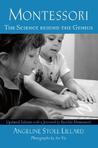
Review: Montessori: The Science Behind the Genius


Montessori: The Science Behind the Genius
Montessori: The Science Behind the Genius by Angeline Stoll Lillard

My rating: 4 of 5 stars


Lillard sets out to present the empirical evidence for the Montessori Method. Using research of Montessori directly and psychological research more generally, she explains both the Montessori theory and how the evidence supports much of what goes on in a Montessori classroom. The breadth of evidence that supports many of the key claims of Montessori is impressive and worth a serious look by anyone interested in Montessori or educational philosophy in general.

Another important aspect of the book is where Lillard points out the need for more research to support various aspects of Montessori. She is also careful to note the qualifications or limiting conditions on many of the studies. These are important both because it points out paths for future researchers, but also demonstrating Lillard’s intellectual honesty. She is clearly a Montessori supporter, but she is not dogmatic about it.

A downside here is that Lillard is often critical of traditional, mainstream education, but too often in an overly general way. She paints it with too broad of a brush and so might be seen as unfairly dismissing traditional schools and teachers. This is a point reinforced by some of my students’ responses to the book. I assigned this for my graduate class in Philosophy of Education. For the most part, they liked it and found much of it valuable and eye-opening; but a few noted her easy dismissal of traditional education and felt it unfairly characterized their own experiences. If the book was: “Why Montessori is better than traditional schools” then this would be a significant failing. But Lillard is not writing this book to criticize mainstream education but to show how research supports Montessori. So the fact that she falls short in fairly dealing with traditional education is not damning for the overall quality and importance of this book.


View all my reviews

Tuesday, December 03, 2013

CFA: Steve Jobs and Philosophy (Popular Culture and Philosophy Series)

CFA: Steve Jobs and Philosophy (Popular Culture and Philosophy Series)
Edited by Shawn E. Klein

  • Papers must focus on topics or ideas that are significantly connected to the life, work, and/or cultural impact of Steve Jobs. 
  • Submit abstracts of no more than 300 words to: sklein@rockford.edu 
  • Direct any questions about possible topics to: sklein@rockford.edu 
  • Abstracts due: On-Going
  • Notification of accepted abstracts: On-Going
  • Completed paper due: May 9, 2014
  • 3,000-word philosophy papers written in a conversational style for a lay audience 

 Any relevant topic considered, but here are some possibilities:

  • Jobs’ leadership style and ethical considerations raised by it: the virtues of leadership and how these were (or were not) exemplified by Jobs.
  • Epistemological issues of creativity (related to how Jobs sought to inspire and cultivate creativity and innovation at Apple, NeXT, and Pixar)
  • Epistemological and ethical issues in being a “visionary”; the effects of the so-called “Reality Distortion Field” 
  • The ethical, social, or corporate importance of creativity 
  • Epistemological issues in intuitionism and its role in Jobs’ thinking. 
  • Perfectionism: virtue or vice? 
  • Technology and aesthetics (Form and function) 
  • The originator vs. the integrator/popularizer. (e.g. Apple didn't invent the GUI or point and click, but integrated them with other systems and made them popular) 
  • Philosophical lessons learned by failure and success (from the Newton to the Iphone; Jobs getting pushed out and then returning to lead Apple) 
  • Buddhism and its role in Jobs’ life and career. 
  • The juxtaposition of Jobs’ counter-culture attitude and his capitalistic success. 
  • The virtue (or vice) of pride: moral ambitiousness or hubris? 
  • Steve Jobs vs Bill Gates/Apple vs Microsoft
  • Jobs on philanthropy 
  • Jobs’ political philosophy/outlook
  • Company creating and building as a moral enterprise.

 Steve Jobs and Philosophy will be a book in Open Court Publishing Company’s Popular Culture and Philosophy Series: http://www.opencourtbooks.com/categories/pcp.htm. Submit ideas for possible future PCP books to the series editor, George A. Reisch, at pcpideas@caruspub.com.