Wednesday, February 07, 2018

Review: My Promised Land: The Triumph and Tragedy of Israel

My Promised Land: The Triumph and Tragedy of Israel My Promised Land: The Triumph and Tragedy of Israel by Ari Shavit
My rating: 5 of 5 stars

There are many hard truths in this book; things that cannot and should not be ignored. I don’t always agree with Shavit’s conclusions about how to deal with these truths or what they mean in the bigger picture but I think it is important that they be faced. These sometimes myth-busting, sometimes disturbing stories pose deep challenges to those who, like me, grew up on the standard Jewish-American discourse about Israel. That is not to say it is revisionist or offering a history that was previously unknown. But what Shavit is able to do is put a human face on all sides of the history of Israel. This makes it harder, for example, to downplay or dismiss a tragedy as just an unfortunate consequence of a war. It makes the tragedy personal and thus much more real to the reader. (That said, this very poignancy can also distort one’s thinking about the issues by pulling too much at the personal—this is a paradox of thinking about these kinds of issues. You can’t ignore the personal for the sake of a comprehensive, principled account, but bringing in the personal has a way of putting too much on weight on the personal stories at the expense of objectivity.)

Shavit’s journey through the history, demography, and geography of Israel is deeply personal. It is not a detailed work of history or policy analysis. Shavit selects certain points of history and certain individuals and tells us their story. In many ways it is, necessarily, incomplete and piecemeal. What ties the book together is the way that Shavit brings these threads together to form his vision of the past and potential future of Israel.

Shavit seems to be writing this book to answer questions about Israel: Why was Israel necessary? How did it get built? What impact did this have on the people in Israel (Arab and Jewish alike)? How has Israel survived and flourished? How has Israel (and Israelis) changed over decades of its existence? What explains these changes? What do these changes and the forces behind these changes mean for the future?

I don’t think one walks away from this book with definitive answers to any of these questions. One gets a sense of Shavit’s answers—but given the personal nature of the book these are not offered as _the_ answers and Shavit doesn’t present us with arguments to justify these answers. But the necessity of raising these questions and thinking about them is what makes this book important.


View all my reviews

Thursday, January 04, 2018

Review: Winner Takes All

Winner Takes All Winner Takes All by Robert Bidinotto
My rating: 4 of 5 stars

The third in what is now a trilogy, Winner Takes All, deals with questions about justice and revenge through an exciting and compelling story. While I enjoyed the novel, I think I preferred the first two better. The story meanders a bit in the beginning as Bidinotto sets the pieces. The plot is more wide-ranging, with more players and elements, so he needs to do this. But it took me a bit to get into it. Personally, I found the subplot of the relationship between Annie and Dylan to be at times distracting. The relationship is important; it humanizes and grounds Dylan. But their interactions were often just a bit too on the nose for my taste.

Nevertheless, the second half of the book cooks as Dylan unwinds what is going on and figures out how to stop it. Dylan is a bad-ass; part Batman, part Jack Bauer, part Jason Bourne. Fans of this genre (Child, Silva, Thor, Flynn, Baldacci) will like it.

From the intellectual side, Bidinotto works his idea of the master narrative into the plot. It drives the motivations and decisions of both the good and bad guys in the novel. The protagonists struggle explicitly with the apparent conflicts of integrity, justice, morality, and the law in a corrupt world. It is important for how the characters individually resolve or deal with these conflicts to understand how they see themselves and how they see the world: their master narrative.


View all my reviews

Tuesday, December 26, 2017

Review: Spencer & Locke

Spencer & Locke Spencer & Locke by David Pepose
My rating: 5 of 5 stars

This graphic novel blew my mind. I adore Calvin And Hobbes. Easily my favorite all time comic strip; it is not even close. Watterson's strip was beautiful, poignant, and brilliant.

But imagine the darker timeline. What if Calvin's world was not a loving, middle-class upbringing? What would Calvin have been like? And what if he became a cop and still had Hobbes around? That's what you get in this amazingly creative noir graphic novel.

You don't need to been as big a C&H fan as I am to appreciate what the authors have done in their retelling and re-conceptualization of C&H. It certainly helps to get some of the background, but it's an intriguing story on its own.


View all my reviews

Review: The Name of the Wind

The Name of the Wind The Name of the Wind by Patrick Rothfuss
My rating: 5 of 5 stars

This a great book. It's a refreshing fantasy story; exciting and well-written. The characters are interesting and the story new. While there are elements/motifs from other fantasy novels (be it Lord of the Rings or Harry Potter), Rothfuss isn't rehashing these. There is magic and there are dragons and demons. There is a boy turning into a man while at school where he is an outsider and causing all kinds of trouble. But Rothfuss creates a new tale out of these many of these classic elements. The world creation is subtle but deep. There is mystery and intrigue in the story Rothfuss tells us. And he shows us this world in a beautiful and detailed way (without ever being pretentious). Highly recommend it to anyone who loves the fantasy genre.

View all my reviews

Thursday, November 23, 2017

Review: Mojave Crossing

Mojave Crossing Mojave Crossing by Louis L'Amour
My rating: 4 of 5 stars

The Sackett novels are such fun. L'Amour is wonderful at depicting the southwest: its beauty, its danger, its allure. They do get a little formulaic at times, but L'Amour is such a master it doesn't matter.

View all my reviews

Saturday, November 18, 2017

Review: State of the Union

State of the Union State of the Union by Brad Thor
My rating: 3 of 5 stars

Thor writes a fun, entertaining thriller. But it's boiler-plate, formulaic. Harvath is no different than any other character in this genre. There is little character development, growth, or exploration. The plot is straight-forward--even if somewhat preposterous. It's basically the standard-issue, indistinguishable summer action flick but on the page.

View all my reviews

Thursday, November 02, 2017

Review: Democracy and Political Ignorance

Democracy and Political Ignorance Democracy and Political Ignorance by Ilya Somin
My rating: 5 of 5 stars

In many ways, this is a frightening book. Somin goes into careful detail on the arguments and evidence for widespread and persistent political ignorance. Then he discusses the harm such ignorance has on policy and good governance. And then he shows that most solutions are likely to fail to significantly reduce the problem. Some of the solutions discussed wouldn’t likely work even if they were feasible or likely to be implemented. Many of the other solutions—including Somin’s own suggestion: limiting the scope and power of government—suffer from the paradox that to implement them means first overcoming the problem of political ignorance.

Thought there is some technical detail; Somin has an exceptionally clear style. He’s careful and thorough in his research, and makes great effort to be balanced and intellectually honest.

The case Somin makes for limiting the scope (what government can do) and power (decentralizing power) of government is persuasive – though I am predisposed towards his conclusions to start with. Nevertheless, Somin’s discussion of the contrasting efficacy between ballot voting and voting with one’s feet does a lot to make a relatively ideologically neutral argument for limiting the power and scope of government.

There is one persistent sticking point for me. So the long-standing evidence shows that most voters lack political knowledge. This is explained by the theory of rational ignorance: where since (1) gaining more political knowledge takes resources (time, effort) and (2) any individual vote has almost no chance of having an impact (no payoff), it is rational to remain ignorant: there is no payoff for the resources invested. A potential problem here is that one thing that voters are ignorant of is (2). Most voters think their vote matters and has an important impact (and this why they vote). So it seems that by their own standards, they should be investing the resources to gain more political knowledge. But they don’t. This makes it seem that their ignorance is not, by their own lights, rational. Maybe the literature on rational ignorance has an answer to this, but the ones I’ve come across don’t seem to explain it to my satisfaction. Somin’s response seems to be that this falls into a sort of sweet spot: voters overestimate their impact (so they go to vote) but not enough to give them an incentive to get more political knowledge. This may be the case, but I still don’t find it satisfying. It might explain the paradox of voting, but I’m not sure it explains the apparent irrationality of thinking your vote has an impact while remaining ignorant.

This is an important book that any one interested in social knowledge, political philosophy, or political science ought to read.

View all my reviews

Monday, October 09, 2017

Review: One False Move

One False Move One False Move by Harlan Coben
My rating: 5 of 5 stars

I enjoy the Bolitar series. Coben has created an interesting set of characters. They are not all original or novel for the genre, but the admixture is unique and works well.

This installment was very good. The set up and mystery were well crafted. And we get some character growth and development with Myron, Win, and Esperanza. The ending was even a bit of surprise.

The only thing that bothered me was how dated it felt. It was only published 1998 but it feels like an alien world. Every time one of the character said "cellular phone" I cringed a little. Myron even uses microfiche machine to search newspapers. Microfiche! Might as well be talking about gramophones and talkies. Obviously this is not Coben's fault but it's somewhat weird that a book not even 20 years old could feel so out of date technology-wise. This doesn't bother me as much with novels from the 70s or novels that are intentional set in another time. I think it stands out here because these books are contemporary.

View all my reviews

Review: Words on the Move: Why English Won't - And Can't - Sit Still

Words on the Move: Why English Won't - And Can't - Sit Still Words on the Move: Why English Won't - And Can't - Sit Still by John McWhorter
My rating: 5 of 5 stars

McWhorter's approach to language and linguistics is refreshing and enlightening. As a trade book, I am sure the ruffles and edges of more scholarly approaches are smoothed out, but McWhorter does a good job of making it simple without being simplistic.

In this work, McWhorter discusses how languages are constantly adapting and changing. He explains how the ceaseless shifts in sounds, usages, and meanings change the language and our understanding of it.

For the purists out there (and I have a lot of sympathy for this group) some of what McWhorter says might not fit comfortably. He makes, however, a persuasive case for his point of view and he is frank about the counterarguments.

Most of all, McWhorter is funny and engaging, a pleasure to read regardless (or irregardless) of your agreement with his view.

View all my reviews

Review: Words on the Move: Why English Won't - And Can't - Sit Still

Words on the Move: Why English Won't - And Can't - Sit Still Words on the Move: Why English Won't - And Can't - Sit Still by John McWhorter
My rating: 0 of 5 stars

McWhorter's approach to language and linguistics is refreshing and enlightening. As a trade book, I am sure the ruffles and edges of more scholarly approaches are smoothed out, but McWhorter does a good job of making it simple without being simplistic.

In this work, McWhorter discusses how languages are constantly adapting and changing. He explains how the ceaseless shifts in sounds, usages, and meanings change the language and our understanding of it.

For the purists out there (and I have a lot of sympathy for this group) some of what McWhorter says might not fit comfortably. He makes, however, a persuasive case for his point of view and he is frank about the counterarguments.

Most of all, McWhorter is funny and engaging, a pleasure to read regardless (or irregardless) of your agreement with his view.

View all my reviews

Saturday, September 16, 2017

Review: Empire's End

Empire's End Empire's End by Chuck Wendig
My rating: 5 of 5 stars

In this conclusion to the Aftermath trilogy, we see the story lines of the main characters get wrapped up. [Spoiler Warning: some of what I write might be spoiler-ish]
.
.
.
Overall, I liked the book and the trilogy. It introduces some great characters into the Star Wars universe while also staying grounded in the Star Wars with which many are most familiar. The story is put together well and it authentically feels like Star Wars (with one exception) That said, I didn’t love the ending. I’m not sure why, maybe it just felt a little anti-climatic. Don’t get me wrong, there is a definitely an exciting climax and it is handled well. But I was expecting something more with Rax and Jakku. The set up for whatever is coming next is there and that’s good. So maybe I’m just being picky, but emotionally there was something of a minor let down.

The one exception to the authentic feel was Han Solo. Maybe because Han is my favorite character, the Han character here just didn’t seem right. It seemed more like someone else playing Han.

The foreshadowing for the new trilogy movies is there—especially for Kylo Ren. I’m sure there were some hints about Rey (Especially since it takes place a lot on Jakku) and Finn, but if there were, I missed them.

I don’t think we’ll see movies of this trilogy, but I do hope they pick up Sloan’s story in some way.

View all my reviews

Review: Vanishing Act

Vanishing Act Vanishing Act by Thomas Perry
My rating: 5 of 5 stars

A compelling thriller that takes you through northern New York, Canada, and LA; from big cities to deep into the mountain and lakes of northern New York. It is not unpredictable, but the how and the particulars are gripping. Whether driving, running, or flying, the story never sits still. The protagonist is refreshing. She is capable, smart, and tough. Her Native American heritage adds a layer of depth and complexity to both her character and the story. Definitely a series worth checking out.

View all my reviews

Tuesday, August 29, 2017

Review: Ready Player One

Ready Player One Ready Player One by Ernest Cline
My rating: 5 of 5 stars

For a child of the eighties, this book is chock full of nostalgia. As fun as that is, the novel is much more than that. It's not necessarily particularly original, but the way Cline puts the parts together is creative and entertaining. He creates a believable dystopic future that doesn't feel that far off. There are some good twists in the plot that keep it from becoming too predictable or simplistic. The main characters are relatable and interesting, but not all that complex and don't grow or develop much. This is one of its weaknesses. Another weakness is that it ends up being a bit too heavy on the theme of OASIS as too escapist. That's part of the characters' stories, and that's fine. But there is a lot of value that is being created in this VR world too. The characters recognize this, but it gets a little undermined by the escapism theme at times. I would have also liked a little more world building in OASIS--if only to experience it more.

It's not a novel that likely will be a classic sci-fi; but it is great fun to read.

View all my reviews

Friday, August 25, 2017

Review: Play Matters

Play Matters Play Matters by Miguel Sicart
My rating: 3 of 5 stars

The account of play in Play Matters is quite interesting, though too unsystematic and too rooted in postmodern ideas. The account also suffers somewhat from “Huizinga-Syndrome”— that is, finding “play under nearly every rock in the social landscape” (Suits, “Words on Play”). One of the central aspects of Sicart’s account is that play is appropriative: it takes over other parts of our lives and experiences. This tends to assimilate everything as play. Seeing play as carnivalesque, as Sicart presents it, also tends to bring too much under the concept: everything from vandalism to political activism gets swept into play.

I liked his conception of play as a way of experiencing and being in the world and that it is not mere frivolity or childish. Sicart discusses play as a way of expressing and experience ourselves in the world. It is a way of seeing the world and a way of relating to the things and people around us. In these ways, play can, importantly, be productive of certain kinds of values, experiences, and community.

Another really interesting part of the book is Sicart’s distinction between play and playfulness. Playfulness is the application of aspects of play to contexts that are not play. So one might be playful in a book review or wedding ceremony without subverting the actual ends of those activities and subsuming them into play itself. Play as such has a logic all its own and wouldn’t be appropriate for all contexts. But one could still be playful in those contexts. Some of my criticism of his Huizinga-Syndrome might be resolved if instead of seeing all the things he presents as play, these are just a certain kind of playfulness.

The first two chapters, where Sicart discusses his account of play and then playfulness, are the most philosophically worthwhile parts of the book. As Sicart extends his account into other areas, the postmodern roots show themselves more and the philosophical content dips. The discussion becomes overly broad, ambiguous, and sweeping as postmodern influenced writing characteristically gets. But, then, maybe Sicart is just being playful.


View all my reviews

Tuesday, August 08, 2017

Review: Lando

Lando Lando by Louis L'Amour
My rating: 5 of 5 stars

Like the other Sacketts, this book combines beautiful, lovingly described landscapes with the grittiness of life on the trail and in the rugged west. Orlando himself is something of a different kind of Sackett: he carries on the traditional Sackett virtues, but largely comes to adulthood on his own. His father is not around and he has no brothers. There is a lot of action from gun battles to fisttocuffs to races. And the book ranges from the mountains of Tennessee to Texas and also to the Gulf in Mexico. It's great fun.

View all my reviews

Tuesday, August 01, 2017

Review: The Three Languages of Politics: Talking Across the Political Divides

The Three Languages of Politics: Talking Across the Political Divides The Three Languages of Politics: Talking Across the Political Divides by Arnold Kling
My rating: 5 of 5 stars

In this short book (essay really), Kling presents a structure to help you understand the nature of political discussions. We are always talking past each other, misunderstanding and misconstruing each other. Kling shows us that this is because we are in many ways speaking different languages. Kling calls these axes: Conservatives tend to speak in a barbarian/civilization axis; Progressives in a oppressor/oppressed axis, and Libertarians in a coercion/liberty axis. These axis tend to frame the way members of these political tribes look at and describe the world.

So, for example, a libertarian tends to view political discussions and topics as existing on an axis from coercion (bad) to liberty (good). So when libertarians talk about politics, they frame it in those terms. Meanwhile, a progressive looks at thinks in terms of oppression (bad) and liberating/supporting the oppressed (good) and frame things in those terms. But since these categories are not picking out the same sets, we don't understand each other when one side says some policy is good. (e.g. "It's a good policy because it is meant to help poor workers." But "That can't be good its coercive".) And so the discussion goes nowhere; each side frustrated by the apparent obstinance or stupidity of the other side.

Kling discusses why we tend to fall into these tribes and axes as well as the pernicious affect these have on rational, truth seeking discussions. In part, due to this framing, we tend to see the other tribes as evil and irrational hellbent on destroying our deepest values. These other tribes are either stupid or conniving, manipulative conspirators. If they were smart or honest, they would, of course, recognize the truth and agree with one's own tribe. But, of course, the other tribes say the same about you and your tribe.

The ultimate take away, and Kling's hope, is that by being more aware of your own axis and language, as well as the other axes and languages, you can be less susceptible to your own biases and less likely to be dismissive of those with you disagree. You can better understand why they are wrong (and if they are wrong) when you don't just dismiss them as stupid or irrational. You will be better able and open to discover problems or weaknesses in your view as well. This might actually lead to more fruitful and reasonable political discussions.

It's a quick read, concisely and clearly written. It's nothing ground breaking, Kling is building on the work of many others (and he has a nice appendix that discusses the work he is building on.) But it is definitely worth reading for anyone frustrated by the seemingly lack of actual or reasonable discussion in politics.

View all my reviews

Friday, July 28, 2017

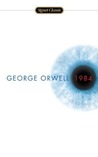
Review: 1984

1984 1984 by George Orwell
My rating: 5 of 5 stars

This is one of the saddest books I’ve ever read. Okay, I didn’t openly weep like I did in Where the Red Fern Grows , but it made me very sad. Does one need spoiler alerts for a nearly 70-year-old book? Just in case…spoilers ahead.


Winston’s welcomed acceptance and outright love of his defeat is what is so sad. In the end, he utterly betrays himself and all his values – and is glad to do so. If he was just defeated, it would be merely tragic; the hero fallen. In mere defeat, there can at least be a kind of grace or honor of having fought the good fight. But his almost ecstatic joy at being finally and fully defeated makes it so much worse. There is no dignity, no hope, no self, no human being left. And, of course, that’s the point.

Orwell’s insight into the psychology of totalitarian control as well as the motivations of those in control and those subjugated goes deep. O’Brien and Winston’s conversations in the last third of the book are worth much reflection.

1984 is heralded as a prescient and cautionary book about the dangers of the surveillance state. And it is, and the surveillance state is a real concern. However, I think most miss the real and more important warning of 1984: the dangers of the renunciation of individualism and reason. As much as Orwell was a socialist, he decried the evils of collectivism in much of his work (never mind how he squares the circle of an individualistic socialism—doublethink?). He was a fierce and early critic of both the Soviets and the Nazis: recognizing that the danger they posed was the same: collectivism. Both devoured the individual and subjected the mind to the state. Reason was their greatest enemy; hence the constant resort to violence, often random. This was not merely to get rid of explicit enemies, but to stultify the reasoning mind. 1984 takes these “ideals” to their full logical consequence. It is terrifying and depressing: it is a book without hope. And that’s what makes it so sad.


View all my reviews

Wednesday, July 26, 2017

Review: House of Spies

House of Spies House of Spies by Daniel Silva
My rating: 5 of 5 stars

This picks up the story from The Black Widow, but it has a very different feel and tone. Silva was certainly having fun with this one: the settings are more exotic: from Saint-Tropez in Southern France to the edges of the Sahara desert in Morocco; from London to Casablanca. Whereas The Black Widow was intriguing and thrilling because it takes us into heart and mind of ISIS, The House of Spies is intriguing and thrilling because of the glamour and glitz of the long con that Gabriel and his team are engaged into to catch Saladin. It has all the elements that make Gabriel Allon such a great series: the characters we fans love are all here doing their thing.


View all my reviews

Wednesday, July 12, 2017

Review: How You Play the Game: A Philosopher Plays Minecraft

How You Play the Game: A Philosopher Plays Minecraft How You Play the Game: A Philosopher Plays Minecraft by Charlie Huenemann
My rating: 3 of 5 stars

As both a father of die-hard Minecrafter and a player myself, there was much to enjoy about this little book. It was at its best when Huenemann used Steve’s perspective to explore some of the philosophic ideas and questions inherent in the game and in playing it. Steve, as a narrator in the book, engages in his own philosophic musings and meditations much like a Minecraftian Descartes. It was in these passages that book was the most intriguing and innovating; giving a new perspective on the game. The book was weaker (note: not bad, just less interesting for me) when Huenemann takes over the narration. Partly this is because of my own training as a philosopher. It’s less novel for me when he draws out, for the example, the Humean ideas in Steve’s musing. I think for a non-philosopher interested in learning more about philosophy these parts might be helpful and interesting. But for me, they were kind of old hat. I wanted more of Socratic Steve.

It’s a quick, fun read. It raises some interesting questions and does a nice job of covering many of the traditional and conventional questions and thinkers in philosophy. It could even be a nice supplement to an intro course.


View all my reviews

Sunday, July 09, 2017

Review: Killer Instinct

Killer Instinct Killer Instinct by Zoë Sharp
My rating: 5 of 5 stars

I found a new series! Zoe Sharp's Charlie Fox is smart and tough. She is a throwback to classic protagonists of the genre. She's got a sharp tongue, kicks butt, and solves the crime without much help from the police. She is self-contained and competent without being superheroish.

Sharp weaves a thrill ride of story--though a bit gruesome at times. It isn't all that unpredictable, but there are enough twists and turns to keep you on your toes. I enjoy her style and the way she uses the language. She took cliches and made them fresh. There is a lot of British slang that add to the tone and setting. I could almost hear the text in British accent.

Definitely recommend this for fans of the genre and the likes of Lee Child, Robert Parker, etc.,

View all my reviews

Wednesday, July 05, 2017

Review: The Black Widow

The Black Widow The Black Widow by Daniel Silva
My rating: 5 of 5 stars

Silva is at his disturbing and prescient best here. Allon is preparing to take over the Office but first he has to send an agent to infiltrate ISIS and prevent a major attack. Allon and his team (with an interesting new member) are back in action from Syria and Iraq to Paris and Washington. I don’t want to give away any spoilers, so I won’t say more. Although I will say that I am thankful (and hopeful) that ISIS is not as capable as Silva presents them here.

Given the way this ended, the story line in Black Widow continues into the next one. I can’t wait for the next volume (out this summer).


View all my reviews

Saturday, July 01, 2017

Review: John Adams

John Adams John Adams by David McCullough
My rating: 4 of 5 stars

I’m in the minority here, I know, but I was quite underwhelmed by McCullough’s biography of John Adams. Now maybe it was the audio version, but I had trouble getting through it. I’ve listened to Washington, Jefferson, and Hamilton biographies and they all captured the spirit, intensity, and drama of the age far more than McCullough’s book. McCullough seemed much more intent on capturing the daily ebb and flow of Adams’ day-to-day life. There were tedious sections of back and forth correspondence, filled with the likes of the minutiae of his daily walks or the shopping necessary to outfit the house in France. Some of this is to good end: his relationship with Abigail, for example, comes out in their correspondence quite clearly.

When McCullough does get to the more historical elements, the book picks up pace and can be quite good. McCullough shows the reader the tremendously important impact that Adams had on the birth of this nation: his role in the early revolution, the drafting of the Declaration, the securing of financing for the revolution, and his presidency (which was not nearly as successful as the former items).

McCullough does a good job of balancing the pros and cons of Adams’ character. His pride and vanity is clear as day, but so too is his honesty and integrity. He could be overbearing and pedantic, but he is a man of deep principle and commitment to the liberty of the republic and it citizens.

One of the interesting things about reading the biographies of the Founders is getting the different points of view of the other Founders. In McCullough’s Adams, the main antagonist, so to speak, is Jefferson. Jefferson comes off, as he does in other places, as incredibly intelligent but hypocritical. His relationship with Adams is complex and helps to draw out the character of each man. Hamilton makes some brief appearances and predictably is dismissed as a dangerous power-hunger intriguer. Washington is distant: his presence is felt, but he doesn’t seem to be much of a direct player here.

Adams is an important figure who helped shape his age and ours, largely for the better. It is worth knowing more about him and I’m glad I slogged my way through until the end. McCullough’s style might be more suited to the eye than the eye, so this might have been a book I should have read, rather than listened to.


View all my reviews

Sunday, June 25, 2017

Review: The Dark Wind

The Dark Wind The Dark Wind by Tony Hillerman
My rating: 5 of 5 stars

Everything that fans of Hillerman would want: Beautiful descriptions of the Arizona and New Mexico landscape; the intrigue of mystery; and the intricacies of Navajo and Hopi traditions. Hillerman's books show us how the world looks through, at least in this case, Jimmy Chee's eyes. I love Chee's curiosity about the world and his need to find the pattern and reason behind the happenings of the world.

View all my reviews

Sunday, June 18, 2017

Review: Like Dreamers: The Paratroopers Who Reunited Jerusalem in the Six-Day War, and the Divided Israel They Created

Like Dreamers: The Paratroopers Who Reunited Jerusalem in the Six-Day War, and the Divided Israel They Created Like Dreamers: The Paratroopers Who Reunited Jerusalem in the Six-Day War, and the Divided Israel They Created by Yossi Klein Halevi
My rating: 5 of 5 stars

Like Dreamers is not a definitive history of the Six Day War, of Israel, or the Arab-Israeli conflicts, but instead is a deeply personal exploration of the lives of individuals connected by this history. It is a wonderful book, worth reading by anyone interested in Israel and connected topics.

This is one of the several things I liked about how Halevi tells this story. While the major, famous names: Ben-Gurion, Rabin, Sharon, Begin, etc., are part of it, they are never the focus, never the movers of the story. The focus is always on the lives of the paratroopers. This gives it the feel of bottom-up history, rather than a history of ‘great men.’ And that provides a more authentic and personal connection to the events and lives of those affected by the events.

The narrative is at once exhilarating, aspirational, sad, poignant, funny, and thought-provoking. The first half tracks the lives of several of the individuals of the paratrooper brigade that helped to capture Jerusalem during the Six Day War. From their childhood to the 67 war, the narrative builds towards the capture and reunification of Jerusalem. This is presented as the apex of Israeli unity. The jubilation, the exhilaration, the joy of the moment: the overnight shift from facing annihilation to redeeming the 2,000-year-old dream of Jewish history.

The second half of the book, though, walks through how this vision of unity quickly fades—both between these individuals and within the nation. In this way, the author captures the diverse and divergent visions of the Israeli left and right, the Peace Now-ers and Greater Israel-ers, the kibbtuzniks and the settlers, the secular and the religious. And by focusing on particular individuals, Halevi shows how these divisions and categories break down and intertwine. Individuals—and their nations—are far more complex and complicated then a set of abstract ideological views. By showing us, through the lives of individuals, how their ideas and views developed, changed, and morphed in the face of a changing world, it gives a depth and humanity to the competing narratives of Israel (within Israel). It shows an abounding respect for these different ways to be Israeli, to be Zionist, to be Jewish.


View all my reviews

Tuesday, May 30, 2017

New Podcast: Examined Sport

My old Sports Ethics Show podcast has been on hiatus for far too long. Instead of just starting that back up again, I am relaunching it with a new name, Examined Sport, and a new concept.

The concept is ten to fifteen minute podcasts that focus on arguments or concepts from the philosophy of sport and analyze or explain them in simple and direct ways. I will look at classic, discipline-defining articles, exciting newly published works, and dig deep to rediscover important but not as well-known papers.

 Examined Sport mission:
  1. Extend the reach of the philosophy of sport literature.
  2. Be a resource for students to learn more about philosophy of sport.
  3. Highlight essential themes of the literature.
  4. Rediscover important and interesting papers.
  5. Spur new thought and research in the philosophy of sport.
The first episode is, logically, on Bernard Suits classic article: “What is a Game?”

You can subscribe to the podcast on iTunes.
You can also watch each episode on The Sports Ethicist YouTube channel. (Archives of the old show are also available on iTunes and YouTube.)

Review: Aftermath: Life Debt

Aftermath: Life Debt Aftermath: Life Debt by Chuck Wendig
My rating: 5 of 5 stars

It took me a little bit longer to get into Life Debt than Aftermath, but by the half way point the book gets cooking. I know many people were critical of Aftermath and praised Life Debt more, but I liked Aftermath a lot. I also like Life Debt. There's more Han and Chewie, enough said. Admiral Sloane is a really interesting character and I'm curious to see what happens with her.

The first two books feel very much like a Star Wars story; Wendig does a great job of capturing the feel and the characters. It has to be daunting to write characters we know so well, like Han or Leia, but he does a believable job of portraying them. And the new characters he develops are quite good: Sinjir, Jas, and Mr. Bones are my favorites. Mr. Bones has some of the best lines: "A HUG IS LIKE VIOLENCE MADE OF LOVE" and "I ENJOY EVISCERATION."


View all my reviews

Monday, May 22, 2017

Review: Robert B. Parker's Little White Lies

Robert B. Parker's Little White Lies Robert B. Parker's Little White Lies by Ace Atkins
My rating: 4 of 5 stars

This is the first Atkins' Spenser that I was a little disappointed in. Atkins still does a good job of capturing Spenser, but the story here didn't quite come off. It meandered somewhat and engaged in a little too much nostalgia by trotting out too many characters from previous books. Individually, I like Atkins bringing this or that character back, but there were too many in this book.

That said, I like that Atkins is playing a bit with the characters and exploring them more. Spenser shows more vulnerability. Hawk is still mysterious but we get more of the contours of who he is.

View all my reviews

Friday, May 05, 2017

Review: Anansi Boys

Anansi Boys Anansi Boys by Neil Gaiman
My rating: 5 of 5 stars

The story starts a bit slow, but as the pieces start to come together, it hooks you. Gaiman uses Caribbean and African myths as a backdrop to tell a story that is ultimately about finding yourself in the world. It is about coming to grips with where you came from (your parents, your ancestry), but at the same time being you and not letting that stuff either keep you down or define who you are.

Gaiman has a knack for writing stories that blend the mundane and the fantastical. Anansi Boys is no different: the fantastical world of the myths and stories fit naturally into the life of a rather boring bookkeeper’s life. Still, as the stories are told, this mundane boring life changes, evolves into something new and compelling.

Some might not like the tidiness of the ending or the predictability of various plot-lines; but the story captures the imagination and you want to ride out what you know is coming: (1) to make sure that is indeed what will happen and (2) because you want to watch it happen.

FWIW: I haven't read American Gods (yet)

View all my reviews

Monday, April 10, 2017

Review: Against Democracy

Against Democracy Against Democracy by Jason Brennan
My rating: 5 of 5 stars

Against Democracy, as the name suggests, is a devastating critique of democracy both in terms of the efficacy of real-world democracies to provide competent government and the moral justifications for democracy (more precisely, universal suffrage as a moral right). It is at its best when it challenges and debunks our cherished assumptions about and views of democracy.

I find the book less convincing when it comes to Brennan’s proposed alternative: epistocracy. This is the rule of the knowers; or more precisely, the idea that in some way voting or governing is restricted by some kind of test of knowledge. For example, you only get to vote if you can pass an exam like the citizenship test or everyone gets a vote, but people who can pass such an exam get extra votes. Brennan briefly discusses several possible ways epistocracy might work (and there are many), but without any actual full-blown epistocracies to look at, it is hard to get a feel for just what such a system would really look like and how such a system would actually work. This is hardly Brennan’s fault; there just aren’t any real-world examples to present.

He does discuss some of the epistocratic elements already in place (e.g. Supreme Court) and this helps make things clearer. Nevertheless, I think he might have spent more time fleshing out a few of the more promising alternatives in greater detail. After all, the discussion of epistocracy proper is only one chapter (I would assume Brennan is saving this for his next book.)

Without the more fleshed out alternatives, it is harder to evaluate them and compare them to democracy (which is what Brennan wants us to do). It also makes it harder to determine whether some of the objections raised against epistocracy are answered adequately. For example, I am not sure the demographic objection is satisfactorily met. This is the concern that epistocracy would, given the current demographic realities, disenfranchise individuals that are part of already disadvantaged groups. Brennan’s response boils down to the claim that since epistocracy should yield better policies (especially for such groups, who have been ill served by democracy), these individuals will be better off under epistocracy. This might be true but it sure doesn't seem like it would convince someone deeply concerned about this issue. Of course, that doesn’t show that Brennan is wrong, but it tugs at how deep the perceived value of voting is and that at least from a rhetorical point of view more work needs to be done.

Another practical concern is that Brennan never addresses how we get there from here. What is the realistic path to adopting his vision? If democracies are as incompetent as he convincingly argues, then how do we get democracies to change and implement epistocracy (peacefully)?

Another concern I have, and this runs through a lot of Brennan’s work that I have read, is that he has way more confidence in empirical social science than I tend to think is warranted. I am not denying the value of this science or its importance in making these kinds of arguments. Nevertheless, I think more humility and caution is needed when using it. The empirical data seems to me to be more limited in terms of scope and generalizability than Brennan seems to treat it. That said, he is explicitly cautious at times, just not as much as I think he needs to be.

I am sympathetic to Brennan’s arguments against democracy and for epistocracy. But I worry that's because I am not part of the groups that are disenfranchised by Brennan's proposals: my position in society is not likely to be affected. Would someone in those groups find the view as appealing? Probably not. But, then, such people aren't reading books like these I (and maybe that’s part of the problem).

As a realistic alternative, I don’t think epistocracy will win the day anytime soon. But I think the book has important value in the present forcing us to rethink the way see democracy and by making the case that more epistocratic elements need to be added or strengthened in our republic.


View all my reviews

Sunday, April 09, 2017

Review: Sackett

Sackett Sackett by Louis L'Amour
My rating: 5 of 5 stars

This novel introduces Tell, the older brother of Orrin and Tyrel Sackett from the previous novel The Daybreakers. The story arc is similar to other Sackett stories: the wandering, the run-ins with unwise ruffians, and the beautiful woman the Sackett falls in love with. The story is great fun, if a bit formulaic. Like the other Sackett stories, L'Amour paints beautiful pictures of the Western landscape while weaving together (and sometimes creating) the idioms, tropes, and mythos of "The West."

View all my reviews

Friday, April 07, 2017

Review: Memorial Day

Memorial Day Memorial Day by Vince Flynn
My rating: 5 of 5 stars

Flynn explores a frightening possibility; one that seems all too realistic. The hero Rapp is able, of course, to thwart the attack and save the world yet again--all in thrilling fashion.

View all my reviews

Sunday, March 19, 2017

Review: Aftermath

Aftermath Aftermath by Chuck Wendig
My rating: 5 of 5 stars

This was great! It both introduces you to new aspects of the Star Wars universe but at the same time staying in the world fans of the movie will recognize. It mostly focuses on new characters, though a few of the main movie characters have cameos. I liked the structure with the interludes that focused on what was going on elsewhere in the galaxy: it gave you a feel for the whole universe here, more than just the main plot and characters. they also felt like they were setting up for future characters and events later on. It was also interesting to get the Imperials point of view as well--something you don't get in the movies. There is very little in terms of the Force and so it feels more like a straight up sci-fi novel. The characters introduced are interesting: refreshing but also fitting the forms typical of Star Wars. I can't wait to read book 2.

View all my reviews

Friday, March 10, 2017

Review: Thomas Jefferson: The Art of Power

Thomas Jefferson: The Art of Power Thomas Jefferson: The Art of Power by Jon Meacham
My rating: 4 of 5 stars

Meacham's biography and history is not bad, but it could meander a bit. He weaves in many little stories and anecdotes about aspects of Jefferson's personal, daily life that I found less interesting. I get why Meacham does this: he wants to show Jefferson as a complete human being, but I found it distracting. The book is at its best when it focuses on the more historical aspects of Jefferson's life.

While Meacham's expressed goal was not to lionize Jefferson -- and this book is not a hagiography -- there are times that I think he glosses over the more problematic, partisan, or inconsistent Jefferson to focus on the grander Jefferson. He covers the former elements, but they are down played maybe a bit too much. This might just be a factor of having recently also listened to Chernow's bio of Hamilton where Jefferson doesn't come off grand at all. Speaking of Hamilton, it was surprising how little a role Hamilton has in Meacham's biography. Adams is Jefferson's antagonist here, not Hamilton.

Edward Hermann was a fantastic reader: I could listen to him read the phone book.

View all my reviews

Monday, March 06, 2017

Review: Echo Burning

Echo Burning Echo Burning by Lee Child
My rating: 5 of 5 stars

A skillfully crafted thriller that is full of twists. It's implausible and ridiculous in the way that such thrillers are -- but that's the point and part of the charm. Reacher's reluctant heroism driven by his sense of justice and compassion for Ellie saves the day in this racist, backwater Texas town. The portraits of the different characters from Carmen to Ellie to Alice to Hack to Rusty provide the foundation for the plot and the action.


View all my reviews

Saturday, February 18, 2017

Review: The Free Market Existentialist: Capitalism without Consumerism

The Free Market Existentialist: Capitalism without Consumerism The Free Market Existentialist: Capitalism without Consumerism by William Irwin
My rating: 5 of 5 stars

William Irwin’s The Free Market Existentialist is a clear and concise exploration of the compatibility of three views not often united under one heading: existentialism, a defense of free markets, and moral anti-realism.

Irwin is explicit that he doesn’t expect existentialists to turn into limited government libertarians, nor libertarians to become existentialists. His goal is more modest: showing that there is nothing incompatible about the conjoining of these views and there might even be ways in which they fit better than other more conventional pairings. In this regard, I think Irwin achieves his goals. One might not walk away from this book a free market existentialist himself, but one will, I think, see how that’s not some crazy oxymoron either.

In terms of the existentialism, Irwin’s focus is primarily on Sartre and his work. First, Sartre is possibly the best-known existentialist and second, he was a Marxist. Irwin makes a convincing case against Sartrean Marxism and then explains how many of Sartre’s themes might be a better fit with free market capitalism. He also suggests how one’s understanding of free markets and one’s self within free markets can be improved by taking an existentialist perspective.

The last two chapters of the book focus on explaining Irwin’s vision of free markets. It is not his goal here to be exhaustive or to provide the philosophical foundations and justifications for free markets (there are footnotes directly to such sources). The vision presented is standard classical liberal/libertarian fare and I have little to quibble with here.

The part of the book I found the most wanting was the focus on moral anti-realism. Irwin describes moral anti-realism as the rejection of the view that morality exists independently of anyone’s beliefs about it. I think that is probably too broad—though that depends on what we mean by morality existing and existing independently. The meta-ethical issues about the existence of morality are complex, and I think, largely muddled. (To be clear: the issues themselves are muddled, not Irwin’s discussion). While the bridges between moral anti-realism and existentialism were easier to grasp, the relation of moral anti-realism to free markets was less persuasive—thought not without some interesting and worthwhile points.

I think the choice of title is telling. Irwin is the eponymous Free Market Existentialist; he is not providing us with an ‘ism’ to take up. There may be others who share his view (I admit to be sympathetic: I used to describe Rand’s Objectivism as Existentialism on Prozac) but, as he says in the conclusion, he’s not trying to start a new orthodoxy. It’s about starting a conversation and I think Irwin’s book does just that.


View all my reviews

Saturday, January 07, 2017

Review: Richard Stark's Parker: The Hunter

Richard Stark's Parker: The Hunter Richard Stark's Parker: The Hunter by Darwyn Cooke
My rating: 4 of 5 stars

Different and far darker than I expected--though I didn't really know what to expect. The noir artwork and themes drew me too it (and the guy at the comic book store highly recommended it). I hadn't even heard of the original novels by Richard Stark.

Parker is the protagonist - but he's certainly no hero. He does, though, have that inner code that noir protagonists have. He's a completely self-sufficient and supremely competently man. You do not want to cross this guy--as he is makes crystal clear in the course of the book. As Spenser said of Hawk: "He's not a good man, but he's good."

I haven't read many graphic novels, so I don't have much to compare this to. But the art fit the story very well. It helped set the mood and tone.

View all my reviews

Review: Live by Night

Live by Night Live by Night by Dennis Lehane
My rating: 5 of 5 stars

I had this book on my shelf for a bit but when I saw it was being made into a movie, I decided it was time to read it. It's a great book; Lehane at the top of his game. It should make a great movie.

It's precursor The Given Day was really good, but was a bit unwieldy. There were too many story lines going at once. Live by Night is much more focused on just Joe Coughlin's life. This allowed the reader to get much more inside of Joe's life than Danny's and the other characters from The Given Day. We get a much more introspective novel.

It didn't strike me until reading this how existential Lehane's novels are. All of his novels seem to be about characters thrown into a violent and absurd world, facing hard choices, trying to make the best of their lives. Nevertheless, Lehane's characters are far more constrained by their past and their environments than a Sartrean Existentialist would have them (radical freedom and all). This is evident with Coughlin as well--and in part is one of themes of the book: one's past will catch up to you and reaps its 'rewards.'

The one thing I am still not sure about is the ending. I won't spoil it, but it didn't sit quite right with me. That said, I am not sure any other ending would have been better.

View all my reviews

Monday, January 02, 2017

Defining Sport Published

I'm proud to announce the publication of my newest book: Defining Sport: Conceptions and Borderlines.

This is the first book in Lexington Books series: Studies in Philosophy of Sport. (FYI: let me know if you have an idea for a book in this series.)

More information on the book here. 

Saturday, December 17, 2016

Review: The Girl from Krakow

The Girl from Krakow The Girl from Krakow by Alex Rosenberg
My rating: 3 of 5 stars

This was a compelling and engaging book in many ways. The characters where unique—not cutouts or clichés. The story evocated many different emotions: sadness, fear, disgust, excitement, and even to a degree joy (or maybe relief is better). The look at the life in Poland, Moscow, and Germany during the war through the eyes of Jews hiding out in the open offered a different perspective on WWII.
Nevertheless, there is some aspect, some element that I didn’t like. Unfortunately, I can’t quite pin down what that is; I think, though, it has to with the integrity of the story telling. That is, there were elements of the story that the author focused on which ultimately didn’t really matter to the story. The best example of this are the sex scenes. The author got quite detailed in describing these. That in itself didn’t bother me, but it didn’t necessarily fit with the rest of the style of the book. I kept thinking there would be some reason later in the book for this detail—that it would have an impact or importance later. But it never did. There were other examples of this sort of structure as well that undermined my overall take on the book.

There was also something about the two main characters that struck a flat note. There was at times something psychologically unreal about them.

I am not sure I can quite recommend the book; though I think it touches on important questions. In particular, the question that survivors of any tragedy face: why did I survive? It’s not a bad book; but it could have much better.


View all my reviews

Saturday, October 22, 2016

Review: The Coffee Trader

The Coffee Trader The Coffee Trader by David Liss
My rating: 3 of 5 stars

While I enjoyed the book, I wanted more from it. This was not as tightly written as the other Liss novels I've read. It took a little bit to get going, in part because of the convoluted plot. Looking back, Liss was trying to throw you off the scent of the different machinations and schemes, but in the sequence of reading, it was more meandering than I would have liked. I also wanted more of the transition of the Sephardic Jews from Portugal into the Amsterdam culture.

I liked Miguel and Hannah got more interesting as the book went along. Alferonda is intriguing. But the other characters where a bit too much of a caricature. And I didn't think the book did sufficient justice to the internal governance of the Jewish community or to the economics of the commodity market. Not that the portrayal was wrong as such, but it seemed simplistic and myopic. The Jewish community leaders were paranoid mini-despots. And there was no sense of the importance and value created by the market and the exchange--it was all just speculative paper pushing and inherently deceptive. Everyone in the book is marred by some kind of deceit or betrayal. The protagonists either had good motives in their deceit or did their betraying by accident, to be sure, but no one was truly heroic.

This sounds like a harsh review, but in the end, I found myself enjoying the book. It picked up towards the end as the schemes of the characters started to come to fruition. And, as a lover of coffee, it was interesting to read the characters first responses to this strange new drink.

View all my reviews

Tuesday, September 20, 2016

Review: People of Darkness

People of Darkness People of Darkness by Tony Hillerman
My rating: 5 of 5 stars

Jimmy Chee and Joe Leaphorn are both great characters but are also quite different. Leaphorn seems more at home or comfortable in the white man's world, while Chee's bewilderment and curiosity gives the story a tone that it is different. Chee is not uncomfortable in the white man's world, but it is more foreign to him than it seems to Leaphorn and so through his eyes one gets a novel look at the familiar. The plot is standard mystery fare. Hillerman does his usual good job of balancing the keeping of the mystery plot going with the beautiful descriptions of the landscapes of New Mexico and the Navajo Reservation and the integration of Navajo traditions and customs.

View all my reviews

Wednesday, September 07, 2016

Review: The Willpower Instinct: How Self-Control Works, Why It Matters, and What You Can Do to Get More of It

The Willpower Instinct: How Self-Control Works, Why It Matters, and What You Can Do to Get More of It The Willpower Instinct: How Self-Control Works, Why It Matters, and What You Can Do to Get More of It by Kelly McGonigal
My rating: 5 of 5 stars

I first came across Kelly McGonigal through a TED video where she explained how to make stress a positive force, rather than the dangerous negative force it usual is. In that talk, she discusses how things like mindfulness and acceptance can help channel stress into healthier channels. I found the research she discussed intriguing and some of the suggestions helpful. So when I decided to read her book, I was hoping for a similar outcome. And I was rewarded.

I don’t think, for the most part, that I have serious willpower issues. But I am interested in the psychology and neuroscience of self-control, as well as how to improve our mental practices to lead happier lives. So while this book can be a self-help guide for someone struggling with their willpower in terms of quitting smoking, dieting, or watching too much TV, it also discusses some of the research behind the methods that might work best at helping people with those issues. She has many practical, DIY sections in each chapter to help you apply the concepts to your own life. It’s not too ‘science-heavy’ in terms of the studies, indeed I would have liked more on that, but she does summarize and discuss the major work on self-control, willpower, and behavior change.

I did find myself making use of the ideas in my regular life. For example, I was setting up an assignment for my students on my school’s online course management system. There is an option that you can run the students’ papers through a software program that checks for plagiarism. If you select this option, the students are warned that their assignments will be run through this anti-plagiarism program. As I was thinking about whether to make use of this, I recalled McGonigal’s discussion of how the perception that many others are cheating tends to increase the chances that you will cheat. I wondered if the advertised use of this anti-plagiarism software sent the signal to the students that many students are cheating (after all, that’s why we need software to find it, right?) and so actually have the perverse effect of increasing the chances that a student will cheat. Now, I don’t know if that’s true, but I decided against using the software and will instead rely on my well-honed skills of ferreting out cheating.

I recommend this book for those interested in an intelligent laymen discussion of the psychology and science of self-control and willpower or those looking for some practical tips on to improve their own self-control. That said, the book could have been a little shorter; it felt a bit stretched out to me. McGonigal has quick-paced, casual style with many funny and interesting anecdotes that give life to the science she is discussing.


View all my reviews

Monday, September 05, 2016

Review: The English Spy

The English Spy The English Spy by Daniel Silva
My rating: 5 of 5 stars

This is one of my favorite Allon books. The pairing of Keller and Allon works really well, though I did miss the rest of Allon’s team. The integration of the plot with previous story lines was well done and sets, I presume, the stage for later books.

Now that I’m almost caught up with series, it is fun to see how Silva captures and uses contemporary events and news stories. I don’t imagine Silva sells well in Moscow.

As much as I enjoyed the book, the plot, and the characters, I would like to see Allon operate, for lack of a better way of putting the point, more in an Israeli context. The European theater is interesting, but you can get that from other series. One of the special aspects of Allon is that he is Israeli and Jewish, and I think Silva should take advantage of that more. The next stage of Allon’s adventures--personally and professionally--should be interesting!


View all my reviews

Monday, August 22, 2016

Review: An Elephant for Aristotle

An Elephant for Aristotle An Elephant for Aristotle by L. Sprague de Camp
My rating: 5 of 5 stars

Any one who has an interest in ancient civilizations and/or philosophy will like this book. You start with Alexanders' army in India, travel through the ancient near east and end up in Ancient Greece. Along the way, the descriptions of the different landscapes and cultures are worth the read alone--but the real value is that the interactions and discussions between the characters makes real the particularities of the cultural differences and at the same time the universality of the human condition.

Aristotle's role comes, understandably, late in the book. I didn't care that much for de Camp's portrayal of him. He seemed too snotty and elitist, but then maybe that is a more accurate presentation than my imagined over-idealized Aristotle. Mainly, I thought de Camp made too much of philosophers, Aristotle included, being out of touch with real life. Second, he made too much of Aristotle's pro-slavery arguments. No doubt these are accurate, but it just came up too often. This is, however, likely due to the theme of the universality of human nature and the interaction of the Greeks, Persians, and Indians.

As in any such work of this kind, there were anachronisms and too much license taken here and there but that said, de Camp does a good job of staying faithful to the ways of the ancient Near East--at least as far as I could tell.

View all my reviews

Sunday, July 31, 2016

Review: Free Dakota

Free Dakota Free Dakota by William Irwin
My rating: 4 of 5 stars

A quick, engaging read about an imagined secession movement in North Dakota. I sped through it and enjoyed it. Irwin does a great job of discussing political ideas in plain language and without jargon. This is also a hallmark of his non-fiction philosophic writing, in particular the pop culture and philosophy works which, like the novel, are able to make complex ideas clear and simply without simplifying them.

I enjoyed the many allusions and homages to other libertarian thinkers and works.

Nevertheless, this is Irwin’s first novel and it shows at times. The characters could have been developed more and the plot more subtle and integrated. It took a little bit for the book to get going. The political philosophy might have been interwoven more into the plot and so rather than merely having characters discussing the ideas about liberty and secession, the ideas could have been concretized in the action of the story. There is some of that, especially as the book goes on, but not enough and to many will come over as too talk-y. My biggest criticism is that there was more on the “tell me” side of the old writer’s saw “show me don’t tell me.” I don’t think Irwin wanted to write a 1000-page tome, but this could have been a few hundred pages longer so that he could have developed the detail in the character and the plot that would have made the book better and more compelling.

I would certainly recommend this book to those interested in political ideas, especially libertarianism. Lastly, I would love to read a sequel and learn about how things go forward given the ending.


View all my reviews

Saturday, July 30, 2016

Review: Prince of Thieves

Prince of Thieves Prince of Thieves by Chuck Hogan
My rating: 5 of 5 stars

I saw the movie, The Town, a few years ago and got the book after I learned the movie was based on a book. The movie was great, the book is even better. You get so much more depth with the characters and the plot. With the book, you can dwell on the inner life and struggle in Doug; the obsession of the FBI agent pursuing him; and the thoughts and reactions of Claire -- the woman caught up in the middle of it all.

It always amazes when an author can make a sympathetic hero out of a character that should be a bad guy. Hogan does just that, I kept hoping and looking for a way for Doug to get out; you want him to get away with it all even though you know he shouldn't and he can't. Hogan gives a haunting portrayal of Charlestown adapting to the changes in the 90s--which also mirror the changes in Doug: it wants to move forward but can't or doesn't know how and so does it what it knows best even if that is wrong.

The book was also wonderfully nostalgic for me as someone who lived in Boston in the 90s. I loved reading the names of the old banks and places no longer there.

View all my reviews

Thursday, July 21, 2016

Review: Executive Power

Executive Power Executive Power by Vince Flynn
My rating: 4 of 5 stars

Overall, an exciting thriller. I liked what Flynn did with the two simultaneous story lines early on, but ultimately I wish they were better integrated. The plot and ending is a bit far-fetched, not impossible just not all that plausible. But that's what one would expect from this genre.


View all my reviews

Saturday, July 09, 2016

Review: Starship Troopers

Starship Troopers Starship Troopers by Robert A. Heinlein
My rating: 5 of 5 stars

A classic that should be on everyone’s sci-fi reading list.

It was, I have to admit, very different from what I expected—and so much better. I suppose I had the horrible 90s film with the same title too much in my head, but that monstrosity basically just steals the title, some character names, and the idea of a war against alien bugs.

The story telling is masterful. There isn’t a lot of action—especially for a book about war—but there is a lot to chew on as we see Rico develop and think about the different themes of the book. Also, I realized that from Gundam to many well-known sci-fi books about space wars in the future, this book was the progenitor.

I don’t quite understand why it is considered so controversial. Some claim it is ‘fascistic;’ a criticism that makes little sense unless you confuse the movie for the book. But this is pretty silly since the movie isn’t in any real sense an adaption. (According to the Wikipedia article about the book, the director of the movie admits to not being able to read the book because it was “boring” and that he hated it; also the title of the book and other superficial details from the book were grafted onto to a pre-existing script for marketing reasons).

In the book itself there is nothing resembling fascism—the government is explicitly a representative democracy (though with a limited franchise). We don’t see one-party rule or evidence of authoritarianism. We don’t see much of civilian life, but from what we do see it seems relatively free and unhindered. Military service is completely voluntary and the recruiters try to deter enlistment. There’s nothing to suggest a corporatist fascism like in Firefly (i.e. Blue Sun). There’s also nothing to suggest the racist fascism of the Nazis either. The idea that this book is at all fascist is utterly groundless.

Another criticism is that it is militaristic or pro-military. In many ways, this is true (though I am not sure that this in itself is a criticism). The soldiers in the book are portrayed positively. We don’t come across crooked or incompetent soldiers or officers (at least not ones that make through training). No loafing soldiers whining about their situation or officers redirecting supplies for sale on the black market. There are a few things to consider here. First, this is an all-voluntary army, even amidst a war. There are many intentional points along the way designed to weed out bad characters or those with the wrong motives for joining up. That doesn’t mean there wouldn’t be some loafers or crooks that make it through, but you are not going to have many Hawkeyes or Klingers hanging around the mess.

Second, the units we see through Rico’s eyes are the elite of the elite—this is not a full view of the entire Federation military. There are lots of indications that the military as a whole is run differently than the Mobile Infantry. And by the time we really see these guys in action, there is a full blown war going on. So it makes sense that Heinlein portrays them as he does Heinlein did indicate that book was a paean to infantry soldiers who he viewed as having done the toughest job in wars. The book makes several historical connections to older wars and the infantry solider throughout time. It is in these ways that it is pro-solider.

But if this is all that was behind this ‘controversial’ claim, that’s pretty weak sauce. The deeper issues are the issues raised in the discussions of “History and Moral Philosophy” class. I didn’t agree with all of the ideas presented for sure, but that’s beside the point. These classroom discussion are what makes the book so great. It asks you to think about these issues: Who should have the voting franchise? Who should rule and why? What is the point of war? What institutional arrangements can lead to a more stable and prosperous society? The characters in the book have answers, and there is some reason to think Heinlein is sympathetic to these, but that’s not the point. The point is that the question are posed, and in a philosophy class no less. The instructor (and the author) wants you to think about these questions.


View all my reviews

Saturday, June 18, 2016

Review: The Heist

The Heist The Heist by Daniel Silva
My rating: 5 of 5 stars

As with all the previous Allon novels, this was thoroughly a great read. Allon has evolved; he doesn't brood quite as much. Lethal as ever, he is more about trying to save (restore?) people than to end them. This novel was fun, it brought back a whole litany of characters from earlier novels. I like the potential development of our friend from Corsica. Some of this, though, was a bit forced. Rather than create a new, one-off character, Silva goes to the well and pulls out a character he's used before. This is minor, as long as it doesn't become too regular or too unbelievable. Another minor criticism is that this bore a lot of similarities to a few of the previous novels (in particular the English Girl). Nevertheless, Allon is so captivating. It's hard not to just jump right into the next novel!

View all my reviews

Thursday, June 09, 2016

Review: A Splendid Exchange: How Trade Shaped the World from Prehistory to Today

A Splendid Exchange: How Trade Shaped the World from Prehistory to Today A Splendid Exchange: How Trade Shaped the World from Prehistory to Today by William J. Bernstein
My rating: 4 of 5 stars

This is ambitious book: ranging from prehistory to the current day and tackling diverse economic and policy ideas. The book is better, I found, when discussing the historical impacts and effects of trade. It starts to get a little technically and wonkish for my taste near the end as it delves into questions of contemporary trade policy (though that might be a plus for some). I suppose there isn’t much of a way of deal with the current effects of trade without getting into a discussion of free trade versus protectionism, but I was much more interested in the history: how the trade of the ancient and medieval world impacted the contemporaneous societies and then the modern world. And that is also where I think Bernstein did a better job of telling the story. He used compelling narratives that captured the story of trade in the ancient, medieval, and early modern worlds and showed how trade shaped those worlds and the modern world to come.

In the last quarter of the book, he shifts to the question of free trade and the “winners” and “losers” of trade. He ultimately lands on the side of free trade: he acknowledges that some people and groups will be harmed by trade, but overall and in the long run even they are better off with more and freer trade. The issue of trade-offs from trade is important, though I don’t care for the terminology of winners and losers. Like Bernstein, I acknowledge that some might be relatively less well-off because of trade, but I am not sure that qualifies as being a loser because even the data Bernstein uses shows that they are typically still better off absolutely. More rhetorically, talk of winners/losers perpetuates the myth of trade as zero-sum and that does great damage.

Even with these faults, I enjoyed the book and found it relatively readable. For the most part, it eschews technical jargon and so the book rarely drags.


View all my reviews