Thursday, August 01, 2019

Review: The New Girl

The New Girl The New Girl by Daniel Silva
My rating: 5 of 5 stars

As with most spy thrillers, it is very hard to give a review without spoilers. I’ve tried to avoid any direct spoilers, but there are aspects that might be given away by what I say. So be warned.

The worst part about a Daniel Silva’s Gabriel Allon novel is that it comes to an end. The New Girl is just as fun, exciting, moving, and thought-provoking as the previous 18. It’s hard to top the early novels, but this is up there.

I do so wish Gabriel Allon (GA) was real. Maybe there are people like him and they are so good at what they do, we don’t hear about them and the problems they prevent. But it’s also a bit like hoping Batman was real. No one person is capable of this – and even if they were it is probably not a good idea to have them doing these things in the way they are done in the stories. It works in Batman and GA because we know, because they are the protagonists of the story, that they are good guys. In real life, without an omniscient narrator, we cannot know that.

The best part about The New Girl was the relationship that develops between GA and Khalid. They are, understandably, skeptical and weary of each other at first, but through the events of the story they seem to learn to trust each other and develop what seems like it could be a deep and long friendship – though the way the story unfolds that may not turn out to be the case.

At this point, 19 books in, we don’t get a lot of character development from the main cast. And there is very little of that. Keller, Mihkail, Seymour, Gabriel are who they are. So you need the new characters to drive that aspect. Silva always does a great job at this, both with new protagonists and the antagonists. Sarah’s story arc is interesting – not so much specifically for the plot of The New Girl, but across the several books she has been in. I think there are some exciting things Silva could (and will) do with this character in future novels (which is part of why she was in The New Girl – as set up for the future).

Silva also usually does a great job of humanizing his antagonists. They are rarely mindless fanatics: they have motivations that might have started out reasonable enough, but have gone deeply astray. Part of what he does well with this is that it is not a matter of some hackneyed, lazy moral grayness, where the good guys are a little bad, and the bad guys are a bit good. It’s more that Silva shows us these are human beings that have a complex history and that they have made (often bad) choices that have brought them to this point. We don’t sympathize with them, but we understand them. They are not merely monsters. However, some of the main antagonists in the New Girl come off a bit shallow. They are either just the tools of some mostly off-stage actor directing them (I’m trying not to spoil things) or they are motivated in fairly basic ways (sex and/or power). Nevertheless, I suppose there is some truth in that—but it does take away slightly from the drama.

There are several surprising elements to this story—I can’t discuss them without spoiling them, but I will say Silva allows the story to unfold without introducing any dues ex machinas. I sort of expected a few or at least Silva to pull back. So I’m glad he had the storytelling integrity to go forward with it.

There were several moments in the story related specifically to Israel that, although they are not essential to plot, I found quite moving; even got choked up a bit.

I enjoy how Silva weaves in current real world events – though I do have to be careful not to confuse Silva’s world for the real one!

I am not sure what I think of the ending. It’ll take some time to process it. Partly, I’m not sure what precisely happened. Time will tell.


View all my reviews

Tuesday, July 23, 2019

Review: Spies of No Country: Secret Lives at the Birth of Israel

Spies of No Country: Secret Lives at the Birth of Israel Spies of No Country: Secret Lives at the Birth of Israel by Matti Friedman
My rating: 5 of 5 stars

On the surface, this concise book is a thrilling untold history of Israel’s first spies. It is in some ways a tale out of a Daniel Silva Gabriel Allon novel. As the title tells us, these were spies of no country: they become spies and operated before the state came into existence. Friedman focuses primarily on four men of the Arab Section. They were recruited to be spies because they could pass as Arabs: they knew the language, the customs, the way of life, in a way only a local could.

And this gets to the second layer. These four men were born and raised in the Arab world: they were from Syria, Yemen, and Jerusalem. They were not from Warsaw or Minsk. The Mizrahi, Jews of the Islamic world, were largely invisible in the early days of Israel and in the founding stories of Israel. Friedman’s book is telling the story of these four to help us see the Mizrahi and their importance to Israel; then and today. The title is, I suspect, also part of this layer: the Israel that they become spies for didn’t fully see them. They believed in and spied for the Land of Israel: but the state of Israel came into existence when they were already operating in Beirut and Damascus. By the time they returned to Israel, it was already a very different from the place they left. In this sense too, maybe, they were spies of no country.

Another layer of the book is the slipperiness and messiness of identity. This was a time of gigantic shifts and things got very messy, very quickly. The uneasy, yet relatively stable world in Europe was finally destroyed by WWII and now that was happening in the Middle East as new countries, including Israel, created themselves with new identities. This is given some measure of reality with the lives of these four spies. They were Jews born in the Arab world; they grew up speaking Arabic. As these shifts began, they left the Arab world to live among the Jewish, Hebrew speaking communities in what soon would be Israel. But then as spies, they are sent to live as Arabs among the Arabs. This is highlighted by this quote about the men as they were training to be spies: “But were they Arabs? They would have said no, and most Arabs would have said no. But they were native to the Arab world—as native as Arabs. If the key to belonging to the Arab nation was the Arabic language, as the Arab nationalists claimed, they were inside. So were they really ‘becoming like Arabs’? Or were they already Arabs? Were they pretending to be Arabs, or were they pretending to be people who weren’t Arabs pretending to be Arabs?” (58). It’s enough to give anyone an identity crisis!

Another layer is the ambiguity of founding stories and myths. This not unique to Israel. Americans face this too in trying somehow to make sense of the intellectual and practical achievements of liberty by men such as Jefferson and Washington with the horrors and evils of slavery in which they partook. Friedman’s book highlights the seeming paradox that Israel born out of the ideas in 19th century Europe is peopled by a population half of whom have grandparents from places like Iraq rather than Poland. Friedman’s spies come from and teach us something about this half of the population. Largely invisible for the first part half of Israel’s existence, they are becoming more and more a prominent part of the country’s culture and politics. Understanding the future of Israel means, in part, understanding this invisible past.

Friedman’s book is an opening, an invitation to this past.


View all my reviews

Friday, July 19, 2019

Review: College Teaching At Its Best

College Teaching At Its Best College Teaching At Its Best by Chris Palmer
My rating: 3 of 5 stars

There are several useful and helpful tips in Palmer's book. But overall, I didn't get a lot out of it. I've been teaching for nearly twenty years, so maybe I'm not the target audience. Some of this quite basic. It does seem geared a bit more towards a new college teacher, and it that regard it could be a good resource. Even with that caveat, the advice is a bit limited. It struck me as much more applicable to one who is a teaching at a more competitive or elite school with classes of 25-30 relatively well-prepared students. There is a chapter on teaching large lecture classes and there is some helpful items here. But this brings me to my other concern: much of this is overly idealistic. The techniques and advice often require a lot of time, effort, and resources from the instructor to implement, manage, and maintain. (Here's a simple example: he suggests meeting with all your students within the first two weeks of the semester. But with several hundred students each semester that's not realistic.)

The problem is not the extra effort(this is our job after all); the problem is that it ignores the reality that many if not most teachers at the college level are teaching 3 to 4 sections of large classes with little TA help, so they are already stretched thin. And there is little external incentive from the administration to do these things--and in some cases, the implicit incentives are to do less, not more. Most university's give a lot of lip service to academic excellence but do little to actually support it (and some of the policies undermine it). The book doesn't seem to acknowledge this reality of teaching.

Another huge problem is that there is nothing in the book about online or even hybrid teaching. This gaping lack is egregious as most universities have more and more teaching online--where the challenges are different and much of the advice in this book is irrelevant.

On the plus side, the book is clear and concisely written. It is easy to read over a weekend, so if you are teacher and want to improve(or are new), I'd cautiously recommend it. Some of the tidbits might speak to you and help you out. I certainly picked up a few things that I'll add to my repertoire.

View all my reviews

Monday, July 08, 2019

Review: North of Boston

North of Boston North of Boston by Elisabeth Elo
My rating: 5 of 5 stars

I was perusing one of the local used book stores and saw this book. Being from the Boston area, I'm attracted to all things Boston, so I picked it up. The flap sounded interesting so I bought it. I'm so glad I did! I immediately got into the story and the main character, Pirio Kasparov. She is intelligent, a smart-ass, and has a solid moral base. She gets sucked into the mystery in a classic sort of way (the author has one of the characters quote Sam Spade's line about your partner getting killed and how you are supposed to do something. That might have been a little too on the nose, but I loved it). Pirio is not cut from a standard issue thriller/mystery female lead mold. There are classic elements, but Elo creates a unique and memorable character in Pirio.

Many of the other characters are interesting and well-drawn, if sometimes stereotypical. The plot is well done; there were elements laid down early on that you knew where going to play a role later but it wasn't obvious how it would play out. It's not perfect, and there are some obvious "twists" but overall still original and enjoyable.

I would definitely read more Pirio novels if Elo writes them and I hope she does. I recommend this to other fans of thrillers/mysteries.

View all my reviews

Sunday, May 19, 2019

Review: Triumph: The Untold Story of Jesse Owens and Hitler's Olympics

Triumph: The Untold Story of Jesse Owens and Hitler's Olympics Triumph: The Untold Story of Jesse Owens and Hitler's Olympics by Jeremy Schaap
My rating: 4 of 5 stars

Although I enjoyed the book, it's a bit cursory. I would have liked more detail, more depth. Owens and his story are important and I wanted more: more about the man, more about his relationships, in particular with other runners.

It wasn't always clear what Schaap's goal was: was this a biography of Owens? A story just focused on the Owens at the Olympics? A story about the politics and nationalism that threatened to swallow the Olympics? It feels at times a little of all these, and not enough of any one of them.

I didn't like the way the book handled the footnotes, especially on kindle, it was very hard to see what the sources were for conversations and stories Schaap is relating. It wasn't obvious when Schaap was quoting a direct source for the dialogue or 'recreating' it. (This is part of the problem when a journalist writes history.)

Still, the writing is crisp and the narrative style is clear (part of the benefit of having a journalist write history!). If you know nothing of Jesse Owens and or the 36 Olympics, it's a good place to start. (Though I am not sure how much of this qualifies the eponymous "untold story").


View all my reviews

Saturday, May 11, 2019

Review: How to Be a Stoic: Using Ancient Philosophy to Live a Modern Life

How to Be a Stoic: Using Ancient Philosophy to Live a Modern Life How to Be a Stoic: Using Ancient Philosophy to Live a Modern Life by Massimo Pigliucci
My rating: 5 of 5 stars

Pigliucci does a good job summarizing and reviewing key ideas of Stoic thought. He focuses on his own experience applying the ideas to his life as a way of providing advice on applying it to one's own life. He uses a nice frame of talking with Epictetus as the central way of communicating the Stoic ideas. Their 'conversation' provides a way for Epictetus' text to speak to contemporary concerns.

Do not expect detailed philosophical analysis of the Stoic ideas. That's not Pigliucci's goal here; though I would have liked more of that. There is an appendix which discusses more of the historical connections.

View all my reviews

Review: Chasing Darkness

Chasing Darkness Chasing Darkness by Robert Crais
My rating: 5 of 5 stars

Another good Cole story: lots of twists and turns. Some of them you will see coming, others you may not. Well-paced, good dialogue. Less humor than earlier Cole novels; but still has his characteristic wit.

View all my reviews

Saturday, April 13, 2019

Review: Predictably Irrational: The Hidden Forces That Shape Our Decisions

Predictably Irrational: The Hidden Forces That Shape Our Decisions Predictably Irrational: The Hidden Forces That Shape Our Decisions by Dan Ariely
My rating: 4 of 5 stars

Ariely is an entertaining writer and does a good job of explaining, in laymen's terms, the experiments and ideas of behavior economics. This is a trade book and doesn't, for good or for ill, get into the nit and gritty of the science beyond the experiments. I think it is a book worth reading to get a better understanding some of the patterns of thought or circumstances that influence our decisions and actions.

I would say on the negative side, however, that I think Ariely oversells the results of the experiments and tends to straw man traditional economic thinking. The experiments are nonetheless interesting with surprising results-but he tends to draw much broader conclusions from these than is warranted (at least in terms of the explanations in the text). And some of the criticism of the traditional economic explanations hit the mark, but too often his presentations of the traditional ideas are way too broad, simplistic, or caricatured.

Still, there is value in this book, and at worst, the discussion and results of the experiments are interesting.

View all my reviews

Wednesday, April 10, 2019

Review: Their Eyes Were Watching God

Their Eyes Were Watching God Their Eyes Were Watching God by Zora Neale Hurston
My rating: 5 of 5 stars

The audio performance of this novel was beautiful and enchanting. The characters really come alive and you can experience the rhythm of the work. I can't recommend Ruby Dee's reading highly enough.

Janie's transformation into womanhood, her strength, her demand for life are an inspiration. Although it comes close at times, she is not beaten down by the average, mundane-ness of life, she doesn't give up in the face of tragedy. Though entirely devoted to Teacake, she is her own woman. But she has to become this. Teacake helps her to become her full self--mainly by just not keeping her down the way Logan and Joe did; but it is her own achievement.

This is classic work that should be more widely read and appreciated. Not just as a novel of a particular time and place, but as important piece of American literature: a beautiful coming of age story, a story about finding one's passions and following them, a story about having the strength and integrity to be an individual-regardless of the categories society tries to put on you.

View all my reviews

Tuesday, April 02, 2019

Review: The American West: History, Myth, and Legacy

The American West: History, Myth, and Legacy The American West: History, Myth, and Legacy by Patrick N. Allitt
My rating: 5 of 5 stars

Allitt is great as always. The course covers a broad swath of American history all from the perspective of what the western frontier was, what it meant, and how it moved over time. Allitt discusses the important role of geography as well as the history of the West before it came in to US possession. His presentation of the interaction of whites and native Americans is well done: it neither ignores the disgraceful and shameful treatment by whites of native Americans nor romanticizes the native Americans as a monolithic, idyllic people. I'm sure there are details that are missing, inaccurate, or somewhat fudged over: this is not an in-depth rigorous history. But it does a great job of telling the story of the West.

View all my reviews

Sunday, February 03, 2019

Review: Lords of the Sith

Lords of the Sith Lords of the Sith by Paul S. Kemp
My rating: 4 of 5 stars

The author does a great job of maintaining suspense even though we know, broadly, how the story must end. Vader and the Emperor battle against the Free Ryloth movement which is engaged in open rebellion against the Empire. Since this is years before the events of A New Hope, they and their Empire obviously survive. Yet, the author creates enough tension that you almost begin to believe that Cham and his allies might succeed.

One of the most fascinating aspect of this novel is Vader. There a lot of Vader’s inner monologue. He remembers moments from the past; the pain and anger that drive him. He chafes somewhat under the Palpatine’s commands. Just as when he was Anakin and commanded by the Jedi Council, Vader is impatient and independent and doesn’t take to being told what to do that well. Well, at least inwardly. Outwardly, Vader still obeys Palpatine without flaw. This look into the inner life of Vader is disturbing and insightful. The anger and pain that has consumed Anakin is everywhere. Vader fights to suppress his memories and his past but at the same time he is both incapable of doing so and still needs this to fuel the anger that is his connection to the power of the dark side. There are many allusions to past events in Anakin’s life and foreshadowing of events we know come to past later.

Vader is the most fascinating character of Star Wars—maybe even of contemporary culture. He is evil; a murdering, unstoppable machine. And yet…and yet, he is redeemed. Unlike Palpatine and many of the imperial flunkies, Vader is not driven by a hunger for power, rapaciousness, or sadism. He wants to impose order; he wants power to make sure things work (and we see this in Anakin very early). He murders without any qualms, but he doesn’t take pleasure in it nor does he do so wantonly. We see this throughout the canon with Vader, including here in a few important scenes. It sometimes comes across almost like mercy. Almost, but not quite. It is more about what serves the imposition of order and his connection to the Force. The conflicts that Vader has in his inner monologue in Lords of the Sith shows us this. The novel shows Vader continuing to commit himself to the Emperor and the dark side primarily because he can so no other way to achieve order and serve the force. And this partly sets the stage for his redemption in Return of the Jedi.

There are also several interesting elements of the Free Ryloth movement. Cham, who fans will know from the animated series, has an important role to play here. The beginning of Cham’s transformation from a principled freedom-fighter for Ryloth to a more full-fledge Rebel is one of the sub-themes of the novel.

The execution of these thematic elements in the book was inconsistent. Not every “note” was hit as well as it should have been. Nevertheless, the novel is a good read and fleshes out important aspects of the Star Wars universe.


View all my reviews

Thursday, January 24, 2019

Review: Uncommon Grounds: The History of Coffee and How It Transformed Our World

Uncommon Grounds: The History of Coffee and How It Transformed Our World Uncommon Grounds: The History of Coffee and How It Transformed Our World by Mark Pendergrast
My rating: 2 of 5 stars

People who know me, know that I love coffee. So this book was a natural. But, ultimately, I was disappointed. It is not bad, and there are a lot of interesting bits in the book. However, it gets bogged down at too many places. In particular, there is far too much focus on the intricacies of coffee businesses and international markets. Obviously, these are important aspects of coffee and its impact, but Pendergrast focuses a lot on the details that often just don't seem all that relevant.

More to the point, I was looking for much more of the ways that coffee transformed the world more broadly, per the subtitle. What the book is, is more of a history of the markets in coffee. That's fine, but not what the book is billed as. There is a lot of discussion, in general, of how these markets impacted the coffee growing countries. But even here, it veers too much to the "one damned thing after another" telling of history or makes broad generalizations about economics that, frankly, I am skeptical of. (why? they are rather general and conventional, and the author is not a trained economist). Now certainly the coffee market could be used to explore many themes (as suggested by the book description). But the book just doesn't pull this off well.

The author knows (and loves) coffee and there is some good stuff here. But the book doesn't live up to what it could be.

View all my reviews

Saturday, January 19, 2019

Review: The Boys in the Boat: Nine Americans and Their Epic Quest for Gold at the 1936 Berlin Olympics

The Boys in the Boat: Nine Americans and Their Epic Quest for Gold at the 1936 Berlin Olympics The Boys in the Boat: Nine Americans and Their Epic Quest for Gold at the 1936 Berlin Olympics by Daniel James Brown
My rating: 5 of 5 stars

By the end of the book, I felt so deeply connected to Joe Rantz and his teammates that I cried as I listened to the epilogue. An incredible story, too unbelievable to be fiction--no publisher would buy it as a novel. The things that individually and as a team, the Washington Crew had to overcome to make it to the Olympics and then win them was just ridiculous. Time and time again, everything was stacked against them and it looked like their tale was over. Time and time again, they found each other and prevailed.

The story primarily follows Joe Rantz from his childhood up through the winning of Olympic Gold. I am not sure why his story was the focal point rather any of the other boys. Maybe because his circumstances were from the start the most tragic, that he had the most to overcome. (More practically, it was probably because the author was able to interview him the most before Rantz passed away in 2010).

The first third or so of the book is a little slow and less interesting. This is largely about the travails of Joe's childhood. Once he is at the University of Washington and on the team, the story gets much more compelling.

The author does a good job of keeping the story on task. There is a lot going on the 30s that could have sidetracked things. While the story has to deal with the Depression and the rise of Hitler--the author does so only so much as necessary for the story.

I would have liked even more of George Pocock, the man who designed and built the racing shells for University of Washington (and many other teams). Each chapter starts off with an epigraph quotation from Pocock and he comes across as the 'Yoda' of the crew.

Edward Hermann does a masterful job, as always, with the reading.


View all my reviews

Saturday, December 29, 2018

Review: The Rational Optimist

The Rational Optimist The Rational Optimist by Matt Ridley
My rating: 5 of 5 stars

This has been on my to-read list for a long time (originally it came out in 2010). I enjoy Ridley’s work, and this fits in well. There are few surprises for those who have read Ridley or similar books. Essentially: forget the day-to-day news cycle, look at the big historical picture and the data, and human life in general has been getting better and better; and there’s every reason to think it will continue to do so. But what about….Ridley probably discusses it and has an answer. Technology, wealth, ingenuity have and will continue to help us find ways to deal with problems and (and the new problems that arise from those solutions).

What makes Rational Optimist somewhat unique is Ridley’s basic argument for why humans are able to succeed: where the technology, wealth, and ingenuity comes from. Combining, as he says Adam Smith and Charles Darwin, Ridley argues that what makes the human species unique and able to prosper so well is the sex of ideas. That is, the human propensity to exchange goods also leads to exchange of ideas. This, he argues, is the root of the existence of and expansion of cultural and collective knowledge. Ideas evolve (Darwin) through interaction (Smith). Through specialization, trade, and the evolution of ideas, humans are able to adapt and achieve ever higher standards of living.

It is a fascinating thesis, and Ridley explains it in detail, going through history and pre-history to find evidence for it. The audiobook is well-produced and keeps your attention. I tend to lose focus somewhat with numbers and statistics, so the print version would be good if that is important.


View all my reviews

Friday, December 28, 2018

Review: Without Fail

Without Fail Without Fail by Lee Child
My rating: 4 of 5 stars

Overall, it’s about what you expect from Child and Reacher. It’s not the best one, but it is a good read. It is slow to start, Child spends a lot of time building up one of the characters and Reacher’s relationship to her, and that ultimately makes sense. Nevertheless, the story takes a bit to get some traction. And I’m also not that comfortable with the ending. It works within the story, but it’s a bit cold-blooded for me.

View all my reviews

Monday, December 17, 2018

Review: The Language Hoax: Why the World Looks the Same in Any Language

The Language Hoax: Why the World Looks the Same in Any Language The Language Hoax: Why the World Looks the Same in Any Language by John H. McWhorter
My rating: 5 of 5 stars

McWhorter is always interesting, entertaining, and insightful. He reads the audible book, and I like that. He has the voice for it and, since he wrote it, knows how it should sound. The one downside for me on this, and it's minor, is that since I listen to his podcast, Lexicon Valley, this did feel like a really long podcast episode.

On to the substance. The focus of the book is a critique of a kind of strict or strong Whorfianism (Sapir–Whorf hypothesis). On the strongest version of this hypothesis, the idea is that language conditions or determines how and what we think -- even what we perceive. Here are some crude examples: Russian has several words for different shades of blue, therefore Russian speakers literally see more shades of blue. Or the Pirahã language which apparently has no numbers means the Pirahã don’t know how to count. McWhorter's argument in this book is to point out how this view is empirically and theoretically wrong.

McWhorter is careful to make sure his reader doesn't misinterpret his critique as a rejection of any influence of language on how and we think. Of course there are important influences. The critique is against the strong version -- which is the one that the media and others tend to glom on to. He also discusses why the strong version is the version that is popularized, while empirically minded linguistics don't take it seriously. Language is the tool we use for thinking and communicating, and so it's important to think about it as we inquire into how we conceptualize about the world. But it doesn't determine what and how we think.

My priors are with McWhorter, so his critique and analysis make perfect sense to me. But more than that, he is careful to discuss the opposing theories and theorists with charity and integrity. He discusses the linguist evidence and what the evidence supports. He builds his case and lays out it.


View all my reviews

Friday, November 23, 2018

Review: The Coddling of the American Mind: How Good Intentions and Bad Ideas Are Setting up a Generation for Failure

The Coddling of the American Mind: How Good Intentions and Bad Ideas Are Setting up a Generation for Failure The Coddling of the American Mind: How Good Intentions and Bad Ideas Are Setting up a Generation for Failure by Greg Lukianoff
My rating: 5 of 5 stars

This is an important book that explains many of our contemporary social and academic ills. It argues that battles over freedom of expression, increasing anxiety and depression in youth, and political polarization are all connected to a set of ideas about childhood and educational practices. The book fits with many of my priors, so that likely colors how I think about it. Nevertheless, the arguments presented here are worth examining and exploring.

Lukianoff and Haidt identify three ideas, what they call Great Untuths, that are main culprits:

The Untruth of Fragility: the idea the kids are easily damaged or harmed. Parents and society must protect kids from any and all dangers and risks.

The Untruth of Emotional Reasoning: Always trust your feelings: if you feel it to be true, it must be true.

The Untruth of Us vs. Them: Life is a battle between good people and evil people. We are always pitted against another tribe that is out to destroy us.

The gist of their argument is that these untruths took root in the 80s and led parents, teachers, and even children themselves to think that kids need constant monitoring and protection from all kinds of dangers and risks. This ‘safetyism’ led to reductions in free play, making it harder for kids to develop interpersonal conflict skills, personal risk assessment, self-confidence, and self-reliance. Moreover, the actual effects of these well-intentioned motives to protect kids made them more anxious and more at risk since they didn’t learn how to deal with potentially dangerous and risky situations.

These untruths also encouraged various distorted ways of thinking about one’s self and others, leading to greater anxiety and depression, as well as a perception that disagreement about ideas and values posing a threat to one’s well-being and identity. If you think you are fragile and easily harmed, and think your feelings are an adequate guide to truth, then someone else expressing a different set of ideas can easily be interpreted as an existential threat from which you need protection.

When the kids raised under these untruths — the so-called iGen or Generation Z — went to college they bring these distorted ways of thinking and demands for protection with them. The argument continues that these trends combined with other trends in parenting, education, and various concerns about social justice is what has lead to the conflicts we see on campuses and elsewhere today. Haidt and Lukianoff marshall social science evidence to make their case, building their arguments on their respective experiences in psychology, education, and parenting. I find it convincing and conclusive, but you should read the book to evaluate their arguments yourself.

As a college educator, I see a lot of what Haidt and Lukianoff are talking about. I see it in the attitudes and behaviors of my students. I also see it in the reactions of university administration and how it tries to respond to the demands and needs of these students. And to be honest, I see it it in my son and my own parenting.

One of the aspects I like about the book is its positive outlook. Though they are diagnosing and describing disturbing trends, they don’t see impending doom or catastrophe.

They challenge us to see the counters to the untruths:

Kids are anti-fragile: they need to be exposed to and adapt to their environment so that they can deal with the inherent risks in that environment. “Prepare the child for the road, not the road for the child”

Emotional reasoning is fraught with bias and error: we need to be careful about the judgments we make and be aware of the cognitive biases we may have.

Tribalism is a dangerous way to approach life, often leading to greater conflict. Better to learn to use our inherent tribal instincts to reduce conflict by working to see our common identity.

By recognizing these truths, Haidt and Lukianoff provide a path out of the current state of things. They leave the reader with both hope and a set of intellectual tools.

The book itself is accessible and a quick read. There is a lot of interesting and useful information, especially for parents and educators. This is not an academic book. Indeed, I think academics might find it a bit thin in some regards. There are plenty of sources and citations, but it is not written to satisfy the demands of academic rigor and comprehensiveness. But that’s not what Haidt and Lukianoff are looking to do here. It is more of a self-help guide for parents and educators. To help us see the problem and provide some advice on how to change and adjust our practices. In that regard, they are successful.

View all my reviews

Friday, November 09, 2018

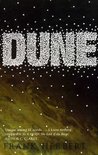
Review: Dune

Dune Dune by Frank Herbert
My rating: 5 of 5 stars

Dune is an incredible feat of imagination and writing. Frank Herbert intermingles history, religion, politics, ecology, and philosophy into an epic adventure of intrigue and revolution.

One can see the influence Dune has had on later science fiction. It’s hard not to imagine Tatooine as one reads about Arrakis. The intrigue among the great houses will be familiar to Game of Thrones readers. Equally so, Dune is itself influenced by earlier works, such as Asimov’s Foundation series.

The world created by Herbert is complex. A long history. A complicated set of mystical, religious beliefs intermixed with science and politics. Court intrigue that sets up the underlying conflict of the novel. Cultural norms and rules that are unknown. The reader is, to borrow the now hackney phrase, a stranger in a strange land. As such, one needs a little patience when starting Dune. You have to allow yourself to become familiar with this world.

There are many themes explored and played with by Herbert in Dune. To name but a few: The exploration of religion, its influence, and its institutions. The ongoing conflict of civilization v primitivism (city v country; empire v fremen). The evolution and persistence of religion and culture. Man v environment. The appeal and danger of fundamentalism and Messianism. The pitfalls of ‘Great Men’. The role of computers and technology in society.

It is fun to try to untangle and spot the real-world influences. What language is this word coming from? What religion influenced Herbert for this or that practice or mystical belief?

It is also interesting how conservative the whole galactic culture appears to be. It is a deeply aristocratic society. Women occupy traditional roles. There is little in the way of what one might call ‘alternative lifestyles.’ Like many traditional/conservative cultures, honor plays a huge part. I am sure there are many English PhDs that have made their bones chewing on all this!

If I have a criticism, it would be that the characters could be tools of the plot, rather than the driving force of the plot. The grand sweep of time moving everyone along to the conclusion. The motivations of the character could be at times opaque or hidden behind too many layers.

Dune deserves the praise it gets; it deserves its place in literary history (though maybe not quite as high as Brian Herbert, Frank Herbert’s son would place it). If you only know of Dune because of the David Lynch/Sting movie from the 80s, it is worth reading with fresh eyes.


View all my reviews

Tuesday, August 07, 2018

Review: Skinwalkers

Skinwalkers Skinwalkers by Tony Hillerman
My rating: 5 of 5 stars

Bringing Leaphorn and Chee together was a brilliant stroke. Leaphorn is more logical--more like a Poirot or Marple. Chee is more intuitive. Both are smart and perceptive. They respect each other and will work well together.

The mystery here was not terribly complicated, but seeing Leaphorn and Chee bring the clues together and discover the truth was masterfully down by Hillerman. And Hillerman also gives us the beautiful descriptions of landscapes of the southwest. He is able to give the reader the feel of what living in the high desert might be like. The contrast between cultures is also endlessly fascinating.

View all my reviews

Saturday, July 28, 2018

Review: The Other Woman

The Other Woman The Other Woman by Daniel Silva
My rating: 5 of 5 stars

Gabriel Allon returns to do battle with the Russians again in another exciting novel by Daniel Silva. The usual cast of characters make their appearances, though the focus is mostly on Allon and Graham Seymour. There are several twists and turns in the plot that keep you guessing and thinking. Silva does a masterful job of weaving in real history and current events into his fictional world. I always enjoy reading his Author Notes after the novel to see what is based on real life and what is made up.
My last thought after finishing this was when is #19 coming out?!

View all my reviews

Saturday, July 21, 2018

Review: Sports: The First Five Millennia

Sports: The First Five Millennia Sports: The First Five Millennia by Allen Guttmann
My rating: 3 of 5 stars

This is an ambitious project: telling the history of five millennia of sport—and doing so in about 350 pages. And ultimately, it is unrealistic. There is a lot of interesting and fascinating information here, but it is, necessarily, too often superficial, without sufficient context, and skimmed over. There are passages where it turns into the proverbial just one damned thing after another. Dates and names fly at you, interspersed with occasionally amusing or telling anecdotes. As much as I liked the idea of tracing the history of sport from prehistoric communities up to today, there was just too much information with too little space.

There are, nonetheless, many positives to the book. The author, Allen Guttmann, does a good job of including multiple perspectives. There is very rarely any sense that he has an ideological ax to grind. Guttmann also makes sure to bring in sport from a broad range of differing social classes and groups. The role of women in the history of sport was frequently highlighted—though obviously there are many more opportunities in the modern world for women in sport, women have in nearly every culture and every era been involved in some kind of sport.

I most enjoyed the first part of the book where Guttmann focuses on the sport of ancient cultures. He looks, of course, at the Greeks, but also cultures across the globe. He discusses various theories about how sport developed in these societies: from what they evolved and how they become what we might recognize as sport. This is the most interesting and recommendable part of the book. The discussion of sport in the middle ages was also intriguing. Where things start to get bogged down is when Guttmann moves more into the modern period.

Guttmann is a widely respected historian of sport, and I am certainly going to look at his more focused books. I am not sure I’d recommend this book, however. It unfortunately comes too close to turning into a fleshed out timeline.


View all my reviews

Thursday, July 19, 2018

Review: The Old Testament

The Old Testament The Old Testament by Amy-Jill Levine
My rating: 5 of 5 stars

This series of lectures on the Old Testament is very good as an overview to the history of the text and the different interpretative approaches to the Old Testament. Levine brings together, at different points, Jewish, Christian, Muslim, and secular understandings of the texts. This is not a religion or theology course; there is no presupposition of the divinity of the text, but such a view, for those that have it, is not incompatible with Levine's discussions. Though I am sure those with particular views about the meaning of the Old Testament will disagree at lots of points, Levine doesn't present her interpretation as _the_ definitive one. She acknowledges the reality of many traditions and interpretations.

In 24 lectures, one can hardly get too deep into the books and stories of this text, and Levine acknowledges through out the series this limitation. Nevertheless, in the aspects she discusses, she is able to convey much of the meaning and the history.

Personally, I would have liked even more on the history of these texts, and their comparisons to other texts of the region and period. That's really a different course though.

I wish Levine had more courses at the Teaching Company--ones that individually delved more deeply into select books of the Bible. Her style is pleasant, she cares deeply for her subject, and she has an impressive breadth and depth of knowledge of it.


View all my reviews

Review: A New Dawn

A New Dawn A New Dawn by John Jackson Miller
My rating: 4 of 5 stars

For fans of Rebels, this is a great way to spend more time with Hera and Kanan, and to see how they first met. Like Rebels, it gives you a look at the beginnings of the rebellion. Miller also introduces Rae Sloane who goes on to play important roles in the Aftermath trilogy. She is a fascinating character. An imperial, she is not corrupt. She is ambitious, but not blindly so. She is committed to the law and order ideology of the Empire and this guides her character from A New Dawn up through the end of Aftermath. This makes her a great antagonist. She is not a monster like Vidian, Vader, or Palpatine. Sloane is understandable. She is competent, intelligent, and has a kind of integrity.

The book is a little slow to get going as it introduces the characters and the setting, but the story picks up to an exciting conclusion.

View all my reviews

Thursday, July 12, 2018

Review: Dance for the Dead

Dance for the Dead Dance for the Dead by Thomas Perry
My rating: 5 of 5 stars

The second novel in the Jane Whitefield series refreshingly doesn’t follow the same plot structure as the first novel. Jane still guides "people out of the world” but the reasons for the hiding are quite different, and the manner in which Jane goes about it is also different. The story has some rather dark and brutal parts. Jane continues to be an intriguing protagonist. She shows more vulnerabilities in this novel, but is still just as tough, intelligent, and component. Highly recommend this series.

View all my reviews

Monday, June 25, 2018

Review: Letters to My Palestinian Neighbor

Letters to My Palestinian Neighbor Letters to My Palestinian Neighbor by Yossi Klein Halevi
My rating: 5 of 5 stars

This is a fascinating and unique little book. The frame is a set of ten letters written by the author to a Palestinian neighbor. He does not know this neighbor, Halevi explains, and doesn’t know to whom to send these letters. And that is part of the story of the letters: the need for these neighbors to speak to each other, but there is seemingly infinite distance to reach each other. The letters to an anonymous neighbor express a sense of hope although one that is shadowed by the vast distance that remains: a hopeful despondence? A despondent hope?

This paradoxical situation is the leitmotif of the book. It is a deeply personal expression of paradox and ineluctable tension of ideas and people. The modern and premodern; religious and secular; Israeli and Arab; Israeli identity and Jewish identity; Judaism and Islam; East and West; the past and the future; and Jew and Jew.

As a book of letters to his Palestinian neighbor, the book is hardly directed at me and yet it is important for an American Jew to read to this book—indeed for anyone looking for some measure of insight into the Israel-Arab conflict—and also for insight into Jewishness.

Halevi’s goal here is to tell the Jewish/Israeli narrative. His hope is that if both sides can express their narratives, there can be some mutual understanding that can be the basis for moving forward. So Halevi presents his personal statement about what Jewishness is and what Israeli life is about. He talks about how these identities connect. And how this relates to the land of Israel and to the Palestinians.

Halevi is reaching out to an audience which may not and mostly will not accept it or appreciate it (An Arab translation is available free online). But he tells the narrative with the intent of trying to respect that Palestinian need for that denial while calling for them to move beyond it. He doesn’t ask for agreement or affirmation; just the space to tell his narrative. He invites Palestinians to tell their narrative and wants to grant them the same space: the space to tell each other our national narratives without dismissal or rejection. The idea is that if we can start there, we can start to see and hear each other; and then we can start a dialogue that might lead to some kind of mutual understanding.

Interestingly, Halevi is also writing to the Israeli far right. They know the Jewish narrative. But they need to see it in relation and conflict with the Palestinian narrative. Halevi is arguing that both narratives have some measure of validity and that both sides need to understand and deal with these perspectives. If we are to see each other we have to stop ignoring, downplaying and denying each other.


View all my reviews

Review: The Wise Man's Fear

The Wise Man's Fear The Wise Man's Fear by Patrick Rothfuss
My rating: 5 of 5 stars

This is the second novel in the Kingkiller Chronicle. The first novel was amazing and the follow-up is as good, if not better. It takes us much deeper into the world and culture of Temerant (and beyond). We learn more about Kvothe and see his abilities and character develop more as well. We learn more about the Adem, about naming, about the Chandrian, and about the Fae and their world.

The depth of the world that Rothfuss has created is on par with the greatest of fantasy series. He does a great job of taking the standard tropes of the genre and using them with his own little twist to make the familiar seem novel. He weaves in together many familiar elements to create something new: for example, the Lethani is a sort of mix of the Dao, phronesis, and Falun Gong. I love what he does with the Adem language and culture.

The writing is crisp and creative. Although the book is quite long, it is so well paced, it doesn’t feel long. The character development, the world development, and mythos development are top-notch. If you like fantasy, you have to read this series. It really is not to be missed.


View all my reviews

Tuesday, June 19, 2018

Review: The Watchman

The Watchman The Watchman by Robert Crais
My rating: 5 of 5 stars

Fast-paced and well-crafted. Crais twists his Cole series by telling the story primarily from Pike's point of view (it is, though, still third person). Cole was, up to this point, very much Spenser in LA, but by telling us a mystery from Pike's point of view, Crais takes his Cole series to a place Parker never did.

View all my reviews

Tuesday, June 05, 2018

Review: The Foundations of Eastern Civilization

The Foundations of Eastern Civilization The Foundations of Eastern Civilization by Craig G. Benjamin
My rating: 5 of 5 stars

This is a broad, sweeping, Big History course. The lectures span from Neolithic migrations into Asia up to present day. While mostly focusing on China, Benjamin has several what he calls mini-courses on other regions, including Korea, Vietnam, and Japan. He examines how these regions developed on their own but also under the influence of China. The course explores what is meant by 'foundations,' by 'eastern,' and by 'civilization': how should we and how did each of the many cultures and peoples understand and express these? Benjamin looks at the impacts of geology and climate on the cultures and peoples. He looks how the economic and political systems developed and evolved: both from internal developments and external influences.

Each lecture is interesting and well-presented. Benjamin is an excellent lecturer and story-teller. There were many things I learned, but the most surprising for me was how ancient and deep rooted some of the divisions in the region are. For example, like many I presume, I assumed the division between North and South Korea was a Cold War, modern phenomenon, but come to learn that Korea has often historically been divided in a north/south arrangement.

I am doubtful about my recall of much of the detail: the names, places, and dates and so on. But the course provides a grand schema to think about Eastern civilizations. In this way it is a good structure to have before pursuing more close study of a particular time, place, or people.

View all my reviews

Saturday, May 19, 2018

Review: Robert B. Parker's Old Black Magic

Robert B. Parker's Old Black Magic Robert B. Parker's Old Black Magic by Ace Atkins
My rating: 4 of 5 stars

I'm torn. The 20 year old art heist is interesting and fun; it's a decent, though not difficult, mystery. Atkins does a reasonable enough imitation of Spenser and the other characters. There are nice touches with accents and slang typical of Boston that gives flavor to the book. I like the updating of the BPD and more realism with Spenser's interactions with them (without losing Belson and Quirk).

But Atkins is missing some important elements of Spenser. He's still a smart-ass tough who quotes Thoreau, Frost, and Shakespeare. He still has his code. But Spenser qua detective is not quite there. He gets tailed several times in ways that would make Hawk lose all respect for Spenser. And he's not quite as perceptive or intuitive as Parker's Spenser was.

Compared to Parker at his best, this doesn't compare. But it's still better than Parker at his laziest.


View all my reviews

Sunday, May 13, 2018

Review: Bloodline

Bloodline Bloodline by Claudia Gray
My rating: 5 of 5 stars

There are books that you just don’t want to end. You read through them quickly because you need to know what is going to happen next, but you dread that with each page you are getting close to the end. This is one of those books. Claudia Gray presents us with one of the best versions of Princess Leia in all the canon. Leia is just as strong, witty, and haughty as we see her elsewhere, but we also see her inner strength, her vulnerability, her concerns and fears. She is thoughtful and introspective about her past without being nostalgic. This is not a bratty, arrogant teen-age princess, this is sabacc playing bad-ass.

The story itself is engaging, action-packed, and suspenseful. The secondary characters are well-drawn. There is plenty of foreshadowing for the events of the new trilogy. For those who whine about the where the Resistance comes from in TFA and TLJ, this books shows and explains the roots. So stop ya bitchin’!

One of the many things I liked about the book was Leia’s continual struggle with dealing with the knowledge of Vader as her father. She is not as forgiving as Luke – that is, she is not as willing to accept Anakin’s redemption at the end of Jedi. She also has to come to grips with who Anakin was before he becomes Vader and why he becomes Vader. And all of this plays important roles in the plot.

The Chuck Wendig trilogy is great and moves the story forward from Jedi. Bloodline plays just as important role of connecting the original series to the new. It plays an essential role in the canon. More than this, it is just a damn good story.

View all my reviews

Sunday, May 06, 2018

Review: Davita's Harp

Davita's Harp Davita's Harp by Chaim Potok
My rating: 5 of 5 stars

Chaim Potok’s books are so engulfing: they suck me into a world that is both familiar and foreign; a world that appears both enchanting and soul-crushing. Davita’s Harp, though different than many of Potok’s other novels, nonetheless shares these features. One major difference is that the protagonist is a young girl: Ilana Davita. The second is the way the story is told. It is much more like a memoir. It starts with some of Ilana’s earliest memories as her world starts to take shape. It has a collage quality to it without a lot of continuity. As she grows the story becomes more robust and continuous, though never losing that memoir feel.

One of the reasons I love reading Potok is that he captures my own ambivalence about American Judaism (of the more religious variety). He, and his characters, are pulled to it, but at the same time he shows it’s darker, uglier side. The push/pull of the secular and religious is the dramatic tension in Potok’s novels. Davita’s Harp adds several other layers to this push/pull with conflicts of gender, politics, and family.

This is a much sadder novel than Potok’s other works that I’ve read. There is repeated tragedy, injustice, and death. And lots of pain and inner torment. The memories of past traumatic events haunt the characters and change them. A major theme of the books is that the characters are all driven to embrace some kind of ideology to help make sense of and give purpose to the world. For Ilana’s parents this was communism and Marxism; for others it was religion: Orthodox Judaism or the Catholicism of her Aunt. Ilana, struggling to make her own sense of things, turns to each of these as well. Mostly, though, she is looking for a home, a community. Part of the sadness, the tragedy of the book is that for most of the characters, and for some more than others, the individual gets let down, hurt, even rejected by their chosen ideological community. This is somewhat, though possibly unintentionally, mirrored by the grand conflicts in the background of the book between fascism and communism as they ate their own and the rest of Europe in the Spanish Civil War and World War Two.

The Jakob Daw character and his stories are intriguing. They add a somewhat mystical element to the novel. I’m not sure – much like Ilana – what they mean, but they provide a texture to the novel. And they are important for Ilana’s growth and development as she comes of age.

From very young, Ilana has to deal with heartbreak and loss. She is not always successful at it but she does seem to find a home in the synagogue and yeshiva. They too, though, end up causing her great pain. One of the best and chilling sequences in the book is her response to the injustice she experiences. I believe, though, that she eventually finds an outlet for her pain and finds peace through her writing and storytelling – as suggested by the hopeful ending.


View all my reviews

Sunday, April 08, 2018

Review: The Sackett Brand: The Sacketts

The Sackett Brand: The Sacketts The Sackett Brand: The Sacketts by Louis L'Amour
My rating: 5 of 5 stars

This takes up almost right after Mojave Crossing with the story of Tell and Ange. It takes a dark turn and turns into a thrilling man hunt and trial of survival through the canyons of the Mogollon Rim in Arizona. Many Sacketts, familiar and new, arrive to come to Tell's aid and gives this book a classic Western revenge movie feel. As with all L'Amour books, the story telling is crisp, the descriptions beautiful, and there is plenty of philosophical musings about the mores and norms of the West.

View all my reviews

Review: The History and Achievements of the Islamic Golden Age

The History and Achievements of the Islamic Golden Age The History and Achievements of the Islamic Golden Age by Eamonn Gearon
My rating: 5 of 5 stars

These lectures are a captivating tour of the Islamic world from the 8th to the 13th centuries. Eamonn Gearon is a great storyteller and each lecture in this series could stand on its own as fascinating and engaging. His deep knowledge of the history and ideas of the Islamic world is evident throughout all the lectures.

The breadth of Gearon’s discussion shows that the Islamic Golden Age produced achievements in nearly all branches of science, philosophy, mathematics, and technology. The achievements during the Islamic Golden Age across all areas of human thought and life is unparalleled until the European Enlightenment – which owes no small influence to the Islamic Golden Age. There is much in our modern world that has its roots in the Islamic Golden Age. Gearon makes a point to underline that these intellectual and practical achievements are not necessarily religious or particularly tied to or driven by Islam. The achievements came from all kinds of people, Jewish, Christian, Muslim, Arab, European, African, Persian, and so on. What makes it the Islamic Golden Age is that this a period ruled by Muslims, by states that had Islam has the state religion.

One of the most interesting questions that runs throughout the lectures is why was there so much progress during this period and then why did it come to an end? The thread one gets from these lectures is that with regional stability from the Abbasid Empire came the relatively free movement of goods, peoples, and ideas. This along with the relative toleration and interaction of ideas and people set the ground for the flourishing of human thought and achievement. As the Abbasid Empire weakened, the stability, tolerance, and trade weakened as well. And as a consequence, as Gearon says, the Golden Age become silver and then the bronze.

So why did the Abbasids weaken? Gearon explores this a bit but not in great detail. Essentially a combination of foreign invasions (Christians and Mongols), internal divisions (the Fatmids, the Almohads), and the natural complacency of the ruling class contributed to the Abbasids fall and with it the Islamic Golden Age.

There are remarkable parallels to the Roman and English empires. In all these, there was a general correspondence of (relatively) liberal trade and immigration policies, (relative) tolerance of ideas, and the health of the culture and achievement of people under the empires. This is not to say that there were not awful problems, people excluded and dominated, and so on, but compared to other periods and other regions, there was remarkable growth and achievement. And when these more liberal and tolerant policies ebbed, so do the achievement and progress, and then the empires themselves. Important lessons for our times.


View all my reviews

Tuesday, March 27, 2018

Review: Frederick Douglass: Self-Made Man

Frederick Douglass: Self-Made Man Frederick Douglass: Self-Made Man by Timothy Sandefur
My rating: 5 of 5 stars

In the words of my eight-year-old son: “Frederick Douglass is cool!” Timothy Sandefur’s new book on Douglass is a pithy account of why he is so cool. In this tightly and clearly written account of Douglass’ life and legacy, Sandefur persuasively makes the case that Douglass is an important and central figure of 19th century American politics and should be for the 20th and 21st centuries as well. He highlights the nuance, depth, and breadth of Douglass’ intellectual achievements: not just on the abolition movement but also on constitutional and political theory more broadly.

Sandefur shows how Douglass’s ideas, style, and methods influenced in various ways thinkers and activists such as Booker T. Washington, W.E.B. DuBois, and Martin Luther King, Jr. He details Douglass’ self-made rise from bondage to dining with and influencing U.S. Presidents.

The one “problem” with the book is that it will inspire you to go out and read more about Douglass and by Douglass.


View all my reviews

Saturday, March 17, 2018

Review: The Ghostway

The Ghostway The Ghostway by Tony Hillerman
My rating: 5 of 5 stars

Hillerman always crafts a tight mystery interwoven with the beautiful landscape of the southwest and the traditions of the Navajo. The Ghostway is no exception. Many of Hillerman's novels are also part meditation on what it is to be Navajo, and here we see Chee's internal struggle with his own Navajo identity get highlighted by foil of those he encounters in trying to solve the mystery: traditional Navajo, uprooted and un-rooted LA Navajo, and white people.

View all my reviews

Friday, March 16, 2018

Review: American Emperor: Aaron Burr's Challenge to Jefferson's America

American Emperor: Aaron Burr's Challenge to Jefferson's America American Emperor: Aaron Burr's Challenge to Jefferson's America by David O. Stewart
My rating: 5 of 5 stars

Aaron Burr is a fascinating historical figure. A revolutionary war hero. He presages the modern politician. He very nearly beat Jefferson for the Presidency in 1800. In the infamous duel, the sitting vice-president kills Alexander Hamilton. Under two murder indictments, he finishes his term and presides over the senate, including the impeachment hearing of Judge Samuel Chase. If that’s not enough, he spends the next five years essentially trying to become emperor of Mexico and probably more. He narrowly avoids a conviction of treason and then spends another five years in Europe trying to get a European power to support his plans to take over Mexico (in between his many romantic dalliances). Finally, he returns to New York only to lose the only two people he probably cared about: his daughter and grandson. He lives until 80 in what had to be a lonely and disgraced life.

Burr was charming and convivial, but also a power hungry, manipulator who most likely was conspiring to take over all of the North American continent and make himself an American Napoleon. Unlike Napoleon, though, there was no underlying political ideology motivating Burr. Burr’s motivation is best captured in the Hamilton musical: “I wanna be in the room where it happens.” Burr just wanted to be _the guy_. He wanted to be admired and loved, he wanted to be in charge.

And he almost succeeded.

The audiobook was performed well by Andrew Garman. It starts with the set-up for the Hamilton duel and takes you through the rest of Burr’s life. The author spends a lot of time and detail on Burr’s “western expedition” preparations and the subsequent treason trials. It provides a fascinating look at the leading lights of the founding era through Burr’s often unsympathetic eyes.


View all my reviews

Friday, March 09, 2018

Review: The Case Against Education: Why the Education System Is a Waste of Time and Money

The Case Against Education: Why the Education System Is a Waste of Time and Money The Case Against Education: Why the Education System Is a Waste of Time and Money by Bryan Caplan
My rating: 5 of 5 stars

Bryan Caplan’s new book is a devastating and depressing take down of the education system. Caplan argues that the education system does little to educate and that most of the gains we see from education are not linked to what students may learn. If he’s right, then most of the current education system (K-12, higher ed) is a colossal waste. There are, nevertheless, important liberating elements (at least for me as a higher ed teacher).

There is a lot Caplan covers, and I won’t touch on most of it here. I’m going to focus on a few key things that struck me as the most important and interesting. Agree with his conclusions or not, Caplan presents us with an important argument about education with which we need to deal. Refreshingly, he’s very open with the data and even provides links to the spreadsheets for people to play with the data and assumptions themselves. One gets the sense he would love to be disproved about the disvalue of education.

First, the devastation and depression. The basic theme of the book is this: college graduates, on average, earn 73% more than high school graduates and Caplan wants to explain this earning premium. It needs explaining because, as he argues, very little of it seems to be tied to what college graduates learn in college. The view that the premium is tied to the training and skills learned in college is what Caplan calls the Human Capital view. You go to college, learn a bunch of stuff, and this makes it so you are more likely to be hired into a good job and earn more. Caplan argues that this conventional view is largely mistaken on a few counts: students don’t learn that much or remember much of what they do learn; and what they learn is not usually a skill relevant for the job. (If you are skeptical of this, read the book and evaluate his data and arguments.)

One of the things that has convinced me that the human capital view is not accurate is that college dropouts are not in a much better position (for hiring and earning) than high school graduates. For example, at ASU you need 120 credits to graduate. If you earn 119 credits but skip that last credit hour, your hiring and earning potential is just slightly better than the high school graduate with 0 college credits. That’s hard to square with the human capital view. You earned 99% of the degree and so if the college premium was due to what you learn you should be a lot closer to the college graduate than the high school graduate. Unless, as Caplan quips, we teach all the important skills in that last credit hour.

Caplan shows that a huge chunk of the college premium is just having the degree—not what you learn while getting the degree. This is the Signaling view. The college degree signals important information to potential employers about your employability: intelligence, conformity, and conscientiousness (discipline, work effort, punctuality). Crossing the finish line of the diploma takes some reasonable amount of intelligence. Going to (and graduating from) a traditional four-year college shows your willingness to conform to social norms and expectations. Lastly, it shows, at a minimum, that you were able to follow enough directions and show up to class on time enough that you were able to pass enough classes to get the degree. Caplan argues that these signals make up about 80% of the college earning premium.

One might say, ok, fine signaling is most of the premium, but education is still worthwhile because it broaden student’s horizons, awakes them to new possibilities, spurs the imagination beyond the mundane, and teaches them deeper thinking and conceptual skills that they can use to become better citizens and human beings. Caplan’s response: Wishful thinking. That’s want we education to be. It’s what for academics like myself and Caplan it partly was. It’s just not what it is for most people. For most students: they don’t want to be there and they aren’t prepared to be there. And even so, their horizons and imaginations don’t actually get broadened all that much anyway.
Caplan acknowledges that this sounds cynical and elitist. But, as he argues, it is about what the data shows. Maybe a different education system could fulfill the broadening horizons myth, but education in this world and in this structure doesn’t even come close. Based on my near two decades of teaching in universities, I’d have to agree. I like to think I’m expanding student’s horizons and improving their thinking; that I’m exposing them to new and exciting ideas. And there are a few students for whom this is true. But most just ask if it is going to be on the test and can we get out of class early. Maybe I’m just a crappy teacher or have mediocre students. But Caplan’s data suggests otherwise: no matter the teacher or the school this is the norm.

In this way this is depressing: what is the point of my job? Am I just wasting my time? But it is also liberating. It frees me to focus on the students and ideas in the here and now. It’s not about job prep or their future: it’s about engaging ideas with students who are interested right now. I can focus on what I find exciting and cool. The students who are also engaged can come along. Those who aren’t, aren’t really missing out on anything important to them. They can just move along the signal chain on to something that does interest them.

One of the counters to his critique that Caplan looks at is this. Sure, students aren’t going to use categorical syllogisms on the job or find much use outside of history for learning how to interpret original historical sources. But the abstract thinking skills they learn when doing these things is something that will be important in their lives and jobs. It’s hard to teach these abstract thinking skills directly, but they can be picked up by studying logic, history, chemistry, etc. Call this the abstract thinking argument. It’s an argument I’ve made in the past when trying to sell students on philosophy. Caplan looks at the education psychological literature and argues that there just isn’t any empirical evidence for the abstract thinking argument. I’m not that convinced he’s right on this.

Now, I haven’t look at this literature, but based on the what Caplan says about it, I’m not sure it works to show the abstract thinking argument doesn’t work. He looks at what is called “transfer of knowledge.” Do students who learn the scientific method, use the scientific method outside the contexts in which they learn it? In other words, do they transfer the method over from their chemistry classes to using it outside of chemistry? The evidence, Caplan says, is no, they don’t. And that might be true (I see versions of this in which students don’t use the writing skills they learn in composition classes in other non-composition classes such as my philosophy classes). But this seems different from the abstract thinking argument. The transfer of knowledge evidence seems to be about specific skills or methods. But I’m not sure it applies to learning abstract processes of thought like logical thinking.

Here’s an analogy. You learn dribbling in soccer and that isn’t applicable outside of soccer. But running as a skill is broad athletic skill that is used across many sports (and beyond). I am concerned that what Caplan has shown is that dribbling is not transferable but then using that as the claim that there is no evidence that running is transferable. If abstract thinking skills are more like running with wide usage, then Caplan’s evidence misses the mark.

The policy implications of Caplan’s book are intriguing. The most important one, I think, is the need to develop and encourage different pathways for students. There are students for whom the traditional college experience is perfect: they will succeed at it, enjoy it, and reap the benefits from it. But it is not and should not be the path for all. Apprenticeships, technical education, and vocational education are other options that would serve the needs and interests of many more people—and have greater payoff for the broader society and not just the individual who is better able to get a job and earning a living.

There is a lot in Caplan’s book that is worth looking at and thinking about it. Some of which is probably wrong. I surely don’t agree with all his arguments or interpretations of the data. What I think is most important about the book is that it calls for us to look at education as it is, not what we wish or hope it to be. If we want to get education to what we wish it could be, we have to deal with the reality of the current system and not pretend it is something else.

Caplan calls himself an educational whistleblower. His whistleblowing will, I hope, lead to more conversations, and more realistic conversations, about education.


View all my reviews

Tuesday, March 06, 2018

Review: Riot Act

Riot Act Riot Act by Zoë Sharp
My rating: 5 of 5 stars

This is a very good follow up novel. The structure and unfolding of the plot is not identical to the first novel and Sharp continues to develop the Charlie character. The setting of northwest UK works really well. I typically end up spending some time on Google maps checking out the locations. I also like that they don't Americanize the spellings or slang; it would really detract from the story telling if they did that. I am not sure, however, about the Sean Meyer character and how he'll get integrated into the story. I get the idea of introducing a love interest, but I don't want that to overshadow Charlie and her story.


View all my reviews

Friday, February 16, 2018

Review: The Industrial Revolution

The Industrial Revolution The Industrial Revolution by Patrick N. Allitt
My rating: 5 of 5 stars

Professor Allitt is great. I've listened to several of his courses, he's a great lecturer: informative, humorous, and balanced. This history of the industrial revolution does a thorough job of explaining the historical precursors, the key individuals involved, and the progress and effects of the revolution up through contemporary times. The first half of the lectures are focused on the developments in Britain. The second half moves into the US, Europe and then the industrialization of other parts of the world. There are focuses on important inventions: the steam engine, automobile, flight, electricity. Allitt also looks at the impact of industrialization on the art, politics, economics, war, and the environment.

I highly recommend this course -- and any course by Professor Allitt.


View all my reviews

Wednesday, February 07, 2018

Review: My Promised Land: The Triumph and Tragedy of Israel

My Promised Land: The Triumph and Tragedy of Israel My Promised Land: The Triumph and Tragedy of Israel by Ari Shavit
My rating: 5 of 5 stars

There are many hard truths in this book; things that cannot and should not be ignored. I don’t always agree with Shavit’s conclusions about how to deal with these truths or what they mean in the bigger picture but I think it is important that they be faced. These sometimes myth-busting, sometimes disturbing stories pose deep challenges to those who, like me, grew up on the standard Jewish-American discourse about Israel. That is not to say it is revisionist or offering a history that was previously unknown. But what Shavit is able to do is put a human face on all sides of the history of Israel. This makes it harder, for example, to downplay or dismiss a tragedy as just an unfortunate consequence of a war. It makes the tragedy personal and thus much more real to the reader. (That said, this very poignancy can also distort one’s thinking about the issues by pulling too much at the personal—this is a paradox of thinking about these kinds of issues. You can’t ignore the personal for the sake of a comprehensive, principled account, but bringing in the personal has a way of putting too much on weight on the personal stories at the expense of objectivity.)

Shavit’s journey through the history, demography, and geography of Israel is deeply personal. It is not a detailed work of history or policy analysis. Shavit selects certain points of history and certain individuals and tells us their story. In many ways it is, necessarily, incomplete and piecemeal. What ties the book together is the way that Shavit brings these threads together to form his vision of the past and potential future of Israel.

Shavit seems to be writing this book to answer questions about Israel: Why was Israel necessary? How did it get built? What impact did this have on the people in Israel (Arab and Jewish alike)? How has Israel survived and flourished? How has Israel (and Israelis) changed over decades of its existence? What explains these changes? What do these changes and the forces behind these changes mean for the future?

I don’t think one walks away from this book with definitive answers to any of these questions. One gets a sense of Shavit’s answers—but given the personal nature of the book these are not offered as _the_ answers and Shavit doesn’t present us with arguments to justify these answers. But the necessity of raising these questions and thinking about them is what makes this book important.


View all my reviews

Thursday, January 04, 2018

Review: Winner Takes All

Winner Takes All Winner Takes All by Robert Bidinotto
My rating: 4 of 5 stars

The third in what is now a trilogy, Winner Takes All, deals with questions about justice and revenge through an exciting and compelling story. While I enjoyed the novel, I think I preferred the first two better. The story meanders a bit in the beginning as Bidinotto sets the pieces. The plot is more wide-ranging, with more players and elements, so he needs to do this. But it took me a bit to get into it. Personally, I found the subplot of the relationship between Annie and Dylan to be at times distracting. The relationship is important; it humanizes and grounds Dylan. But their interactions were often just a bit too on the nose for my taste.

Nevertheless, the second half of the book cooks as Dylan unwinds what is going on and figures out how to stop it. Dylan is a bad-ass; part Batman, part Jack Bauer, part Jason Bourne. Fans of this genre (Child, Silva, Thor, Flynn, Baldacci) will like it.

From the intellectual side, Bidinotto works his idea of the master narrative into the plot. It drives the motivations and decisions of both the good and bad guys in the novel. The protagonists struggle explicitly with the apparent conflicts of integrity, justice, morality, and the law in a corrupt world. It is important for how the characters individually resolve or deal with these conflicts to understand how they see themselves and how they see the world: their master narrative.


View all my reviews

Tuesday, December 26, 2017

Review: Spencer & Locke

Spencer & Locke Spencer & Locke by David Pepose
My rating: 5 of 5 stars

This graphic novel blew my mind. I adore Calvin And Hobbes. Easily my favorite all time comic strip; it is not even close. Watterson's strip was beautiful, poignant, and brilliant.

But imagine the darker timeline. What if Calvin's world was not a loving, middle-class upbringing? What would Calvin have been like? And what if he became a cop and still had Hobbes around? That's what you get in this amazingly creative noir graphic novel.

You don't need to been as big a C&H fan as I am to appreciate what the authors have done in their retelling and re-conceptualization of C&H. It certainly helps to get some of the background, but it's an intriguing story on its own.


View all my reviews

Review: The Name of the Wind

The Name of the Wind The Name of the Wind by Patrick Rothfuss
My rating: 5 of 5 stars

This a great book. It's a refreshing fantasy story; exciting and well-written. The characters are interesting and the story new. While there are elements/motifs from other fantasy novels (be it Lord of the Rings or Harry Potter), Rothfuss isn't rehashing these. There is magic and there are dragons and demons. There is a boy turning into a man while at school where he is an outsider and causing all kinds of trouble. But Rothfuss creates a new tale out of these many of these classic elements. The world creation is subtle but deep. There is mystery and intrigue in the story Rothfuss tells us. And he shows us this world in a beautiful and detailed way (without ever being pretentious). Highly recommend it to anyone who loves the fantasy genre.

View all my reviews

Thursday, November 23, 2017

Review: Mojave Crossing

Mojave Crossing Mojave Crossing by Louis L'Amour
My rating: 4 of 5 stars

The Sackett novels are such fun. L'Amour is wonderful at depicting the southwest: its beauty, its danger, its allure. They do get a little formulaic at times, but L'Amour is such a master it doesn't matter.

View all my reviews

Saturday, November 18, 2017

Review: State of the Union

State of the Union State of the Union by Brad Thor
My rating: 3 of 5 stars

Thor writes a fun, entertaining thriller. But it's boiler-plate, formulaic. Harvath is no different than any other character in this genre. There is little character development, growth, or exploration. The plot is straight-forward--even if somewhat preposterous. It's basically the standard-issue, indistinguishable summer action flick but on the page.

View all my reviews