Tuesday, January 02, 2007

A Puzzle of Mystery

Malcolm Gladwell, author of Blink! and The Tipping Point, has a very interesting article over at The New Yorker.

Drawing on a distinction, attributed to national-security expert Gregory Treverton, between a puzzle and a mystery, Gladwell offers an analysis of Enron and the Iraqi war. The distinction is essentially this: A puzzle is a problem that is solved by finding more information. When the information is in place, the puzzle is solved (or the solution is clear). A mystery is something different. It's not a matter of missing information, it's a matter of how one puts the information together.

So Enron and Iraq were (are) mysteries; there was no clear cut solution that was only out of reach because we lacked information. The information was there, it was how the information was understood that mattered.

Gladwell describes how Enron's business model and accounting procedures were out there to be seen. In fact, he refers to a 1998 Cornell business school project where six students correctly identified that Enron's practices were risky, dubious, and possibly manipulative. Other financial reports found similar things. Both found this information in public documents.

So the 'problem of Enron' was not a puzzle. It was a mystery: figuring out what was going on and what was going to happen required complicated and thorough analysis of the information already available (we didn't need more disclosure, we needed better understanding of what was disclosed). Getting the right conclusion was an exercise in good judgment, require experience and sometimes specialized knowledge.

Iraq is similar in that understanding what was going on prior to invasion as well as predicting the consequences required analyzing countless bits of information and putting them together in the appropriate ways. This in part explains the great divergence of viewpoints and visions on pre-invasion and post-invasion Iraq: People are looking at the information and seeing different things.

Gladwell doesn't offer any solutions or proposals, just an interesting analysis of how the way one looks at a problem (is it a puzzle or a mystery) is deeply relevant to one's success. In a puzzle, one needed more information. In a mystery, one needs comprehension of the information one already has. So looking at a problem as one or the other will counsel different courses of action.

A few thoughts:
  • One wonders after reading Gladwell, exactly what Enron did that was explicitly criminal? I am not apologizing (I know little about the facts of the case, so this is just speculation) for Enron, but it seems like, according to Gladwell, they followed the accounting and reporting rules pretty much as they should but got caught in their own complicated web of financial tools (that they barely understood themselves) and collapsed. They may have been deceptive but did they violate state or federal laws? It strikes me, at least following Gladwell's account, that they got into some shady areas that was just enough to hang them on, but had they not been as big or caused so much financial disruption, they would have gotten off with some fines or more minor sentences.
  • The puzzle/mystery distinction might be interesting as a way of distinguishing science and philosophy. Science is about puzzles: finding the facts and collecting information. Problem-solving is largely a matter of getting better information. Philosophy is about mysteries: taking the information and conceptualizing; putting it together in a way that makes the best sense of the information. Problem-solving here is a matter of honing one's judgment.

Friday, December 22, 2006

Rabbis without God

The Jerusalem Post is reporting:
"In an unprecedented event in Israel, seven secular Jews who view Judaism as a culture, as opposed to a religion, will be ordained as rabbis Friday in Jerusalem."
As the few and brave readers of this blog know, I am involved in a local Secular Jewish congregation--one that is a related organization to the one that is doing the ordaining in Israel: International Institute for Secular Humanistic Judaism--so this is good to hear.

A hat tip to Jack Silver by way of my wife for this news.

Philosophy of Ambiguity

My uncle sent these to me and I thought many of them where funny enough to pass along:

1. Don't sweat the petty things and don't pet the sweaty things.

2. One tequila, two tequila, three tequila, floor....

3. Atheism is a non-prophet organization.

4. If man evolved from monkeys and apes, why do we still have monkeys and apes?

5. The main reason Santa is so jolly is because he knows where all the bad girls live.

6. I went to a bookstore and asked the saleswoman, "Where's the self-help section?" She said if she told me, it would defeat the purpose.

7. What if there were no hypothetical questions?

8. If a deaf person swears, does his mother wash his hands with soap?

9. If someone with multiple personalities threatens to kill himself, is it considered a hostage situation?

10. Is there another word for synonym?

11. Where do forest rangers go to "get away from it all?"

12. What do you do when you see an endangered animal eating an endangered plant?

13. If a parsley farmer is sued, can they garnish his wages?

14. Would a fly without wings be called a walk?

15 Why do they lock gas station bathrooms? Are they afraid someone will clean them?

16. If a turtle doesn't have a shell, is he homeless or naked?

17. Can vegetarians eat animal crackers?

18. If the police arrest a mime, do they tell him he has the right to remain silent?

19. Why do they put Braille on the drive-through bank machines?

20. How do they get deer to cross the road only at those yellow road signs?

21. What was the best thing before sliced bread?

22. One nice thing about egotists: They don`t talk about other people.

23. Does the Little Mermaid wear an algebra?

24. Do infants enjoy infancy as much as adults enjoy adultery?

25. How is it possible to have a civil war?

26. If one synchronized swimmer drowns, do the rest drown too?

27. If you ate both pasta and antipasto, would you still be hungry?

28. If you try to fail, and succeed, which have you done?

29. Whose cruel idea was it for the word "Lisp" to have "S" in it?

30. Why are hemorrhoids called "hemorrhoids" instead of "assteroids"?

31. Why is it called tourist season if we can't shoot at them?

32. Why is there an expiration date on sour cream?

33. If you spin an oriental man in a circle three times does he become disoriented?

34. Can an atheist get insurance against acts of God?

Thursday, December 21, 2006

Deathly Hallows

Rowling has announced the title to her next and last Harry Potter book: Harry Potter and the Deathly Hallows. Sounds a tad ominous, no?

The article from the BBC has some interesting quotes from Rowling about her mixed emotions on finishing the last book.
http://news.bbc.co.uk/1/hi/entertainment/6200745.stm

Hat tip to my beautiful wife.

Friday, December 15, 2006

Just how do you spell it???

The LeeVee's video for How do you spell Channukkah?:

Thursday, December 14, 2006

Hanukkah Rocks Review

Here's my review, written for the Or Adam newsletter, of The LeeVee's Hanukkah Rocks CD.

Just how do you spell Hanukkah? And is it apple sauce or sour cream for your latkes? These are the question posed by The LeeVees in their holiday album: Hanukkah Rocks. Adam Gardner and Dave Schneider combine for this fun, contemporary, and entertaining album of new Hanukkah songs. Released in October 2005, Hanukkah Rocks seeks to fill a gap in Hanukkah music. Outside of the ubiquitous "Driedel Song", there aren't too many songs out there for Hanukkah. Gardner and Schneider, both established musicians with their respective bands (Guster and The Zambonis), successfully fill this void with sure to be classics like "Latke Clan": "We'll put the oil into the pan/So come and join our Latke Clan/'Cause we are latke fans" and the hilarious "How Do You Spell Channukkahh?": "I remember when I was/In Elementary School/A Spanish kid told me/that it starts with a silent J/But Julio was wrong". These songs capture the secular sense of Hanukkah that connects most Jews to the holiday, but they are also good enough to listen to year round. Other songs are about the love for kugel, the adventure of the Jewish Matzoh Ball, and the unofficial Jewish tradition of going for Chinese food on Christmas day. The album is often amusing and always fun; and furthermore, full of the joy of being Jewish.

Hanukkah Rocks, Reprise Records
Available online at www.theleevees.com

Monday, December 04, 2006

My American Accent

Hat tip to Philosopher Stone for this. His, he asserts, was dead on. As for me, not quite. Maybe I over thought questions...

What American accent do you have?
Your Result: The Midland

"You have a Midland accent" is just another way of saying "you don't have an accent." You probably are from the Midland (Pennsylvania, southern Ohio, southern Indiana, southern Illinois, and Missouri) but then for all we know you could be from Florida or Charleston or one of those big southern cities like Atlanta or Dallas. You have a good voice for TV and radio.

The West
Boston
North Central
The Inland North
Philadelphia
The Northeast
The South
What American accent do you have?
Take More Quizzes

Sunday, December 03, 2006

More Updates...

Some other items of interest (to me at least):

1. Saw the new Bond movie on Saturday. Daniel Craig is fantastic as Bond. Bronson brought a lot of romantic elements back to Bond after Dalton's more naturalistic portrayal, but Craig, and the movie as a whole, really brings out the true romanticism of the character and the story. Bond is a true hero in a grand adventure; and the movie avoids the cynicism and cheesiness that often accompany such films. One gets the feeling that this must have been what it was like to have seen Dr. No with Sean Connery for the first time in the theaters. The rest of the cast is quite good as well. I am looking forward to next Bond already.

2. Kristen and I have been listening with our friends Amy and Michael to the Teaching Company's: Introduction to Judaism course. We listen to the tapes and then go over the discussion questions and other issues raised by the lecture. A much more effective method than just listening as I walk the dog half a sleep in at 6am. We are almost done with the course and will then listen to Jewish Intellectual History.

3. We've started an Or Adam Book Club. We're going to start in February and then meet every two months. All the books will have Jewish theme or focus of some kind. The first book is The Song of Hannah by Eva Etzioni-Halevy. One of the other books we are doing is Betraying Spinoza by Rebecca Goldstein. It's a biography of Spinoza, but Goldstein is a philosopher and so I expect it to get into his ideas. I know little of Spinoza, and so this will be a good opportunity to pick up a little more.

Update

To my loyal readers, if there are any, it is time for an update on what I've been up to.

I've applied for several full-time teaching jobs for Fall 2007. Mostly Northeastern schools; small liberal arts colleges with a strong emphasis on undergraduate education. I think that is the kind of school I'd be happiest at, and moreover, I think that kind of education environment is, for most students, the most beneficial and rewarding. I'll be attending the Eastern APA meeting in DC; I am hopeful that I'll have some interviews. For those outside of the philosophy world: the Eastern APA conference is both a philosophy conference with presentations and the like but it also the main stage for the first round of job interviews.

The dissertation is under way, and I am targeting finishing in May. A bit on the aggressive side, but my chair and I are confident and optimistic. We have worked out a plan that is doable.

Part of the dissertation involves using characters from Robert Parker's Spenser series. I am using the characters of Spenser and Hawk to focus the questions and problems of Practical Wisdom that the dissertation is focused on. As such, I am reading several of the novels so that they are more fresh in mind.

Saturday, October 14, 2006

I guess the French aren't that bad

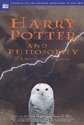
Good news came in the mail today. Harry Potter and Philosophy has been translated into French: Harry Potter et la Philosophie.

For those keeping track, that means I've been translated into Portuguese, Korean, and French.

Thursday, September 21, 2006

Official: Jolie is Dagny

According to Variety magazine, Angelina Jolie has signed with Lionsgate to portray Dagny Taggart in the film adapation of Rand’s classic, Atlas Shrugged.

Click here to read more at Variety.com

Click here to read The Atlas Society’s announcement

Still no word on a director yet, but signing Jolie is a big step.

Saturday, September 16, 2006

The best logical fallacies

By way of Philosopher Stone, GeekPress has a list of logical fallacies: each one with an argument for why it is the best logical fallacy. Here's the rub: each one of these arguments commits the fallacy that it claims is the best. Very funny.

Monday, September 11, 2006

Posting Dirth

For the few who actually read this blog, I apologize for the dirth of posting. I am working hard on preparing for my comprehensive exam in early October. All my energy and attention is being focused on this task.

A few quick hits:
1. I am excited about the start of football season, though I won't really be able to watch the first month of games. I did watch the ugly win by the Pats yesterday. A win is a win is win. Positives: running game looks awesome. Defense looks sharp, but had some troubles getting going. Negatives: um, a wide receiver would be nice.

2. Deion Branch trade to Seattle. Sad to see him go; concerned about Pats WR situation; but overall hard to argue against Team Belichick. I am hoping Gabriel will step up and be the deep threat we need.

3. Comps preps lately has been focused on Julia Annas' work. Prior to Annas, I was reading through Sarah Broadie--another top Aristotle scholar. The contrast in style and approach is striking. Annas is more of a generalist, at least in The Morality of Happiness. She is looking at the whole of ancient ethics. Broadie is super-detailed, giving an indepth and close analysis of Aristotle. Both are important scholarly tactics, and both are important for my project of looking at the development of Practical Wisdom from Aristotle to contemporary virtue ethics.

4. This afternoon, I am reading Kant's Doctrine of the Virtues. I am excited, because this is totally new material, but a bit anxious, because it's going to be a tough slog through difficult material.

5. On my morning Bella walks, I have been listening to Robert Greenberg's How to listen to and understand Opera (Teaching Co.). Almost half way through. Very, very good--but then it's the Teaching Co. so that goes without saying. (But I said it anyway, go figure)

6. I can't believe it's been 5 years since 9/11. I can still clearly remember Tim announcing, as we settled into work, to the office in Poughkeepsie, NY: "The World Trade Center tower has been hit by an airplane". We thought at first it was a freak accident. Then the second tower was hit: now it was clear that it was a terrorist attack.

Well, that's probably too long a break...back to work...

Friday, July 28, 2006

Consumerism in Education

As an educator, I read articles on education: its current state, where it’s going, style’s of teaching, etc. Often these articles refer, derisively, to the creep of consumerism into education. The complaint is that too many students have the view that since they are paying for the class, they should get an A or more direct control over the classroom itself. In my experience there is a lot of truth to this complaint; many students do have this view.

The complaint is, however, misplaced. The consumerism of the students, per se, doesn’t bother me or strike me as problematic. After all, education is a service that is being sold. Students are buying (and consuming) this service. Indeed, I often think of myself qua teacher as an entrepreneur. Consumerism becomes problematic in education when students (and others: parents, administrators, educators, politicians, etc.) have the wrong idea of what is being consumed.

When students view their purchase as the purchase of an A or even the purchase of an ‘education’, they are misunderstanding (with partial culpability to the institutions themselves) their purchase. Educational institutions are selling access and opportunity for education; the student has to get that education himself. An analogy to personal fitness training is apt here. If Sally purchases a year of personal fitness training at her local gym, she is not buying fitness; she is buying access to a trainer who has knowledge about fitness and can direct her efforts towards her goals. She is buying the access to facilities and equipment. She is purchasing the opportunity to get herself fit. If Sally became upset because the trainer was pushing her and challenging her during her sessions or because she failed to reach her fitness goals due to her own sloth or lack of effort then Sally is seriously misplacing her disappointment.

The same applies for education. When Tommy pays tuition at an education institution he is purchasing access to experts who can direct him towards his goals (and even help him determine these goals); he is purchasing access to facilities such as libraries and research centers. He is buying the opportunity to get an education, but he has to work to achieve these goals, much like Sally has to work to achieve her fitness goals.

If more students viewed education in this way, consumerism would be a benefit to them and to educators. Paying for one’s own education provides a powerful incentive to actually do the work that will help in achieving one’s goals. Even for the more apathetic students, I think the attitude would shift from “I paid for the credits, give me the A” to “I paid for the credits, I better do something about it”. This would be similar to the experience many have after buying a gym membership: “well, I paid for the membership; I might as well make use of it”.

So what causes students to have the wrong idea about what they are buying? The causes are many. In part, I think the institutions themselves contribute to this with the way they sell their services (either to students directly or the taxpayers that are actually paying for the education) and the way they structure their institutions. I think politicians represent a college education in this way—as some consumable that needs to be distributed to each member of society. The drive to get everyone a college education means that many students at colleges don’t want to be there (at least not for the right reasons), but are there because of incentives, parental or social pressures, and the like. They are told they need to get a college diploma to get a good job and so they want a college diploma. Many student, thus, don’t want (or care about) an education; they just want the document that says they can now get a good job. In other words, they want a union card, not an education.

I am not sure how to break this attitude. But, I think a start is for educators to do a better job of setting the right expectations for students.

Monday, July 17, 2006

Kristol: It's Our War

William Kristol, of the Weekly Standard, has a good piece on why Israel's fight with Hizbollah is part of the wider struggle against Islamo-fascism; that is, the US (and the West) against Iran.

Friday, July 14, 2006

Just call me Prez

According to this website, the celebrities I most resemble are Sean Astin, Haley Osment, Gabriel Bryne, Ronaldo, Lance Armstrong, Patrick Swayze, George W Bush, Matt Dillon, Lee Harvey Oswald, and Matt Ruffalo. I've gotten Matt Dillon before...but Oswald?? Do I look like a crazied patsy assassin?

Hat tip to Joe 'Hilary Duff' Duarte for the website.

Wednesday, July 12, 2006

Good News!

My review of Douglas Rasmussen and Douglas Den Uyl's Norms of Liberty is scheduled to be published by The Independent Review in their Winter 2007 issue (mailed in December). Yippie!

Some What I am Reading Updates

I finished the biography of Belichick. A very good read with lots of interesting information about the development of the team, and of Belichick as a coach. I would have like to have seen more in the later years where he was building and coaching the Patriots. It was much more focused on his earlier years--but given the title (The Education of a Coach) of the book that makes sense.

I started Parker's "Blue Screen", the latest Sunny Randall. So far, so good. She meets Jesse Stone, and the book starts off recalling some events from the Spenser book where Spenser meets Jesse. So these are all the same universe, so it's only a matter of time before Sunny and Spenser meet.

Bidinotto on Atlas Movie

Robert has some nice tidbits about the Atlas Movie at his blog.

Monday, July 10, 2006

Seminar Comments and Follow-up

Just got back from TOC’s Summer Seminar at Chapman University. I had a wonderful week and the seminar was excellent. The program was top-notch this year, with not a single presentation (save one) that I was disappointed in. I reconnected with old friends and made several new ones.

The big event of this year’s program was of course the ‘meet n’ greet’ with Howard and Karen Baldwin. The Baldwin’s are the principals of the Baldwin Entertainment Group (of Ray fame) which is producing the Atlas Shrugged movie. For more than an hour, the Baldwin’s graciously fielded questions from the crowd which was eager to give its suggestions (both positive and negative). I was very impressed with the Baldwins, in particular Karen Baldwin. They appear to be fully committed to making this movie--and more importantly making it right.

Now that they have signed with Lionsgate for distribution and production, the next step is to hire a director and then start to do casting. They said they are talking to directors, Vadim Perelman (House of Sand and Fog) as the one name I can remember. I have heard mostly good things about House of Sand and Fog, but I’ve never seen it. They also appear very close to casting Angelina Jolie for Dagny--they apparently have had many conversations with her about it. I know many would not be happy with this choice--but Jolie can pull it off and she’ll drive audiences to the theaters world wide.

One last tidbit about the Atlas movie: they are planning a trilogy, with the first part to beginning filming in the Spring.

The two best talks I attended: Tim Sandefur’s Eminent Domain Abuse: Its Philosophical Roots; and Susan Wake’s Overcoming Ethical Relativism in the College Classroom.

I didn’t attend Barbara Branden’s Rage and Objectivism; but I heard nothing but good things about it. Another talk I didn’t attend but which was very well received was Bidinotto’s The Anatomy of Cooperation. I’ve ordered both audios, so I hope to find out what I missed.

The one disappointing session was the joint interview of the Brandens by Duncan Scott. I wasn’t sure of the point of the session prior to going, and I am still not. The questions were for the most part uninteresting and basically softballs; there was nothing said that hadn’t already been said a hundred times before. As a philosopher, I will be glad when Objectivism can be discussed and studied without having to deal with irrelevancies from 40 years ago. Let’s get down to the business of understanding philosophy and making our lives happier and more prosperous.

All in all, a great conference and a great week.