Wednesday, June 11, 2014

Review: Free Market Fairness


Free Market Fairness
Free Market Fairness by John Tomasi

My rating: 4 of 5 stars


When Tomasi’s book first came in 2012, it got a lot of attention in libertarian circles. He challenged a lot of preconceived notions about libertarianism, fairness, and justice. Tomasi sets out in this book to create a kind of hybrid between the commitments typically associated with libertarians (and/or classical liberalism, market liberalism, etc.) and the commitments normally tied to what he calls High Liberalism (welfare liberalism, modern liberalism, egalitarian liberalism, etc.).

A more provocative way to put what Tomasi gives us in this book is a Rawlsian libertarianism. I over simply here, but Tomasi essentially takes the core premises of Rawls’ conception of justice as fairness and uses it to defend a kind of libertarianism. Or rather, he argues that a proper understanding of what is required by justice as fairness and the moral premises behind it is best realized in a regime that thoroughly protects economic liberty (alongside—and for similar reasons—political liberty). Further, the demands of social justice are best met under such a system as well.

Whatever you might ultimately think about the overall argument (and I remain skeptical though sympathetic), you have to give Tomasi credit for engaging in this huge revisionary project. At worst, it is an engaging and enlightening exercise to see what might happen if you accept Rawlsian starting points but add to it the moral importance of economic liberty. It’s an interesting way to learn about and further one’s understanding of Rawls (as well as economic liberty). At best, Tomasi has put forward a program the reunites the divided liberal house and sets it a more solid moral foundation.

Ultimately, I don’t think Tomasi’s project is successful on the latter account. This is because I do not think the moral foundations upon which the project is based are the correct ones. Nevertheless, the book is worth a read by anyone interested in liberty or justice. If you more libertarian minded, you will get a presentation of the modern liberal point of view that is fair, charitable, and clear. This better prepares you to understand the philosophical viewpoint that you are up against without misrepresentation or oversimplification. If you more in the Rawlsian vein, you ought to read it because it will challenge many of the ways you might think about justice as fairness and related ideas. Either way, you may not come to agree with Tomasi but you will most certainly learn something.


View all my reviews

Tuesday, June 03, 2014

Review: Happier: Learn the Secrets to Daily Joy and Lasting Fulfillment


Happier: Learn the Secrets to Daily Joy and Lasting Fulfillment
Happier: Learn the Secrets to Daily Joy and Lasting Fulfillment by Tal Ben-Shahar

My rating: 5 of 5 stars


Ben-Shahar presents the reader with a straight-forward, quick book that lays out the highlights of research into happiness and into what make us happy. The book, though, is more practicum than theory. Each chapter has exercises that help the reader put these ideas into action. I read the book straight through first and will go back to do the exercises. But already the insights that Ben-Shahar discusses have helped me to think differently about the nature of happiness and its relation to aspects of one’s life (such as work or the future).

Ben-Shahar's uses his own life experiences, hypothetical cases, and metaphors to concretize the theory. I particularly liked his quadrant of the rat-race, hedonism, nihilism, and happiness. This captures more of the nuance of what kind of life (or rather one's perspective on life) is more likely to lead to happiness.

Ben-Shahar's advice is practical and doesn't rely on quick fixes or some formula. It's intellectual work. It's about thinking about one's values and the hierarchy of those values: find out what is important and how to balance these in your life. It is also about finding the balance between past, present, and future. Living in the past or living for the future is not a recipe for happiness. One needs to be present, but can't forget their past or their future either. None of this is easy to do: but the pay off of a happy, fulfilling life is worth the work.


View all my reviews

Wednesday, May 28, 2014

New Boston Sports Pod Episode: Red Sox in Free Fall!

In this episode of the Boston Sports Pod, Joe and I try to figure out what is going on with the Red Sox and their slide into last place. We close with a look at the surging Revs. http://bostonsportspod.libsyn.com/episode-4-red-sox-free-falling-and-more

You can subscribe to the podcast on iTunes.

Sunday, May 18, 2014

Boston Sports Pod: Episode 3: Bruins: Looking Back and Moving Forward

In this episode, Joe and Shawn discuss what happened in the Bs playoff series loss to the Canadiens. What does it mean for the team's legacy? How did this happen? And what do the Bs do now?

Episode 3: Bruins: Looking Back and Moving Forward

Previous Episodes:
Episode 2: Bruins Playoffs, Patriots Draft, and Liverpool
Episode 1: Bruins and Habs, Red Sox, and more

You can (and should!) subscribe to the podcast on iTunes: https://itunes.apple.com/us/podcast/boston-sports-pod/id874144253

Thursday, May 15, 2014

Review: Robert B. Parker's Cheap Shot


Robert B. Parker's Cheap Shot
Robert B. Parker's Cheap Shot by Ace Atkins

My rating: 5 of 5 stars


This is the third Ace Atkins Spenser; and it may be the best one. Atkins does a great job of mimicking Parker’s style and pacing, but adds some depth and subtle to the story. With Parker, it was never really a who-dunnit. It was more about how Spenser would react and what he would do. There would be a conflict among the goals Spenser had and he would use his code to resolve it. Atkins maintains that, to a degree, but also adds more of a mystery (red herrings and unexpected twists). I hope that Atkins keeps the Spenser code in focus. It is essential to what makes Spenser, Spenser. Spenser isn’t just some wisecracking detective. He is the embodiment of an autonomous moral code.

I especially like how Atkins writes Hawk and Z. There seems to me to be a little more texture here with these characters. This is especially the case with Z, since he was under developed when Parker passed. In general, Atkins is aware of and committed to the Spenser Universe. He references older cases and characters in very natural ways. These may just be shout-outs to the fandom, or they might be signals of future developments (e.g. Rachel Wallace).

At times, however, Atkins does seem to overdo or over use Spenser’s sarcasm. Some of the Pearl the Wonder Dog comments feel forced. But these are minor quibbles. Atkins has been the perfect writer to continue the Spenser-verse and I hope he stays on.


View all my reviews

Wednesday, May 14, 2014

Review: Reality Is Broken: Why Games Make Us Better and How They Can Change the World


Reality Is Broken: Why Games Make Us Better and How They Can Change the World
Reality Is Broken: Why Games Make Us Better and How They Can Change the World by Jane McGonigal

My rating: 4 of 5 stars


The most surprisingly thing about this book is that it is many ways a self-help book. It discusses games in the context of how game-playing (and understanding games) can help make one’s life better. In the closing paragraphs, McGonigal says: “Games don’t distract us from our real lives. They fill our real lives: with positive emotions, positive activity, positive experiences, and positive strengths” (354). Much of the book is explaining and defending these claims.

The first half of the book was much more interesting and engaging for me. McGonigal discusses how games affect individuals: their work, their happiness, their relationships. The games she brings in here seemed appealing. It made me want to go and play some of them. Typically the games where not in any way designed with these positive effects in mind; they were just games that had these results.

McGonigal also sees games as a way of changing the world and solving various kinds of large scale problems. This last part of the book was less convincing and less engaging. Maybe it’s because the games here seemed too contrived or the results too unrealistic, I am not sure. But in any case, something was missing in her discussion here that made me skeptical of the ways games (qua games) could be used to solve real global crises.


View all my reviews

Tuesday, May 06, 2014

The Boston Sports Pod: Episode One: Bruins and Habs, Red Sox and More

Joe and I have started a new podcast: The Boston Sports Pod. Two long-time Boston sports fan talking all things Boston sports.

The first episode is up: Episode One: Bruins and Habs, Red Sox, And More. Joe and I discuss the first two Bruins and Habs playoff games, the struggling but improving Red Sox, the Patriots' draft needs, and close with updates on the Revolution and Liverpool.

You can (and should!) subscribe to the podcast on iTunes: https://itunes.apple.com/us/podcast/boston-sports-pod/id874144253


Saturday, April 26, 2014

Review: Saving Mars


Saving Mars
Saving Mars by Cidney Swanson

My rating: 4 of 5 stars


A surprisingly well-done YA sci-fi series. It's a mix of a coming-of-age, save the world, fight the power story. It's pretty well paced with a good mix of action, back story, and character development. While it doesn't really dwell on these, it raises issues about mind-body relation, differing cultural norms, security and privacy, and authority and autonomy.


View all my reviews

Sunday, February 23, 2014

Second Call: Steve Jobs and Philosophy

I am still looking for a few more papers to include in Steve Jobs and Philosophy. This volume is part of Open Court's popular Pop Culture and Philosophy series. 
  • Papers must focus on topics or ideas that are significantly connected to the life, work, and/or cultural impact of Steve Jobs. 
  • Submit abstracts of 300 words to: sklein@rockford.edu 
  • Direct any questions about possible topics to: sklein@rockford.edu 
  • Completed paper due: May 9, 2014 (or thereabout)
  • 3,000-word philosophy papers written in a conversational style for an intelligent lay audience 
I have most topics already covered, but there are few topics that are important for including in the volume.
  • Ethical and/or Epistemological issues of creativity (related to how Jobs sought to inspire and cultivate creativity and innovation at Apple, NeXT, and Pixar)
  • Epistemological issues in intuitionism and its role in Jobs’ thinking. (How does Jobs' focus on intuition relate to -- or does not relate to -- philosophical approaches to intuition?)
  • Philosophical lessons learned by failure and success (Jobs is successes were preceded by flops: Lisa before the Mac; Newton before the Ipad; Jobs getting pushed out and then returning to lead Apple to even greater success) 
  • Some thing on the Apple Fanboy/girl phenomenon. 
  • The juxtaposition of Jobs’ counter-culture attitude and his capitalistic success. In particular, how does this mix highlight how conventional left-right/liberal-conservative dichotomies actual fail to capture most people?

Please contact me if you are interested in any of these or any other topic that is well-suited for this volume. If you know of someone who might be, please forward this page to them.


Tuesday, January 14, 2014

Review: Silent Night: A Spenser Holiday Novel


Silent Night: A Spenser Holiday Novel
Silent Night: A Spenser Holiday Novel by Robert B. Parker

My rating: 3 of 5 stars


As a longtime fan of Spenser, I always enjoy returning the world and characters Parker created for his readers. Parker was working on Silent Night when he died and it was completed by his longtime literary agent, Helen Brann. It is not clear how much was completely by Parker and how much was done by Brann. If one did not know this, one probably wouldn't guess it. One would think it was just another mediocre, though enjoyable, installment of Spenser. It is a classic Parker plot with the standard cast of characters (even Paul makes an appearance--sort of). Nevertheless, there is something off, mostly in the dialogue. This was often Parker's strongest suit, and it isn't quite right here. A sharpness, a wittiness, that is missing, especially with Hawk. Nevertheless, I liked it as I always do. While I like what Ace Atkins is doing with his Spenser novels, it is sad that this is the last Spenser directly (even if only partially) from Parker.


View all my reviews

Monday, December 16, 2013

AAPSS Session at Eastern APA: Libertarianism on the Brink

Professors Narveson and Sterba have been debating libertarianism for decades (see their book: Are Liberty and Equality Compatible ) and take up the discussion again at this year's meeting of the American Association for the Philosophic Study of Society at the 2013 Eastern American Philosophical Association

SATURDAY MORNING, DECEMBER 28th GIII-1, 11:15 a.m. -- 1:15 p.m. 

Chair: Jennifer Baker (College of Charleston)

Speakers: 

  • Jan Narveson (University of Waterloo): "On blood and turnips: fun, but still impossible" 
  • James Sterba (University of Notre Dame): "Libertarianism on the Brink"

About AAPSS
The American Association for the Philosophic Study of Society (AAPSS) is a professional society affiliated with the American Philosophical Association.
AAPSS was founded by Douglas Den Uyl and Douglas Rasmussen.
Current Co-Presidents are Jennifer Baker, Associate Professor of Philosophy at College of Charleston, and Shawn E. Klein, Assistant Professor of Philosophy at Rockford College.

Saturday, December 07, 2013

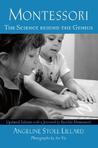
Review: Montessori: The Science Behind the Genius


Montessori: The Science Behind the Genius
Montessori: The Science Behind the Genius by Angeline Stoll Lillard

My rating: 4 of 5 stars


Lillard sets out to present the empirical evidence for the Montessori Method. Using research of Montessori directly and psychological research more generally, she explains both the Montessori theory and how the evidence supports much of what goes on in a Montessori classroom. The breadth of evidence that supports many of the key claims of Montessori is impressive and worth a serious look by anyone interested in Montessori or educational philosophy in general.

Another important aspect of the book is where Lillard points out the need for more research to support various aspects of Montessori. She is also careful to note the qualifications or limiting conditions on many of the studies. These are important both because it points out paths for future researchers, but also demonstrating Lillard’s intellectual honesty. She is clearly a Montessori supporter, but she is not dogmatic about it.

A downside here is that Lillard is often critical of traditional, mainstream education, but too often in an overly general way. She paints it with too broad of a brush and so might be seen as unfairly dismissing traditional schools and teachers. This is a point reinforced by some of my students’ responses to the book. I assigned this for my graduate class in Philosophy of Education. For the most part, they liked it and found much of it valuable and eye-opening; but a few noted her easy dismissal of traditional education and felt it unfairly characterized their own experiences. If the book was: “Why Montessori is better than traditional schools” then this would be a significant failing. But Lillard is not writing this book to criticize mainstream education but to show how research supports Montessori. So the fact that she falls short in fairly dealing with traditional education is not damning for the overall quality and importance of this book.


View all my reviews

Tuesday, December 03, 2013

CFA: Steve Jobs and Philosophy (Popular Culture and Philosophy Series)

CFA: Steve Jobs and Philosophy (Popular Culture and Philosophy Series)
Edited by Shawn E. Klein

  • Papers must focus on topics or ideas that are significantly connected to the life, work, and/or cultural impact of Steve Jobs. 
  • Submit abstracts of no more than 300 words to: sklein@rockford.edu 
  • Direct any questions about possible topics to: sklein@rockford.edu 
  • Abstracts due: On-Going
  • Notification of accepted abstracts: On-Going
  • Completed paper due: May 9, 2014
  • 3,000-word philosophy papers written in a conversational style for a lay audience 

 Any relevant topic considered, but here are some possibilities:

  • Jobs’ leadership style and ethical considerations raised by it: the virtues of leadership and how these were (or were not) exemplified by Jobs.
  • Epistemological issues of creativity (related to how Jobs sought to inspire and cultivate creativity and innovation at Apple, NeXT, and Pixar)
  • Epistemological and ethical issues in being a “visionary”; the effects of the so-called “Reality Distortion Field” 
  • The ethical, social, or corporate importance of creativity 
  • Epistemological issues in intuitionism and its role in Jobs’ thinking. 
  • Perfectionism: virtue or vice? 
  • Technology and aesthetics (Form and function) 
  • The originator vs. the integrator/popularizer. (e.g. Apple didn't invent the GUI or point and click, but integrated them with other systems and made them popular) 
  • Philosophical lessons learned by failure and success (from the Newton to the Iphone; Jobs getting pushed out and then returning to lead Apple) 
  • Buddhism and its role in Jobs’ life and career. 
  • The juxtaposition of Jobs’ counter-culture attitude and his capitalistic success. 
  • The virtue (or vice) of pride: moral ambitiousness or hubris? 
  • Steve Jobs vs Bill Gates/Apple vs Microsoft
  • Jobs on philanthropy 
  • Jobs’ political philosophy/outlook
  • Company creating and building as a moral enterprise.

 Steve Jobs and Philosophy will be a book in Open Court Publishing Company’s Popular Culture and Philosophy Series: http://www.opencourtbooks.com/categories/pcp.htm. Submit ideas for possible future PCP books to the series editor, George A. Reisch, at pcpideas@caruspub.com.

Wednesday, October 16, 2013

Sports Ethicist in Sports Illustrated

My Sports Ethicist blog was mentioned in Phil Taylor's "Point After" column in the October 14, 2014 edition. Taylor's column focused on the apparent growing tolerance for cheating. He quoted from my post "The Biogenesis Scandal and PEDs". When and if Sports Illustrated puts the column online, I will link to it.

Tuesday, October 08, 2013

Review: Hyperion


Hyperion
Hyperion by Dan Simmons

My rating: 4 of 5 stars


Hyperion is an epic sci-fi novel; it has everything one is looking for: space battles, time travel, a background future-history, a boogeyman (and boogey-race), androids, super-powerful AI, political intrigues, a rag-tag group of thrown together characters with slowly revealed backstories, and so on. Many of the technologies and sci-fi elements are familiar: it is a kind of mash-up of bits from Bladerunner, The Matrix, Terminator, (New) Battlestar Galactica, Tron, Firefly, and Stargate (though predating many of these). It is original in the way all these elements come together and the story being told. There is a fascinating interweaving of questions about religion, faith, and ethics. It draws in poetry (suggested by the title itself) and other cultural elements from “Old Earth”.

The one sour note is that the ending falls a little flat for me. (Possible spoiler alert!!) Partly this is the “to be continued” element. Partly it is too anti-climactic with the book building to a confrontation that doesn’t happen. Partly it is a little cheesy. Nevertheless, I will definitely pick up the next in the series and recommend it highly to anyone who likes sci-fi.


View all my reviews

Saturday, September 28, 2013

Review: Ted Williams: A Baseball Life


Ted Williams: A Baseball Life
Ted Williams: A Baseball Life by Michael Seidel

My rating: 3 of 5 stars


Ted Williams is a fascinating sports figure. The greatest hitter to ever play the game of baseball, and yet one of the most criticized of players. He had a hate-hate relationship with the media that dogged him his whole baseball life. Seidel's book provides a good account of Williams' rise to baseball greatness and his struggles with the media and the fans. He does a good job balancing between the media's take and Williams' take on the causes of the strife. He doesn't get too much into his personal life except as affected his baseball life. A nice feature of the narrative is that Seidel references contemporaneous events to provide historical context to the events of baseball.

Personally, I don't get a lot out of detailed accounts of baseball games from a half a century ago. Some of it is interesting, but Seidel does a season by season exposition and throws a lot of stats out there. It tended to blur together, and I often lost the thread. The most interesting parts where the accounts and testimony from Williams and his contemporaries. Overall, I am glad I read it, but I'd only recommend it to hard core baseball readers or Williams' fans.


View all my reviews

Monday, September 16, 2013

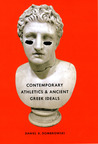
Review: Contemporary Athletics and Ancient Greek Ideals


Contemporary Athletics and Ancient Greek Ideals
Contemporary Athletics and Ancient Greek Ideals by Daniel A. Dombrowski

My rating: 3 of 5 stars


Dombrowski’s book is very interesting and covers a lot of good material in the philosophy of sport. He is clearly well-versed in Ancient Greek philosophy and the philosophy of sport. So there is a lot to be gained by reading this book.

Truth be told, however, I was a bit disappointed. I think, based on the title and the book descriptions, I expected to find much more in the way of Ancient Greek philosophy. There is a lot, so this might be an unfair criticism, but the focus is really on contemporary philosophers of sport and their theories. The Ancient Greeks are called forth to cast insight, background, and further elaboration, but they are not the focus. Nevertheless, I did learn a lot about the relevancy of the Ancient Greek ideas, particularly of Plato, to some of the issues that arise in the philosophy of sport.

Dombrowski’s discussion of Weiss, Huizinga, and Feezell is helpful and thorough. These are not mere recapitulations. He provides clear insight in to the theories of these thinkers and their impact on the philosophy of sport. He criticizes where he disagrees, though I would have preferred even more critical analysis (that said, this would have lengthened the book beyond the easily digestible size it is). The last chapter on process philosophy was less interesting to me and seemed somewhat misplaced in the context of the other chapters.

Overall, I definitely recommend this. It is not long, is clearly written, and it provides a good discussion of some of the major issues in the philosophy of sport.


View all my reviews

Monday, September 09, 2013

Review: A Death In Vienna


A Death In Vienna
A Death In Vienna by Daniel Silva

My rating: 5 of 5 stars


The previous two Allon novels and this one sort of form a trilogy with a focus on the Holocaust. The complicity of the Swiss and the Church are the focus of the first two. This one focuses on the broader complicity of many other countries evident in the post-war world. What makes this particular novel stand out is the detailed point of view of Holocaust survivors. This is integral to the plot; it provides the motivations for many of the characters and it causes the reader to feel the need for justice to be done.

It is paced well and gripping. The accounts from the death camps are harrowing. There is not much in the way of character development here; that is, not much is added to Allon’s character. We do get more of his back story and some of what may have lead him to be the man he is.


View all my reviews

Saturday, August 10, 2013

Review: Stone of Tears


Stone of Tears
Stone of Tears by Terry Goodkind

My rating: 4 of 5 stars


I like the world Goodkind has created. It is rich with characters and an intriguing mythology. I liked the first book, but I like the second book better--maybe because I am familiar with the world, so I can get deeper into the story itself. The story focuses on several interesting themes: self-acceptance and self-awareness, responsibility and consequences for choices, and value-hierarchy. The development of the characters and the way their choices drive the plot keeps me thoroughly engaged in the world. Lastly, I love Gratch.


View all my reviews