Ron Paul has endorsed Chuck Baldwin for president. Chuck who??
Apparently someone who believes that 9/11 was a punishment from God for us kicking "Heaven out of our schools, out of our homes, and out of our hearts." And to protect our individual liberty we need to stop de-Christianizing the country. And that our national freedom is being threaten by the Internationalist, New World Order conspiracy. (Isn't that an 80's punk band? No, but it is pretty much code for the Jews)
I, and I'm sure all of us who were attacked, sometimes quite viciously, for criticizing Paul, feel vindicated by this announcement. I believe this endorsement shows what Paul thinks is most important, and to paraphrase, "it ain't the economy, stupid." Sure, Paul might be very good on economic issues, but he's just about horrible on everything else.
(Hat tips to Reason and Freespace)
(Reason has quotes and links to Chuck Baldwin's website. I don't wish to link to him.)
Wednesday, September 24, 2008


Monday, September 22, 2008
Wither Democracy
An interesting article about the pulling back from democracy across the world. According to the article, after a period where many countries instituted various democrat reforms, many of these reforms have failed or are being dismantled. The author blames the middle class; arguing that while at first the middle class was the significant factor in bringing about democracy (by demanding the protection of their rights); the middle class has turned its back on democracy.
This may be true, but the author misses the point. It's not the middle class that is to blame--it's democracy itself. Most of these reforms were, as far as I can tell, about being able to duly elect government officials. This is after all the hallmark of democracy. And also routinely its worst and most dangerous feature.
We often confuse democracy with a free society. Democracy as a means, combined with other institutional and cultural features, is a good check on government power. The process of electing officials and routinely subjecting them to re-election can protect freedom when these officials cross the line. But when democracy itself becomes the goal, the rights of individuals are often sacrificed to the mob. If the 20th Century taught us anything its that the tyranny of the majority is no better than the tyranny of the few.
People often forget that the United States was not set up as as democracy but as a republic. (Historian and constitutional scholar David Mayer) Many features of the government are anti-democratic and are so on purpose: the President is not directly elected, the courts can overturn the legislature. These anti-democratic features are there to protect the minority of the individual from the tyranny of the majority: to protect the rights and liberties of individuals from being curtailed or stripped at the whim of 51% of the population.
It appears that as many of the countries discussed in this article shifted towards democracy, people have become disillusioned with democracy because it has not brought the protection of rights and liberties. It has brought in populist demagogues who undermine the rights and liberties for which the democratic movements fought. It is no wonder, then, that these folks are turning their backs on democracy.
This may be true, but the author misses the point. It's not the middle class that is to blame--it's democracy itself. Most of these reforms were, as far as I can tell, about being able to duly elect government officials. This is after all the hallmark of democracy. And also routinely its worst and most dangerous feature.
We often confuse democracy with a free society. Democracy as a means, combined with other institutional and cultural features, is a good check on government power. The process of electing officials and routinely subjecting them to re-election can protect freedom when these officials cross the line. But when democracy itself becomes the goal, the rights of individuals are often sacrificed to the mob. If the 20th Century taught us anything its that the tyranny of the majority is no better than the tyranny of the few.
People often forget that the United States was not set up as as democracy but as a republic. (Historian and constitutional scholar David Mayer) Many features of the government are anti-democratic and are so on purpose: the President is not directly elected, the courts can overturn the legislature. These anti-democratic features are there to protect the minority of the individual from the tyranny of the majority: to protect the rights and liberties of individuals from being curtailed or stripped at the whim of 51% of the population.
It appears that as many of the countries discussed in this article shifted towards democracy, people have become disillusioned with democracy because it has not brought the protection of rights and liberties. It has brought in populist demagogues who undermine the rights and liberties for which the democratic movements fought. It is no wonder, then, that these folks are turning their backs on democracy.
Wednesday, September 10, 2008
Benefits of Fandom
Here's an interesting article about the benefits of fandom.
Fans are, according to some studies, "less prone to depression, anger, and stress." Hmmmm...I must know all the exceptions.
Fans are, according to some studies, "less prone to depression, anger, and stress." Hmmmm...I must know all the exceptions.
Thursday, August 28, 2008
I Have A Dream 45 years later
Today was the 45th anniversary of Martin Luther King Jr's famous "I have a Dream" speech. I listened to the speech in its entirety this morning and was blown away. The imagery and rhetoric was beautiful. You just don't hear speakers like that any more. Moreover, it was almost shocking to hear a speech with substance. He was actually saying something meaningful, so unlike today's politicians and pundits who never say anything.
I never realized how much traditional American symbology and imagery was incorporated into the speech. It had the effect (I'm sure intended) of showing that his position was the truly American one and that the racists and segregationists were not.
I never realized how much traditional American symbology and imagery was incorporated into the speech. It had the effect (I'm sure intended) of showing that his position was the truly American one and that the racists and segregationists were not.
Tuesday, July 29, 2008
That whole why do they hate us debate
One of the areas where I diverge with many (non-Objectivist-type) libertarians is over foreign policy. I surprisingly find myself often at odds with CATO, a think tank with which I often agree, on this issue. I don’t care for the term interventionist--that’s not an accurate term for how I view a rational and justifiable foreign policy--nonetheless, I am certainly not a non-interventionist or isolationist. I believe there are many cases beyond some immediate and direct threat situated at one’s geographical borders that justify military and diplomatic activity. Anyway, this post isn’t about how to define those cases. I just wanted to preface my comments below.
One of the central themes of those coming from the non-interventionist position is that Arab/Muslim anti-Americanism is primarily the result of American foreign policy and not deep cultural and value differences. Patrick Basham, a CATO adjunct scholar, purports to prove this with some recent polling data. (Why Muslims Still Hate Us)
I am no position to dispute this data (though I think one should always take polls and surveys with very large salt licks); however, I think Basham runs with the data in a misleading way.
First, why only post-9/11 polls? The Muslim hatred of the West (including America) goes back well before 2001, indeed it seems well before any significant American involvement in the Middle East. For example, the Muslim Brotherhood, one of the leading anti-Western ideological movements, was founded in the 1920s.
This is a point that the non-interventionists tend to ignore. If Muslim hatred of the US is based primarily on our foreign policy, why was their antipathy prior to any serious, prolonged military or diplomatic forays into the Middle East? A better way to state this might be: why were ideological and religious movements that were anti-West so popular?
Second, the fact that polls show, generally, positive attitudes towards many facets of American culture (movies, TV, scientific progress) doesn’t demonstrate that antipathy for the US is not based on a deep cultural and value differences.
Anecdotally, I’ve had too many arguments with anti-American types in Levis and Nikes to think that people don’t compartmentalize these things. People are quite capable of liking the products of American culture without liking the values and principles that make those products possible. That’s all this particular polling data appears to show: Muslims/Arabs enjoy many of the products of American culture. It doesn’t say anything about their points of view on the kinds of values and principles that underlie that culture: namely, individualism and the primacy of reason.
Closing Caveats:
One of the central themes of those coming from the non-interventionist position is that Arab/Muslim anti-Americanism is primarily the result of American foreign policy and not deep cultural and value differences. Patrick Basham, a CATO adjunct scholar, purports to prove this with some recent polling data. (Why Muslims Still Hate Us)
I am no position to dispute this data (though I think one should always take polls and surveys with very large salt licks); however, I think Basham runs with the data in a misleading way.
First, why only post-9/11 polls? The Muslim hatred of the West (including America) goes back well before 2001, indeed it seems well before any significant American involvement in the Middle East. For example, the Muslim Brotherhood, one of the leading anti-Western ideological movements, was founded in the 1920s.
This is a point that the non-interventionists tend to ignore. If Muslim hatred of the US is based primarily on our foreign policy, why was their antipathy prior to any serious, prolonged military or diplomatic forays into the Middle East? A better way to state this might be: why were ideological and religious movements that were anti-West so popular?
Second, the fact that polls show, generally, positive attitudes towards many facets of American culture (movies, TV, scientific progress) doesn’t demonstrate that antipathy for the US is not based on a deep cultural and value differences.
Anecdotally, I’ve had too many arguments with anti-American types in Levis and Nikes to think that people don’t compartmentalize these things. People are quite capable of liking the products of American culture without liking the values and principles that make those products possible. That’s all this particular polling data appears to show: Muslims/Arabs enjoy many of the products of American culture. It doesn’t say anything about their points of view on the kinds of values and principles that underlie that culture: namely, individualism and the primacy of reason.
Closing Caveats:
- I am not saying that all Muslims or Arabs are anti-individualism or irrational. But, that many of the widespread, popular ideological movements in the Arab and Muslim worlds are.
- I am not saying that our often irresponsible and unprincipled foreign policy hasn’t created or increased antipathy towards the US. My point is just that to say this is the primary cause is putting the cart before the horse.
Thursday, July 17, 2008

Wednesday, July 16, 2008
Potty Mouthed Philosophers
First there was Bullshit, now Mindfucking.
Mindfucking: A Critique of Mental Manipulation
By Colin McGinn
Actually, looks interesting and McGinn is usually a relatively clear writer, so it's been added to my wishlist.
Mindfucking: A Critique of Mental Manipulation
By Colin McGinn
Actually, looks interesting and McGinn is usually a relatively clear writer, so it's been added to my wishlist.
Dr. Horrible and Captain Hammer
Superhero musical, anyone?
Dr. Horrible's Sing-along Blog
Starring: Neal Patrick Harris, Nathan Fillion, and Felicia Day. Produced by Joss Whedon.
Dr. Horrible's Sing-along Blog
Starring: Neal Patrick Harris, Nathan Fillion, and Felicia Day. Produced by Joss Whedon.
Thursday, July 10, 2008
Business and Economic Ethics
Though I am not teaching it this fall, here's the video for Business and Economics Ethics:
(Here's the link if you have trouble: http://video.yahoo.com/watch/2919121/8359891)
(Here's the link if you have trouble: http://video.yahoo.com/watch/2919121/8359891)
Sports Ethics Promo
Here's the promotional video for the debut of PHI 276: Sports Ethics.
(Here's the link if you have trouble: http://video.yahoo.com/watch/2919387/8360583)
(Here's the link if you have trouble: http://video.yahoo.com/watch/2919387/8360583)
Introduction to Philosophy Promo Video
Developed by Rockford College's Center for Ethics and Entrepreneurship, the next few posts are promotional videos for my fall courses. Here's the first one, for RC's PHI 103: Introduction to Philosophy:
Shawn E. Klein - Introduction to Philosophy - PHIL 103 - Rockford College @ Yahoo! Video
(Here's the link if you have trouble with the above: http://video.yahoo.com/watch/3430367/9572669 )
Shawn E. Klein - Introduction to Philosophy - PHIL 103 - Rockford College @ Yahoo! Video
(Here's the link if you have trouble with the above: http://video.yahoo.com/watch/3430367/9572669 )
Monday, June 23, 2008
George Carlin, 1937-2008
George Carlin has died at the age of 71 from apparent heart failure. (NYT Obit)
Carlin was a modern-day Socratic gadfly--a real philosopher. Like Socrates, Carlin stood in front of society and pushed them to question the way they lived. His best bits were usually about how we use words and language. He wasn't just a cunning linguist (oh, how he'd love that!); his humor brought out the personal assumptions and social implications of the words we use. He saw the connection between thought, language, and action; and that the attempt to control language is an attempt to control one's thoughts and actions.
This is of course best exemplified in his Seven Words You Can't Say on Television:
Carlin was one of the first stand-up comedians that I remember. His Carnegie hall show, that I think was on HBO in the 80s, was one of the first extended stand-up routines that I saw and it started my love of stand-up. (Along with Bill Cosby and Eddie Murphy) I can still see all the chairs piled up behind him on the stage as Carlin riffed on the behavior of cats and dogs.
His humor was also a biting social criticism--often, as the years went by, at growing distance from my own views--yet still witty and funny. Carlin was a rare a talent that had the ability to piss off just about everyone: he attacked religion, politicians, feminists, and conservatives of all stripes. Carlin had no truck for bullshit of any kind and where he sensed someone trying to get away with something, he attacked them vigorously and thoroughly. Sadly, in his waning years, Carlin got much too bitter and angry; and this detracted from my enjoyment of his more recent work.
Just this Friday, I was watching several of his older bits on YouTube. (This was 'research' for my upcoming talk on "Bullshit".) They were still funny as ever. Thank you George Carlin.
Carlin was a modern-day Socratic gadfly--a real philosopher. Like Socrates, Carlin stood in front of society and pushed them to question the way they lived. His best bits were usually about how we use words and language. He wasn't just a cunning linguist (oh, how he'd love that!); his humor brought out the personal assumptions and social implications of the words we use. He saw the connection between thought, language, and action; and that the attempt to control language is an attempt to control one's thoughts and actions.
This is of course best exemplified in his Seven Words You Can't Say on Television:
Carlin was one of the first stand-up comedians that I remember. His Carnegie hall show, that I think was on HBO in the 80s, was one of the first extended stand-up routines that I saw and it started my love of stand-up. (Along with Bill Cosby and Eddie Murphy) I can still see all the chairs piled up behind him on the stage as Carlin riffed on the behavior of cats and dogs.
His humor was also a biting social criticism--often, as the years went by, at growing distance from my own views--yet still witty and funny. Carlin was a rare a talent that had the ability to piss off just about everyone: he attacked religion, politicians, feminists, and conservatives of all stripes. Carlin had no truck for bullshit of any kind and where he sensed someone trying to get away with something, he attacked them vigorously and thoroughly. Sadly, in his waning years, Carlin got much too bitter and angry; and this detracted from my enjoyment of his more recent work.
Just this Friday, I was watching several of his older bits on YouTube. (This was 'research' for my upcoming talk on "Bullshit".) They were still funny as ever. Thank you George Carlin.
Wednesday, June 18, 2008
Favorite Fiction Books
In a discussion board at Rings of Orbis, people are posting lists of their favorite books. This is what I posted.
Oh boy o' boy! This is going to be tough. I'm sure a different night the list would be slightly different. To keep things more simple: I'm not including non-fiction. I am also avoiding putting anything I read most recently to avoid proximity bias.
In no particular order (keep the list to 10 was hard enough):
1. The Fountainhead by Ayn Rand
The epic and classic story of keeping one's independence and integrity in the face of peer, social, and career pressure.
2. Early Autumn by Robert B Parker
I love all of Parker's Spenser novels (some of the older citizens may remember Spenser for Hire from the 80s). This one is my favorite because Spenser is the most explicit about his philosophy of life.
3. The Catcher in the Rye by J.D Salinger
A classic. Loved it as a teenager, and really identified with Holden. As an adult, Holden seems more immature and in need of some growing up, but I still love it.
4. Brave New World by Aldous Huxley
An early Sci-fi classic. A story that has stuck in my imagination since I was kid.
5. The Maltese Falcon By Dashiell Hammett
My favorite genre is the detective novel (with sci-fi a close second!). Hammett's classic is just plain fantastic. If you like the Bogart movie, the novel is so much better.
6. Dennis Lehane's Patrick Kenzie/Angela Gennaro Novels
I couldn't decide which one was my favorite, but I love the series. Darker and more realistic than Spenser.
7. The Moon is a Harsh Mistress by Robert Heinlein
One exception to my rule of not including recent reads. This is, I guess, an instant classic for me. I make the exception for two reasons: 1) it's fantastic and 2) I should have read it years ago.
8. Asimov's Foundation series
I loved it as a young teenager--but haven't read it in years so I often wonder if I would still like it. But I devoured the series in my tweens.
9. Harry Potter and the Prisoner of Azkaban by J.K Rowling.
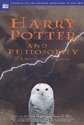
Loved the whole series (Check out my Harry Potter and Philosophy on Amazon), but this one was my favorite.
10. The Counterlife by Philip Roth
This book is so interesting and weird, plus I've read it several times and still haven't quite figured it all out.
I'm working on a non-fiction list and will post it at some point.
Oh boy o' boy! This is going to be tough. I'm sure a different night the list would be slightly different. To keep things more simple: I'm not including non-fiction. I am also avoiding putting anything I read most recently to avoid proximity bias.
In no particular order (keep the list to 10 was hard enough):
1. The Fountainhead by Ayn Rand
The epic and classic story of keeping one's independence and integrity in the face of peer, social, and career pressure.
2. Early Autumn by Robert B Parker
I love all of Parker's Spenser novels (some of the older citizens may remember Spenser for Hire from the 80s). This one is my favorite because Spenser is the most explicit about his philosophy of life.
3. The Catcher in the Rye by J.D Salinger
A classic. Loved it as a teenager, and really identified with Holden. As an adult, Holden seems more immature and in need of some growing up, but I still love it.
4. Brave New World by Aldous Huxley
An early Sci-fi classic. A story that has stuck in my imagination since I was kid.
5. The Maltese Falcon By Dashiell Hammett
My favorite genre is the detective novel (with sci-fi a close second!). Hammett's classic is just plain fantastic. If you like the Bogart movie, the novel is so much better.
6. Dennis Lehane's Patrick Kenzie/Angela Gennaro Novels
I couldn't decide which one was my favorite, but I love the series. Darker and more realistic than Spenser.
7. The Moon is a Harsh Mistress by Robert Heinlein
One exception to my rule of not including recent reads. This is, I guess, an instant classic for me. I make the exception for two reasons: 1) it's fantastic and 2) I should have read it years ago.
8. Asimov's Foundation series
I loved it as a young teenager--but haven't read it in years so I often wonder if I would still like it. But I devoured the series in my tweens.
9. Harry Potter and the Prisoner of Azkaban by J.K Rowling.
Loved the whole series (Check out my Harry Potter and Philosophy on Amazon), but this one was my favorite.
10. The Counterlife by Philip Roth
This book is so interesting and weird, plus I've read it several times and still haven't quite figured it all out.
I'm working on a non-fiction list and will post it at some point.
Wednesday, June 04, 2008
Arguments against Performance-Enhancing Technologies
I have been working on a sports ethics presentation. The following is a (really) rough draft of the section of performance-enhancing technologies. I'd be interested in feedback, but do keep in mind this is not meant as a formal piece of writing. It is more of a jotting down of thoughts waiting to be coerced into something intelligent. Usual caveats for such thing: poor grammar, typos, inchoate thoughts. This is an experiment on my part, I typically prefer to post only more polished works. Let's hope this goes well.
_______________
I have identified seven distinct arguments offered for justifying the banning of certain performance-enhancing technologies/drugs (PET or PED) (these are not mutual exclusive or jointly exhaustive):
1. Argument from Danger
2. Argument from Unnaturalness
3. Argument from Objectification
4. Argument from Fairness
5. Argument from Coercion
6. Argument from False Achievement
7. Argument from the Children
Argument from Danger
o The substance or technology endangers the user to some significant degree.
o Primarily targeted at performance-enhancing drugs.
o Problems:
o Many of the dangers arise from abuse or overdose; thus, dangers could often be avoided if used under a physicians care. (though no doubt this would be harder to regulate)
o Counter-examples:
§ Some of the banned substances, like HGH, have few, if any, known serious, long-term consequences.
§ Some dangerous substances are not banned: Nicotine is a well-known stimulant and it is linked to cancer and other diseases, yet, few sport associations prohibit it.
o Paternalistic concerns.
§ Generally, the individual athlete should be free to weight the benefits and risks of a particular substance and assume the risk if so chooses. A prohibition appears to say that the athlete is in some manner unfit to make this decisions
o Danger inherent in many sports to begin with:
§ Boxing
§ Physics shows us that a body weight limit in football would reduce injury caused by collisions.
Argument from Unnaturalness
o This is probably the weakest argument of all.
o Much of an athlete’s preparation for competition is unnatural to some degree.
o Diet and training of an elite athlete is typically far out of the natural range.
o A large part of the problem lies in the ambiguity of ‘natural’ and ‘unnatural’.
o Anabolic steroids are derived from substances that occur in our body.
o Blood doping involves injecting one’s own blood back into his system--what’s more natural than one’s own blood?
o Many allowed substances are ‘unnatural’: ibuprofen not a naturally occurring chemical compound.
o There is no inherent value in something being natural as opposed to man-made. Arsenic is after all a naturally occurring substance while chocolate has to be manufactured.
o Performance-enhancing Technologies:
o All technologies are man-made and artificial and thus, in a sense, unnatural.
o Once we move from bare feet to sandals and then to running shoes, why not a better designed running shoe?
Argument from Objectification
o A less common argument for banning PETS is that the use of PETs turns the athlete into an object, a tool for success instead of a human being.
o The skills of the athlete are replaced with technology and so we have a contest of technologies not of individuals.
o Problems:
o Sports are constantly undergoing technological advancement in equipment used in the game and for training--usually unnoticed and unchallenged.
o The introduction of graphite racquets in tennis has not made the tennis players less human, mere tools of performance.
o PEDs are not automatic, instantaneous. The athlete still needs natural ability as well as dedicated training and practice in order to see his ability improve. It really wouldn’t matter how much steroids I took, I am never going to hit a golf ball like Tiger Woods -- or any pro golfer for that matter.
o We use technology to enhance all areas of lives:
§ Dishwashers, automobiles.
§ Pain and allergy relief medicines.
§ These don’t make us less human; in fact they allow us to express our humanity more fully. Instead of wasting time washing dishes at the sink, one can spend the time writing his philosophy dissertation.
Argument from Fairness
o One of the more common arguments:
o The general idea is that PET should be banned because they give the user an unfair advantage.
o This argument, however, begs the question.
o Certainly if the use of substance or technology is prohibited, and a player uses it in violation of the rules, they have advantage over the players who do follow the rules. This is unquestionable unfair.
o However, if the substances or technologies are not prohibited, then each player has the opportunity to make use of the PET. It is not clear how its use would be unfair.
o Counter Examples:
o Does a basketball player who spends an extra hour after practice shooting free throws gain an unfair advantage? Does the long-distance runner who consumes a meal heavy in complex carbohydrates the night before a run gain an unfair advantage over one who does not? Does a swimmer in the new Speedo suit have an unfair advantage over his competition if they decide to wear a different suit?
o This argument appears to collapse into the argument from danger:
o Since these substances or technologies endanger the user, many would rather not use them but competitive pressure requires that they do so--and this pressure is unfair.
o This brings us back to the problems of the argument from danger and forward to the argument from Coercion.
Argument from Coercion
o The idea here is most athletes feel competitive pressure to make use of these substances or technologies that they would not otherwise choose to use.
o Most athletes, the argument goes, would rather not inject themselves with a substance like steroids that could have significant long-term side-effects. Yet, they are compelled to do so if most of their competitors are doing so. This forces the athletes to do something they would rather not do and to do something that possibly puts them at some considerable risk.
o It looks like someone who chooses to use PED force this same choice on others.
o An effective sport-wide ban would remove this pressure.
o Problems:
o Parallels to other aspects of sport:
§ Extreme training/diet
o Can also be dangerous and unhealthy.
o Puts pressure on others to do engage in similar practices.
o (it should be noted that there are limits at most levels in number of practices, length of practices, etc. for very much this reason)
o Parallels other areas of our lives
§ Getting a college degree
§ Many college students only go to college because of the competitive pressure in the job market. They need the degree to get a job. If they could get the same job without the degree, they would prefer not to go to college.
o Assumption: most athletes only take PEDs because of competitive pressure. Is this true?
o Doesn’t appear to work for non-drug technologies. Competitive pressure doesn’t explain the ban on on non-drug technologies, such as aluminum bats in Major League Baseball.
Argument from the Children
“Why won’t anyone think of the children!” (The Simpsons)
This argument is based on the idea that the use of performance enhancing drugs by professionals leads to an increase in the use by under-age aspiring athletes. The adult professional might be able to weight the long-term risks of using steroids versus the potential gain. A fourteen year old trying to make the high school football probably cannot make that assessment in an objective and rational way. Moreover, the dangers of using many of these drugs are often more severe for a growing youth than an adult. So the argument goes, in order to prevent the use of performance-enhancing drugs in children, we need to ban its use by adults.
Problems:
o Many activities that are okay or permissible for adults but not okay for children (sex; contractual agreements, smoking cigarettes) and yet we don’t ban the permissible adult use.
o The diet that a professional football player or marathoner might regularly eat is probably not a diet that is acceptable for a high school student. The hours and intensity of training an elite athlete engages in is not likely to be healthy for a teenager. And yet many young, aspiring athletes do follow the lead of adult athletes on diet and training, quite possibly to detrimental effect. (example?)
Nonetheless, a sport might have a significant interest in making itself a good role model for youngsters and this might be one way to do this.
However, this argument does not solve the more general problem of finding a non-arbitrary reason for drawing the line between what is acceptable and what is not.
Argument from False Achievement
o The central idea here is that the achievements of an athlete using a performance-enhancing technology are not achievements of the athlete. The achievements are due to the technology and not the athlete’s skill or ability.
o One hears this one often regarding baseball’s Barry Bonds: his home run record, critics argue, is not his, but BALCO’s.
o This doesn’t seem quite fair. Most individuals could take steroids and never hit a major league pitch much less a home run, much less over 760 of them. Even most major league baseball players probably couldn’t hit that many even on steroids.
§ Another important consideration here is that many of the pitchers were taking steroids as well during this period, and so there has to be some balance of increased strength in hitting versus increased ability to get the batter out.
o We don’t seem to draw the same conclusions about an athlete’s increased ability or strength due to better diet and training; or, approved supplements like creatine.
o Improved technology: Sand wedge in golf; swimsuits in swimming; graphite racquets in tennis.
o All of these improved the athletes’ ability to do what they do. Yet, we don’t attribute Andre Agassi’s greatness to a better tennis racquet though certainly his racquet is far superior to ones Arthur Ashe used.
o However, it is telling that there are some calls for banning Speedo’s LZR Racer suit. Reported to reduce drag and make swimmers more buoyant, some say it is an unfair advantage and that it has lead to the breaking of many world records in swimming. The worry behind this is in part a concern that the suits and not the swimmer are responsible for these achievements.
Some conclusions from this analysis:
o Tendency of arguments to collapse to Argument from Danger.
o Anti-new technology bias: old technology and drugs are okay, new ones are bad. (cortisone is older and so okay, speedo swimsuit is new and so is unfair)
o Only apparent rationale for line being drawn where it is often drawn is between stuff that works really well and stuff that doesn’t work as well.
o Creatine is often taken for the very same reasons that anabolic steroids are taken. The latter works much, much better.
o A properly formulated diet can increase muscle mass and reduce body fat; but HGH can do this better.
o The better a new technology works at improving performance the more likely it seems that it will be banned.
Thursday, May 29, 2008
Books Received
The Rational Imagination: How People Create Alternatives to Reality by Ruth Byrne.
This one looks interesting and relevant to my project. Byrne will discuss the role of imagination in rational thought generally and more specifically the role it plays in counterfactual thinking. For example, "How might my life have gone if I had started grad school immediately after college?"
The Work of Imagination by Paul Harris
This one came up in a lot of bibliographies, so I thought it might be important. Harris is a developmental psychologist and this book presents the research on the role of imagination in the cognitive and emotional development of children.
This one looks interesting and relevant to my project. Byrne will discuss the role of imagination in rational thought generally and more specifically the role it plays in counterfactual thinking. For example, "How might my life have gone if I had started grad school immediately after college?"
The Work of Imagination by Paul Harris
This one came up in a lot of bibliographies, so I thought it might be important. Harris is a developmental psychologist and this book presents the research on the role of imagination in the cognitive and emotional development of children.
Tuesday, May 20, 2008

Sunday, May 18, 2008
Birthday Books
For our anniversary (6 years!), Kristen and I spent the afternoon at B&N. We love walking through the stacks and checking out all the books. We had lunch at one of favorite spots and then spent the rest of the day at Starbucks chatting. Also, for my birthday last month, I got (my favorite gifts) gift certificates for Amazon and B&N. I only recently got around to using them. It can be hard to pick out new books. There are so many I want, so many I already own and haven't read yet. I focused this time on books I am likely to get to this summer.
From Amazon:
The Moon is Harsh Mistress by Robert Heinlein
Yes, I know, it's hard to believe I haven't yet read this sci-fi classic. I thought it was about time.
Sunset Express by Robert Crais
The next book for me to read in the Elvis Cole series. One of the several detective-fiction series I read.
Infidel by Ayaan Hirsi Ali
A highly recommended and courageous memoir of the author's life-long struggle against living under Islam.
Moneyball: The Art of Winning an Unfair Game by Michael Lewis
A groundbreaking book about baseball. Besides my intrinsic interest, I thought it might prove useful in preparation for the Sports Ethics course.
From B&N:
Wizard's First Rule by Terry Goodkind
A recommended fantasy novel series. This is the first book in the series. I always look for it when I'm in a bookstore. This is the first time it was there, so I got it.
The Guns of the South by Harry Turtledove
Picked this on a whim. As I mentioned before I enjoy alternative history, and Turtledove is a well-known author in this genre. This one is about the South winning the Civil War.
Moving the Chains: Tom Brady and the Pursuit of Everything by Charles Pierce
An account of Tom Brady's rise to greatness in the NFL. Got this, obviously, because I'm a die-hard Patriots and Brady fan. Also, along with Moneyball, this is all part of the background reading for the Sports Ethics course.
From Amazon:
The Moon is Harsh Mistress by Robert Heinlein
Yes, I know, it's hard to believe I haven't yet read this sci-fi classic. I thought it was about time.
Sunset Express by Robert Crais
The next book for me to read in the Elvis Cole series. One of the several detective-fiction series I read.
Infidel by Ayaan Hirsi Ali
A highly recommended and courageous memoir of the author's life-long struggle against living under Islam.
Moneyball: The Art of Winning an Unfair Game by Michael Lewis
A groundbreaking book about baseball. Besides my intrinsic interest, I thought it might prove useful in preparation for the Sports Ethics course.
From B&N:
Wizard's First Rule by Terry Goodkind
A recommended fantasy novel series. This is the first book in the series. I always look for it when I'm in a bookstore. This is the first time it was there, so I got it.
The Guns of the South by Harry Turtledove
Picked this on a whim. As I mentioned before I enjoy alternative history, and Turtledove is a well-known author in this genre. This one is about the South winning the Civil War.
Moving the Chains: Tom Brady and the Pursuit of Everything by Charles Pierce
An account of Tom Brady's rise to greatness in the NFL. Got this, obviously, because I'm a die-hard Patriots and Brady fan. Also, along with Moneyball, this is all part of the background reading for the Sports Ethics course.
Friday, May 16, 2008
Summertime
The semester is done, it has been for a week now. That means it's time for a break, right? While I will take a vacation this summer, I have several summer projects that need attention.
1. Dissertation, Dissertation, Dissertation
Without a doubt, the most important project of the summer. My goal is to finish, if not defend, before the Fall semester. I'm currently grappling with the literature on imagination. Quite interesting material. Most of it is focused on psychological or neurological accounts of imagination. That's of less interest to me as I am not trying to provide an explanation of imagination. Still, it is important to get a sense of how those that have studied the workings of imagination explain it. I am interested in the different roles imagination plays in the ways we think; in particular, how imagination might interact with practical reasoning.
2. TAS Summer Seminar talks
As previously announced, I am giving two talks this summer at TAS's seminar in Portland. The abstract and outlines for those talks are due next week, so I am hard at work getting those done. These are going to be really fun.
3. Fall Class Prep
I am teaching Introduction to Philosophy again, plus two sections of a new course: Sports Ethics. I'm really excited about this. I've been reading up on the literature--for the Summer Seminar talk on Sports Ethics and for the class. And there are a lot of current controversies that we'll talk about: steroids, technological advances and their effect on sports, etc.
4. Graduate Seminar
In August, I'll be attending TAS's Graduate Seminar on Political Philosophy and Legal Theory. So there will be some prep for that as well.
So, I've got a pretty full docket for the summer, but it's all interesting and fun work.
1. Dissertation, Dissertation, Dissertation
Without a doubt, the most important project of the summer. My goal is to finish, if not defend, before the Fall semester. I'm currently grappling with the literature on imagination. Quite interesting material. Most of it is focused on psychological or neurological accounts of imagination. That's of less interest to me as I am not trying to provide an explanation of imagination. Still, it is important to get a sense of how those that have studied the workings of imagination explain it. I am interested in the different roles imagination plays in the ways we think; in particular, how imagination might interact with practical reasoning.
2. TAS Summer Seminar talks
As previously announced, I am giving two talks this summer at TAS's seminar in Portland. The abstract and outlines for those talks are due next week, so I am hard at work getting those done. These are going to be really fun.
3. Fall Class Prep
I am teaching Introduction to Philosophy again, plus two sections of a new course: Sports Ethics. I'm really excited about this. I've been reading up on the literature--for the Summer Seminar talk on Sports Ethics and for the class. And there are a lot of current controversies that we'll talk about: steroids, technological advances and their effect on sports, etc.
4. Graduate Seminar
In August, I'll be attending TAS's Graduate Seminar on Political Philosophy and Legal Theory. So there will be some prep for that as well.
So, I've got a pretty full docket for the summer, but it's all interesting and fun work.
Thursday, May 08, 2008
Happy Birthday!
Today is the 60th anniversary of the founding of the modern state of Israel (Yom Ha'atzmaut). In many ways, it is the most successful state formed out of former European colonial possessions. The area that became Israel was a British possession and before that part of the Ottoman Empire.
It has a growing and stable economy, rich in high-tech and bio-tech. It is also one of the more successful countries to shift from a centralized, socialistic economy to a more decentralized, freer economy. This is, of course, one of the main reasons for its growing economy.
Israel has fought 4 major wars with its neighbors, not to mention decades of battling terrorists. Its air force is one of the best in the world. Many of the tank fighting strategies deployed in both the Gulf Wars were developed by the Israelis on their battlefields. The cooperation between the militaries of Israel and the US has been a boon to both countries.
Economically and militarily, Israel is an unquestionable success story.
Yet, Israel still struggles with its identity. It is largely a secular society, but identifies itself as a Jewish state. It struggles with dealing with issues of democracy and equality regarding the Israel Arab minority as well as differences between Jews of European descent and those who emigrated from the Arab world. It wrestles daily with the weight of controlling disputed and violent territories. And even after 60 years, it contends with an international community that is, at best, unsure how to relate to with her.
Somehow, this is fitting for a Jewish state. Individual Jews have, in analogous ways, the same struggles. Many of Jews outside of Israel are also secular but do not shed their Jewish identity and connections. This balance between secularism and religion is always a challenge for Jews--even those who are expressly religious. This is why some retreat into the confines of Hasidic communities where they largely cut themselves off from the outside world. And why others reject their identity all together so as not to be connected with religion at all. Most Jews, however, find themselves somewhere along the spectrum of secular and religion; not wanting to jettison their Jewish identity, but not wanting to live by restrictive and arbitrary rules.
Individual Jews also contend with the differences between Jews. Since the Jewish Enlightenment, The Haskalah, in the 18th century when Jews began to integrate into European society and culture, Jews have struggled with the choices their fellow Jews have made. Some chose to completely assimilate into European society--going so far as converting to Christianity. Others chose the opposite path fighting against any integration and forming insular communities that avoid Christian Europe. Again, most were some where in between, balancing being Jewish and European.
In Europe and American, there was and is prejudice between Jews. The more highly cultured and assimilated Jews looking down upon and embarrassed by the Tevyas of the world. We see this in the late 19th century when German Jews, already established in the US, had to deal with these Yiddish speaking, peasant immigrants from Eastern Europe. And we see it today between Hasidic communities and other Jewish communities. A Reform Jewish family living in Manhattan has more in common with (and get along better with) its Presbyterian neighbors than with the Hasidic Jews living across the river in Crown Heights.
And Jews today are still uncomfortable and unsure of their relationship with the non-Jewish world around them. We are, largely, successful economically and socially. Anti-semitism is still an issue, but it is not respectable and usually hidden. Jews do not worry about not getting jobs or in to schools anymore. They don't worry about getting into social clubs or politics. Few fear being dragged from their work and beaten. And yet, most Jews, deep down, have some nondescript, undirected worry. "It could happen again. It happened in Germany and Jews were comfortable and successful there"
And this brings me back to Israel. One of the main reasons Jews are so supportive of Israel is because we need to know its there. We need to know its there as an escape valve--if things get bad enough, there is always Israel. We need to know its there as a source of pride--see what Jews can do. We need to know its there because it unites Jews--it's one of the few things most Jews can agree on.
I hope that the next 60 years will bring more prosperity to Israel, peace with its neighbors and its Arab population within, and wider acceptance within the world community. But Israel, like all Jews, will always struggle with its identity--that is, ironically, our identity.
It has a growing and stable economy, rich in high-tech and bio-tech. It is also one of the more successful countries to shift from a centralized, socialistic economy to a more decentralized, freer economy. This is, of course, one of the main reasons for its growing economy.
Israel has fought 4 major wars with its neighbors, not to mention decades of battling terrorists. Its air force is one of the best in the world. Many of the tank fighting strategies deployed in both the Gulf Wars were developed by the Israelis on their battlefields. The cooperation between the militaries of Israel and the US has been a boon to both countries.
Economically and militarily, Israel is an unquestionable success story.
Yet, Israel still struggles with its identity. It is largely a secular society, but identifies itself as a Jewish state. It struggles with dealing with issues of democracy and equality regarding the Israel Arab minority as well as differences between Jews of European descent and those who emigrated from the Arab world. It wrestles daily with the weight of controlling disputed and violent territories. And even after 60 years, it contends with an international community that is, at best, unsure how to relate to with her.
Somehow, this is fitting for a Jewish state. Individual Jews have, in analogous ways, the same struggles. Many of Jews outside of Israel are also secular but do not shed their Jewish identity and connections. This balance between secularism and religion is always a challenge for Jews--even those who are expressly religious. This is why some retreat into the confines of Hasidic communities where they largely cut themselves off from the outside world. And why others reject their identity all together so as not to be connected with religion at all. Most Jews, however, find themselves somewhere along the spectrum of secular and religion; not wanting to jettison their Jewish identity, but not wanting to live by restrictive and arbitrary rules.
Individual Jews also contend with the differences between Jews. Since the Jewish Enlightenment, The Haskalah, in the 18th century when Jews began to integrate into European society and culture, Jews have struggled with the choices their fellow Jews have made. Some chose to completely assimilate into European society--going so far as converting to Christianity. Others chose the opposite path fighting against any integration and forming insular communities that avoid Christian Europe. Again, most were some where in between, balancing being Jewish and European.
In Europe and American, there was and is prejudice between Jews. The more highly cultured and assimilated Jews looking down upon and embarrassed by the Tevyas of the world. We see this in the late 19th century when German Jews, already established in the US, had to deal with these Yiddish speaking, peasant immigrants from Eastern Europe. And we see it today between Hasidic communities and other Jewish communities. A Reform Jewish family living in Manhattan has more in common with (and get along better with) its Presbyterian neighbors than with the Hasidic Jews living across the river in Crown Heights.
And Jews today are still uncomfortable and unsure of their relationship with the non-Jewish world around them. We are, largely, successful economically and socially. Anti-semitism is still an issue, but it is not respectable and usually hidden. Jews do not worry about not getting jobs or in to schools anymore. They don't worry about getting into social clubs or politics. Few fear being dragged from their work and beaten. And yet, most Jews, deep down, have some nondescript, undirected worry. "It could happen again. It happened in Germany and Jews were comfortable and successful there"
And this brings me back to Israel. One of the main reasons Jews are so supportive of Israel is because we need to know its there. We need to know its there as an escape valve--if things get bad enough, there is always Israel. We need to know its there as a source of pride--see what Jews can do. We need to know its there because it unites Jews--it's one of the few things most Jews can agree on.
I hope that the next 60 years will bring more prosperity to Israel, peace with its neighbors and its Arab population within, and wider acceptance within the world community. But Israel, like all Jews, will always struggle with its identity--that is, ironically, our identity.
Thursday, May 01, 2008
Never Forget. Never Again.
Today is Yom HaShoah: Holocaust Remembrance Day.
Nearly 6 million innocent lives extinguished for being Jews. Anywhere from 1.5 to 2 million of these lives were children.
These numbers are unfathomable. Each life a unique, unrepeatable point; an individual with hopes, fears, passions, and goals. These are gone forever. What was lost is unimaginable. The future achievements and accomplishments of each of these individuals lost to the gas chambers.
There are several memorials that represent this all too clearly. Two are at the US Holocaust Museum in DC. One is a sculpture of a huge pile of shoes. Lives discarded as a easily as one discards shoes. These personal items often all that was left of these lives.
The second is the memorial for a Jewish town wiped from the map. It's two stories of photographs of the town and its people. Pictures of weddings, parades, shops, friends, lovers. All gone, consumed by hate.
The last is the Children's Memorial at Yad Vashem, the Israeli Holocaust memorial and museum in Jerusalem. An underground structure, dark and cool. There are memorial candles and mirrors reflecting these candles. The effect is haunting. An infinity of tiny lights shining in this cold dark place. What brightness that could have come from these lives that we will never know?
An excellent resource: The Holocaust Wing of the Jewish Virtual Library
Never Forget. Never Again.
Nearly 6 million innocent lives extinguished for being Jews. Anywhere from 1.5 to 2 million of these lives were children.
These numbers are unfathomable. Each life a unique, unrepeatable point; an individual with hopes, fears, passions, and goals. These are gone forever. What was lost is unimaginable. The future achievements and accomplishments of each of these individuals lost to the gas chambers.
There are several memorials that represent this all too clearly. Two are at the US Holocaust Museum in DC. One is a sculpture of a huge pile of shoes. Lives discarded as a easily as one discards shoes. These personal items often all that was left of these lives.
The second is the memorial for a Jewish town wiped from the map. It's two stories of photographs of the town and its people. Pictures of weddings, parades, shops, friends, lovers. All gone, consumed by hate.
The last is the Children's Memorial at Yad Vashem, the Israeli Holocaust memorial and museum in Jerusalem. An underground structure, dark and cool. There are memorial candles and mirrors reflecting these candles. The effect is haunting. An infinity of tiny lights shining in this cold dark place. What brightness that could have come from these lives that we will never know?
An excellent resource: The Holocaust Wing of the Jewish Virtual Library
Never Forget. Never Again.
Friday, April 18, 2008
More on Roscoe Pet Ordinance
I thought it might be interesting to post the correspondence I had with one of the Roscoe Village Trustees regarding the proposed pet ordinance.
Here is the first response from Trustee Scott Richardson.
Here is the response I sent back to Mr. Richardson.
Mr. Richardson sent me a copy of the proposed ordinance. And here is the response I sent after I read the ordinance.
Thanks to Mr. Richardson for, one, corresponding with me (no other trustee contacted me), and, two, for not objecting to my plan for posting this exchange.
Here is the first response from Trustee Scott Richardson.
Our current ordinance limits the number of pets to 4 unless you have a kennel or multi pet license. The new ordinance was made to take care of people that don't take care of the animals they have. The ordinance address cats more then any other animal. We have made allowances for people that have ferral cats. People that live next to other people with numerous animals have a rights also and we have to take into account their feelings also and they don't want these animals in there yards going to the bathroom. We have had several meetings about this subject and have fashioned the ordinance to deal with the problem we are having.
Here is the response I sent back to Mr. Richardson.
Your response doesn't address any concerns and just reiterates to me the arbitrariness of this ordinance. The fact that some individuals don't take care of their animals is no basis for denying responsible individuals their liberty. If that is the concern, the ordinance should directly address that. A homeowner with one pet that is not taking care of responsibly raises all these same concerns. That is why the ordinance is arbitrary.
You wrote: "People that live next to other people with numerous animals have a rights also and we have to take into account their feelings" Well, no, we don't. That one feels a certain way about how many pets I might have is their problem; not mine or the villages. I might live next door to someone who has a motorcycle and I might not like that, but that doesn't give the village the authority to prevent my neighbor from having a motorcycle. Or maybe I don't like kids running around, and my neighbor has 5 kids. Should the village legislate no more than 4 kids? Or maybe I don't like Asian people, should we take account of my feelings then? According to the principle you have stated, the village would have that authority. Unless my pets are doing harm or posing a threat to my neighbor, his feelings don't count. Nor I should say, do mine. What should be the concern of the village government is the safety and protection of the residents; not their feelings.
Each resident certainly has rights--this is precisely my concern. The village is violating the rights of the residents by prohibiting, with no reasonable basis in the safety and protection of residents, an otherwise lawful action. That another doesn't like that lawful action is not a reasonable basis: such is the seed of tyranny.
Having rights means that others cannot interfere with one activities and property unless those activities or property are damaging another's activities or property. How does one owning five indoor, spayed cats effect anyone else? If I have dog that goes to the bathroom in some one else's yard, I should clean it up. Now if I don't, then that is a problem. I have interfered in their property and should be accountable for that. That is entirely reasonable, and I would have assumed that the village required that already.
My problem is not that the village wants to make sure that animals are being responsibly cared for and that residents aren't being unduly affected by the pets that others own. My problem is that village is going about this in an overly broad and arbitrary manner. Broad because the ordinance makes it illegal for anyone to have more than 4 pets, instead of focusing on the problem: those that have pets they don't take care of. And it is arbitrary because there is no connection between the number of pets and how responsible the owners are. Why 4? Why not 3 (as it was at first) Why not 5? There is no objective basis for making the choice.
It would be nice if the times, locations, and topics for the meetings were readily available, say on website or in a monthly or quarterly mailing to residents. The only reason I knew anything about this was the newspaper story.
I still urge the board to rewrite the ordinance in a more direct manner that deals directly with the problem of feral cats and irresponsible pet owners instead of enacting an ordinance that limits everyone.
Mr. Richardson sent me a copy of the proposed ordinance. And here is the response I sent after I read the ordinance.
My objection to 90.003(b) still stands. [The section regarding the limitation of the number of pets]
The purpose of the ordinance as stated is for the control and prevention of stray or feral animals and for the control and regulation of those breeding and selling/trading domestic animals. I don't necessarily agree that the village needs to do these things, but I am not here objecting to that. If there is a real health or safety issue, the village should be able to deal with that.
However, I strongly disagree with the implied assumption that a household with more than 4 pets is a household that is keeping animals to breed, sell, or trade. If that assumption is not being made than what is the basis for 90.003(b)?
Furthermore, the way the ordinance is written the total number includes not just cats and dogs but other pets, such as guinea pigs and birds. The Register Star reported that the ordinance cap would only apply to cats and dogs. If the cap includes all pets, than the number of 4 will be quite easy to go over. It is easy to imagine a home with two dogs and two cats, and then one of the children having a guinea pig (and these often are kept in pairs). Certainly this is not an example of a household intending to breed, sell, or trade.
So I still see no rational or objective basis for the number to be at 4.
Thanks to Mr. Richardson for, one, corresponding with me (no other trustee contacted me), and, two, for not objecting to my plan for posting this exchange.
Monday, April 14, 2008
Letter published
The Rockford Register Star published online my letter, an abbreviated version of my letter to the Village Board. I'll be checking the paper on Tuesday to see if it will be in the print edition as well.
Update 4/15/08: The letter was published in today's print edition as well. Yay me!
Update 4/15/08: The letter was published in today's print edition as well. Yay me!
Sunday, April 13, 2008
Roscoe Pet Ownership
The village of Roscoe is in the process of trying to pass an ordinance that would limit the number of pets a household could own. The following is a letter I sent the Village Trustees (A shorter version was submitted to the local paper).
As a resident of Roscoe, I write with great dismay and some anger at the ordinance regarding pet ownership. This ordinance is arbitrary, unreasonably broad in its scope, and ambiguous in its content.
The limit of four pets per household is arbitrary. There is no general link between the number of pets one has in one’s household to the health and safety of Roscoe residents. Merely adding a dog to home that has four pets already does not suddenly create a health hazard or safety risk to other residents.
There is, moreover, no connection between having more than four pets and one failing to take responsibility regarding that pet. A family could have two pets and fail to care for those pets responsibly and thus possibly create a health or safety risk for residents. While another family might have two dogs and three cats and take wonderful and loving care of these pets. On what reasonable basis does the Village take upon itself the authority to deprive these individuals of property that is posing no harm or danger to residents?
Residents who are responsible should not be punished for the irresponsibility of others. The board should craft an ordinance that empowers the village to deal appropriately with residents who create a nuisance by failing to take responsibility for their pets--regardless of how many they own. Such an ordinance should not interfere in the peaceful lives and homes of responsible residents.
I urge you to vote against this arbitrary, ambiguous, and unreasonable ordinance. It violates the liberty of law-abiding and responsible individuals.
Thursday, April 10, 2008
Philosophy majors increasing
This New York Times article is making the rounds among those in the philosophy profession. Nationally, enrollments in philosophy are increasing. This is good news for the profession. I hope it translates into increased enrollments at Rockford as well.
The article speculates that the increase is in large part due to students' increasing awareness and curiosity with the ethics involved in things like the Iraq war, political scandals, technological advances, and the environment. No doubt that's a factor, but I am skeptical if this is what it is really about. Maybe these things get the students initial attention, but I think there are other important factors. Of course this is purely anecdotal and speculation.
Some of this might just be a pendulum swing from more trendy and career-focused majors to the broader, more traditional majors in humanities. Students wanted very specific majors that tied directly to a job/career upon graduating. Possibly, now they are looking for majors that teach broad-based, more universal intellectual skills: critical thinking and writing, effective communication, and the ability to understand and deal with ideas in general. These skills give one wider opportunities in the future; as opposed to the training in a specific skill that may become obsolete or outsourced.
One factor in this might be the realization that what is needed in the student's search for a career is adaptability and flexibility. This requires a more broad-based ability to think and reason; not just some particular job skills. Philosophy teaches one how to critically and analytically read a text; how to pick out the important ideas; how to understand the ways these ideas connect; and how to communicate this. These skills are effective if you are reading Aristotle or the CEO's annual corporate plan.
Philosophy, of course, is not the only major to teach these skills. Ideally, all BA majors do this, but specifically humanities majors are good at this. I think philosophy does this the best because it is often primarily focused on doing just this. You don't read Descartes to find out about how the mind actually works. You read it to understand what Descartes is doing; how does he get from point A and to point B. As such, philosophy is focused on the process; not so much the results. (This is not to say the results aren't important: they are the goal, the point of all the work, but philosophy as a discipline is focused on the question and the how of answering it. The answer is left for the philosopher himself to figure out.)
In my experience, the students who become philosophy majors fall into three groups (these are not mutually exclusive nor jointly exhaustive). The first group are the geeks--like myself--who just love to discuss ideas no matter the context. They will gravitate to a philosophy major because in philosophy there are really no restrictions about what can be talked about. (The restrictions are in the manner--reason and logic, not in the content.).
The second group are those that see philosophy as great training for law school. Philosophy majors, as a group, are almost always near the top of the listing of majors that do the best on the LSAT (and other standardized tests).
The third group are late-comers to philosophy. They've tried other majors--this might even be there second BA--and are dissatisfied. The other majors were filled with classes that involved just memorization or the uncritical employment of formulas. These courses usually just required them to return back to the professor what was said in class or the text. Now this might have been just bad teaching and not the disciplines themselves, but for these students, philosophy was like a breathe of fresh air. It challenged them, for the first time, to think about the world, about themselves, and about their ideas. It is as if they have been using a computer for years just as a word processor, but suddenly discover that it can connect to the internet.
I think it is the latter group that might be a large factor in the swelling of philosophy enrollments. Most students come out of 12 years of school that is more and more just about standardized exams. There are force-fed all kinds of content, with little in the way of integration or explanation of the importance of the content. They are largely not taught to think as such, just to absorb the content and then provide that content on the exams. This in reinforced by a wide-spread cultural relativism that views anything other than brute facts as one's opinion and not subject to evaluation or criticism.
Then they take a philosophy course. The teacher, annoyingly I'm sure, keeps asking them "Why do you believe that?" or "Why do you think that is the case?" Their usual responses of "That's just my opinion" or "That's the way I was brought up to believe" are no longer enough. Many don't care. Others suddenly start to wonder, why do I believe that? And a philosopher is born.
The article speculates that the increase is in large part due to students' increasing awareness and curiosity with the ethics involved in things like the Iraq war, political scandals, technological advances, and the environment. No doubt that's a factor, but I am skeptical if this is what it is really about. Maybe these things get the students initial attention, but I think there are other important factors. Of course this is purely anecdotal and speculation.
Some of this might just be a pendulum swing from more trendy and career-focused majors to the broader, more traditional majors in humanities. Students wanted very specific majors that tied directly to a job/career upon graduating. Possibly, now they are looking for majors that teach broad-based, more universal intellectual skills: critical thinking and writing, effective communication, and the ability to understand and deal with ideas in general. These skills give one wider opportunities in the future; as opposed to the training in a specific skill that may become obsolete or outsourced.
One factor in this might be the realization that what is needed in the student's search for a career is adaptability and flexibility. This requires a more broad-based ability to think and reason; not just some particular job skills. Philosophy teaches one how to critically and analytically read a text; how to pick out the important ideas; how to understand the ways these ideas connect; and how to communicate this. These skills are effective if you are reading Aristotle or the CEO's annual corporate plan.
Philosophy, of course, is not the only major to teach these skills. Ideally, all BA majors do this, but specifically humanities majors are good at this. I think philosophy does this the best because it is often primarily focused on doing just this. You don't read Descartes to find out about how the mind actually works. You read it to understand what Descartes is doing; how does he get from point A and to point B. As such, philosophy is focused on the process; not so much the results. (This is not to say the results aren't important: they are the goal, the point of all the work, but philosophy as a discipline is focused on the question and the how of answering it. The answer is left for the philosopher himself to figure out.)
In my experience, the students who become philosophy majors fall into three groups (these are not mutually exclusive nor jointly exhaustive). The first group are the geeks--like myself--who just love to discuss ideas no matter the context. They will gravitate to a philosophy major because in philosophy there are really no restrictions about what can be talked about. (The restrictions are in the manner--reason and logic, not in the content.).
The second group are those that see philosophy as great training for law school. Philosophy majors, as a group, are almost always near the top of the listing of majors that do the best on the LSAT (and other standardized tests).
The third group are late-comers to philosophy. They've tried other majors--this might even be there second BA--and are dissatisfied. The other majors were filled with classes that involved just memorization or the uncritical employment of formulas. These courses usually just required them to return back to the professor what was said in class or the text. Now this might have been just bad teaching and not the disciplines themselves, but for these students, philosophy was like a breathe of fresh air. It challenged them, for the first time, to think about the world, about themselves, and about their ideas. It is as if they have been using a computer for years just as a word processor, but suddenly discover that it can connect to the internet.
I think it is the latter group that might be a large factor in the swelling of philosophy enrollments. Most students come out of 12 years of school that is more and more just about standardized exams. There are force-fed all kinds of content, with little in the way of integration or explanation of the importance of the content. They are largely not taught to think as such, just to absorb the content and then provide that content on the exams. This in reinforced by a wide-spread cultural relativism that views anything other than brute facts as one's opinion and not subject to evaluation or criticism.
Then they take a philosophy course. The teacher, annoyingly I'm sure, keeps asking them "Why do you believe that?" or "Why do you think that is the case?" Their usual responses of "That's just my opinion" or "That's the way I was brought up to believe" are no longer enough. Many don't care. Others suddenly start to wonder, why do I believe that? And a philosopher is born.
Thursday, April 03, 2008
What if......?
I am reading an alternative history trilogy by Kirk Mitchell called The Germanicus Trilogy. The series is based on two counterfactuals: Pontius Pilate pardons Jesus and the Romans beat the Germans at Tuetoburg Forest in 9 C.E. With these two changed events, the Roman Empire does not fall. It Romanizes the German tribes, who get incorporated into and revitalize the legions over the centuries. And without the martydom of Jesus, there is no Christianity and so the intellectual culture of the empire doesn't become intolerant and dogmatic. This prevents the social breakdown that contributed to the fall of the empire.
The stories take place in, as far as I can tell, the 20th century. The Romans have some modern technology, but they are far behind us. They have trains, guns and just recently mastered electricity.They have only just started to settle in the Novo Provinces (North America). The Aztecs have a formidable empire in Central America. There is some mention of a Chinese Empire as well. It has it's flaws, but it is quite interesting and entertaining. I've just started the second book. The Romans are about to go to war with the Aztecs.
I am fascinated by alternative history -- though I think it is hard to pull off in fiction. After all, you need a good story line, not just a gimmick. Nonetheless, it is endlessly interesting to imagine how the world would be different if one particular moment in time was changed. (What if Reagan died after the assassination attempt? What if JFK, MLK, RFK didn't die? What if Churchill had been in power instead of Chamberlain? )
Sometimes important world events hinge on the most coincidental or accidental events, so it's not hard to see how the outcomes might have been different. During World War I, Hitler had one of the most dangerous positions as a messenger on the front. He would have been under enemy fire often. And he was seriously wounded twice, once in a mustard gas attack. What if Hitler had been killed instead of injured? The last 70 years are completely different. Might WW2 never have happened? Would that have meant no cold war? No nuclear weapons? No Holocaust? What kind of impact would the hundreds of millions of lives that would have had an opportunity to grow and flourish instead of being extinguished have had on the world?
Or would someone worse than Hitler arise and precipiate these events, maybe even on a larger scale? Might a different leader have guided the Germans to victory?
It is imponderable, which makes it so intriguing!
I have my own pet alternative history. Indulge my fantasy. It centers around James J. Hill's Great Northern Railway (the only wholly privately funded transcontinental railroad--and also the only one not to go bankrupt). Hill with his Great Northern Railway and Pacific steamships facilitated a growing trade between China and Japan and the various states (New England textiles, southern cotton, Pennsylvania steel). After the (unjustified) trustbusting of Hill and federal requirements in rate-setting (and other market interferences), the trade with the Orient dropped off considerably. So here's the what if: the government doesn't interfere. China and Japan would have had significant economic ties to the US in the early part of the 20th century and forward. This might have also meant stronger cultural ties, with China and Japan developing more liberal economies and possibly more liberal politics. This might have prevented a communist China (and Korea and Vietnam?) and an imperialist Japan. There likely would have been a more robust economy, and so the great depression is only a minor and brief recession. No depression, no FDR, no new deal. Without a Pearl Harbor, the US might not have gotten involved in WWII; but if it had, its entire focus would have been in Europe and so the war there might have been over sooner. Imagine the lives saved! Imagine the fortunes made! The increased standard of living for millions upon millions of Asians and Americans. It boggles the mind...and really makes the damage of government intervention in the economy concrete.
One will never know how history would have played out, but boy is it fun to let the imagination run amok.
The stories take place in, as far as I can tell, the 20th century. The Romans have some modern technology, but they are far behind us. They have trains, guns and just recently mastered electricity.They have only just started to settle in the Novo Provinces (North America). The Aztecs have a formidable empire in Central America. There is some mention of a Chinese Empire as well. It has it's flaws, but it is quite interesting and entertaining. I've just started the second book. The Romans are about to go to war with the Aztecs.
I am fascinated by alternative history -- though I think it is hard to pull off in fiction. After all, you need a good story line, not just a gimmick. Nonetheless, it is endlessly interesting to imagine how the world would be different if one particular moment in time was changed. (What if Reagan died after the assassination attempt? What if JFK, MLK, RFK didn't die? What if Churchill had been in power instead of Chamberlain? )
Sometimes important world events hinge on the most coincidental or accidental events, so it's not hard to see how the outcomes might have been different. During World War I, Hitler had one of the most dangerous positions as a messenger on the front. He would have been under enemy fire often. And he was seriously wounded twice, once in a mustard gas attack. What if Hitler had been killed instead of injured? The last 70 years are completely different. Might WW2 never have happened? Would that have meant no cold war? No nuclear weapons? No Holocaust? What kind of impact would the hundreds of millions of lives that would have had an opportunity to grow and flourish instead of being extinguished have had on the world?
Or would someone worse than Hitler arise and precipiate these events, maybe even on a larger scale? Might a different leader have guided the Germans to victory?
It is imponderable, which makes it so intriguing!
I have my own pet alternative history. Indulge my fantasy. It centers around James J. Hill's Great Northern Railway (the only wholly privately funded transcontinental railroad--and also the only one not to go bankrupt). Hill with his Great Northern Railway and Pacific steamships facilitated a growing trade between China and Japan and the various states (New England textiles, southern cotton, Pennsylvania steel). After the (unjustified) trustbusting of Hill and federal requirements in rate-setting (and other market interferences), the trade with the Orient dropped off considerably. So here's the what if: the government doesn't interfere. China and Japan would have had significant economic ties to the US in the early part of the 20th century and forward. This might have also meant stronger cultural ties, with China and Japan developing more liberal economies and possibly more liberal politics. This might have prevented a communist China (and Korea and Vietnam?) and an imperialist Japan. There likely would have been a more robust economy, and so the great depression is only a minor and brief recession. No depression, no FDR, no new deal. Without a Pearl Harbor, the US might not have gotten involved in WWII; but if it had, its entire focus would have been in Europe and so the war there might have been over sooner. Imagine the lives saved! Imagine the fortunes made! The increased standard of living for millions upon millions of Asians and Americans. It boggles the mind...and really makes the damage of government intervention in the economy concrete.
One will never know how history would have played out, but boy is it fun to let the imagination run amok.
Full Circle
My blogging has slowed quite a bit in the last month. Mostly, I am too busy. But, also I just haven't been inspired by anything. Here's some random snippets of what's been on my mind lately.
Why would a CBS affiliate preempt the first new Criminal Minds post-strike with a local Salvation Army Telethon?! I would have thought they couldn't do this. At least they had CSI:NY.
I love CSI:NY, but it does take some effort to suspend my disbelief that crime scene investigators are the first ones through the door on a police raid.
Why is it that Obama hasn't been hurt by his long-time association with (and refusal to distance himself from) the racist, anti-semitic, and anti-American Rev. Wright? One major reason is, I think, that most of the media portrayed his speech as a repudiation of Wright (even though it actually wasn't), so voters have given him a pass.
I had originally thought that Obama poised the bigger challenge to McCain in the general election. Mostly this was because I thought Hilary would bring the conservatives flooding to the polls to vote against her. But the more Obama's positions are set out, the less distinctive he appears from Hilary. He's for the same large, intrusive, unwise government programs (both live by the philosophy that there's no problem the government can't throw money at). He's foreign policy seems foolish and uninformed. About the only difference, is that Obama just seems nice and Hilary seems mean and bitter. Hell, that maybe enough.
By the general election, the conservatives will have unified behind McCain. The Democrats will be divided after a long primary battle between virtually the same person. If Iraq continues to stabilize and the economy is improving by November (which I think it will be as the housing market recovers), then I think McCain wins.
I should be emphatic here: I don't support McCain. He's not motivated by principles of individual liberty and limited government. But I tend to think he's far less damaging than Obama or Hilary. Especially with a Democratic Congress. Gridlock is Good.
Speaking of elections, I am constantly reminded of Cheers's Fraiser Crane's refrain when a politician came stumping to the bar: "But he didn't say anything!"
Speaking of Cheers, I've been watching a lot of the reruns over lunch lately. They are showing most of the later years. I think Fraiser and Lilith really carried that show through the last few seasons. They are consistently the funniest and have the more interesting plot lines. Most of the other characters where reduced to one-liners and silly shtick. (still funny, but not what it was in the days of Coach)
And we come full circle back to TV.
Why would a CBS affiliate preempt the first new Criminal Minds post-strike with a local Salvation Army Telethon?! I would have thought they couldn't do this. At least they had CSI:NY.
I love CSI:NY, but it does take some effort to suspend my disbelief that crime scene investigators are the first ones through the door on a police raid.
Why is it that Obama hasn't been hurt by his long-time association with (and refusal to distance himself from) the racist, anti-semitic, and anti-American Rev. Wright? One major reason is, I think, that most of the media portrayed his speech as a repudiation of Wright (even though it actually wasn't), so voters have given him a pass.
I had originally thought that Obama poised the bigger challenge to McCain in the general election. Mostly this was because I thought Hilary would bring the conservatives flooding to the polls to vote against her. But the more Obama's positions are set out, the less distinctive he appears from Hilary. He's for the same large, intrusive, unwise government programs (both live by the philosophy that there's no problem the government can't throw money at). He's foreign policy seems foolish and uninformed. About the only difference, is that Obama just seems nice and Hilary seems mean and bitter. Hell, that maybe enough.
By the general election, the conservatives will have unified behind McCain. The Democrats will be divided after a long primary battle between virtually the same person. If Iraq continues to stabilize and the economy is improving by November (which I think it will be as the housing market recovers), then I think McCain wins.
I should be emphatic here: I don't support McCain. He's not motivated by principles of individual liberty and limited government. But I tend to think he's far less damaging than Obama or Hilary. Especially with a Democratic Congress. Gridlock is Good.
Speaking of elections, I am constantly reminded of Cheers's Fraiser Crane's refrain when a politician came stumping to the bar: "But he didn't say anything!"
Speaking of Cheers, I've been watching a lot of the reruns over lunch lately. They are showing most of the later years. I think Fraiser and Lilith really carried that show through the last few seasons. They are consistently the funniest and have the more interesting plot lines. Most of the other characters where reduced to one-liners and silly shtick. (still funny, but not what it was in the days of Coach)
And we come full circle back to TV.
Sunday, March 23, 2008
The Guild
For anyone who has ever felt like they might be spending just a little too much time on the internet, check out this web series. It is hilarious.
http://www.watchtheguild.com/episodes/
From their website:
http://www.watchtheguild.com/episodes/
From their website:
The Guild is a independent sitcom webisode about a group of online gamers. It is written for gamers, about gamers by a gamer. Episodes vary from 3-5 minutes and length, and follow the Guild members’ lives online and offline.
Tuesday, March 11, 2008
Then what is it about?
This is something that has long bugged me.
Well...it is about him, isn't it?
Update: I wonder...maybe it is that the 'you' is plural. So she's singing about multiple guys and each one probably thinks the song is about him, when it is about all of them. Different terms for 3rd person singular and plural would help here.
You're so vain, you probably think this song is about you
You're so vain, I'll bet you think this song is about you
Don't you? Don't You?
Well...it is about him, isn't it?
Update: I wonder...maybe it is that the 'you' is plural. So she's singing about multiple guys and each one probably thinks the song is about him, when it is about all of them. Different terms for 3rd person singular and plural would help here.
Friday, March 07, 2008
A little bit older, a little bit wiser
George McGovern (yes, that McGovern) has an interesting piece in the WSJ today on freedom and responsibility. He argues against government paternalism and for protecting freedom of choice.
Hey, this guy should run for the Democratic nomination!
Hey, this guy should run for the Democratic nomination!
Thursday, March 06, 2008
Harry Potter at Tufts
On Wednesday night, I spoke at Tufts University on Harry Potter. It was a great experience to be back at Tufts as an invited speaker. I think the talk was well received. I spoke with several students after the talk and they seemed to like it. My parents were there, and they liked it--but they have to be law.
The title of my talk was: Harry Potter and Humanity: Choice, Love, and Death. The essential idea of the talk is that HP has wide appeal because it deals with important parts of the human condition. I focus on two such points: the importance of one's choices and the acceptance of mortality. I argue that what makes Voldemort's evil possible, in part, is his refusal to accept his humanity and his mortality. I might post the talk here, but I may not--I think it needs more work. It is very different to give a speech than to post it in written form. If you are interested in seeing what I wrote, send me a request by email: sklein _at_ alumni.tufts.edu.
Here's the Tufts Daily newspaper article about the event. The article captures the event pretty well; though it misquotes me somewhat--but not in a meaningful way.
Some thoughts on being back at Tufts:
The title of my talk was: Harry Potter and Humanity: Choice, Love, and Death. The essential idea of the talk is that HP has wide appeal because it deals with important parts of the human condition. I focus on two such points: the importance of one's choices and the acceptance of mortality. I argue that what makes Voldemort's evil possible, in part, is his refusal to accept his humanity and his mortality. I might post the talk here, but I may not--I think it needs more work. It is very different to give a speech than to post it in written form. If you are interested in seeing what I wrote, send me a request by email: sklein _at_ alumni.tufts.edu.
Here's the Tufts Daily newspaper article about the event. The article captures the event pretty well; though it misquotes me somewhat--but not in a meaningful way.
Some thoughts on being back at Tufts:
- The students look the same. I swear, they looked the same when I was there.
- The campus looks remarkably similar; yet, there are lots of differences. That is a testament to good design. They have upgraded many of the buildings and added some new ones without change the feel of the campus.
- As I passed through the campus I was flooded with memories of different moments in time; many I haven't thought of since their occurrence. So strange to return to a place where there are pieces of your life every where you look.
Tuesday, February 26, 2008
How we got our Oscar
We started taking Bella to Petsmart on Saturdays for socializing so she can interact with other dogs and people. While there last week, we took a look at the cats they have up for adoption. Petsmart partners with local shelters for adoption, and this Petsmart partners with Winnebago County shelter. I got Malcom at the Petsmart in Mesa, AZ that partnered with the Maricopa County shelter.
So last week, there were several cats and though we thought about it and hung out by the cats' cages, we just weren't ready yet to adopt. This Saturday, two of the cats were the same as last time. The cat to become Oscar was there (the shelter named him Carter--we though Oscar just worked better) and was very playful and alert. He seemed interested in Bella and not in that "what a barbarian" way that most cats are. Earlier, another dog had come to his cage window, and he seemed very much interested in a playful way.
A saleswomen was alert to our interest and asked if we wanted to go in and play with him. Kristen and I looked at each other, knowing that "yes" was a yes to adoption, not just playing with him. We took the plunge. Oscar was very friendly and playful. He let you pick him up and hold him. When I picked him up, he gave me a little kiss and put his paw on my beard.
We had to wait until Sunday morning to take Oscar home because the county shelter had already closed. They called us in the morning and said the paper work had cleared and we could come and get him. We made our way down to the store, picked up some supplies and took our new housemate home.
The shelter neutered him and gave him most of his shots. He still needed to be tested for Feline Leukemia and Feline Aids. So he had to stay in our guest room quarantined from Malcom (these diseases don't pose a threat to Bella). I called the Vet's office on Monday morning and we made an appointment for later that afternoon.
He got the all clear from the vet and when I got home from school (early thanks to a snow storm) we began the integration process. We put both Malcom and Oscar in their respective travel bags and put them next together for about 15 minutes in Kristen's office. Then, leaving Malcom in his bag, let Oscar out of his to walk around and get comfortable. Malcom was throwing a little fit in his bag, but Oscar walked around and finally settled down and relaxed. After about 10 minutes, we put Oscar back in his bag, and let Malcom out. Malcom walked around, smelling all the places that Oscar had been. He hissed at Oscar in his bag and finally settled in behind Kristen's desk. After about another 10 minutes, we let Oscar out. Malcom wouldn't let him get too close, hissing if he got close. Oscar tried a few times, but then kept his distance. But only for a little bit, he'd try again and again. We finally just let them out of the room and have free range of the house.
Oscar shows no fear of Bella. Bella is nervous (because Malcom terrorizes her) around Oscar, but mostly just wants to smell Oscar's butt. Oscar doesn't mind for the most part, but when Bella gets too insistent or too sniffy, he takes off. This of course means that Bella chases him. They are getting better.
Oscar follows Malcom around now, clearly wanting to be friends. They chase each other around, but Malcom's hissing as mostly stopped. Still, they have some distance to go. I'm sure it is difficult for Malcom, but he got used to Sylvia, he'll get used to Oscar.
Oscar is very much at home now. He slept on our bed a good chunk of the day. He's eating well, playing with toys and the scratch post. He sat on my lap for a spell as we watched TV tonight. He lounges around in different spots, clearly comfortable where ever he is. He's very vocal and purrs a lot.
In short, he's a little sweetie who is very loving and playful. We are glad he's with us!
So last week, there were several cats and though we thought about it and hung out by the cats' cages, we just weren't ready yet to adopt. This Saturday, two of the cats were the same as last time. The cat to become Oscar was there (the shelter named him Carter--we though Oscar just worked better) and was very playful and alert. He seemed interested in Bella and not in that "what a barbarian" way that most cats are. Earlier, another dog had come to his cage window, and he seemed very much interested in a playful way.
A saleswomen was alert to our interest and asked if we wanted to go in and play with him. Kristen and I looked at each other, knowing that "yes" was a yes to adoption, not just playing with him. We took the plunge. Oscar was very friendly and playful. He let you pick him up and hold him. When I picked him up, he gave me a little kiss and put his paw on my beard.
We had to wait until Sunday morning to take Oscar home because the county shelter had already closed. They called us in the morning and said the paper work had cleared and we could come and get him. We made our way down to the store, picked up some supplies and took our new housemate home.
The shelter neutered him and gave him most of his shots. He still needed to be tested for Feline Leukemia and Feline Aids. So he had to stay in our guest room quarantined from Malcom (these diseases don't pose a threat to Bella). I called the Vet's office on Monday morning and we made an appointment for later that afternoon.
He got the all clear from the vet and when I got home from school (early thanks to a snow storm) we began the integration process. We put both Malcom and Oscar in their respective travel bags and put them next together for about 15 minutes in Kristen's office. Then, leaving Malcom in his bag, let Oscar out of his to walk around and get comfortable. Malcom was throwing a little fit in his bag, but Oscar walked around and finally settled down and relaxed. After about 10 minutes, we put Oscar back in his bag, and let Malcom out. Malcom walked around, smelling all the places that Oscar had been. He hissed at Oscar in his bag and finally settled in behind Kristen's desk. After about another 10 minutes, we let Oscar out. Malcom wouldn't let him get too close, hissing if he got close. Oscar tried a few times, but then kept his distance. But only for a little bit, he'd try again and again. We finally just let them out of the room and have free range of the house.
Oscar shows no fear of Bella. Bella is nervous (because Malcom terrorizes her) around Oscar, but mostly just wants to smell Oscar's butt. Oscar doesn't mind for the most part, but when Bella gets too insistent or too sniffy, he takes off. This of course means that Bella chases him. They are getting better.
Oscar follows Malcom around now, clearly wanting to be friends. They chase each other around, but Malcom's hissing as mostly stopped. Still, they have some distance to go. I'm sure it is difficult for Malcom, but he got used to Sylvia, he'll get used to Oscar.
Oscar is very much at home now. He slept on our bed a good chunk of the day. He's eating well, playing with toys and the scratch post. He sat on my lap for a spell as we watched TV tonight. He lounges around in different spots, clearly comfortable where ever he is. He's very vocal and purrs a lot.
In short, he's a little sweetie who is very loving and playful. We are glad he's with us!
Oscar Time
On Sunday, Kristen and I brought home the latest addition to our brood.
Meet Oscar:


I'll be posting more about Oscar soon.
Meet Oscar:


I'll be posting more about Oscar soon.
Thursday, February 21, 2008
The Prodigal Son Returning
I am excited to be returning to Tufts University to take part on a colloquium on Harry Potter. From the Experimental College website:
Book Plug: Harry Potter and Philosophy: If Aristotle Ran Hogwarts
"Why Take Harry Seriously?" -- A Spring Colloquium
March 5th, 6:30-8:00PM
Barnum 104
Join us for an examination of how the Harry Potter series has relevance beyond the page and screen.
Book Plug: Harry Potter and Philosophy: If Aristotle Ran Hogwarts
Friday, February 15, 2008
Why kids lie
An interesting article on lying in the New York Magazine. It mostly focuses on how often young children lie, why they lie, and how often they do so.
Hat Tip: A&L Daily
Hat Tip: A&L Daily
Wednesday, February 13, 2008
Darwin Day
Happy Darwin Day (a day late...)!
From the Darwin Day website:
From the Darwin Day website:
Darwin Day is an international celebration of science and humanity held on or around February 12, the day that Charles Darwin was born on in 1809. Specifically, it celebrates the discoveries and life of Charles Darwin -- the man who first described biological evolution via natural selection with scientific rigor. More generally, Darwin Day expresses gratitude for the enormous benefits that scientific knowledge, acquired through human curiosity and ingenuity, has contributed to the advancement of humanity.
Subscribe to:
Posts (Atom)