Tuesday, April 28, 2020

Review: Sporting Gender: The History, Science, and Stories of Transgender and Intersex Athletes

Sporting Gender: The History, Science, and Stories of Transgender and Intersex AthletesSporting Gender: The History, Science, and Stories of Transgender and Intersex Athletes by Joanna Harper
My rating: 4 of 5 stars

One of the most contentious issues in sport is that of transgender and intersex athletes. It is an extraordinarily complex and fraught mix that often seems like it pits two important values against each other: opportunity and fairness. Sport should be open to all those who wish to complete and to compete at the highest levels they can. Sport, at its best, also seeks to create fair and meaningful competitions. So, on one hand, sport should be open to all athletes able to complete: it would be wrong to limit the opportunities of transgender and intersex athletes. But, on the other hand, there is a concern that if those opportunities aren’t limited in some way, specifically that if trans and intersex women compete without limitations against cisgender women, it could undermine the fairness of such competitions.

I don’t think there is a straightforward or obvious answer on these issues: and there are good, reasonable arguments (and many bad arguments too) for many different positions on all the various aspects of these issues. That said, my default position is towards the liberty of athletes to compete in the sport of their choice. I don’t mean to say that is the answer: but only that it is my starting point. It is the presumptive position that I think any argument to limit this liberty and opportunity needs to overcome.

Joanna Harper’s Sporting Gender is a good starting point for looking at many of the issues and arguments that might defeat or sustain this presumption. Harper’s book, as the subtitle indicates, takes you through the history, science, and stories of transgender and intersex athletes.
Starting in the early part of the twentieth century, she presents many stories of the individual trans and intersex women and their struggles to compete in sport. Many of these stories are tragic; too often rooted in ignorance and prejudice. For those that think these issues start and end with Castor Semenya, this history is essential.

Harper also discusses the science of sex and its impact on exercise and athletics. She details the many different ways that one might not fit neatly into either of the more familiar categories of male and female. Biological sex is nowhere near as simple as one might assume. (Not to even get into issues of gender.) There is some technical stuff to wade through, but the general gist should be digestible by those without much science background. This is summary, though; there are better places to look for more detailed discussions of the science (much of which can be found in the book’s endnotes).

Another important element of the book is Harper’s discussion of some of the legal cases that punctuate the history of trans and intersex athletes. The details and decisions of these cases are historically important and they had direct influence on the current regulations and guidelines of the major sport organizations like the IOC and IAAF.

Much of the latter half of the book focuses on two recent important Court of Arbitration cases involving intersex athletes (Chand and Semenya). Harper was involved in both cases as an expert witness. While I appreciated the inside look into these cases, this is where the book was at its weakest. I wasn’t all that interested in Harper’s evaluation of the various lawyers involved and whether their closing remarks were powerful or not. There was a lot of that sort of thing in these sections and that took away from the more important issue of rehearsing the arguments presented.
Harper is a trans woman and a runner, and she uses her own experiences to help frame parts of the book. This is both a blessing and a curse. It helps to contextualize and humanize much of the more abstract history and science. But it also means that the book is part memoir and so there are various tangents about her own life that were not part of my reasons for reading this book.

Harper’s ultimately position is that elite competitive sports needs to find the right balance of rules and methods to maximize “the possibility that all women can enjoy equitable and meaningful sport” (247). Furthermore, that there are good reasons to keep separating athletes in to male and female divisions and that the use of testosterone levels is the best current method to make this distinction (247). Though she does provide reasons for why this is her position, the book is not really set up to be a clear and cogent argument to support these claims. Its focus is more on presenting the history (both personal and legal) and the science. And on that front, I’d recommend it for those interested in this issue.

I don’t think the book deals enough with the philosophical and ethical aspects of trans and intersex athletes. What makes for fair and meaningful competition? Why are male/female divisions important? If there is a performance advantages by being trans or intersex, why should that matter and how is it different from other kinds of (non-doping) performance advantages? Harper broaches these questions to a degree, but she is not a philosopher and so the discussion is, in my view, too superficial and limited. There is also almost no engagement with the sport philosophy literature that discusses these issues. I still would recommend the book for the history and science angle, but it is not going to answer the meatier questions of philosophy or ethics.


View all my reviews

Saturday, April 25, 2020

Review: The Infidel and the Professor: David Hume, Adam Smith, and the Friendship That Shaped Modern Thought

The Infidel and the Professor: David Hume, Adam Smith, and the Friendship That Shaped Modern ThoughtThe Infidel and the Professor: David Hume, Adam Smith, and the Friendship That Shaped Modern Thought by Dennis C. Rasmussen
My rating: 5 of 5 stars

An important work to help understand the relationship and mutual influence of Smith and Hume. Rasmussen explains how the men met, how their relationship developed over the years, and how they influenced each other. It dispels many of myths and half-truths on all these fronts. Rasmussen does such a great job, that by the end, as he discusses Hume's death, you really feel Smith's loss. The depth and poignancy of their friendship shines through.

The reader, Keith Sellon-Wright, was excellent.

View all my reviews

Tuesday, April 14, 2020

Review: Star Wars Lost Stars, Vol. 1 (manga) (Star Wars Lost Stars

Star Wars Lost Stars, Vol. 1 (manga) (Star Wars Lost Stars (manga))Star Wars Lost Stars, Vol. 1 (manga) (Star Wars Lost Stars by Claudia Gray
My rating: 5 of 5 stars

(covering all three volumes)

This is an enjoyable secondary Star Wars story. It doesn't expand on the universe or introduce anything new, but gives us a look into the how the rise and fall the Empire affected the lives and relationships of the main characters: Thane and Ciena. The story does a good job of integrating with the mainline Star Wars story without stepping on it.

I haven't read the Gray's original novel on which the manga is based, so I can't speak to the adaption, but the art in the manga captures the cinematic elements of Star Wars in away that helps bring the story to life. As young adult graphic novel, it has some juvenile aspects but not too many. I definitely enjoyed it (I devoured them in two days).


View all my reviews

Sunday, April 12, 2020

Review: Death Without Company

Death Without Company (Walt Longmire, #2)Death Without Company by Craig Johnson
My rating: 5 of 5 stars

Johnson has created such an interesting and compelling cast of characters. Though they play on various character types, none of them feel stereotypical. I am not entirely sure about the supernatural elements, but they are not central and they add a bit of spice. I enjoy the the descriptions of the Wyoming landscape and environment. I also think Johnson does a good job of realistically integrating indigenous people and cultures. The mystery is fine, but seems a bit secondary to the interplay of the characters.

View all my reviews

Sunday, March 22, 2020

Review: Open Borders: The Science and Ethics of Immigration

Open Borders: The Science and Ethics of ImmigrationOpen Borders: The Science and Ethics of Immigration by Bryan Caplan
My rating: 5 of 5 stars

An excellent presentation of the economic and moral arguments for open borders. Zach Weinersmith's (of SMBC comics) wonderful art makes the arguments more interesting and more approachable. Caplan doesn't just give his argument. He takes seriously the most influential arguments against open borders. He gives his reasons for rejecting these arguments, but never merely dismisses them.

View all my reviews

Review: Dark Disciple

Dark Disciple (Star Wars)Dark Disciple by Christie Golden
My rating: 5 of 5 stars

Ventress is one of Star Wars best anti-hero characters. Her arc in the Clone Wars was a great part of a great series. Dark Disciple continues and close that arc. Her growth and redemption was well done. But even more interesting was Vos's descent to the dark side and his ultimate redemption. The fall to the dark side can sometimes be construed in simplistic terms: the character just wants power or is crudely selfish. But Vos's descent -- not unlike Anakin's -- is fueled by love and commitment. This is far more interesting and allows the reader to explore the relationship between light and dark.

View all my reviews

Wednesday, March 04, 2020

Review: Titanshade

Titanshade (The Carter Archives #1)Titanshade by Dan Stout
My rating: 5 of 5 stars

So many sci-fi/fantasy books run through the same cliches, but Titanshade is a delightfully original novel. It's also a great mash-up of genres: part noir, part detective, part fantasy, part sci-fi. The characters and settings are well drawn and engaging. I recommend it.

View all my reviews

Thursday, January 23, 2020

Review: Master and Apprentice

Master and Apprentice Master and Apprentice by Claudia Gray
My rating: 4 of 5 stars

This was an enjoyable look at the early relationship of Qui-Gon and Obi-Wan. It was not as good Claudia Gray's Star Wars: Bloodline, but I still enjoyed it. The story itself raises interesting questions about the role of the Jedi in the Republic and the Galaxy--both what it was pre-Civil War and and what it ought to have been. Rael is an interesting character that is explored a bit more. The vague, background references to Dooku added a bit of intrigue. Reading this so soon after listening to Dooku: Jedi Lost both helped and hurt. It helped because it gave me some background to the connections between Qui-Gon, Rael, and Dooku. Hurt in the minor sense that there were ways in which the stories were not always seemingly in line. I wouldn't say conflicted or inconsistent, but I felt like that the authors maybe have had different visions of Dooku post Jedi/pre-sith lord. I liked some of the quirky supporting cast as well. And the way the story unfolds was well done.


View all my reviews

Tuesday, January 07, 2020

Review: Dooku: Jedi Lost

Dooku: Jedi Lost Dooku: Jedi Lost by Cavan Scott
My rating: 5 of 5 stars

An entertaining exploration of Dooku's fall from grace. In the prequels and Clone Wars, Dooku is a pompous villain with no regard for anything but his power. In Jedi Lost, we see that he was not always that way and makes the character all the more tragic in his downfall. Told in flashback from Ventress's reading of Dooku's journals, there is an element of how much of the story is true--though in keeping with Star Wars, it is true 'from a certain point of view.'

The fact that this was an audio performance, with different voice-actors and sound effects, adds to the overall experience. (Though there are a few voices hear and there that are hard to decipher clearly.)

View all my reviews

Review: Resistance Reborn

Resistance Reborn (Journey to Star Wars: The Rise of Skywalker, #1)Resistance Reborn by Rebecca Roanhorse
My rating: 5 of 5 stars

Enjoyed this immensely. A good lead up to Episode 9.

View all my reviews

Review: Bit by Bit: How Video Games Transformed Our World

Bit by Bit: How Video Games Transformed Our World Bit by Bit: How Video Games Transformed Our World by Andrew Ervin
My rating: 4 of 5 stars

The subtitle of the book: “how video games transformed our world” is probably a bit too ambitious and overstates what the book is really about. It is far more of a memoir of the author’s, Andrew Ervin, jaunt through the history of video games. I get the sense the point of the book changed over time: that at first Ervin was looking to write a history of the video game — and the book largely tracks that history. Ervin tracks down original versions of old games to play them. He talks with some of the original designers. But along the way, we get more and more of Ervin’s experiences—not just of the game but of his life story. Not a lot, mind you, it’s not an autobiography. But his life forms the context of much of the storytelling about video games, just like the way such narratives set the backstory for many video games.

The other layer is the cultural impact of video games. Ervin weaves in cultural, art, and literary criticism into the discussion of video games. These parts were uneven. Sometimes insightful, other times insipid, and occasionally pompous or overwrought.

The book is definitely at its strongest on the first two fronts: as a history and a memoir of a gamer. Ervin’s own experiences playing Minecraft or Adventure resonated more with me than discussions about Dadaism, Moby Dick, or militarism. Much of the history can be gathered elsewhere, but Ervin’s conversations with the creators and designers added a novel aspect to the standard histories. Lastly, some of the games Ervin plays and discusses are ones that are outside of the mainstream (or are at least ones I had never heard of). This broadens the subject to include different kinds of video games to show how varied and diverse the genre really is.

Overall, the book is interesting and worth a read if you are interested in gaming.

View all my reviews

Saturday, December 07, 2019

Review: Iroquois Diplomacy on the Early American Frontier: The Penguin Library of American Indian History

Iroquois Diplomacy on the Early American Frontier: The Penguin Library of American Indian History Iroquois Diplomacy on the Early American Frontier: The Penguin Library of American Indian History by Timothy J. Shannon
My rating: 4 of 5 stars

An informative history of the Iroquois's complex relationships with the British(later Americans) and French in the 17th and 18th centuries. At times, I got bogged down in names, dates, and some of the finer details (a function, for me, of listening rather than reading) but the general account was worth it. Granted some of this is limited by the available sources, but I would have liked more about the Iroquois and their relationship to their indigenous neighbors. Most of this history is about the diplomacy with the European powers.

The history here is fascinating and nuanced. The author balances things well; and anyone coming in with a view that the Europeans were simply and only just imperialistic, racist land grabbers or that the Iroquois were innocent noble savages that were exploited will be disabused of these notions. The Europeans were often that but not only or always that. Along with the cynical treaties merely meant to push the Iroquois off their land, there were sincere efforts at relationship building that were successful and long-lasting. And the Iroquois were far from innocent dupes being played and exploited. They were quite astute and played the French and British off each to great effect. And the Iroquois were sometimes intentionally party to the exploitation of other native nations by the Europeans. History is always a lot more complicated and lot more interesting than what we learned in school.


View all my reviews

Review: Eight Million Ways to Die

Eight Million Ways to Die Eight Million Ways to Die by John K. Snyder
My rating: 5 of 5 stars

A classic detective noir retold in graphic novel form. I haven't read the original, but the graphic presentation was excellent. It helped to set the mood and setting; it captured the tension felt by Scudder and his relationship to alcohol. The story was well-plotted and interesting; though the resolution came rather quickly. I wish there were more graphic novel adaptations like this.

View all my reviews

Wednesday, December 04, 2019

Review: Robert B. Parker's Angel Eyes

Robert B. Parker's Angel Eyes Robert B. Parker's Angel Eyes by Ace Atkins
My rating: 5 of 5 stars

I really do miss Robert Parker. Nevertheless, Atkins does a great job at capturing Parker's style, the feel of a Spenser novel, and the underlying morality of it. He even gets close to Spenser's wit--though it's not quite as snappy or droll as Parker's dialogue.

Atkins had some fun with this one. He always does some call-backs to earlier Parker novels, but this one had several laugh-out-loud references. One was a hilarious and not-so-subtle dig (maybe?) at the new Wahlberg Netflix series. Another was a completely out of the blue and unprecedented Joe Pike sighting. There was also another not-so-subtle dig at Robert Kraft (which as a Pats fan I found less amusing).

If you miss Spenser and want to spend time in that world, Atkins provides a reasonable simulacrum of it. There is always something a little off, but it is still a good read.

View all my reviews

Monday, November 25, 2019

Review: Ancient Civilizations of North America

Ancient Civilizations of North America Ancient Civilizations of North America by Edwin Barnhart
My rating: 4 of 5 stars

Barnhart is a great lecturer; and I enjoyed listening to him. The history was very interesting, and I learned a lot. I liked the structure of the lecture of the series, as he moved through the different regions and their history.

I did tend to get lost and daydream as he got into the details of pottery shards, ancient middens, and other archaeological particulars.

As with many teaching company courses, the first half/third of the series was the best. (not sure why that is, but it is very common.) In this case, the latter half was dealing less and less with ancient civilizations and more with pre-contact cultures of the 13th and 14th centuries. Still important, interesting stuff, but not what I was expecting.

View all my reviews

Review: If All the Seas Were Ink: A Memoir

If All the Seas Were Ink: A Memoir If All the Seas Were Ink: A Memoir by Ilana Kurshan
My rating: 3 of 5 stars

I’ve long had a fantasy of reading and studying the Talmud. I’m intrigued by the history of it; the philosophy and theology that it contains, its structure and methodology, and its centrality to Jewish thought. But it’s such a huge challenge. Never mind language, but the very structure and methodology that fascinates me is one of the significant hurdles to overcome. And then its sheer length. It’s long. Really long. It’s a serious commitment; one that would absorb almost all my time.

But then, in Ilana Kurshan’s memoir, If All The Seas Were Ink, I learned about Daf Yomi. A project by which one reads one page of Talmud every day, completing the whole Talmud in seven and half years. Still a long time and a commitment, but this made it seem more feasible. I started to look into a bit more after starting her book. A new cycle starts in January. Maybe I could do this.

But, by the end of Kurshan’s book, I’m over it (mostly). I realized through Kurshan’s discussion of her daily reading, ironically, that I don’t want to read the whole Talmud. I’m interested in reading parts and pieces, or reading about parts and pieces. But the whole thing? Every day for seven and half years? That’s a lot of discussion of religious minutiae that holds no interest to me.

The memoir itself is interesting. To be honest, I didn’t love it. There were some beautiful parts; some poignant moments, aspects that prompted self-reflection. But overall, I didn’t connect with Kurshan. I am not sure why: maybe her intensity, her idealistic romanticism, or something else. But whatever it was, she always felt somewhat distant to me—even as she shared intimate aspects of her life.

The book started strong. I was pulled in by the idea of using the reading of Talmud daily to give herself structure and direction as she rebuilt her life. But there were a few things as the book went on that helped to create some of that distance I mentioned above. One, there was a lot of coincidence between the daily study and things in her life. On one hand, that’s kind of the point of the book. Moreover, who doesn’t have that experience of reading about something and then seeing that something everywhere? But on the other hand, after a while, it felt a little inauthentic.

Two, she seemed to be running out of interesting things to say by the end. As her life gets back on track and things are going well, it’s just not as interesting from a story point of view. And at this point, it becomes a lot of being thankful for her blessings and tying this into her study of Talmud. On personal level, that’s great. But as reader, it doesn’t make for great reading.

I did appreciate reading Kurshan’s point of view. Though far more religious and traditional than I could or would ever be, she was not orthodox or dogmatic. She bristled at the sexism in the tradition. She had difficulty with traditional prayer. At the same time, I think some of her more overt religiousness contributed to my felt distance from her. I would have also liked more of daily Israeli life. And more than just Jerusalem. She seemed to live in a somewhat religious bubble in Jerusalem and I didn’t get a sense of the much broader picture of life in Israel.

The book is at its most interesting when Kurshan weaves together ideas from the Talmud and how it helped her to think about her life. While I complained above that there were a lot of coincidences between her life and study, it didn’t bother me when she used this to show how this affected her thoughts and actions. It was more the hokey way she sometimes used the coincidences to introduce or set up the chapter. That’s when it felt forced and inauthentic.

I’m glad to have read it. I didn’t hate it, but I didn’t love it. It gave me some insight and inspired some reflection, but also left me with the feeling that something was missing or incomplete.


View all my reviews

Sunday, October 13, 2019

Review: Loyalty

Loyalty Loyalty by Ingrid Thoft
My rating: 3 of 5 stars

There is a lot to like here. The main character, Fina, is solid. She's not all the way hard-boiled or all that original; but she's tough, smart, and a wise-cracker. The setting is Boston--always a plus, though there wasn't that much Boston in it. It could have been Philly for all you knew. The story moves along and though not terribly original, it wasn't totally obvious.

The writing itself was not strong. Plenty of cliches and too much telling instead of showing. The secondary characters were also a bit 'standard-issue' and stereotypical of the genre.

Fina is strong enough that I'd be willing to give #2 a try; though in the summer. This is definitely more of a beach/summer read. It's fun, it moves and entertains, but not much more than that.

View all my reviews

Tuesday, September 24, 2019

Review: Thrawn: Alliances

Thrawn: Alliances Thrawn: Alliances by Timothy Zahn
My rating: 4 of 5 stars

An ambitious book with some great ideas that ultimately doesn’t come together as tightly as one would like. Still, I enjoyed it. Thrawn is a great character, one of my favorite Star Wars characters. The setting of the book both in the midst of the Clone Wars and also in the time period before the Battle of Yavin, and going back and forth between these throughout the book was a great choice on how to tell the story. The parallels between the interactions of Anakin and Thrawn and then Vader and Thrawn were fun to play with. And then also seeing Vader react to and struggle with the memories of his old self was a neat spin (Anytime we can get inside that helmet and see what Vader is thinking is fun).

But the plots in both story lines tended more towards the convoluted. This is in part because in order for Thrawn to do his thing, a lot of pieces need to be moving in the background and everyone else has to be seemingly unaware of these. But with two story lines and all that intrigue, it was just a bit too much. I was also a bit let down on how the stories ultimately came together.

Another weakness is that Vader and Thrawn’s interactions got a little tiresome and predictable. And man did I forget how whiny Anakin could be.

That said, the story adds interesting elements to the Star Wars universe: in particular some new aspects of the Force. And, did I mention Thrawn?


View all my reviews

Sunday, September 01, 2019

Review: The New Trail of Tears: How Washington Is Destroying American Indians

The New Trail of Tears: How Washington Is Destroying American Indians The New Trail of Tears: How Washington Is Destroying American Indians by Naomi Schaefer Riley
My rating: 4 of 5 stars

This was a fascinating and disturbing book. Riley details the terrible ways in which the policies of the US and the Canada continue to screw over the indigenous peoples of North America. She focuses on property rights issues, education, child welfare, and criminal issues. Many of the current policies in place in these areas, often well-intentioned, have exacerbated previous injustices or created new ones. Too many of the anecdotes Riley reports are terrible and horrifying. Others are frustrating and maddening. This book will make you sad and angry.

Riley does discuss some proposals for possible solutions, but not in any detail (and its not always clear these proposals are much better). This is a weakness, but not a damning one. I took the point of the book as more diagnosis than treatment. Most people, like myself, are ignorant of most of these policies and laws that are doing real damage and injustice, and so this is more about shining sunlight on these.

(Note on the audio: this was mixed. The reader was good, but there were issues with sound quality. At times the voice sounded too mechanical or too flat. It seemed to be that the equalizer settings were changing throughout, creating varying quality.)


View all my reviews

Saturday, August 31, 2019

Review: Trail of Lightning

Trail of Lightning Trail of Lightning by Rebecca Roanhorse
My rating: 5 of 5 stars

Rebecca Roanhorse crafts a wonderfully imaginative and unique post-apocalyptic tale. The Navajo (Dine) creation stories (much like many other Mesoamerican/native American myths), our current world, the fifth, is the result of a cycle of creation and destruction. Roanhorse continues this cycle with destruction of the fifth world in the near future. Arising from the destroyed fifth world, the Sixth World makes real the gods and legends of the Dine. Roanhorse plays with these stories and legends in delightful and frightening ways.

The former Navajo Nation reservation survived the destruction of the fifth world and become a distinct political unit: Dinetah. We are not told much about the world outside of the Dinetah—there are mentions of the Exalted Mormon Kingdom in parts of what was Utah and Arizona. But that’s it. Nevertheless, there are some hints that in other parts of the world that have survived the old gods, the gods of indigenous people have also become real as well. Hopefully we learn a bit more in later Sixth World novels.

The lead character, Maggie Hoskie, is a bad-ass with some incredible clan powers (another feature of the sixth world) that allow her to hunt and kill the dangerous monsters of Dine legend that now terrorize her people. She connects up with Kai, a medicine man with his own incredible powers. Together they discover some disturbing facts about these monsters and where they are coming from. (No spoilers, nothing here that is not on the book jacket.)

I really enjoyed the novel. It does just enough world-building and background without detracting from the pace and action of the main story. The characters: from the humans to the gods are well developed and interesting. I love the way Roanhorse plays with the mythology. It gives the world she is creating a refreshing feel and provides a rich well on which to draw. There is more to this world to explore; more stories to tell.


View all my reviews

Saturday, August 24, 2019

Review: Washington: A Life

Washington: A Life Washington: A Life by Ron Chernow
My rating: 5 of 5 stars

A fantastic and thorough biography. Chernow gives the full picture of Washington-at least as full as one can get in a biography.

Chernow doesn't shy away from the warts, mistakes, and errors of Washington's life, but the core greatest of the man shines through. Washington's biggest mistake, like all to many of his contemporaries, was slavery. One can't help but wonder how history would have been different if Washington was able to overcome this. Of all the founders, he probably had the best chance of pushing for emancipation. Both because of his southern standing but also the widely recognized strength of his moral character, he might have been to pull together a coalition that could have brought an end to slavery. He seems like he got close to trying this at times, but the imagination was lacking or the pressing needs of the present blinded him. Washington clearly understand the contradictions of slavery with the founding principles in the Declaration and Constitution for which he was fighting as first a general and then a president. As well, he seemed to see the weakness of the economic argument for slavery: rather than enriching him and the other southerners, it was bankrupting many of them and more of a drain then an economic gain. And yet, for all his moral wisdom and tactical brilliance, he tragically couldn't imagine a way forward and out of slavery.

It still astounds me that Washington walks away from power. It's now part of the American Mythos but we all know that Washington could have been king, but retires instead. And really, he doesn't even seem tempted. That's all the more amazing. This moral fortitude and his shepherding of the US in its early years certainly makes him as one of history's greats.


View all my reviews

Review: Athenian Democracy: An Experiment for the Ages

Athenian Democracy: An Experiment for the Ages Athenian Democracy: An Experiment for the Ages by Robert Garland
My rating: 3 of 5 stars

I hate to admit it but I was a bit underwhelmed by this course. It's hard to put my finger on why. I certainly learned some things, but it wasn't the course I was expecting. I would have liked more in depth focus on the historical development and operations of the democracy. Garland obviously covers that, but I still walked away feeling like it wasn't enough of the focus. Though I appreciate the attempt to connect this to contemporary times, the manner that Garland did this sometimes was off-putting and distracting. As a philosopher, I was hoping for much more on the philosophical foundations of the democracy. Again, Garland covers that but not sufficiently.

View all my reviews

Review: An Odyssey: A Father, a Son, and an Epic

An Odyssey: A Father, a Son, and an Epic An Odyssey: A Father, a Son, and an Epic by Daniel Mendelsohn
My rating: 5 of 5 stars

Part literary criticism, part biography, and part memoir, this book weaves together a touching and wonderful story. On the surface, it is a story of a father attending his son’s seminar on the Odyssey. Making use of the very ring structure that Mendelsohn is lecturing his students about, he presents his interpretation of the Odyssey and how to study it, explores his relationship with his father, and tells the story of his father’s life. This mirroring of the structure of Odyssey is tightly done: it is not forced. Mendelsohn doesn’t call attention to what he’s doing, but he’s not burying it either.

As college professor, I enjoyed the retelling of the classroom settings and the interactions of the students. As a lover of the classics, I appreciated the insight into the Odyssey. As a father and a son, I found the story deeply touching. My relationship with my father is not at all like his—but the deeper idea of coming to see your father as person and seeing him (or trying to at least) for real is true for all fathers and sons (and as Mendelsohn shows us, is part of the theme of the Odyssey).

Mendelson is courageously honest about the portrayal of himself. Although at times he comes off as a rather stereotypical haughty professor of classics, he doesn’t shy away from highlighting his own failures to connect to his father; the ways in which he missed opportunities to see his father. In this way, the book can be sad. And yet, for all these failures, there is a connection made; their relationship is transformed, and I think, father and son do come to know each other better.


View all my reviews

Thursday, August 01, 2019

Review: The New Girl

The New Girl The New Girl by Daniel Silva
My rating: 5 of 5 stars

As with most spy thrillers, it is very hard to give a review without spoilers. I’ve tried to avoid any direct spoilers, but there are aspects that might be given away by what I say. So be warned.

The worst part about a Daniel Silva’s Gabriel Allon novel is that it comes to an end. The New Girl is just as fun, exciting, moving, and thought-provoking as the previous 18. It’s hard to top the early novels, but this is up there.

I do so wish Gabriel Allon (GA) was real. Maybe there are people like him and they are so good at what they do, we don’t hear about them and the problems they prevent. But it’s also a bit like hoping Batman was real. No one person is capable of this – and even if they were it is probably not a good idea to have them doing these things in the way they are done in the stories. It works in Batman and GA because we know, because they are the protagonists of the story, that they are good guys. In real life, without an omniscient narrator, we cannot know that.

The best part about The New Girl was the relationship that develops between GA and Khalid. They are, understandably, skeptical and weary of each other at first, but through the events of the story they seem to learn to trust each other and develop what seems like it could be a deep and long friendship – though the way the story unfolds that may not turn out to be the case.

At this point, 19 books in, we don’t get a lot of character development from the main cast. And there is very little of that. Keller, Mihkail, Seymour, Gabriel are who they are. So you need the new characters to drive that aspect. Silva always does a great job at this, both with new protagonists and the antagonists. Sarah’s story arc is interesting – not so much specifically for the plot of The New Girl, but across the several books she has been in. I think there are some exciting things Silva could (and will) do with this character in future novels (which is part of why she was in The New Girl – as set up for the future).

Silva also usually does a great job of humanizing his antagonists. They are rarely mindless fanatics: they have motivations that might have started out reasonable enough, but have gone deeply astray. Part of what he does well with this is that it is not a matter of some hackneyed, lazy moral grayness, where the good guys are a little bad, and the bad guys are a bit good. It’s more that Silva shows us these are human beings that have a complex history and that they have made (often bad) choices that have brought them to this point. We don’t sympathize with them, but we understand them. They are not merely monsters. However, some of the main antagonists in the New Girl come off a bit shallow. They are either just the tools of some mostly off-stage actor directing them (I’m trying not to spoil things) or they are motivated in fairly basic ways (sex and/or power). Nevertheless, I suppose there is some truth in that—but it does take away slightly from the drama.

There are several surprising elements to this story—I can’t discuss them without spoiling them, but I will say Silva allows the story to unfold without introducing any dues ex machinas. I sort of expected a few or at least Silva to pull back. So I’m glad he had the storytelling integrity to go forward with it.

There were several moments in the story related specifically to Israel that, although they are not essential to plot, I found quite moving; even got choked up a bit.

I enjoy how Silva weaves in current real world events – though I do have to be careful not to confuse Silva’s world for the real one!

I am not sure what I think of the ending. It’ll take some time to process it. Partly, I’m not sure what precisely happened. Time will tell.


View all my reviews

Tuesday, July 23, 2019

Review: Spies of No Country: Secret Lives at the Birth of Israel

Spies of No Country: Secret Lives at the Birth of Israel Spies of No Country: Secret Lives at the Birth of Israel by Matti Friedman
My rating: 5 of 5 stars

On the surface, this concise book is a thrilling untold history of Israel’s first spies. It is in some ways a tale out of a Daniel Silva Gabriel Allon novel. As the title tells us, these were spies of no country: they become spies and operated before the state came into existence. Friedman focuses primarily on four men of the Arab Section. They were recruited to be spies because they could pass as Arabs: they knew the language, the customs, the way of life, in a way only a local could.

And this gets to the second layer. These four men were born and raised in the Arab world: they were from Syria, Yemen, and Jerusalem. They were not from Warsaw or Minsk. The Mizrahi, Jews of the Islamic world, were largely invisible in the early days of Israel and in the founding stories of Israel. Friedman’s book is telling the story of these four to help us see the Mizrahi and their importance to Israel; then and today. The title is, I suspect, also part of this layer: the Israel that they become spies for didn’t fully see them. They believed in and spied for the Land of Israel: but the state of Israel came into existence when they were already operating in Beirut and Damascus. By the time they returned to Israel, it was already a very different from the place they left. In this sense too, maybe, they were spies of no country.

Another layer of the book is the slipperiness and messiness of identity. This was a time of gigantic shifts and things got very messy, very quickly. The uneasy, yet relatively stable world in Europe was finally destroyed by WWII and now that was happening in the Middle East as new countries, including Israel, created themselves with new identities. This is given some measure of reality with the lives of these four spies. They were Jews born in the Arab world; they grew up speaking Arabic. As these shifts began, they left the Arab world to live among the Jewish, Hebrew speaking communities in what soon would be Israel. But then as spies, they are sent to live as Arabs among the Arabs. This is highlighted by this quote about the men as they were training to be spies: “But were they Arabs? They would have said no, and most Arabs would have said no. But they were native to the Arab world—as native as Arabs. If the key to belonging to the Arab nation was the Arabic language, as the Arab nationalists claimed, they were inside. So were they really ‘becoming like Arabs’? Or were they already Arabs? Were they pretending to be Arabs, or were they pretending to be people who weren’t Arabs pretending to be Arabs?” (58). It’s enough to give anyone an identity crisis!

Another layer is the ambiguity of founding stories and myths. This not unique to Israel. Americans face this too in trying somehow to make sense of the intellectual and practical achievements of liberty by men such as Jefferson and Washington with the horrors and evils of slavery in which they partook. Friedman’s book highlights the seeming paradox that Israel born out of the ideas in 19th century Europe is peopled by a population half of whom have grandparents from places like Iraq rather than Poland. Friedman’s spies come from and teach us something about this half of the population. Largely invisible for the first part half of Israel’s existence, they are becoming more and more a prominent part of the country’s culture and politics. Understanding the future of Israel means, in part, understanding this invisible past.

Friedman’s book is an opening, an invitation to this past.


View all my reviews

Friday, July 19, 2019

Review: College Teaching At Its Best

College Teaching At Its Best College Teaching At Its Best by Chris Palmer
My rating: 3 of 5 stars

There are several useful and helpful tips in Palmer's book. But overall, I didn't get a lot out of it. I've been teaching for nearly twenty years, so maybe I'm not the target audience. Some of this quite basic. It does seem geared a bit more towards a new college teacher, and it that regard it could be a good resource. Even with that caveat, the advice is a bit limited. It struck me as much more applicable to one who is a teaching at a more competitive or elite school with classes of 25-30 relatively well-prepared students. There is a chapter on teaching large lecture classes and there is some helpful items here. But this brings me to my other concern: much of this is overly idealistic. The techniques and advice often require a lot of time, effort, and resources from the instructor to implement, manage, and maintain. (Here's a simple example: he suggests meeting with all your students within the first two weeks of the semester. But with several hundred students each semester that's not realistic.)

The problem is not the extra effort(this is our job after all); the problem is that it ignores the reality that many if not most teachers at the college level are teaching 3 to 4 sections of large classes with little TA help, so they are already stretched thin. And there is little external incentive from the administration to do these things--and in some cases, the implicit incentives are to do less, not more. Most university's give a lot of lip service to academic excellence but do little to actually support it (and some of the policies undermine it). The book doesn't seem to acknowledge this reality of teaching.

Another huge problem is that there is nothing in the book about online or even hybrid teaching. This gaping lack is egregious as most universities have more and more teaching online--where the challenges are different and much of the advice in this book is irrelevant.

On the plus side, the book is clear and concisely written. It is easy to read over a weekend, so if you are teacher and want to improve(or are new), I'd cautiously recommend it. Some of the tidbits might speak to you and help you out. I certainly picked up a few things that I'll add to my repertoire.

View all my reviews

Monday, July 08, 2019

Review: North of Boston

North of Boston North of Boston by Elisabeth Elo
My rating: 5 of 5 stars

I was perusing one of the local used book stores and saw this book. Being from the Boston area, I'm attracted to all things Boston, so I picked it up. The flap sounded interesting so I bought it. I'm so glad I did! I immediately got into the story and the main character, Pirio Kasparov. She is intelligent, a smart-ass, and has a solid moral base. She gets sucked into the mystery in a classic sort of way (the author has one of the characters quote Sam Spade's line about your partner getting killed and how you are supposed to do something. That might have been a little too on the nose, but I loved it). Pirio is not cut from a standard issue thriller/mystery female lead mold. There are classic elements, but Elo creates a unique and memorable character in Pirio.

Many of the other characters are interesting and well-drawn, if sometimes stereotypical. The plot is well done; there were elements laid down early on that you knew where going to play a role later but it wasn't obvious how it would play out. It's not perfect, and there are some obvious "twists" but overall still original and enjoyable.

I would definitely read more Pirio novels if Elo writes them and I hope she does. I recommend this to other fans of thrillers/mysteries.

View all my reviews

Sunday, May 19, 2019

Review: Triumph: The Untold Story of Jesse Owens and Hitler's Olympics

Triumph: The Untold Story of Jesse Owens and Hitler's Olympics Triumph: The Untold Story of Jesse Owens and Hitler's Olympics by Jeremy Schaap
My rating: 4 of 5 stars

Although I enjoyed the book, it's a bit cursory. I would have liked more detail, more depth. Owens and his story are important and I wanted more: more about the man, more about his relationships, in particular with other runners.

It wasn't always clear what Schaap's goal was: was this a biography of Owens? A story just focused on the Owens at the Olympics? A story about the politics and nationalism that threatened to swallow the Olympics? It feels at times a little of all these, and not enough of any one of them.

I didn't like the way the book handled the footnotes, especially on kindle, it was very hard to see what the sources were for conversations and stories Schaap is relating. It wasn't obvious when Schaap was quoting a direct source for the dialogue or 'recreating' it. (This is part of the problem when a journalist writes history.)

Still, the writing is crisp and the narrative style is clear (part of the benefit of having a journalist write history!). If you know nothing of Jesse Owens and or the 36 Olympics, it's a good place to start. (Though I am not sure how much of this qualifies the eponymous "untold story").


View all my reviews

Saturday, May 11, 2019

Review: How to Be a Stoic: Using Ancient Philosophy to Live a Modern Life

How to Be a Stoic: Using Ancient Philosophy to Live a Modern Life How to Be a Stoic: Using Ancient Philosophy to Live a Modern Life by Massimo Pigliucci
My rating: 5 of 5 stars

Pigliucci does a good job summarizing and reviewing key ideas of Stoic thought. He focuses on his own experience applying the ideas to his life as a way of providing advice on applying it to one's own life. He uses a nice frame of talking with Epictetus as the central way of communicating the Stoic ideas. Their 'conversation' provides a way for Epictetus' text to speak to contemporary concerns.

Do not expect detailed philosophical analysis of the Stoic ideas. That's not Pigliucci's goal here; though I would have liked more of that. There is an appendix which discusses more of the historical connections.

View all my reviews

Review: Chasing Darkness

Chasing Darkness Chasing Darkness by Robert Crais
My rating: 5 of 5 stars

Another good Cole story: lots of twists and turns. Some of them you will see coming, others you may not. Well-paced, good dialogue. Less humor than earlier Cole novels; but still has his characteristic wit.

View all my reviews

Saturday, April 13, 2019

Review: Predictably Irrational: The Hidden Forces That Shape Our Decisions

Predictably Irrational: The Hidden Forces That Shape Our Decisions Predictably Irrational: The Hidden Forces That Shape Our Decisions by Dan Ariely
My rating: 4 of 5 stars

Ariely is an entertaining writer and does a good job of explaining, in laymen's terms, the experiments and ideas of behavior economics. This is a trade book and doesn't, for good or for ill, get into the nit and gritty of the science beyond the experiments. I think it is a book worth reading to get a better understanding some of the patterns of thought or circumstances that influence our decisions and actions.

I would say on the negative side, however, that I think Ariely oversells the results of the experiments and tends to straw man traditional economic thinking. The experiments are nonetheless interesting with surprising results-but he tends to draw much broader conclusions from these than is warranted (at least in terms of the explanations in the text). And some of the criticism of the traditional economic explanations hit the mark, but too often his presentations of the traditional ideas are way too broad, simplistic, or caricatured.

Still, there is value in this book, and at worst, the discussion and results of the experiments are interesting.

View all my reviews

Wednesday, April 10, 2019

Review: Their Eyes Were Watching God

Their Eyes Were Watching God Their Eyes Were Watching God by Zora Neale Hurston
My rating: 5 of 5 stars

The audio performance of this novel was beautiful and enchanting. The characters really come alive and you can experience the rhythm of the work. I can't recommend Ruby Dee's reading highly enough.

Janie's transformation into womanhood, her strength, her demand for life are an inspiration. Although it comes close at times, she is not beaten down by the average, mundane-ness of life, she doesn't give up in the face of tragedy. Though entirely devoted to Teacake, she is her own woman. But she has to become this. Teacake helps her to become her full self--mainly by just not keeping her down the way Logan and Joe did; but it is her own achievement.

This is classic work that should be more widely read and appreciated. Not just as a novel of a particular time and place, but as important piece of American literature: a beautiful coming of age story, a story about finding one's passions and following them, a story about having the strength and integrity to be an individual-regardless of the categories society tries to put on you.

View all my reviews

Tuesday, April 02, 2019

Review: The American West: History, Myth, and Legacy

The American West: History, Myth, and Legacy The American West: History, Myth, and Legacy by Patrick N. Allitt
My rating: 5 of 5 stars

Allitt is great as always. The course covers a broad swath of American history all from the perspective of what the western frontier was, what it meant, and how it moved over time. Allitt discusses the important role of geography as well as the history of the West before it came in to US possession. His presentation of the interaction of whites and native Americans is well done: it neither ignores the disgraceful and shameful treatment by whites of native Americans nor romanticizes the native Americans as a monolithic, idyllic people. I'm sure there are details that are missing, inaccurate, or somewhat fudged over: this is not an in-depth rigorous history. But it does a great job of telling the story of the West.

View all my reviews

Sunday, February 03, 2019

Review: Lords of the Sith

Lords of the Sith Lords of the Sith by Paul S. Kemp
My rating: 4 of 5 stars

The author does a great job of maintaining suspense even though we know, broadly, how the story must end. Vader and the Emperor battle against the Free Ryloth movement which is engaged in open rebellion against the Empire. Since this is years before the events of A New Hope, they and their Empire obviously survive. Yet, the author creates enough tension that you almost begin to believe that Cham and his allies might succeed.

One of the most fascinating aspect of this novel is Vader. There a lot of Vader’s inner monologue. He remembers moments from the past; the pain and anger that drive him. He chafes somewhat under the Palpatine’s commands. Just as when he was Anakin and commanded by the Jedi Council, Vader is impatient and independent and doesn’t take to being told what to do that well. Well, at least inwardly. Outwardly, Vader still obeys Palpatine without flaw. This look into the inner life of Vader is disturbing and insightful. The anger and pain that has consumed Anakin is everywhere. Vader fights to suppress his memories and his past but at the same time he is both incapable of doing so and still needs this to fuel the anger that is his connection to the power of the dark side. There are many allusions to past events in Anakin’s life and foreshadowing of events we know come to past later.

Vader is the most fascinating character of Star Wars—maybe even of contemporary culture. He is evil; a murdering, unstoppable machine. And yet…and yet, he is redeemed. Unlike Palpatine and many of the imperial flunkies, Vader is not driven by a hunger for power, rapaciousness, or sadism. He wants to impose order; he wants power to make sure things work (and we see this in Anakin very early). He murders without any qualms, but he doesn’t take pleasure in it nor does he do so wantonly. We see this throughout the canon with Vader, including here in a few important scenes. It sometimes comes across almost like mercy. Almost, but not quite. It is more about what serves the imposition of order and his connection to the Force. The conflicts that Vader has in his inner monologue in Lords of the Sith shows us this. The novel shows Vader continuing to commit himself to the Emperor and the dark side primarily because he can so no other way to achieve order and serve the force. And this partly sets the stage for his redemption in Return of the Jedi.

There are also several interesting elements of the Free Ryloth movement. Cham, who fans will know from the animated series, has an important role to play here. The beginning of Cham’s transformation from a principled freedom-fighter for Ryloth to a more full-fledge Rebel is one of the sub-themes of the novel.

The execution of these thematic elements in the book was inconsistent. Not every “note” was hit as well as it should have been. Nevertheless, the novel is a good read and fleshes out important aspects of the Star Wars universe.


View all my reviews

Thursday, January 24, 2019

Review: Uncommon Grounds: The History of Coffee and How It Transformed Our World

Uncommon Grounds: The History of Coffee and How It Transformed Our World Uncommon Grounds: The History of Coffee and How It Transformed Our World by Mark Pendergrast
My rating: 2 of 5 stars

People who know me, know that I love coffee. So this book was a natural. But, ultimately, I was disappointed. It is not bad, and there are a lot of interesting bits in the book. However, it gets bogged down at too many places. In particular, there is far too much focus on the intricacies of coffee businesses and international markets. Obviously, these are important aspects of coffee and its impact, but Pendergrast focuses a lot on the details that often just don't seem all that relevant.

More to the point, I was looking for much more of the ways that coffee transformed the world more broadly, per the subtitle. What the book is, is more of a history of the markets in coffee. That's fine, but not what the book is billed as. There is a lot of discussion, in general, of how these markets impacted the coffee growing countries. But even here, it veers too much to the "one damned thing after another" telling of history or makes broad generalizations about economics that, frankly, I am skeptical of. (why? they are rather general and conventional, and the author is not a trained economist). Now certainly the coffee market could be used to explore many themes (as suggested by the book description). But the book just doesn't pull this off well.

The author knows (and loves) coffee and there is some good stuff here. But the book doesn't live up to what it could be.

View all my reviews

Saturday, January 19, 2019

Review: The Boys in the Boat: Nine Americans and Their Epic Quest for Gold at the 1936 Berlin Olympics

The Boys in the Boat: Nine Americans and Their Epic Quest for Gold at the 1936 Berlin Olympics The Boys in the Boat: Nine Americans and Their Epic Quest for Gold at the 1936 Berlin Olympics by Daniel James Brown
My rating: 5 of 5 stars

By the end of the book, I felt so deeply connected to Joe Rantz and his teammates that I cried as I listened to the epilogue. An incredible story, too unbelievable to be fiction--no publisher would buy it as a novel. The things that individually and as a team, the Washington Crew had to overcome to make it to the Olympics and then win them was just ridiculous. Time and time again, everything was stacked against them and it looked like their tale was over. Time and time again, they found each other and prevailed.

The story primarily follows Joe Rantz from his childhood up through the winning of Olympic Gold. I am not sure why his story was the focal point rather any of the other boys. Maybe because his circumstances were from the start the most tragic, that he had the most to overcome. (More practically, it was probably because the author was able to interview him the most before Rantz passed away in 2010).

The first third or so of the book is a little slow and less interesting. This is largely about the travails of Joe's childhood. Once he is at the University of Washington and on the team, the story gets much more compelling.

The author does a good job of keeping the story on task. There is a lot going on the 30s that could have sidetracked things. While the story has to deal with the Depression and the rise of Hitler--the author does so only so much as necessary for the story.

I would have liked even more of George Pocock, the man who designed and built the racing shells for University of Washington (and many other teams). Each chapter starts off with an epigraph quotation from Pocock and he comes across as the 'Yoda' of the crew.

Edward Hermann does a masterful job, as always, with the reading.


View all my reviews

Saturday, December 29, 2018

Review: The Rational Optimist

The Rational Optimist The Rational Optimist by Matt Ridley
My rating: 5 of 5 stars

This has been on my to-read list for a long time (originally it came out in 2010). I enjoy Ridley’s work, and this fits in well. There are few surprises for those who have read Ridley or similar books. Essentially: forget the day-to-day news cycle, look at the big historical picture and the data, and human life in general has been getting better and better; and there’s every reason to think it will continue to do so. But what about….Ridley probably discusses it and has an answer. Technology, wealth, ingenuity have and will continue to help us find ways to deal with problems and (and the new problems that arise from those solutions).

What makes Rational Optimist somewhat unique is Ridley’s basic argument for why humans are able to succeed: where the technology, wealth, and ingenuity comes from. Combining, as he says Adam Smith and Charles Darwin, Ridley argues that what makes the human species unique and able to prosper so well is the sex of ideas. That is, the human propensity to exchange goods also leads to exchange of ideas. This, he argues, is the root of the existence of and expansion of cultural and collective knowledge. Ideas evolve (Darwin) through interaction (Smith). Through specialization, trade, and the evolution of ideas, humans are able to adapt and achieve ever higher standards of living.

It is a fascinating thesis, and Ridley explains it in detail, going through history and pre-history to find evidence for it. The audiobook is well-produced and keeps your attention. I tend to lose focus somewhat with numbers and statistics, so the print version would be good if that is important.


View all my reviews

Friday, December 28, 2018

Review: Without Fail

Without Fail Without Fail by Lee Child
My rating: 4 of 5 stars

Overall, it’s about what you expect from Child and Reacher. It’s not the best one, but it is a good read. It is slow to start, Child spends a lot of time building up one of the characters and Reacher’s relationship to her, and that ultimately makes sense. Nevertheless, the story takes a bit to get some traction. And I’m also not that comfortable with the ending. It works within the story, but it’s a bit cold-blooded for me.

View all my reviews

Monday, December 17, 2018

Review: The Language Hoax: Why the World Looks the Same in Any Language

The Language Hoax: Why the World Looks the Same in Any Language The Language Hoax: Why the World Looks the Same in Any Language by John H. McWhorter
My rating: 5 of 5 stars

McWhorter is always interesting, entertaining, and insightful. He reads the audible book, and I like that. He has the voice for it and, since he wrote it, knows how it should sound. The one downside for me on this, and it's minor, is that since I listen to his podcast, Lexicon Valley, this did feel like a really long podcast episode.

On to the substance. The focus of the book is a critique of a kind of strict or strong Whorfianism (Sapir–Whorf hypothesis). On the strongest version of this hypothesis, the idea is that language conditions or determines how and what we think -- even what we perceive. Here are some crude examples: Russian has several words for different shades of blue, therefore Russian speakers literally see more shades of blue. Or the Pirahã language which apparently has no numbers means the Pirahã don’t know how to count. McWhorter's argument in this book is to point out how this view is empirically and theoretically wrong.

McWhorter is careful to make sure his reader doesn't misinterpret his critique as a rejection of any influence of language on how and we think. Of course there are important influences. The critique is against the strong version -- which is the one that the media and others tend to glom on to. He also discusses why the strong version is the version that is popularized, while empirically minded linguistics don't take it seriously. Language is the tool we use for thinking and communicating, and so it's important to think about it as we inquire into how we conceptualize about the world. But it doesn't determine what and how we think.

My priors are with McWhorter, so his critique and analysis make perfect sense to me. But more than that, he is careful to discuss the opposing theories and theorists with charity and integrity. He discusses the linguist evidence and what the evidence supports. He builds his case and lays out it.


View all my reviews

Friday, November 23, 2018

Review: The Coddling of the American Mind: How Good Intentions and Bad Ideas Are Setting up a Generation for Failure

The Coddling of the American Mind: How Good Intentions and Bad Ideas Are Setting up a Generation for Failure The Coddling of the American Mind: How Good Intentions and Bad Ideas Are Setting up a Generation for Failure by Greg Lukianoff
My rating: 5 of 5 stars

This is an important book that explains many of our contemporary social and academic ills. It argues that battles over freedom of expression, increasing anxiety and depression in youth, and political polarization are all connected to a set of ideas about childhood and educational practices. The book fits with many of my priors, so that likely colors how I think about it. Nevertheless, the arguments presented here are worth examining and exploring.

Lukianoff and Haidt identify three ideas, what they call Great Untuths, that are main culprits:

The Untruth of Fragility: the idea the kids are easily damaged or harmed. Parents and society must protect kids from any and all dangers and risks.

The Untruth of Emotional Reasoning: Always trust your feelings: if you feel it to be true, it must be true.

The Untruth of Us vs. Them: Life is a battle between good people and evil people. We are always pitted against another tribe that is out to destroy us.

The gist of their argument is that these untruths took root in the 80s and led parents, teachers, and even children themselves to think that kids need constant monitoring and protection from all kinds of dangers and risks. This ‘safetyism’ led to reductions in free play, making it harder for kids to develop interpersonal conflict skills, personal risk assessment, self-confidence, and self-reliance. Moreover, the actual effects of these well-intentioned motives to protect kids made them more anxious and more at risk since they didn’t learn how to deal with potentially dangerous and risky situations.

These untruths also encouraged various distorted ways of thinking about one’s self and others, leading to greater anxiety and depression, as well as a perception that disagreement about ideas and values posing a threat to one’s well-being and identity. If you think you are fragile and easily harmed, and think your feelings are an adequate guide to truth, then someone else expressing a different set of ideas can easily be interpreted as an existential threat from which you need protection.

When the kids raised under these untruths — the so-called iGen or Generation Z — went to college they bring these distorted ways of thinking and demands for protection with them. The argument continues that these trends combined with other trends in parenting, education, and various concerns about social justice is what has lead to the conflicts we see on campuses and elsewhere today. Haidt and Lukianoff marshall social science evidence to make their case, building their arguments on their respective experiences in psychology, education, and parenting. I find it convincing and conclusive, but you should read the book to evaluate their arguments yourself.

As a college educator, I see a lot of what Haidt and Lukianoff are talking about. I see it in the attitudes and behaviors of my students. I also see it in the reactions of university administration and how it tries to respond to the demands and needs of these students. And to be honest, I see it it in my son and my own parenting.

One of the aspects I like about the book is its positive outlook. Though they are diagnosing and describing disturbing trends, they don’t see impending doom or catastrophe.

They challenge us to see the counters to the untruths:

Kids are anti-fragile: they need to be exposed to and adapt to their environment so that they can deal with the inherent risks in that environment. “Prepare the child for the road, not the road for the child”

Emotional reasoning is fraught with bias and error: we need to be careful about the judgments we make and be aware of the cognitive biases we may have.

Tribalism is a dangerous way to approach life, often leading to greater conflict. Better to learn to use our inherent tribal instincts to reduce conflict by working to see our common identity.

By recognizing these truths, Haidt and Lukianoff provide a path out of the current state of things. They leave the reader with both hope and a set of intellectual tools.

The book itself is accessible and a quick read. There is a lot of interesting and useful information, especially for parents and educators. This is not an academic book. Indeed, I think academics might find it a bit thin in some regards. There are plenty of sources and citations, but it is not written to satisfy the demands of academic rigor and comprehensiveness. But that’s not what Haidt and Lukianoff are looking to do here. It is more of a self-help guide for parents and educators. To help us see the problem and provide some advice on how to change and adjust our practices. In that regard, they are successful.

View all my reviews

Friday, November 09, 2018

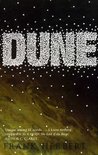
Review: Dune

Dune Dune by Frank Herbert
My rating: 5 of 5 stars

Dune is an incredible feat of imagination and writing. Frank Herbert intermingles history, religion, politics, ecology, and philosophy into an epic adventure of intrigue and revolution.

One can see the influence Dune has had on later science fiction. It’s hard not to imagine Tatooine as one reads about Arrakis. The intrigue among the great houses will be familiar to Game of Thrones readers. Equally so, Dune is itself influenced by earlier works, such as Asimov’s Foundation series.

The world created by Herbert is complex. A long history. A complicated set of mystical, religious beliefs intermixed with science and politics. Court intrigue that sets up the underlying conflict of the novel. Cultural norms and rules that are unknown. The reader is, to borrow the now hackney phrase, a stranger in a strange land. As such, one needs a little patience when starting Dune. You have to allow yourself to become familiar with this world.

There are many themes explored and played with by Herbert in Dune. To name but a few: The exploration of religion, its influence, and its institutions. The ongoing conflict of civilization v primitivism (city v country; empire v fremen). The evolution and persistence of religion and culture. Man v environment. The appeal and danger of fundamentalism and Messianism. The pitfalls of ‘Great Men’. The role of computers and technology in society.

It is fun to try to untangle and spot the real-world influences. What language is this word coming from? What religion influenced Herbert for this or that practice or mystical belief?

It is also interesting how conservative the whole galactic culture appears to be. It is a deeply aristocratic society. Women occupy traditional roles. There is little in the way of what one might call ‘alternative lifestyles.’ Like many traditional/conservative cultures, honor plays a huge part. I am sure there are many English PhDs that have made their bones chewing on all this!

If I have a criticism, it would be that the characters could be tools of the plot, rather than the driving force of the plot. The grand sweep of time moving everyone along to the conclusion. The motivations of the character could be at times opaque or hidden behind too many layers.

Dune deserves the praise it gets; it deserves its place in literary history (though maybe not quite as high as Brian Herbert, Frank Herbert’s son would place it). If you only know of Dune because of the David Lynch/Sting movie from the 80s, it is worth reading with fresh eyes.


View all my reviews

Tuesday, August 07, 2018

Review: Skinwalkers

Skinwalkers Skinwalkers by Tony Hillerman
My rating: 5 of 5 stars

Bringing Leaphorn and Chee together was a brilliant stroke. Leaphorn is more logical--more like a Poirot or Marple. Chee is more intuitive. Both are smart and perceptive. They respect each other and will work well together.

The mystery here was not terribly complicated, but seeing Leaphorn and Chee bring the clues together and discover the truth was masterfully down by Hillerman. And Hillerman also gives us the beautiful descriptions of landscapes of the southwest. He is able to give the reader the feel of what living in the high desert might be like. The contrast between cultures is also endlessly fascinating.

View all my reviews

Saturday, July 28, 2018

Review: The Other Woman

The Other Woman The Other Woman by Daniel Silva
My rating: 5 of 5 stars

Gabriel Allon returns to do battle with the Russians again in another exciting novel by Daniel Silva. The usual cast of characters make their appearances, though the focus is mostly on Allon and Graham Seymour. There are several twists and turns in the plot that keep you guessing and thinking. Silva does a masterful job of weaving in real history and current events into his fictional world. I always enjoy reading his Author Notes after the novel to see what is based on real life and what is made up.
My last thought after finishing this was when is #19 coming out?!

View all my reviews

Saturday, July 21, 2018

Review: Sports: The First Five Millennia

Sports: The First Five Millennia Sports: The First Five Millennia by Allen Guttmann
My rating: 3 of 5 stars

This is an ambitious project: telling the history of five millennia of sport—and doing so in about 350 pages. And ultimately, it is unrealistic. There is a lot of interesting and fascinating information here, but it is, necessarily, too often superficial, without sufficient context, and skimmed over. There are passages where it turns into the proverbial just one damned thing after another. Dates and names fly at you, interspersed with occasionally amusing or telling anecdotes. As much as I liked the idea of tracing the history of sport from prehistoric communities up to today, there was just too much information with too little space.

There are, nonetheless, many positives to the book. The author, Allen Guttmann, does a good job of including multiple perspectives. There is very rarely any sense that he has an ideological ax to grind. Guttmann also makes sure to bring in sport from a broad range of differing social classes and groups. The role of women in the history of sport was frequently highlighted—though obviously there are many more opportunities in the modern world for women in sport, women have in nearly every culture and every era been involved in some kind of sport.

I most enjoyed the first part of the book where Guttmann focuses on the sport of ancient cultures. He looks, of course, at the Greeks, but also cultures across the globe. He discusses various theories about how sport developed in these societies: from what they evolved and how they become what we might recognize as sport. This is the most interesting and recommendable part of the book. The discussion of sport in the middle ages was also intriguing. Where things start to get bogged down is when Guttmann moves more into the modern period.

Guttmann is a widely respected historian of sport, and I am certainly going to look at his more focused books. I am not sure I’d recommend this book, however. It unfortunately comes too close to turning into a fleshed out timeline.


View all my reviews

Thursday, July 19, 2018

Review: The Old Testament

The Old Testament The Old Testament by Amy-Jill Levine
My rating: 5 of 5 stars

This series of lectures on the Old Testament is very good as an overview to the history of the text and the different interpretative approaches to the Old Testament. Levine brings together, at different points, Jewish, Christian, Muslim, and secular understandings of the texts. This is not a religion or theology course; there is no presupposition of the divinity of the text, but such a view, for those that have it, is not incompatible with Levine's discussions. Though I am sure those with particular views about the meaning of the Old Testament will disagree at lots of points, Levine doesn't present her interpretation as _the_ definitive one. She acknowledges the reality of many traditions and interpretations.

In 24 lectures, one can hardly get too deep into the books and stories of this text, and Levine acknowledges through out the series this limitation. Nevertheless, in the aspects she discusses, she is able to convey much of the meaning and the history.

Personally, I would have liked even more on the history of these texts, and their comparisons to other texts of the region and period. That's really a different course though.

I wish Levine had more courses at the Teaching Company--ones that individually delved more deeply into select books of the Bible. Her style is pleasant, she cares deeply for her subject, and she has an impressive breadth and depth of knowledge of it.


View all my reviews

Review: A New Dawn

A New Dawn A New Dawn by John Jackson Miller
My rating: 4 of 5 stars

For fans of Rebels, this is a great way to spend more time with Hera and Kanan, and to see how they first met. Like Rebels, it gives you a look at the beginnings of the rebellion. Miller also introduces Rae Sloane who goes on to play important roles in the Aftermath trilogy. She is a fascinating character. An imperial, she is not corrupt. She is ambitious, but not blindly so. She is committed to the law and order ideology of the Empire and this guides her character from A New Dawn up through the end of Aftermath. This makes her a great antagonist. She is not a monster like Vidian, Vader, or Palpatine. Sloane is understandable. She is competent, intelligent, and has a kind of integrity.

The book is a little slow to get going as it introduces the characters and the setting, but the story picks up to an exciting conclusion.

View all my reviews

Thursday, July 12, 2018

Review: Dance for the Dead

Dance for the Dead Dance for the Dead by Thomas Perry
My rating: 5 of 5 stars

The second novel in the Jane Whitefield series refreshingly doesn’t follow the same plot structure as the first novel. Jane still guides "people out of the world” but the reasons for the hiding are quite different, and the manner in which Jane goes about it is also different. The story has some rather dark and brutal parts. Jane continues to be an intriguing protagonist. She shows more vulnerabilities in this novel, but is still just as tough, intelligent, and component. Highly recommend this series.

View all my reviews