Wednesday, May 02, 2012

Review: Shop Class As Soulcraft: An Inquiry into the Value of Work


Shop Class As Soulcraft: An Inquiry into the Value of Work
Shop Class As Soulcraft: An Inquiry into the Value of Work by Matthew Crawford

My rating: 3 of 5 stars


There were things about this book I really liked, and things that infuriated and frustrated me. Part of the author's point is to revitalize and defend manual work. He wants to show the intellectual rewarding aspects of this kind of work. This part I liked, and he does a wonderful job here, with interesting anecdotes and references to historic thinkers. He seems to want to reject the mind/body dictohomy at the root of the manual-mental work division. But in developing the framework for his argument, he reintroduces or rather fails to reject fully the mind/body dictohomy in the form of a kind of concrete-abstract dichotomy.

Now, this is a real distinction, so what I mean is he consistently priviledges knowledge and ideas that are more concrete over more abstract ones. This is related, I think, to what Ayn Rand called this the anti-conceptual mentality. She says that this mentality "treats concepts as if they were (memorized) percepts; it treats abstractions as if they were perceptual concretes." Crawford doesn't do this completely, but he does fail to treat abstractions as fundamentally connected to and about reality. They are, well, too abstract to provide us with guidance, validity, or objectivity in work. Only, it seems, a particular, concrete direct experience can do this. There is a ubiquitous contrast of a kind navel-gazing, head in the cloud shadow of a person with the real guy doing real work that anyone can see, experience, and measure. We can only get objectivity with things we can see, if it is abstract or far-off, it cannot serve that function, and worse, misleads us. So carpenters know when they have done a good job, they can see it, others can see it. But the manager of some team in a corporate environment has nothing to look at the end of his work day. This, Crawford claims, leaves him with no objective standards to judge his work. What follows in his account are all the problems caricatured by The Office and Dilbert.

This anti-conceptual mentality leads him to several misdiagnoses of problems with contemporary work environments and institutions (the marxist influences don't help either). Nevertheless the book is an interesting and worthwhile read, with many insights into the pleasure and value of work and the essential role that work plays in the good life.


View all my reviews

Review: The Given Day


The Given Day
The Given Day by Dennis Lehane

My rating: 4 of 5 stars


I still prefer the Patrick and Angela novels, but Lehane is always an entertaining author. I like how he pushes himself into new areas and genres. This novel brings you into the world of Boston in the 20s. Lehane weaves a complicated plot, but it comes together at the end. I don't know how sold I am on the Babe Ruth angle, but it ended up working and added a novel element to the story.


View all my reviews

Tuesday, April 10, 2012

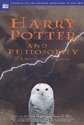
Harry Potter and Humanity at PCA/ACA

This is my abstract for the paper I will be presenting at the 42nd Annual PCA/ACA National Conference in Boston, MA.

Harry Potter and Humanity: Choices, Love, and Death

In this paper, I analyze how the Harry Potter novels bring to our awareness two fundamental parts of the human condition: the importance of one’s choices and the inevitable of one’s mortality.

Lord Voldemort, in his ruthless search for immortality, never accepts his own humanity; he openly rejects it. I argue it is this choice that makes his irredeemable evil, and his ultimate defeat, possible.

On the other hand, it is Harry’s acceptance of his mortality that allows him to embrace his humanity. It is this recognition that gives Harry the power defeat Voldemort. More than that, it makes it possible for Harry to develop into a realized, virtuous adult. In his acceptance of his mortality, the boy that lived is able more fully and wholly to live.

This revised paper was originally written for "The Power to Imagine Better: The Philosophy of Harry Potter" at Marymount Manhattan College in New York City.

Thursday, March 29, 2012

Abstract for APEE Presentation

I will be speaking on the panel "Author Meets Critics: Adam Moore's: Privacy Rights " at the Association of Private Enterprise Education International Conference in Las Vegas on April 1-3, 2012.

Here is the abstract:

Adam Moore argues for a robust right to informational privacy. He defines privacy as "an access control right over oneself and information about oneself" (16). A potential problem arises, I argue, in that some information is created in such a way that two different parties can be said to own the information. For example, when I buy an espresso at a cafe, that is personal information about my tastes and habits. But this information is created in a context involving other agents who, it would seem, have a right to this information by the same arguments that establish my right to this information. While I agree with much of Moore's account, it does not adequately address this potential conflict which seems to be at the heart of many disputes over privacy.

Friday, March 16, 2012

Review: A History of the Jews


A History of the Jews
A History of the Jews by Paul Johnson

My rating: 5 of 5 stars


This is not just a history of the Jews. It is a history of Western Civilization. It covers so much, it is at times overwhelming. It is hard to sum up one’s response to a book that covers nearly 5000 years and every major event in the West. I can do no better than quote Johnson from his Epilogue: “It seems to be the role of the Jews to focus and dramatize these common experiences of mankind, and to turn their particular fate into a universal moral” and “The Jews believed they were a special people with such unanimity and passion, and over so long a span, that they became one. They did indeed have a role because they wrote it for themselves.” These lines succinctly and accurately sum up the book and Johnson’s approach on the history of Jews.

Johnson’s take is sympathetic and admiring. He is fascinated by the history he is telling and so the reader is fascinated as well. I do wish the parts where broken up in to chapters or sections to facilitate reading. This is not a book one reads in a sitting. Each part is a small book in itself, and so more natural breaks in the text would have helped. Johnson does an amazing job of integrating the history, of tracing lines from ancient Baghdad to modern Tel Aviv. Like any good long book, I am glad to have finished it, but I will miss it.


View all my reviews

Sunday, January 08, 2012

Review: A Brief History of Liberty


A Brief History of Liberty
A Brief History of Liberty by David Schmidtz

My rating: 5 of 5 stars


Brief it is, but still manages to be a thorough and extensive history and discussion of liberty and freedom. Convassing many different conceptions of liberty, it is not a polemic or didactic work. It is thoughtful and well-researched. The authors deal with interesting questions and problems that arise within the history of freedom, including some of the contemporary social psych literature that is sometimes cast as providing a basis to reject the claims of classical liberalism. I hope my students find it as useful and as interesting as I did.


View all my reviews

Thursday, December 29, 2011

Sports Studies Symposium: second call and extended deadline

Call for Abstracts (second) with extended deadline (Jan 20)

1st Annual Rockford College Sports Studies Symposium:
An interdisciplinary conference on the study of Sport
Date: April 28, 2012

Rockford College
5050 E. State. St.
Rockford, IL 61108

Whether one is a participant, a casual spectator, a die-hard fan, or a critic, sport, in all its varieties and forms, play a significant role in the lives of most people through out the world. Sports and competitions have long been a part of human civilization and raise a wide range of important philosophical and ethical issues.

This symposium will bring together a panel of scholars to discuss philosophical themes or issues arising in the study of Sport. The focus of the panel will depend, in part, on the submitted abstracts. Each presenter on a panel will have 20 minutes for their presentation. This will be followed by 10-15 minutes for panelists to respond to each other and then 15 minutes or more for audience Q&A. There will also be a panel on the Rhetoric of Sport.

Abstract Submission:
Submissions are welcome on any philosophical theme or issue arising in the study of Sport. Abstract should be 300-500 words. Send via email (as PDF) to sklein_at_rockford_dot_edu.

New Deadline: January 20th, 2012
Notification of Acceptance: February 1st, 2012

If you have any questions, please contact Shawn Klein (Assistant Professor, Philosophy Department) at 815-226-4115 or sklein_at_rockford_dot_edu or Michael Perry (Assistant Professor, English Department) at 815-226-4098 or mperry_at_rockford_dot_edu.

Review: The Habit of Thought: From Socratic Seminars to Socratic Practice


The Habit of Thought:  From Socratic Seminars to Socratic Practice
The Habit of Thought: From Socratic Seminars to Socratic Practice by Michael Strong

My rating: 5 of 5 stars


I found this very useful and have already purchased several books recommended here. I hope to implement much of what he suggests in future classes.


View all my reviews

Review: Heat Rises

Heat Rises
Heat Rises by Richard Castle

My rating: 4 of 5 stars


I had some trouble getting into this third Castle novel, seemed to be spinning its wheels. Too much Heat and Rook "gushiness." But half way through it started to pick up and redeemed itself. There were several funny Castle/Firefly references that'll make fans laugh.


View all my reviews

Tuesday, November 29, 2011

Review: Red Harvest


Red Harvest
Red Harvest by Dashiell Hammett

My rating: 5 of 5 stars


Classic noir. Love the language and style. Makes me want to go back and reread The Maltese Falcon.


View all my reviews

Review: Red Harvest


Red Harvest
Red Harvest by Dashiell Hammett

My rating: 5 of 5 stars


Classic noir. Love the language and style.


View all my reviews

Friday, October 21, 2011

CFA: Sports Studies Symposium

Call for Abstracts

1st Annual Rockford College Sports Studies Symposium:
An interdisciplinary conference on the study of Sport
Date: April 28, 2012

Rockford College
5050 E. State. St.
Rockford, IL 61073

Whether one is a participant, a casual spectator, a die-hard fan, or a critic, sport, in all its varieties and forms, play a significant role in the lives of most people through out the world. Sports and competitions have long been a part of human civilization and raise a wide range of important philosophical and ethical issues.

This symposium will bring together a panel of scholars to discuss philosophical themes or issues arising in the study of Sport. The focus of the panel will depend, in part, on the submitted abstracts. Each presenter on a panel will have 20 minutes for their presentation. This will be followed by 10-15 minutes for panelists to respond to each other and then 15 minutes or more for audience Q&A. There will also be a panel on the Rhetoric of Sport.

Abstract Submission:
Submissions are welcome on any philosophical theme or issue arising in the study of Sport. Abstract should be 300-500 words. Send via email (as PDF) to sklein_at_rockford_dot_edu.

Deadline: January 6th, 2012
Notification of Acceptance: February 1st, 2012

If you have any questions, please contact Shawn Klein (Assistant Professor, Philosophy Department) at 815-226-4115 or sklein_at_rockford_dot_edu or Michael Perry (Assistant Professor, English Department) at 815-226-4098 or mperry_at_rockford_dot_edu.

Sunday, September 18, 2011

Review: Deal Breaker


Deal Breaker
Deal Breaker by Harlan Coben

My rating: 5 of 5 stars


I thoroughly enjoyed this mystery. In a rarity for me, I had no idea who did it until the murderer was revealed. It emulates a lot from Parker's Spenser, but still has enough unique in the character to carry itself without being derivative. I look forward to reading more in the Myron Bolitar series.


View all my reviews
Tuesday, August 16, 2011

Review: Gregor the Overlander


Gregor the Overlander
Gregor the Overlander by Suzanne Collins

My rating: 5 of 5 stars


I really enjoyed this. It is definitely targeted at a younger audience than Collins' Hunger Games, but it is still worth reading if you like this sort of thing. Collins does a great job of getting inside the head of young adults. She doesn't over-simplify them. She avoids the whininess of some other authors in the young adult genre. She also creates an unique and interesting world in the Underland. We learn a lot about it, but she leaves a lot there to be explored in later books.


View all my reviews

Saturday, August 13, 2011

Review: The Kill Artist


The Kill Artist
The Kill Artist by Daniel Silva

My rating: 4 of 5 stars


A great thriller with lots of action and interesting twists. The added element of the Israeli-Arab conflict makes it stand out from the standard issue spy thriller. I am definitely going to read more in this series. That said, I was not crazy about the ending, and there were minor aspects of the plot that didn't quite work for me.


View all my reviews

Wednesday, July 27, 2011

Review: The Lions of Lucerne


The Lions of Lucerne
The Lions of Lucerne by Brad Thor

My rating: 5 of 5 stars


Everything I've heard people tell me about Brad Thor is true. This was an exciting, thrilling read. Great twists and turns (even if not completely fooled by them, they were still fun). Can't wait to read the next one.


View all my reviews

Saturday, July 16, 2011

Review: The Logical Leap: Induction in Physics


The Logical Leap: Induction in PhysicsThe Logical Leap: Induction in Physics by David Harriman

My rating: 4 of 5 stars


Harriman presents his application of Rand's theory of concepts to an elaboration and defense of a theory of induction, particularly in physics. He draws interesting and novel connections between concept-formation, abstraction, and induction. He makes some strong and controversial claims about induction and certainty, some of which I am still mulling over. The basic format is to present the theory in outline and then, using the history of science, to show how induction in physics has worked. His presentation is clear and concise. His narrative is clean, without much of the distracting polemics sometimes seen in some followers of Rand and Peikoff. There is some controversy about some of the details of the history he presents. Having little expertise or experience in this area, I am not competent to judge this. If the criticisms are accurate, this would surely be a fault of the book. It would demonstrate carelessness or sloppiness. Nevertheless, I do not think these alleged faults, on their own, undermine Harriman's central claims about induction. He is not after all engaged in the history of science as such, but using that history as a way of illustrating the theory of induction. I say this not to excuse such possible errors, but only to put them into context. Even with these possible faults, I'd recommend the book to those interested in Rand, epistemology, or the history of science.


View all my reviews

Saturday, July 09, 2011

Review: HUNTER: A Thriller


HUNTER: A Thriller (A Dylan Hunter Thriller)HUNTER: A Thriller by Robert Bidinotto

My rating: 5 of 5 stars


Hunter, the first novel by Robert Bidinotto, is an exciting, action packed thriller. Think Batman meets Jason Bourne (sort of). The plot of the book centers around the actions of a vigilante who is avenging the victims of a porous legal system by taking out the brutal criminals who have thus far escaped justice. It also raises interesting philosophical questions about justice, the legal system, and punishment. Oh, and it's a love story, too. I'm looking forward to more Dylan Hunter novels.


View all my reviews

Tuesday, June 28, 2011

Testing Twitterfeed

Testing twitterfeed. Sorry for the odd post.

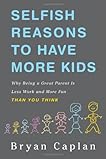
Review: Selfish Reasons to Have More Kids: Why Being a Great Parent is Less Work and More Fun Than You Think


Selfish Reasons to Have More Kids: Why Being a Great Parent is Less Work and More Fun Than You ThinkSelfish Reasons to Have More Kids: Why Being a Great Parent is Less Work and More Fun Than You Think by Bryan Caplan

My rating: 4 of 5 stars


An interesting read. I am not sure I buy all his conclusions about the (lack of) long-term effects of parenting, but his overall point makes sense. No need to be a "tiger mom": give your kids love and a rational space to live in, and the rest is up to them. But as I came into the book with that view, Caplan's book does little to lower my 'price' for more kids. And anyway, it won't convince Kristen!


View all my reviews