We inaugurated The Rockford Individualist Collective (TRIC) on Saturday, October 27, 2007. Our discussion was on Congressman Ron Paul and whether Objectivist or “Objectivish” folks should support his president candidacy. The informal consensus appeared to be a ‘no.’
I thought I’d share some of my reasons for not supporting Congressman Paul. My read is that Ron Paul is more Pat Robertson than Barry Goldwater.
His campaign website presents 11 issues. I’ll comment on each of the issues below.
Debt and Taxes
I don’t have any serious objections to Paul’s view here. Essentially, he seems to want to limit and control federal spending by sticking to the Constitution and powers expressed granted by that document. He does some overly worried about foreign banks owning Federal debt. This fact, in it of itself, doesn’t bother me. On the contrary, it seems to show a fundamental long-term soundness to the American economy because foreign banks are willing to buy US treasury bonds and the like.
My worry here with Paul is that he appears to be striking an anti-foreigner note. “It’s those pesky foreigners!”
American Independence and Sovereignty
This section raises some red flags. Paul believes that various free trade agreements with Canada and Mexico are threats to our freedoms, in part, because there is “a plan to erase the borders between the U.S. and Mexico” and “create a single nation out of Canada, the U.S., and Mexico, with a new unelected bureaucracy and money system.”
Besides the worrisome and loony conspiracy-theorist elements, this highlights one of Paul’s great weaknesses. He’s against opening up of trade. He worries that foreign companies will take U.S. jobs and that free trade undermines sovereignty. This protectionism alone undermines the claim that Paul is a libertarian.
War and Foreign Policy
Though this is where much of Paul’s growing popularity is coming from, this is where I have the biggest problem with Paul. His isolationism is dangerous and unrealistic. He appears to accept the view, unfortunately peddled by the otherwise great Cato Institute, that if only we would leave the Islamists alone they would not attack us.
No. This is not a case of ignore the bully and hope he leaves us alone. Nor is this a case where the Islamists have legitimate or reasonable gripes against American foreign policy--certainly nothing that remotely justifies taking up arms against Americans. These Islamists are in this fight to destroy us because we are free and secular; because we are not strict Muslims. (See David Kelley's "The Assault on Civilization" They will not quit this fight because we leave Iraq or even stop our important support of Israel.
Whatever one thinks of the wisdom of invading Iraq when we did, it would be foolish and dangerous to leave now. It would quickly become a dangerous Islamist state. Also, we need to be there to attack Iran before it goes nuclear, but that’s another story.
I’ve always differed from the mainstream isolationist view of many libertarians. I believe we need a principled foreign policy that encourages and supports free societies through out the world. This sometimes requires providing military or other support to such societies: like Israel, South Korea, Taiwan, etc. This is justified on the basis of our self-interest in having more strong free societies through out the world. This also means that sometimes we have to destroy regimes that pose significant threats to ourselves and our allies.
Paul’s foreign policy is essentially: buy our goods but then go away and please don’t bomb us.
Life and Liberty
Another major strike against Paul is his anti-abortion stance. He has sponsored bills that would block Federal courts from protecting the reproductive rights of individuals where state laws prevent abortions.
Besides the problem of being anti-abortion, this points to a more general concern with Paul. He apparently thinks that State’s should be left free to violate individual rights. The Federal government on his view should not interfere with state laws that prohibit abortion, homosexuality, or religious freedom.
Related to this issue, Paul apparently doesn’t support the separation of church and state. He also advocates using federal power to prevent homosexual unions and marriage (and where’s the expressed authority for that in the Constitution, Mr. Paul?)
Second Amendment
No problems here.
Social Security
My biggest gripe here is that for a man that claims that he “never votes for legislation unless the proposed measure is expressly authorized by the Constitution,” he does not speak out against Social Security. He merely wants to reform it and make it solvent and he’s introduced legislation to that effect.
Border Security and Immigration Reform
His anti-immigration stance is as unacceptable, and as un-libertarian, as his protectionist stance on trade.
Privacy and Personal Liberty
“The biggest threat to your privacy is the government” Hear! Hear! It is comments like this that attract the attention of libertarians and other pro-freedom advocates. Paul is also a strong critic of the Patriot Act. As a whole the Patriot Act is a dangerous threat to our freedoms, and Paul’s voice is important here.
Property Rights and Eminent Domain
Paul is pretty good here. Though he doesn’t mention any legislation he has sponsored on this front.
Health Freedom
My criticism here is similar to my concerns under Social Security. He appears to accept the current system and doesn’t speak out against the FDA. Most disconcerting, he doesn’t mention at all the plans by most of the other presidential candidates that would nationalize health care. He’s at the forefront of making sure we don’t lose our right to take what ever vitamins or supplements we want to take, but he has nothing to say about HillaryCare or Medicare? That seems out of whack to me.
Home Schooling
I don’t have a problem with his view’s on home schooling. The worry here is that while he wants to prevent the Department of Education from regulating home schooling, what about other types of schooling?
Summary:
While Paul talks the talk at times for libertarianism and pro-liberty, I don’t think he walks the walk. He is on the side of anti-liberty forces on immigration, trade, reproductive rights, and religion. He advocates dangerous and irresponsible foreign policy views. He is, at worse, a hypocrite and, at best, inconsistent and superficial when he claims he only supports legislation expressly authorized by the Constitution. Legislation that he sponsored and cites on his own website belies this view. He doesn’t speak out against clearly un-constitutional proposals, such as nationalizing health care. Nor does he speak out against already established, yet not constitutionally authorized, programs and agencies, such as the FDA, Medicare, Social Security, and the Department of Education.
I do not see a principled defense or advocacy of liberty here. I see a man using the ideas of liberty to protect his view of America as a white, Christian country. That is not good for liberty, libertarianism, or America.
Update: I also recommend reading Timothy Sandefur's post Ron Paul: a threat to serious libertarians
Update 2(12/28/O7): Since I originally wrote this post, Paul has updated his website and added more issues. I hope to have an expanded analysis soon.
Tuesday, November 06, 2007


Saturday, November 03, 2007
Review Online
My review of Tara Smith's Ayn Rand’s Normative Ethics: The Virtuous Egoist is now online at The New Individualist. The review was published in the magazine's Atlas Shrugged 50th Anniversary tribute.
The review summed up in a few words: worthwhile book that has some flaws.
The review summed up in a few words: worthwhile book that has some flaws.
Monday, October 22, 2007
What a Day for Boston!
Sox complete a comeback to go to the World Series and the Pats are winning (No, it is not 2004 again)
Sports are incredible. There are so many "what ifs?" What if Lofton is called safe at second or doesn't hold at third? Things could have turned out quite differently. That is surely one of the reasons fans live and die on every game, every play, every pitch. And it is a good lesson for life: Each little thing you do has an effect: take nothing for granted.
The Sox face a hot Rockies team (at least they were back when they last played). The Sox will have to sit either Ortiz or Youk at Coors Field. They'll might be playing after digging out of some snow. I have no idea what to expect. I have confidence because the Sox don't ever give up, the whole order is hitting well now, Beckett could pitch 3 times, and Papelbon is possessed. I think the Sox take it in 5.
The Patriots offense is downright nasty. I think they could score at will. Moss is just plain amazing.
The defense has me concerned. They gave up 21 second half points. That is not good even if you put up 49. I don't want the team to have to put up 30+ points in order to win. You don't win Super Bowls like that. You need to shut down other teams, and the Pats haven't done that for 60 minutes. The defense has come up with big drive-killing plays when they needed to, so maybe it is not as bad it looks. It might just be that with 30+ point leads, the defense is not playing as hard as it could. When a team starts to threaten, the Pats do start shutting them down. So maybe it's the Milton Berle Stratagem: only show enough to win.
Also, Seymour will be back soon and that'll help. And the defense is still gelling with Harrison now back and Samuel not being there for pre-season.
The other major concern for the Pats is the lack of a consistent running game. Maroney played a little yesterday and looked good, but he didn't play much (he was only in for 7 snaps). Morris is hurt. They need the running game if only to ice games and not give the opposing team the ball back.
That said, 7-0 is great. I hope they keep it going.
Sports are incredible. There are so many "what ifs?" What if Lofton is called safe at second or doesn't hold at third? Things could have turned out quite differently. That is surely one of the reasons fans live and die on every game, every play, every pitch. And it is a good lesson for life: Each little thing you do has an effect: take nothing for granted.
The Sox face a hot Rockies team (at least they were back when they last played). The Sox will have to sit either Ortiz or Youk at Coors Field. They'll might be playing after digging out of some snow. I have no idea what to expect. I have confidence because the Sox don't ever give up, the whole order is hitting well now, Beckett could pitch 3 times, and Papelbon is possessed. I think the Sox take it in 5.
The Patriots offense is downright nasty. I think they could score at will. Moss is just plain amazing.
The defense has me concerned. They gave up 21 second half points. That is not good even if you put up 49. I don't want the team to have to put up 30+ points in order to win. You don't win Super Bowls like that. You need to shut down other teams, and the Pats haven't done that for 60 minutes. The defense has come up with big drive-killing plays when they needed to, so maybe it is not as bad it looks. It might just be that with 30+ point leads, the defense is not playing as hard as it could. When a team starts to threaten, the Pats do start shutting them down. So maybe it's the Milton Berle Stratagem: only show enough to win.
Also, Seymour will be back soon and that'll help. And the defense is still gelling with Harrison now back and Samuel not being there for pre-season.
The other major concern for the Pats is the lack of a consistent running game. Maroney played a little yesterday and looked good, but he didn't play much (he was only in for 7 snaps). Morris is hurt. They need the running game if only to ice games and not give the opposing team the ball back.
That said, 7-0 is great. I hope they keep it going.
Saturday, September 29, 2007

Friday, September 21, 2007
Wayback Machine: Yom Kippur
It's that time of year again where I repost my article on Rosh Hashanah and Yom Kippur. Rosh Hashanah as come and gone, and Yom Kippur started tonight.
Self-Judgment Days
Self-Judgment Days
CEE Video
The Center for Ethics and Entrepreneurship at Rockford College has produced a promotion video. In the video, Dr. Stephen Hicks, CEE's Executive Director, explains the center's mission and introduces its expert faculty (ahem, that includes me!).
Sylvia Update 9/21
Sylvia's latest checkup provides us with some good news. Her kidney function has started to return to normal and they appear to be returning to normal size. She is still somewhat anemic, but with her kidneys coming back into normal function this should (but might not) get better.
She's being eating quite normally (though not drinking which has us a little concerned). She sleeps a lot--but let's remember that she's a cat after all. She is in the windows a lot and is just generally more 'catlike' as of late.
Because of her improvement, her meds have been reduced to finishing up the antibiotics and administering her daily steroid. This reduces the stress on all of us!!
This is truly wonderful news. We are trying not to get too excited about it, however. Even if she goes into full remission, the cancer will almost certainly return. We are hopeful (and hoping) that she continues to improve and that she continue to be with us.
She's being eating quite normally (though not drinking which has us a little concerned). She sleeps a lot--but let's remember that she's a cat after all. She is in the windows a lot and is just generally more 'catlike' as of late.
Because of her improvement, her meds have been reduced to finishing up the antibiotics and administering her daily steroid. This reduces the stress on all of us!!
This is truly wonderful news. We are trying not to get too excited about it, however. Even if she goes into full remission, the cancer will almost certainly return. We are hopeful (and hoping) that she continues to improve and that she continue to be with us.
Tuesday, September 18, 2007
Sylvia 9/18
First, I want to thank all those who have emailed Kristen and I with the well-wishing regarding Sylvia. It is always uplifting to know that one's family and friends care about that which one cares about as well.
Second, Sylvia seems to be doing a little bit better. She's been up and around, more alert. She goes up and down the stairs on her own. She sleeps with us again instead of hiding in a closet somewhere. Much of this morning she sat in the front window that overlooks the valley we live in. I take all of this as a sign that she is feeling somewhat better.
All of us are getting a little better at medicine time. Sylvia certainly doesn't like it and struggles with us. But we have learned how to settle her down (relatively speaking) and get her the medicine more quickly and efficiently. This is, I think, helping her overall situation because she is getting more of the medicine in her and the situation is less stress on her.
We struggle everyday with whether we are doing the right thing with Sylvia. We hope we are giving her some more quality of life and not just prolonging her suffering (and ours). Nonetheless, she doesn't seem ready to give up yet, and so neither are we.
Sylvia's next treatment is on Thursday. We are hoping that her blood work will show some improvement. I'll likely blog Thursday evening or Friday with an update.
Second, Sylvia seems to be doing a little bit better. She's been up and around, more alert. She goes up and down the stairs on her own. She sleeps with us again instead of hiding in a closet somewhere. Much of this morning she sat in the front window that overlooks the valley we live in. I take all of this as a sign that she is feeling somewhat better.
All of us are getting a little better at medicine time. Sylvia certainly doesn't like it and struggles with us. But we have learned how to settle her down (relatively speaking) and get her the medicine more quickly and efficiently. This is, I think, helping her overall situation because she is getting more of the medicine in her and the situation is less stress on her.
We struggle everyday with whether we are doing the right thing with Sylvia. We hope we are giving her some more quality of life and not just prolonging her suffering (and ours). Nonetheless, she doesn't seem ready to give up yet, and so neither are we.
Sylvia's next treatment is on Thursday. We are hoping that her blood work will show some improvement. I'll likely blog Thursday evening or Friday with an update.
Saturday, September 15, 2007
Sylvia Update 9/15/07
On Thursday, we took Sylvia to the University of Wisconsin Veterinary Medical Teaching Hospital to see an oncologist specialist. VMTH-UW is a leader in veterinary oncology, so we are getting some of the best care possible.
They confirmed the diagnosis and ran some further tests. Sylvia was very anemic and dehydrated. Her kidneys were starting to lose function. They recommended a blood transfusion and keeping at the hospital for a few days so that they get her fluid levels up. They would also start the chemotherapy.
We were able to pick her up today. She was more alert and perky when she got home. She ate some food and walked around. She was still weak, and slept some as well.
Sylvia goes back on Thursday for more chemo. In the meantime, Kristen and I have to administer several drugs and fluids. She’s on anti-acid and anti-ulcer medicine. These are to help with some of the side effects of the lymphoma and failing kidneys. She also gets a daily steroid and some antibiotics. The fluids, to help keep her hydrated, are administered subcutaneously--that means delivered by needle under the skin (between the skin and the muscle). We reviewed this with doctor and he demonstrated. It didn’t look easy, but it didn’t look too bad either. Well, it took Kristen and I about an hour to do it. I couldn’t get the needle in or I went to far and Sylvia would squirm. Finally, I think I got the feel for it, but even then, it was hard. The pill was no easier, she just wouldn’t swallow it! And we have to do this twice a day. I think (hope) it will get easier as all of us get used to it.
After this hour long poking and prodding, Sylvia is definitely stressed and not interested in eating. Hopefully, after a night of sleep in our house, she’ll be happier tomorrow…until I have to poke her again. Sorry Sylvia!!
They confirmed the diagnosis and ran some further tests. Sylvia was very anemic and dehydrated. Her kidneys were starting to lose function. They recommended a blood transfusion and keeping at the hospital for a few days so that they get her fluid levels up. They would also start the chemotherapy.
We were able to pick her up today. She was more alert and perky when she got home. She ate some food and walked around. She was still weak, and slept some as well.
Sylvia goes back on Thursday for more chemo. In the meantime, Kristen and I have to administer several drugs and fluids. She’s on anti-acid and anti-ulcer medicine. These are to help with some of the side effects of the lymphoma and failing kidneys. She also gets a daily steroid and some antibiotics. The fluids, to help keep her hydrated, are administered subcutaneously--that means delivered by needle under the skin (between the skin and the muscle). We reviewed this with doctor and he demonstrated. It didn’t look easy, but it didn’t look too bad either. Well, it took Kristen and I about an hour to do it. I couldn’t get the needle in or I went to far and Sylvia would squirm. Finally, I think I got the feel for it, but even then, it was hard. The pill was no easier, she just wouldn’t swallow it! And we have to do this twice a day. I think (hope) it will get easier as all of us get used to it.
After this hour long poking and prodding, Sylvia is definitely stressed and not interested in eating. Hopefully, after a night of sleep in our house, she’ll be happier tomorrow…until I have to poke her again. Sorry Sylvia!!
Wednesday, September 12, 2007
Look Ma! More Quizzes!
Here's one that Patrick discovered. Results are a little surprising, but not that much. I wouldn't have expected that Existentialism would be so high, but the rest of it seems in order.
| You scored as Existentialism, Your life is guided by the concept of Existentialism: You choose the meaning and purpose of your life. “Man is condemned to be free; because once thrown into the world, he is responsible for everything he does.” “It is up to you to give [life] a meaning.” --Jean-Paul Sartre “It is man's natural sickness to believe that he possesses the Truth.” --Blaise Pascal More info at Arocoun's Wikipedia User Page...
What philosophy do you follow? (v1.03) created with QuizFarm.com |
Tuesday, September 11, 2007
Ethical Philosophy Selector
I took this quiz years ago, and had somewhat similar results (though I don't remember the exact ordering).
Here's my Top Ten:
1. Aristotle (100 %)
2. Ayn Rand (97 %)
3. John Stuart Mill (94 %)
4. Epicureans (91 %)
5. Aquinas (86 %)
6. Plato (81 %)
7. Nietzsche (78 %)
8. Thomas Hobbes (78 %)
9. David Hume (73 %)
10. Jean-Paul Sartre (73 %)
Try it and see what you get!
Here's my Top Ten:
1. Aristotle (100 %)
2. Ayn Rand (97 %)
3. John Stuart Mill (94 %)
4. Epicureans (91 %)
5. Aquinas (86 %)
6. Plato (81 %)
7. Nietzsche (78 %)
8. Thomas Hobbes (78 %)
9. David Hume (73 %)
10. Jean-Paul Sartre (73 %)
Try it and see what you get!
Saturday, September 08, 2007
Sylvia

Kristen and I got Sylvia as a kitten, not more than 6 weeks old, one month before we were engaged. Born to a stray, she came into in our lives by luck, joining Malcom--the cat I had from my bachelor days in Arizona. She stole our hearts instantly and we loved her from day one. Well, maybe not Malcom, but he grew to love her as evidenced by his constant grooming of her and his protection of her from other animals. For the first months that we had Bella (our yellow lab), Malcom wouldn’t let Bella get too close to or too playful with Sylvia.
While Malcom is shy and hesitant around strangers and friends, Sylvia is always friendly and curious, making quick friends of any visitor. There is nothing as inviting and loving as the yellow wide-eyes of Sylvia as her tail flickers behind her.
On Friday, we were told by our veterinarian that Sylvia has lymphoma. She had lost a lot of weight in the last few months and had been throwing up. Her symptoms fluctuated, whenever we thought that maybe we should take her in to the vet, she would appear to get better. We also thought the weight loss was from the stress of the move to IL. But the last few weeks, she lost more weight and was throwing up more than ever. The vet took x-rays and her kidneys were twice the size they should be. After more testing this past week with results that were initially inconclusive, the final terrible results from the pathologist came back on Friday.
The news, as anyone can imagine, is devastating. There are some treatment options, and we will be exploring those, but the outlook is grim no matter what. Apparently, renal lymphoma in cats is one of the least responses types of cancer. Successful treatment might give us another year at best.
If Sylvia can have a decent quality life, relatively pain-free and happy, in that year(or less), it will be worth it. In the last 6.5 years, she has brought joy and happiness into our lives every single day. The mornings waking up with Sylvia sleeping on my chest. Her widened paws and big eyes when she wanted to be pet. The little cry when I would playfully pinch the tip of her tail. Her little pink nose and grey ‘goatie’. How small she gets when she curls up in my lap when I am at the computer. Her white paws so gracefully pushed together as she sits in her ‘paperweight’ position. And, of course, her flirty leg. Nearly impossible to describe, but Sylvia, when she wants to be pet, will stretch herself out against a wall, and push out one of her back legs and hold it there. Once performed, it is irresistible: one must pet her.
We don’t know how we are going to proceed or what will happen. We don’t know what to expect or how to deal with this. But we know one thing for sure: we will always love Sylvia. By sharing our lives, she has made them infinitely better.
Saturday, August 25, 2007
Sophie's World
Sorry for the long delay in posting, but moving and setting up shop have kept me from my blogging duties. Classes start next week, so I am quite busy. Nonetheless, I have just finished Sophie's World--a book that as a philosopher I am often asked about. I decided it was finally time to read it so I could offer an educated opinion. The following is my brief review:
For the most part, the history of philosophy offered in Sophie’s World is sound, though of course often overly simplified. Such simplification is expected and acceptable in a book of this size and for its intended audience. It is at its best in the classical and medieval periods. As we get into the 18th and 19th centuries, there are some disappointing and questionable choices. There is altogether too much attention given to Marx and Freud, while nothing is remarked about John Stuart Mill or John Locke (his political thought). A reader might get the impression that existentialism was the dominant philosophy of the 20th century and not the analytic tradition that actually does dominate, for better or for worse, the Anglo-American world. The thinkers of great importance for this tradition: Moore, Russell, Wittgenstein, are not mentioned at all. This absence is ultimately forgivable because the book was written by a Scandinavian for a Scandinavian audience. Still, the reader should be aware that philosophy in the English speaking world goes in a very different direction than the direction that Alberto takes Sophie.
The story itself is not all that interesting. There is little in the way of characterization and the mystery and fantasy elements are too forced. Sophie can be annoying in the way a 15 year old know it all can be annoying. The adults, other than Alberto, are hardly more developed than the adults of Charlie Brown. And for all the fantastic elements in the book, the hardest to believe is that Sophie’s mother lets her daughter gallivant around with a 50-year old stranger.
I do not think this is not a book for a seasoned philosopher or really any adult reader. It is just a bit too childish. I would probably recommend it, however, for a young adult interested in learning about philosophy. But, then again, if that young adult were precocious enough to be interested in philosophy at that age, I would rather just hand him something by Plato or Aristotle.
For the most part, the history of philosophy offered in Sophie’s World is sound, though of course often overly simplified. Such simplification is expected and acceptable in a book of this size and for its intended audience. It is at its best in the classical and medieval periods. As we get into the 18th and 19th centuries, there are some disappointing and questionable choices. There is altogether too much attention given to Marx and Freud, while nothing is remarked about John Stuart Mill or John Locke (his political thought). A reader might get the impression that existentialism was the dominant philosophy of the 20th century and not the analytic tradition that actually does dominate, for better or for worse, the Anglo-American world. The thinkers of great importance for this tradition: Moore, Russell, Wittgenstein, are not mentioned at all. This absence is ultimately forgivable because the book was written by a Scandinavian for a Scandinavian audience. Still, the reader should be aware that philosophy in the English speaking world goes in a very different direction than the direction that Alberto takes Sophie.
The story itself is not all that interesting. There is little in the way of characterization and the mystery and fantasy elements are too forced. Sophie can be annoying in the way a 15 year old know it all can be annoying. The adults, other than Alberto, are hardly more developed than the adults of Charlie Brown. And for all the fantastic elements in the book, the hardest to believe is that Sophie’s mother lets her daughter gallivant around with a 50-year old stranger.
I do not think this is not a book for a seasoned philosopher or really any adult reader. It is just a bit too childish. I would probably recommend it, however, for a young adult interested in learning about philosophy. But, then again, if that young adult were precocious enough to be interested in philosophy at that age, I would rather just hand him something by Plato or Aristotle.
Sunday, July 29, 2007
Back from Italy, now to Illinois
As my loyal readers will have noticed, for the last two weeks and change there have been no posts. I was on holiday with my wife in Italy and returned last night after 22 hours of travel time. Good to be home, but we move to Rockford, IL on Friday, so no rest. Still going through my inbox...
Harry Op-Ed
My op-ed on Harry Potter, "Harry and the grouches" was published in the Ottawa Citizen on July 20, 2007. The op-ed takes on some of the criticisms that Harry Potter is just for kids and that it has nothing of lasting value to offer our culture.
Sunday, July 08, 2007
Thoughts on the Last Harry Potter
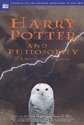
In the last few days, I've exchanged emails about Harry Potter and Philosophy with Tim LeBon, author of Wise Therapy. I thought I would post some of my thoughts that I shared with Tim on the upcoming release of Harry Potter and the Deathly Hollows. [Edit: Read Tim LeBon's blog entries that incorporate my comments and the comments of Ed Kern and Tim Morris.]
Regarding Snape, obviously, we won't know for sure until we see the last book, but I think ultimately Snape is redeemed. As you said, if Snape turns out to be truly a death eater, then Dumbledore has been made quite the fool. Snape has been the red herring in each of the books, and I think he's still the red herring. Then again, Dumbledore has admitted to making mistakes (at the end of Bk V where he takes some of the responsibility for Sirius death and for placing Harry into more trouble than Dumbledore expected). Moreover, maybe the biggest red herring of them all is that Snape really is evil. As the saying goes, the best hiding place is in plain sight. This scenario is, I think, unlikely. It would end the series on such a sour and malevolent note.
Which leads to the question of whether Harry will die. Harry's death would also end the series with a malevolent feel. Moreover, I think it would be in sharp contrast to almost everything in the series. This series is fundamentally a story about moral development; it is a story about Harry becoming a responsible and mature adult. His death is not the logic progression here. The logical end is his independence and the flowering of his power. Harry's development towards independence has been a central theme: from escaping the Dursleys to losing Sirius and now Dumbledore. I think we will see Harry take full control of himself and his powers and take his place in the adult world.
JKR has left it so that she can really do anything. There are 700 some odd pages left and a lot can be revealed that can up-end the best predications. From a fan point of view as well as philosophical/artistic point of view, I don't want to see Harry die. I say personally because I like Harry and I like happier endings. I say philosophically because I don't think killing the hero of the story is consistent with the kind of story of moral development and growth that JKR has been telling. I say artistically because the ultimate point of art is to uplift our souls, provide us with strength, and give us insight into our selves and to our lives. I don't see how Harry's death would serve those ends.
But if Harry must die, I don't want him to die in some grand sacrificial manner that casts him as some kind of Christ-like figure. Such an ending would be personally unsatisfying, but also against the grain of the whole series. The imagery and symbols have largely been drawn from classical and pre-Christian culture and so pasting a specifically Christian symbol on to it at the end would be incongruous.
If I had to guess, I'd say Hagrid is going to get killed. I suspect possibly a Weasley family member(Percy?) and maybe even a Dursley family member (Petunia?) But these are really just guesses, hunches.
Ultimately, however JKR close the series, the path she takes us on to that end will be more important than how it ends. Whether Harry lives or dies, whether Snape is evil or not, what will matter is if these last 700 pages tell the story in the way that makes it so when the end comes it is what we will need to see.
Regarding Snape, obviously, we won't know for sure until we see the last book, but I think ultimately Snape is redeemed. As you said, if Snape turns out to be truly a death eater, then Dumbledore has been made quite the fool. Snape has been the red herring in each of the books, and I think he's still the red herring. Then again, Dumbledore has admitted to making mistakes (at the end of Bk V where he takes some of the responsibility for Sirius death and for placing Harry into more trouble than Dumbledore expected). Moreover, maybe the biggest red herring of them all is that Snape really is evil. As the saying goes, the best hiding place is in plain sight. This scenario is, I think, unlikely. It would end the series on such a sour and malevolent note.
Which leads to the question of whether Harry will die. Harry's death would also end the series with a malevolent feel. Moreover, I think it would be in sharp contrast to almost everything in the series. This series is fundamentally a story about moral development; it is a story about Harry becoming a responsible and mature adult. His death is not the logic progression here. The logical end is his independence and the flowering of his power. Harry's development towards independence has been a central theme: from escaping the Dursleys to losing Sirius and now Dumbledore. I think we will see Harry take full control of himself and his powers and take his place in the adult world.
JKR has left it so that she can really do anything. There are 700 some odd pages left and a lot can be revealed that can up-end the best predications. From a fan point of view as well as philosophical/artistic point of view, I don't want to see Harry die. I say personally because I like Harry and I like happier endings. I say philosophically because I don't think killing the hero of the story is consistent with the kind of story of moral development and growth that JKR has been telling. I say artistically because the ultimate point of art is to uplift our souls, provide us with strength, and give us insight into our selves and to our lives. I don't see how Harry's death would serve those ends.
But if Harry must die, I don't want him to die in some grand sacrificial manner that casts him as some kind of Christ-like figure. Such an ending would be personally unsatisfying, but also against the grain of the whole series. The imagery and symbols have largely been drawn from classical and pre-Christian culture and so pasting a specifically Christian symbol on to it at the end would be incongruous.
If I had to guess, I'd say Hagrid is going to get killed. I suspect possibly a Weasley family member(Percy?) and maybe even a Dursley family member (Petunia?) But these are really just guesses, hunches.
Ultimately, however JKR close the series, the path she takes us on to that end will be more important than how it ends. Whether Harry lives or dies, whether Snape is evil or not, what will matter is if these last 700 pages tell the story in the way that makes it so when the end comes it is what we will need to see.
Wednesday, July 04, 2007
sciQ Interview
As co-editor of Harry Potter and Philosophy, I was interviewed by sciQ, a young adult focused science magazine in Austria. Here's the interview:
http://sciq.agindo.info/film/index.cfm?useid=565
If they post an English language version, I will post that link as well.
http://sciq.agindo.info/film/index.cfm?useid=565
If they post an English language version, I will post that link as well.
Monday, July 02, 2007
Islamic Fanatic Provides Key Insights
A truly fascinating article by a former member of the British Jihad Network. The author elaborates on why it is that Muslims join terrorist groups and why they attack.
While I count myself a libertarian in political outlook, I generally run more 'interventionist' than most libertarians. Regarding the current war on Islamic terrorism, I have found myself often in sharp disagreement with many libertarians over the causes of the conflict. Most libertarians argue that the primary cause is American foreign policy, indeed many go so far as to blame American foreign policy for 9/11 and other attacks. I disagree. While I am very critical of American foreign policy on many fronts, I do not believe that is the primary cause of Islamic hatred of the West. The cause, I believe, of this hatred and thus the conflict is the radical Islamic view of the West as decadent, materialistic, and secular. I think this article bears this out.
I also direct you to David Kelley's "The Assault on Civilization" for a more elaborate explanation of Islamic hatred of the West.
While I count myself a libertarian in political outlook, I generally run more 'interventionist' than most libertarians. Regarding the current war on Islamic terrorism, I have found myself often in sharp disagreement with many libertarians over the causes of the conflict. Most libertarians argue that the primary cause is American foreign policy, indeed many go so far as to blame American foreign policy for 9/11 and other attacks. I disagree. While I am very critical of American foreign policy on many fronts, I do not believe that is the primary cause of Islamic hatred of the West. The cause, I believe, of this hatred and thus the conflict is the radical Islamic view of the West as decadent, materialistic, and secular. I think this article bears this out.
I also direct you to David Kelley's "The Assault on Civilization" for a more elaborate explanation of Islamic hatred of the West.
Wednesday, June 13, 2007
Disturbing New from Tufts
I just recently learned, for FIRE's website, about a disturbing incident at Tufts University. A student-run publication, The Primary Source, was disciplined by the Committee on Student Life for the following two pieces that ran in The Primary Source magazine:
A Christmas Carol that lampoons race-based admission: http://www.thefire.org/index.php/article/8041.html
A piece on Islamic Awareness week:
http://www.thefire.org/index.php/article/8043.html
Outraged at this lamentable display of injustice and politically correctness, I penned the following email to Tufts President Lawrence Bacow and Barbara Grossman, the chair of the Committee on Student Life.
Though I have given money over the past few years, it hardly amounts to anything substantial, so I don't expect anything more than a form response. I hope that the pressure that FIRE and the ACLU is putting on Tufts will let cooler and more rational heads prevail.
Update [6/15]: I received a nice response from President Bacow. In the email, he wrote the following, promising, comment: "I disagreed strongly with the substance of the Primary Source message, I also came out squarely against censorship of the Primary Source largely for the reasons you have expressed. I have been very consistent in my comments both in response to this issue and the Christmas Carol parody that the appropriate response to offensive speech is more speech, not less."
A Christmas Carol that lampoons race-based admission: http://www.thefire.org/index.php/article/8041.html
A piece on Islamic Awareness week:
http://www.thefire.org/index.php/article/8043.html
Outraged at this lamentable display of injustice and politically correctness, I penned the following email to Tufts President Lawrence Bacow and Barbara Grossman, the chair of the Committee on Student Life.
Dear President Bacow and Professor Grossman,
As a gift-giving Tufts Alum, I was greatly disturbed to hear about the Committee on Student Life's April 30, 2007 decision on The Primary Source. The decision to punish the student run publication for its two satirical pieces is a grave and profound disregard for free speech and intellectual independence.
I am not a conservative and often found myself in disagreement with material published in The Primary Source. Nonetheless, I think it is important that student publications be at liberty to publish any non-libelous material they see fit. When a publication publishes something offensive or disturbing, this allows an object lesson for students to learn about the diversity of viewpoints and beliefs that exist on campus and in the world and to learn tolerance of this diversity. It also allows students to counter viewpoints that they disagree with in a peace manner. This too provides a lesson of how to respond to those we disagree with in a civil society. Rather then always run to courts to complain about harassment, one learns to counter viewpoints with a positive message of one's own. In the case of the Muslim students, they could have used this incident as vehicle to educate the Tufts community about Islamic history and the differences between moderate Muslims and extremists. This kind of intellectual engagement and interaction is what a liberal arts education is all about.
While the Christmas Carol is certainly in bad taste, there is an important difference between satire of policies of the university and a racially motivated attack on other students. The carol picks out no individual student for ridicule or attack nor is it even targeted at black students. It is targeted at the policies of the university. This makes the punishment of the students look to be more of an issue of stifling speech in order to protect the university from criticism.
I am in many ways more deeply concerned about the punishment of The Primary Source for the The Islamic Awareness Week piece. No where in the news reports or releases about this incident does anyone claim that the quotations and events referred to in the piece were factual incorrect or fabricated. It cannot be an issue of harassment or intimidation to publish disturbing yet factually correct reports. I am not surprised that the Muslim students who filed the case against The Primary Source were angered and embarrassed by what was published, but to punish The Primary Source is a form of shooting the messenger. It serves to stifle independence of thought and belief on campus.
If this is the policy of Tufts, then it is no longer the great liberal arts institution that I thought it was. Moreover, I am not comfortable providing monetary support to a school that no longer values individual liberty nor intellectual independence.
Sincerely,
Shawn Klein, Class of 95
Though I have given money over the past few years, it hardly amounts to anything substantial, so I don't expect anything more than a form response. I hope that the pressure that FIRE and the ACLU is putting on Tufts will let cooler and more rational heads prevail.
Update [6/15]: I received a nice response from President Bacow. In the email, he wrote the following, promising, comment: "I disagreed strongly with the substance of the Primary Source message, I also came out squarely against censorship of the Primary Source largely for the reasons you have expressed. I have been very consistent in my comments both in response to this issue and the Christmas Carol parody that the appropriate response to offensive speech is more speech, not less."
Thursday, June 07, 2007
Stossel for President
John Stossel is a great voice for liberty, and one of the few in mainstream media. Based off of one of his "Give me a break" segments on 20/20, he wrote up an op-ed about gas prices and profit.
This is what he wishes oil company execs. would say in response to criticism about their profits:
The last bit about taxes versus profit is really interesting. (read more here) First, because so few people know or think about that. Second, most people don't seem to care. The government takes more of their money, but they criticize the oil company profits. There's really an absurd kind of envy going on.
I also think people think that they'll get a piece of the taxes, but the profits just go to the oil company. Well, more likely the profits benefit people in many more ways than they imagine.
First, the profits go to the shareholders (dividends and increasing stock prices) and through mutual funds and pensions, a lot of 'regular folk' are shareholders in oil companies and so benefit from the profits.
Second, even if one is not a shareholder, each of us benefits greatly from a strong stock and capital market: either because we own stock in other companies or because we like to buy stuff from companies and these companies are largely made possible by a strong stock and capital market.
Third, a lot of profit gets invested back into research and development that ultimately makes gas cheaper and cleaner.
This is what he wishes oil company execs. would say in response to criticism about their profits:
"What are you complaining about? What do you think we do with our profits? Buy fancy cars and homes? Well, we do, actually, but nearly all the money goes to looking for more oil and following environmental rules that you want us to follow. You should want us to make more profit. Anyway, we make less profit per gallon than your beloved government takes in taxes."
The last bit about taxes versus profit is really interesting. (read more here) First, because so few people know or think about that. Second, most people don't seem to care. The government takes more of their money, but they criticize the oil company profits. There's really an absurd kind of envy going on.
I also think people think that they'll get a piece of the taxes, but the profits just go to the oil company. Well, more likely the profits benefit people in many more ways than they imagine.
First, the profits go to the shareholders (dividends and increasing stock prices) and through mutual funds and pensions, a lot of 'regular folk' are shareholders in oil companies and so benefit from the profits.
Second, even if one is not a shareholder, each of us benefits greatly from a strong stock and capital market: either because we own stock in other companies or because we like to buy stuff from companies and these companies are largely made possible by a strong stock and capital market.
Third, a lot of profit gets invested back into research and development that ultimately makes gas cheaper and cleaner.
Good stuff at Positive Liberty
A very good post from Jason Kuznicki at the Positive Liberty blog. It is a response to criticism that libertarians are essentially corporate/big business shills. Two main points that Jason raises against this view:
1) libertarians argue for policies that make possible increased prosperity for everyone, not just the wealthy.
2) libertarians argue for policies that restrict any individual or groups of individuals (corporations) from making use of the power of government for their own gain.
In short, while many of the policies advocated by libertarians would benefit corporations and 'the wealthy', they also help the 'little guy'(and arguably to a much greater extent). And the justification of such policies are not in order to benefit either group as such, but to allow the greatest extent of individual liberty.
Like many of the posts at Positive Liberty, there is a lot of other very interesting and good thoughts in Jason's post. Read it.
Update 6/7/07 7:40pm: Timothy Sandefur, also at Positive Liberty, has an equally good follow up post. Refering to libertarianism, "We look toward something new–toward the future, not the past. Our ideas are new and untried paths to wealth and peace, and we ought to advocate them in precisely those terms."
1) libertarians argue for policies that make possible increased prosperity for everyone, not just the wealthy.
2) libertarians argue for policies that restrict any individual or groups of individuals (corporations) from making use of the power of government for their own gain.
In short, while many of the policies advocated by libertarians would benefit corporations and 'the wealthy', they also help the 'little guy'(and arguably to a much greater extent). And the justification of such policies are not in order to benefit either group as such, but to allow the greatest extent of individual liberty.
Like many of the posts at Positive Liberty, there is a lot of other very interesting and good thoughts in Jason's post. Read it.
Update 6/7/07 7:40pm: Timothy Sandefur, also at Positive Liberty, has an equally good follow up post. Refering to libertarianism, "We look toward something new–toward the future, not the past. Our ideas are new and untried paths to wealth and peace, and we ought to advocate them in precisely those terms."
Tuesday, June 05, 2007
40 Years Later
I might as well keep the Israeli theme going...
Today marks the 40th Anniversary of the Six Day War between Israel and the Arab countries. Israel, facing a massive, unprovoked attack from Egypt and Syria, struck first on the morning of June 5, 1967 and quickly devastated the Egyptian air force. Over the course of the next six days, Israel pushed Egypt over the Suez Canal, Syrians off the Golan Heights, and the Jordanians over the Jordan River. In this dramatic victory, reality and perceptions changed in the Middle East forever. Israel was no longer seen as just a spry, little country fighting the good fight. It was mighty. To paraphrase Capt. Malcolm Reynolds: They had done the impossible, and this made them mighty.
Israel also took control of territory (nearly quadrupling its size) filled with a hostile and growing population of Arab Palestinians. Israel never intended to keep these territories or rule its people. They were offered to be returned on June 19, 1967 in exchange for peace. The Arab League's response was: "no peace with Israel, no recognition of Israel, no negotiations with it." Few in Israel today think that most of these territories will remain a part of Israel permanently. Israel did annex the Golan Heights and East Jerusalem (to create a united Jerusalem). While many would give up the Golan for peace, Jerusalem, as always, is different and a much more complicated issue.
When I was living in Israel in 1993, it was a time of great hope. Peace was finally coming. Peace got sidetracked since then, for any number of reasons. The future does not look hopeful now...though sometimes that is when the greatest breakthroughs can occur.
For a thoroughly researched and detailed day by day account of the war, including what led to it, I highly recommend Michael Oren's excellent Six Days of War: June 1967 and the Making of the Modern Middle East
Here a couple of interesting links (some may require registration):
Q&A with author and scholar, Michael Oren (Jerusalem Post)
Forty Years On (The Economist)
No Pyrrhic Victory by Bret Stephens (Wall Street Journal)
Arab armies planned to destroy Israel by Steve Linde (Jerusalem Post)
What if Israel Had Turned Back by Tom Segev (NY Times)
The Heavy Burden of Victory by Jonathan Tobin (Jewish World Review)
Today marks the 40th Anniversary of the Six Day War between Israel and the Arab countries. Israel, facing a massive, unprovoked attack from Egypt and Syria, struck first on the morning of June 5, 1967 and quickly devastated the Egyptian air force. Over the course of the next six days, Israel pushed Egypt over the Suez Canal, Syrians off the Golan Heights, and the Jordanians over the Jordan River. In this dramatic victory, reality and perceptions changed in the Middle East forever. Israel was no longer seen as just a spry, little country fighting the good fight. It was mighty. To paraphrase Capt. Malcolm Reynolds: They had done the impossible, and this made them mighty.
Israel also took control of territory (nearly quadrupling its size) filled with a hostile and growing population of Arab Palestinians. Israel never intended to keep these territories or rule its people. They were offered to be returned on June 19, 1967 in exchange for peace. The Arab League's response was: "no peace with Israel, no recognition of Israel, no negotiations with it." Few in Israel today think that most of these territories will remain a part of Israel permanently. Israel did annex the Golan Heights and East Jerusalem (to create a united Jerusalem). While many would give up the Golan for peace, Jerusalem, as always, is different and a much more complicated issue.
When I was living in Israel in 1993, it was a time of great hope. Peace was finally coming. Peace got sidetracked since then, for any number of reasons. The future does not look hopeful now...though sometimes that is when the greatest breakthroughs can occur.
For a thoroughly researched and detailed day by day account of the war, including what led to it, I highly recommend Michael Oren's excellent Six Days of War: June 1967 and the Making of the Modern Middle East
Here a couple of interesting links (some may require registration):
Q&A with author and scholar, Michael Oren (Jerusalem Post)
Forty Years On (The Economist)
No Pyrrhic Victory by Bret Stephens (Wall Street Journal)
Arab armies planned to destroy Israel by Steve Linde (Jerusalem Post)
What if Israel Had Turned Back by Tom Segev (NY Times)
The Heavy Burden of Victory by Jonathan Tobin (Jewish World Review)
Monday, June 04, 2007
Fighting the British Boycott of Israel
Since I am on a little kick here of defending Israel, I thought I'd mention the following.
The ADL has started a campaign against the efforts for the British Journalist and Academic boycott of Israel. In addition to a letter that you can sign (click here to sign the letter), they are running a series of anti-boycott ads. Click here to see a PDF version of one of their print ads. The basic gist of the ads is that to single out Israel for a boycott while ignoring brutal and ruthless regimes like Iran or Sudan is a form of antisemitism.
Criticism of Israel can be an important part of social and political discourse, but it is the failure to appreciate the context that is the antisemitism. Israel is a democratic country that values freedom, individual rights, and religious pluralism. It often fails to meets its own ideal, but at least it has these ideals, unlike Iran, Sudan, and countless other countries where differences are not tolerated, rights are not recognized let alone respected, and where the very work that journalists and academics engage in can land you in jail or worse.
The moral inversion of singling out Israel and not countries that are by far and away much worse is why this boycott is rightly called antisemitic.
A related anti-boycott page: An Open Letter to the People Known as Members of Britain's University and College Union
The ADL has started a campaign against the efforts for the British Journalist and Academic boycott of Israel. In addition to a letter that you can sign (click here to sign the letter), they are running a series of anti-boycott ads. Click here to see a PDF version of one of their print ads. The basic gist of the ads is that to single out Israel for a boycott while ignoring brutal and ruthless regimes like Iran or Sudan is a form of antisemitism.
Criticism of Israel can be an important part of social and political discourse, but it is the failure to appreciate the context that is the antisemitism. Israel is a democratic country that values freedom, individual rights, and religious pluralism. It often fails to meets its own ideal, but at least it has these ideals, unlike Iran, Sudan, and countless other countries where differences are not tolerated, rights are not recognized let alone respected, and where the very work that journalists and academics engage in can land you in jail or worse.
The moral inversion of singling out Israel and not countries that are by far and away much worse is why this boycott is rightly called antisemitic.
A related anti-boycott page: An Open Letter to the People Known as Members of Britain's University and College Union
Sunday, June 03, 2007
Don't let facts get in the way
Sunday's Arizona Republic printed a viewpoint article, "Questions remain over 1967 attack on U.S. intelligence ship 'Liberty'". The author, Mark Genrich, leaves out many facts in this near-slanderous piece. I submitted a letter to the editor which I've posted below:
For more information on the Liberty:
The Jewish Library's Myth and Facts article on the Liberty.
Michael Oren's excellent account of the 1967 war, Six Days of War, provides a detailed account of the incident.
Update: Letter published!
To the Editor:
With all due respect to the servicemen on the USS Liberty, the tale of an Israeli intentional attack is preposterous. Contrary to Mr. Genrich’s viewpoint article (June 3, 2007), there have been a number of official U.S. investigations, including the US Navy Court of Inquiry and House Armed Services Committee, concluding that this was a tragic mistake. No reason is ever given by these conspiracy theorists for why Israel would intentional attack an American ship.
At the time, the U.S. announced that it had no vessels within a hundred miles of the coast and the USS Liberty was directed not to approach within a hundred miles. Nonetheless, likely because of communication failures, the USS Liberty was attacked fourteen miles from the coast. Israeli forces had reported being shelled from the sea and had concluded that this unidentified ship was responsible. Once the Israelis released this was an American ship, they immediately apologized to American officials both in Israel and in the Washington. Also not mentioned in the article is the fact that Israel quickly and willingly paid reparations to the US and the families of the victims.
Sincerely,
Shawn Klein
For more information on the Liberty:
The Jewish Library's Myth and Facts article on the Liberty.
Michael Oren's excellent account of the 1967 war, Six Days of War, provides a detailed account of the incident.
Update: Letter published!
Saturday, June 02, 2007
Lipstick Jihad
The Israeli journal, Azure, has an interesting review of two books on Iranian youth culture: Lipstick Jihad: A Memoir of Growing Up Iranian in America and American in Iran by Azadeh Moaveni and Warring Souls: Youth, Media, and Martyrdom in Post-Revolution Iran by Roxanne Varzi. Each of these books, according to the review, provide insight into the complexity and paradoxes of the Iranian youths. Iran, ruled by a click of dictatorial theocrats, is largely inhabited by disaffected and alienated young men and women who want nothing more than to drink alcohol, have sex, and listen to rock music.
The hopeful elements presented in these books are that the youth appear to want liberty and to dislike the authoritarian regime. This holds the promise of new Iranian revolution that could oust the current repressive and dangerous regime. Whether this can happen before Iran must be bombed to prevent it from going nuclear is an important question.
A most disheartening element,however, appears in the review. According to one of the authors reviewed, Varzi, there is a deeply ingrained reliance on authority and little individualism. She describes how even in simple social activities like a ski trip or party, there was "nothing that was done spontaneously or from individual initiative. The group was always consulted; everyone participated once the activity was decided on, and there was always somehow a de facto leader (chosen usually for age and experience) whom everyone deferred to." This is hardly promising. Even if a revolution could occur, it could very well usher in just a different authoritarianism. Nonetheless a more secular authoritarianism might be preferable to the maniacal, death-obsessed Islamic authoritarianism already in power.
The review has piqued my interest enough to add these to my amazon wish list.
The hopeful elements presented in these books are that the youth appear to want liberty and to dislike the authoritarian regime. This holds the promise of new Iranian revolution that could oust the current repressive and dangerous regime. Whether this can happen before Iran must be bombed to prevent it from going nuclear is an important question.
A most disheartening element,however, appears in the review. According to one of the authors reviewed, Varzi, there is a deeply ingrained reliance on authority and little individualism. She describes how even in simple social activities like a ski trip or party, there was "nothing that was done spontaneously or from individual initiative. The group was always consulted; everyone participated once the activity was decided on, and there was always somehow a de facto leader (chosen usually for age and experience) whom everyone deferred to." This is hardly promising. Even if a revolution could occur, it could very well usher in just a different authoritarianism. Nonetheless a more secular authoritarianism might be preferable to the maniacal, death-obsessed Islamic authoritarianism already in power.
The review has piqued my interest enough to add these to my amazon wish list.
Friday, May 25, 2007
Who Needs Philosophy?
As I will soon be losing my web site at MCC, it was time to start up a new website for my classes. To that end, I've started www.whoneedsphilosophy.com. This site is for my students to find out more information about their classes, their instructor, and philosophy in general. Others are welcome to peruse the site as well.
Thursday, May 24, 2007
The Evil Competition: Nazis and Communists
Stephen Browne has an interesting post , distributed as a column by The Atlasphere, that wonders why Nazis are the epitome of evil while the Soviets and Communist Chinese have body counts that are orders of magnitude larger. Hitler is the ultimate way to call some one evil, but Stalin, Lenin, or Mao are not. This is something that I have wondered myself. I am disgusted by the college students I see wearing t-shirts with Che, Mao, or Lenin on them. Are they just stupid and ignorant or something much worse?
I posted a comment to Stephen Browne's blog along the following lines (I forgot to copy and paste it and the comment is awaiting approval, so I am rewriting from memory).
I wonder if part of the reason that the Nazis are seen as worse, as more evil, than the Soviets, etc., is the systematic, methodical plan to kill entire races of people. The communists had their camps and mass executions, but they generally only murdered their perceived enemies and those that were deemed beyond 'rehabilitation' or 'reeducation'. They didn't target, to my knowledge, people solely because they were Jewish, gay, gypsie, etc.
Another aspect of this is that the Nazis had no qualms about murdering children. They actively targeted and killed children of all ages. (1.5 million Jewish children were murdered by the Nazi's during the Shoah). To my knowledge, the communists usually didn't target children for execution. (not to imply that children weren't murdered by the Soviets/Chinese/etc.)
I think for many people in comparing the Nazis with the Soviets/Chinese/etc. considerations of intentions and goals are trumping the body counts.
Ultimately, both the Nazis and Communists were and are evil. There is a certain point where trying to make distinctions like "more evil" no longer makes sense.
I posted a comment to Stephen Browne's blog along the following lines (I forgot to copy and paste it and the comment is awaiting approval, so I am rewriting from memory).
I wonder if part of the reason that the Nazis are seen as worse, as more evil, than the Soviets, etc., is the systematic, methodical plan to kill entire races of people. The communists had their camps and mass executions, but they generally only murdered their perceived enemies and those that were deemed beyond 'rehabilitation' or 'reeducation'. They didn't target, to my knowledge, people solely because they were Jewish, gay, gypsie, etc.
Another aspect of this is that the Nazis had no qualms about murdering children. They actively targeted and killed children of all ages. (1.5 million Jewish children were murdered by the Nazi's during the Shoah). To my knowledge, the communists usually didn't target children for execution. (not to imply that children weren't murdered by the Soviets/Chinese/etc.)
I think for many people in comparing the Nazis with the Soviets/Chinese/etc. considerations of intentions and goals are trumping the body counts.
Ultimately, both the Nazis and Communists were and are evil. There is a certain point where trying to make distinctions like "more evil" no longer makes sense.
Wednesday, May 02, 2007
Rockford Bound
I am very pleased to announce that I have been offered and have accepted the job at Rockford College. Rockford is a small, private liberal arts college in Rockford, Illinois. It's about 90 miles NNW of Chicago.
I'll be teaching a 4-4 load from a mix of different classes. The fall slate is Intro to Philosophy and upper-division sections of Ethical Theory and Business Ethics.
[update 5/2/07 4.19pm] Rockford has produced this flyer announcing my hire!
I'll be teaching a 4-4 load from a mix of different classes. The fall slate is Intro to Philosophy and upper-division sections of Ethical Theory and Business Ethics.
[update 5/2/07 4.19pm] Rockford has produced this flyer announcing my hire!
Thursday, April 12, 2007
What's Wrong with Contemporary Philosophy?
[cross-listed at SUPHI]
Here's an interesting article that attempts a diagnosis of contemporary philosophy and why it seems not to progress or hold much external sway.
http://ontology.buffalo.edu/smith/articles/What'sWrong.pdf (Hat tip Stephen Hicks)
I am sympathetic to the points made in the article, in particular regarding analytic philosophy. Analytic philosophy has, in its current academic form, largely become irrelevant, esoteric, and insular. What used to be -- and still is billed as such -- the quest for asking and answering "The Big Questions" has become overly concerned with technical terminology and peculiar puzzles.
Can you really imagine Aristotle at the Lyceum worrying about whether it is a logical possibility for a cat to give birth to an elephant? I recall several times thinking in a seminar: "if we resolved this _fill in the blank_ puzzle, definitely and once for all, what difference does it make?"
Here's an interesting article that attempts a diagnosis of contemporary philosophy and why it seems not to progress or hold much external sway.
http://ontology.buffalo.edu/smith/articles/What'sWrong.pdf (Hat tip Stephen Hicks)
I am sympathetic to the points made in the article, in particular regarding analytic philosophy. Analytic philosophy has, in its current academic form, largely become irrelevant, esoteric, and insular. What used to be -- and still is billed as such -- the quest for asking and answering "The Big Questions" has become overly concerned with technical terminology and peculiar puzzles.
Can you really imagine Aristotle at the Lyceum worrying about whether it is a logical possibility for a cat to give birth to an elephant? I recall several times thinking in a seminar: "if we resolved this _fill in the blank_ puzzle, definitely and once for all, what difference does it make?"
Saturday, March 31, 2007
Scholarly Notes: Gersonides
April's column for Or Adam:
Continuing our tour of early Jewish philosophers, this month we will look at Levi ben Gerson (also known as Ralbag or Gersonides). Born in 1288 in Provence, Gersonides was an important and influential figure in medieval Jewish philosophy. He died in 1344.
Like Philo and Maimonides before him, Gersonides attempts to reconcile Greek philosophy with Jewish theology. Unlike the earlier thinkers, however, Gersonides had robust knowledge of mathematics and astronomy. Norbert Samuelson says of Gersonides: “he could arguably be considered the most important astronomer in Christian Europe before Galileo” (228). He brought this knowledge to bear on his philosophical thinking, giving it an empirical and scientific basis lacking in the earlier synthetic adventures. He criticizes Maimonides for trying to stay neutral on cosmological questions and he argues that astronomy and reason can provide definitive answers.
Heavily influenced by Maimonides and Aristotle, Gersonides sees reason as the ultimate arbiter of truth. He believed that the Torah and reason could not conflict; but where they apparently did, one needed, according to Gersonides, to interpret the Torah in a way compatible with reason. Humans, using their faculty of reason, can gain knowledge and understanding of the universe and there is nothing, according to Gersonides, that is in principle out of reason’s reach.
Like Philo and Maimonides, Gersonides believes in God and the Torah. But their attempts at synthesis are what make these thinkers important for secular humanism. The continual and ruthless injection of reason into attempts at understanding the world paves the way for secular humanism. Gersonides, with his consistent and rigorous rationalism, expands the scope of reason and science in grasping the truths of existence and thus, quite unintentionally, limits the scope of faith and the supernatural.
Sources: The Stanford Encyclopedia of Philosophy and Jewish Philosophy: An Historical Introduction by Norbert Samuelson.
Continuing our tour of early Jewish philosophers, this month we will look at Levi ben Gerson (also known as Ralbag or Gersonides). Born in 1288 in Provence, Gersonides was an important and influential figure in medieval Jewish philosophy. He died in 1344.
Like Philo and Maimonides before him, Gersonides attempts to reconcile Greek philosophy with Jewish theology. Unlike the earlier thinkers, however, Gersonides had robust knowledge of mathematics and astronomy. Norbert Samuelson says of Gersonides: “he could arguably be considered the most important astronomer in Christian Europe before Galileo” (228). He brought this knowledge to bear on his philosophical thinking, giving it an empirical and scientific basis lacking in the earlier synthetic adventures. He criticizes Maimonides for trying to stay neutral on cosmological questions and he argues that astronomy and reason can provide definitive answers.
Heavily influenced by Maimonides and Aristotle, Gersonides sees reason as the ultimate arbiter of truth. He believed that the Torah and reason could not conflict; but where they apparently did, one needed, according to Gersonides, to interpret the Torah in a way compatible with reason. Humans, using their faculty of reason, can gain knowledge and understanding of the universe and there is nothing, according to Gersonides, that is in principle out of reason’s reach.
Like Philo and Maimonides, Gersonides believes in God and the Torah. But their attempts at synthesis are what make these thinkers important for secular humanism. The continual and ruthless injection of reason into attempts at understanding the world paves the way for secular humanism. Gersonides, with his consistent and rigorous rationalism, expands the scope of reason and science in grasping the truths of existence and thus, quite unintentionally, limits the scope of faith and the supernatural.
Sources: The Stanford Encyclopedia of Philosophy and Jewish Philosophy: An Historical Introduction by Norbert Samuelson.
Tuesday, March 27, 2007
The New Kiekekaard

Cow and Boy is a relatively new strip and has quickly risen to one my favorites. It's got a Calvin & Hobbes feel, but instead of a stuffed tiger, it's a talking cow.
Saturday, March 24, 2007
SUPHI: Discussion Question: Origins
Over at Suphi, I posted the following discussion question:
My response was:
I am often amazed at the different ways that individuals have come to philosophy. Some from a novel or movie, others through religion, many through a philosophy course, and even a few from coming across and reading actual contemporary philosophy on their own.
So I am curious: What inspired your desire to learn more about and study philosophy? Was it a book(s)? What book(s) and why? Did you arrive here from some other path?
My response was:
I was a voracious reader from a young age and novels where my entrance point to philosophy. Some of the earliest novels I read that got me thinking, with hindsight, more philosophically were: Atlas Shrugged by Ayn Rand, The Catcher in the Rye by J.D. Salinger, and Brave New World by Aldous Huxley. I read these first (I’ve read each of these at least three times) between 11-14 years-old. The first reads were, for the most part, over my head. Nonetheless, they started me thinking about the way the world was: the nature of good and evil, the influence and danger of authority and power, and how individuals relate (or fail to) to each other. These are themes I still think about and struggle with to this day.
My freshman year at Tufts, I took an introduction to philosophy class where we read Plato, Descartes, and Quine. (Yes "two dogmas" during my first semester of college!) I hated my teacher, so I got somewhat turned off to academic philosophy and ended up an English major. By my junior year, I had reread all three of the above novels again and my interest in philosophy re-emerged. I took several more philosophy courses and the rest, as they say, is history.
Friday, March 23, 2007
ASU Philosophy Graduate Students
Along with several of my fellow graduate students, I have started up a group blog: ASU Philosophy Graduate Students. It's already got a few interesting posts. I plan on cross-posting to Philosophy Blog my posts. I might repost comments here as well as I see fit.
Monday, March 05, 2007
Scholarly Notes: Milton Friedman
March column for Or Adam:
For this month's column, we move to the present day to look at one of the most influential secular Jewish intellectuals of the 20th century. Milton Friedman was born on July 31, 1912 in Brooklyn, NY to an Orthodox Jewish family. As Friedman recalls, he was fanatic in his preteen years about observing the Jewish laws. He began, however, to question the rational basis for these laws and finding none, rejected religion.
Friedman won the Noble Prize in Economics in 1976. He was also awarded the National Medal of Science and the Presidential Medal of Freedom in 1988. His major achievements were in economic theory, but not just in academia. Friedman worked for several federal administrations starting with President Franklin Roosevelt. While working at the Department of Treasury during World War II, Friedman helped to invent the payroll withholding tax system that most of us are all too familiar with and that Friedman would later regret. He was an adviser for several U.S. presidents, including Presidents Nixon and Reagan, as well as British Prime Minister Margret Thatcher. Serving on the Gates Commission--President Nixon's Advisory Commission on an All-Volunteer Force--Friedman was a vigorous and ultimately victorious voice against the military draft. Friedman also was the intellectual force behind school choice, proposing in 1955 a system of school vouchers to introduce competition and choice into education.
Friedman communicated his economic and political ideas to the general public as well. He made a popular series with PBS in 1980 called "Free to Choose" which was later made into a bestselling book by the same name. It was updated in 1990 and is now available for free on the web: http://www.ideachannel.tv/ He wrote a regular column for Newsweek from 1966 until 1983 and gave lectures around the world.
The focus of most of his work was on economics and politics with the goal of creating and spreading more autonomy and freedom throughout the world. Friedman did not speak about god or religion often. From what he does say, it is clear that Friedman viewed the question of god as unanswerable, unverifiable, and ultimately irrelevant. What was important was that individuals had the freedom to choose and live their lives. Milton Friedman died at the age of 94 on November 16, 2006.
Sources: Wikipedia; interview, Academy of Achievement; biography, Cato Institute.
For this month's column, we move to the present day to look at one of the most influential secular Jewish intellectuals of the 20th century. Milton Friedman was born on July 31, 1912 in Brooklyn, NY to an Orthodox Jewish family. As Friedman recalls, he was fanatic in his preteen years about observing the Jewish laws. He began, however, to question the rational basis for these laws and finding none, rejected religion.
Friedman won the Noble Prize in Economics in 1976. He was also awarded the National Medal of Science and the Presidential Medal of Freedom in 1988. His major achievements were in economic theory, but not just in academia. Friedman worked for several federal administrations starting with President Franklin Roosevelt. While working at the Department of Treasury during World War II, Friedman helped to invent the payroll withholding tax system that most of us are all too familiar with and that Friedman would later regret. He was an adviser for several U.S. presidents, including Presidents Nixon and Reagan, as well as British Prime Minister Margret Thatcher. Serving on the Gates Commission--President Nixon's Advisory Commission on an All-Volunteer Force--Friedman was a vigorous and ultimately victorious voice against the military draft. Friedman also was the intellectual force behind school choice, proposing in 1955 a system of school vouchers to introduce competition and choice into education.
Friedman communicated his economic and political ideas to the general public as well. He made a popular series with PBS in 1980 called "Free to Choose" which was later made into a bestselling book by the same name. It was updated in 1990 and is now available for free on the web: http://www.ideachannel.tv/ He wrote a regular column for Newsweek from 1966 until 1983 and gave lectures around the world.
The focus of most of his work was on economics and politics with the goal of creating and spreading more autonomy and freedom throughout the world. Friedman did not speak about god or religion often. From what he does say, it is clear that Friedman viewed the question of god as unanswerable, unverifiable, and ultimately irrelevant. What was important was that individuals had the freedom to choose and live their lives. Milton Friedman died at the age of 94 on November 16, 2006.
Sources: Wikipedia; interview, Academy of Achievement; biography, Cato Institute.
Saturday, February 10, 2007
Philo of Alexandria
My second column for the Or Adam newsletter focused on Philo of Alexandria:
Philo Judaeus, better known as Philo of Alexandria, lived from around 20 B.C.E to 50 C.E. in Alexandria, Egypt and is often identified as the first Jewish philosopher. Like Maimonides, who comes a millennium after him, Philo was interested in reconciling Jewish and Greek thought. Unlike Maimonides, Philo is more heavily influenced by Plato and the Stoics rather than Aristotle. Many of Philo's writings on the existence and nature of God, the creation of the world, and the virtues are similar to the doctrines of Platonic and Stoic thought.
Philo's importance to Jewish philosophy is relatively minor. He is not the touchstone or innovator of Jewish thought that Maimonides is. Philo's philosophical view of Judaism was not widely accepted in his lifetime or later. He did, however, have an important, though sometimes disputed, influence on the development of Christianity. There is, according to some scholars, reason to think that he influenced Paul and some other writers of the Gospels.
So in what sense is he a Jewish philosopher? First, the focus of much of his attention is on the biblical ideas; and in particular, on Moses and the foundations of the Law. Second, Philo sought to show that Greek philosophy provided the best means by which to understand Torah and its law.
Philo's importance to secular Judaism is, like many of the Jewish philosophers this column will look at, indirect. Philo had no intention, and would likely be appalled at, rejecting or sidelining God. He is, nonetheless, interesting from a secular humanistic perspective because he was one of the first Jewish thinkers to explicitly use reason and philosophy to grapple with the sacred Jewish texts. By placing reason at the center of his methodology for understanding the world, Philo helps to make possible secular humanism.
Sources: Jewish Philosophy by Norbert Samuelson; A History of Philosophy, Vol 1 by Frederick Copleston; Wikipedia, JewishEncyclopedia.com and The Internet Encyclopedia of Philosophy.
Philo Judaeus, better known as Philo of Alexandria, lived from around 20 B.C.E to 50 C.E. in Alexandria, Egypt and is often identified as the first Jewish philosopher. Like Maimonides, who comes a millennium after him, Philo was interested in reconciling Jewish and Greek thought. Unlike Maimonides, Philo is more heavily influenced by Plato and the Stoics rather than Aristotle. Many of Philo's writings on the existence and nature of God, the creation of the world, and the virtues are similar to the doctrines of Platonic and Stoic thought.
Philo's importance to Jewish philosophy is relatively minor. He is not the touchstone or innovator of Jewish thought that Maimonides is. Philo's philosophical view of Judaism was not widely accepted in his lifetime or later. He did, however, have an important, though sometimes disputed, influence on the development of Christianity. There is, according to some scholars, reason to think that he influenced Paul and some other writers of the Gospels.
So in what sense is he a Jewish philosopher? First, the focus of much of his attention is on the biblical ideas; and in particular, on Moses and the foundations of the Law. Second, Philo sought to show that Greek philosophy provided the best means by which to understand Torah and its law.
Philo's importance to secular Judaism is, like many of the Jewish philosophers this column will look at, indirect. Philo had no intention, and would likely be appalled at, rejecting or sidelining God. He is, nonetheless, interesting from a secular humanistic perspective because he was one of the first Jewish thinkers to explicitly use reason and philosophy to grapple with the sacred Jewish texts. By placing reason at the center of his methodology for understanding the world, Philo helps to make possible secular humanism.
Sources: Jewish Philosophy by Norbert Samuelson; A History of Philosophy, Vol 1 by Frederick Copleston; Wikipedia, JewishEncyclopedia.com and The Internet Encyclopedia of Philosophy.
Friday, February 02, 2007
Save the 911 Memorial
I am not usually one to sign or pass on online petitions. This one, however, seemed worthy of an exception.
Apparently, the latest plan for the World Trade Center Memorial is to list the names randomly, with no discernible order or grouping, and no information about the individuals (such as age). The petition is to change this so that the names are listed so that "the arrangement of names at the WTC Memorial must answer the following questions: What was the victim’s name? How old was he/she? Where did he/she work? Where was he/she on 9/11?"
I don't like the random listing of names, in part because I can see no meaningful purpose in doing so. It serves to dehumanize the individuals murdered that day; as well as making it quite difficult to find a name. There should be some rational ordering of the names that provides context to the individual victims and allows mourners and visitors to easily find the names.
That's why I signed this petition, and why I am passing on to you.
http://www.savethe911memorial.com/petition.html
Apparently, the latest plan for the World Trade Center Memorial is to list the names randomly, with no discernible order or grouping, and no information about the individuals (such as age). The petition is to change this so that the names are listed so that "the arrangement of names at the WTC Memorial must answer the following questions: What was the victim’s name? How old was he/she? Where did he/she work? Where was he/she on 9/11?"
I don't like the random listing of names, in part because I can see no meaningful purpose in doing so. It serves to dehumanize the individuals murdered that day; as well as making it quite difficult to find a name. There should be some rational ordering of the names that provides context to the individual victims and allows mourners and visitors to easily find the names.
That's why I signed this petition, and why I am passing on to you.
http://www.savethe911memorial.com/petition.html
Monday, January 29, 2007
The Life and Ideas of Milton Friedman
Worth Watching:
Power of Choice: The Life and Ideas of Milton Friedman
Monday, January 29, 2007, 10pm (AZ time) on PBS, Channel 8.
"A documentary on the life and ideas of Nobel-winning economist Milton Friedman (1912-2006), with comments from former Federal Reserve chairman Alan Greenspan; economists Gary Becker and Paul Samuelson, and former Estonian prime minister Mart Laar."
Power of Choice: The Life and Ideas of Milton Friedman
Monday, January 29, 2007, 10pm (AZ time) on PBS, Channel 8.
"A documentary on the life and ideas of Nobel-winning economist Milton Friedman (1912-2006), with comments from former Federal Reserve chairman Alan Greenspan; economists Gary Becker and Paul Samuelson, and former Estonian prime minister Mart Laar."
Sad News
Some sad news to report. I heard today that Professor Fitch, of the ASU Philosophy Department, passed away this weekend. He had been on leave this semester and last to battle the illness he had, but succumbed on Saturday morning. I never took a course with Prof. Fitch and didn't know him well, but he was very popular among the students (undergrad and grad alike) and was deeply respected by the faculty.
Sunday, January 28, 2007
Proper Grad Student Etiquette
For all those who ask this of me regularly:
From PHD Comics. (click on image to see it in full resolution)
From PHD Comics. (click on image to see it in full resolution)
Maimonides
I've begun writing a short monthly column for the Or Adam newsletter. Each month, I'll briefly discuss an important thinker in Jewish history or in secular humanist thought. The following was the first "Scholarly Notes" with a focus on Maimonides.
One of the greatest scholars of medieval Jewish history, and arguably of any period, was the Spanish born Moses ben Maimon, better known by his Greek name: Maimonides. Born in Córdoba in 1135, Maimonides eventually settles in Cairo after moving around to escape Muslim persecution and forced conversions of Jews. In Cairo, he rises to prominence as an influential physician and philosopher. He was an expert in Greek philosophy and wrote many secular medical treatises, but his two most famous works are religious in focus: the Mishneh Torah and The Guide to Perplexed. The Mishneh Torah was the Jewish world's first comprehensive law code, integrating laws and rulings from the Tanakh, the Talmuds, Midrashic literature, contemporary rabbinic writings, and even non-Jewish sources like Aristotle. The Guide to the Perplexed seeks to put Jewish law and beliefs on a solid rational basis; that is, he argues that the beliefs were not just the dictates of the Torah or rabbis, but were deduced and proven by reason. In doing so, Maimonides attempts a synthesis of Jewish thinking and Aristotelian philosophy. Although Maimonides' rationalism met much opposition in the Jewish world, many of his views are today taken, at least by the Orthodox, to be defining elements of Judaism. Maimonides also had a profound influence the non-Jewish world. He set the ground for much of later Christian Medieval philosophy: including Thomas Aquinas who attempts, similar to Maimonides' synthesis of Judaism and Aristotelianism, a synthesis of Christianity and Aristotelianism. With Maimonides' attempt to put Jewish thought and beliefs on a rational basis, we should also see him, though quite unintentionally, as setting the stage for later secular Jewish thinking.
Sources: The Teaching Company's Introduction to Judaism by Shai Cherry; A History of the Jews by Paul Johnson; and Wikipedia.
One of the greatest scholars of medieval Jewish history, and arguably of any period, was the Spanish born Moses ben Maimon, better known by his Greek name: Maimonides. Born in Córdoba in 1135, Maimonides eventually settles in Cairo after moving around to escape Muslim persecution and forced conversions of Jews. In Cairo, he rises to prominence as an influential physician and philosopher. He was an expert in Greek philosophy and wrote many secular medical treatises, but his two most famous works are religious in focus: the Mishneh Torah and The Guide to Perplexed. The Mishneh Torah was the Jewish world's first comprehensive law code, integrating laws and rulings from the Tanakh, the Talmuds, Midrashic literature, contemporary rabbinic writings, and even non-Jewish sources like Aristotle. The Guide to the Perplexed seeks to put Jewish law and beliefs on a solid rational basis; that is, he argues that the beliefs were not just the dictates of the Torah or rabbis, but were deduced and proven by reason. In doing so, Maimonides attempts a synthesis of Jewish thinking and Aristotelian philosophy. Although Maimonides' rationalism met much opposition in the Jewish world, many of his views are today taken, at least by the Orthodox, to be defining elements of Judaism. Maimonides also had a profound influence the non-Jewish world. He set the ground for much of later Christian Medieval philosophy: including Thomas Aquinas who attempts, similar to Maimonides' synthesis of Judaism and Aristotelianism, a synthesis of Christianity and Aristotelianism. With Maimonides' attempt to put Jewish thought and beliefs on a rational basis, we should also see him, though quite unintentionally, as setting the stage for later secular Jewish thinking.
Sources: The Teaching Company's Introduction to Judaism by Shai Cherry; A History of the Jews by Paul Johnson; and Wikipedia.
Some changes
In the last month or so, I've started blogging regularly (and simultaneously with Philosophy Blog) at my myspace blog. I've decided that instead of posting the same things on each blog, I want to differentiate the purpose of each. Philosophy Blog will return to its initial purpose: a place for me to blog about philosophically related topics, issues, and questions. All the personal, quirky, silly blogging will go on Myspace Blog, which will also automatically feed into my Facebook profile. There will be occasional crossover blogs, but I will try to keep to this division.
I haven't decided yet if I am going to clean out the non-philosophy related blogs at Philosophy Blog or not. I most likely will keep the older, pre-myspace blogs, but will delete the posts that are duplicated at myspace.
I haven't decided yet if I am going to clean out the non-philosophy related blogs at Philosophy Blog or not. I most likely will keep the older, pre-myspace blogs, but will delete the posts that are duplicated at myspace.
Friday, January 26, 2007
Comic Censorship
My loyal and valued readers will have noticed that I posted a Get Fuzzy comic strip earlier in the week. This strip started a story line of Bucky running for president and sharing his campaign signs with Rob (aka Pinkie) and Satchel. The gag was that Bucky was inadvertently referencing marijuana in his ads. Today's comic, for instance, shows Bucky trying to get the Christian vote with a biblical reference: "Bucky Katt: More Fun than Being Stoned".

I bring this up again because I noticed that the Arizona Republic was running a different set of Get Fuzzy strips. I also spoke to my mother in Boston and the Boston Globe is also not running the Bucky For President story line.
I am outraged at this ridiculous censorship. There is no notice that this strip is different. What else is being censored in the paper without our knowledge? I am going to write the AZ Republic and may even cancel my subscription.

I bring this up again because I noticed that the Arizona Republic was running a different set of Get Fuzzy strips. I also spoke to my mother in Boston and the Boston Globe is also not running the Bucky For President story line.
I am outraged at this ridiculous censorship. There is no notice that this strip is different. What else is being censored in the paper without our knowledge? I am going to write the AZ Republic and may even cancel my subscription.
Thursday, January 25, 2007
For my fellow Sports Guy fans
From The Onion:
Confused Bill Simmons Picks The Departed To Win Super Bowl
LOS ANGELES—Pop-culture enthusiast and sportswriter Bill Simmons, a regular columnist for ESPN's Page 2, was evidently suffering from genre confusion earlier this week when he picked Martin Scorsese's The Departed to win Super Bowl XLI.
Read the rest...
Read Bill Simmons "The Sports Guy".
Confused Bill Simmons Picks The Departed To Win Super Bowl
LOS ANGELES—Pop-culture enthusiast and sportswriter Bill Simmons, a regular columnist for ESPN's Page 2, was evidently suffering from genre confusion earlier this week when he picked Martin Scorsese's The Departed to win Super Bowl XLI.
Read the rest...
Read Bill Simmons "The Sports Guy".
Wednesday, January 24, 2007
More good news on coffee
Study: Coffee May Slow Balding
Just 60 cups a day...
Object lesson: Dose makes the poison (or in this case the cure)
Just 60 cups a day...
Object lesson: Dose makes the poison (or in this case the cure)
Tuesday, January 23, 2007

Sunday, January 21, 2007
Monday, January 15, 2007
Review is published!
My review, referred to in several earlier posts, of Norms of Liberty: A Perfectionist Basis for Non-perfectionist Politics by Douglas Rasmussen and Douglas Den Uyl has been published in the The Independent Review. I've been a fan of 'the Dougs' work for a long time and so it was a great honor and privilege to review their latest work. And Norms of Liberty is a very good and worthwhile book. So, as I do in the review, I recommend it here as well.
Read the review...
Read the review...
Patriots to the AFC Championship Game
I must admit that I think that being a Patriots and Red Sox fan has easily taken 5 years off my life. The level of stress in watching playoff games can't be healthy. But with the Pats returning to the AFC Championship game, it's worth it.
The Pats beat the Chargers yesterday in a hard fought, down in the trenches kind of game. Neither team seemed to be able to get a sustained rhythm going. The Chargers got something going in the first half and got two touchdowns; but the Patriots scored right before the half to keep the game with in 4 and then in the second half the Patriots just seemed to be building while the Chargers seemed to fade: they started to make more mistakes and panic a little. I was surprised to see them move away from the run as much as they did. LT wasn't breaking too many big runs, but he was doing a good job of wearing things down. The Patriots, supremely confident in their ability to win, just kept coming and eventually evened the score and then went ahead on the young rookie kicker's leg.
This game was one of the most stressful games I've ever watched. I swear it was more gut-wrenching than the Super Bowls--but that's probably just because of proximity.
So on to Indy. This will be another battle. The Colts have been, surprisingly, winning with their D the last few games. But this game will be a real test for the Colts. The Ravens had little offensive power and the Chiefs, backing into the playoffs because of Denver's lost, were just not a very good football team this year. They were basically one-dimensionally on offense and so a team like that is going to be stopped in the playoffs. The Patriots are not one dimensional. They can score on the ground or in the air. (Dillion and Maroney combined for 23 yards and the Pats put up 24 points). Manning is always a powerful offensive weapon -- even when he's not playing well. It'll be an exciting, heart-pounding, hair-pulling out game; but I like the Pats chances for a fourth Super Bowl appearance in the Double-O Decade.
I'm also going to go with Saints in the NFC Championship game. I continue to be under-impressed by the Bears; though kudos to Grossman for playing well yesterday.
The Pats beat the Chargers yesterday in a hard fought, down in the trenches kind of game. Neither team seemed to be able to get a sustained rhythm going. The Chargers got something going in the first half and got two touchdowns; but the Patriots scored right before the half to keep the game with in 4 and then in the second half the Patriots just seemed to be building while the Chargers seemed to fade: they started to make more mistakes and panic a little. I was surprised to see them move away from the run as much as they did. LT wasn't breaking too many big runs, but he was doing a good job of wearing things down. The Patriots, supremely confident in their ability to win, just kept coming and eventually evened the score and then went ahead on the young rookie kicker's leg.
This game was one of the most stressful games I've ever watched. I swear it was more gut-wrenching than the Super Bowls--but that's probably just because of proximity.
So on to Indy. This will be another battle. The Colts have been, surprisingly, winning with their D the last few games. But this game will be a real test for the Colts. The Ravens had little offensive power and the Chiefs, backing into the playoffs because of Denver's lost, were just not a very good football team this year. They were basically one-dimensionally on offense and so a team like that is going to be stopped in the playoffs. The Patriots are not one dimensional. They can score on the ground or in the air. (Dillion and Maroney combined for 23 yards and the Pats put up 24 points). Manning is always a powerful offensive weapon -- even when he's not playing well. It'll be an exciting, heart-pounding, hair-pulling out game; but I like the Pats chances for a fourth Super Bowl appearance in the Double-O Decade.
I'm also going to go with Saints in the NFC Championship game. I continue to be under-impressed by the Bears; though kudos to Grossman for playing well yesterday.
Monday, January 08, 2007
Patriots Advance
My New England Patriots beat the Jets on Sunday 37-16 to advance to the next round of the AFC playoffs. They'll face the San Diego Chargers on Sunday afternoon.
The Jets presented a tough challenge for the Pats--the score belies a contested game until the fourth quarter. The Jets have a lot of talent and, now, with Mangini (a former Patriots assistant coach) they are very well coached.
San Diego presents an entirely different challenge. They are so talented on both sides of the ball, they will be tough to stop. Belichick is a master of game planning to stop one player; so I'll imagine they'll scheme to make Rivers beat them rather than their MVP, offensive player of the year running back. Of course, even if they beat the Chargers, the Pats would then have to play either the Ravens or the Colts: neither one a picnic in the park.
On Saturday, I watched the last quarter of the Dallas-Seattle match-up. Dallas had a chance to win but their young quarterback miffed the hold for a field goal and then failed to make the first down or a TD after recovering the ball. A very tough and heart-wrenching way to lose. I had no dog in this race, but I'd hate to be a Dallas fan: my Cowboy fan friend Joe Duarte's response to the game. I do give Romo some credit for immediately picking up the ball on running for the end zone, that was quick thinking and a few inches more and he might have made it. That's what is so great about football: a few inches either way and you can be a hero or a goat.
Divisional Playoffs:
Eagles @ Saints. I'll go with the Saints in this game. They are at home, and the Eagles just barely escaped from the Giants.
Colts @ Ravens. This is tough; a lot of drama to this game. Colts return to Baltimore. Manning against the Ravens D. I'll go with the home team again.
Seattle @ da Bears. Kind of depends on the weather. If it's a typical January in Chicago, no way Seattle wins. Otherwise it could be close, especially if Rex Grossman doesn't control himself. I'll have to go with the home team again.
Pats @ Chargers. I can't be objective here. It'll be tough, but Pats will pull it out in a classic Pats fashion.
The Jets presented a tough challenge for the Pats--the score belies a contested game until the fourth quarter. The Jets have a lot of talent and, now, with Mangini (a former Patriots assistant coach) they are very well coached.
San Diego presents an entirely different challenge. They are so talented on both sides of the ball, they will be tough to stop. Belichick is a master of game planning to stop one player; so I'll imagine they'll scheme to make Rivers beat them rather than their MVP, offensive player of the year running back. Of course, even if they beat the Chargers, the Pats would then have to play either the Ravens or the Colts: neither one a picnic in the park.
On Saturday, I watched the last quarter of the Dallas-Seattle match-up. Dallas had a chance to win but their young quarterback miffed the hold for a field goal and then failed to make the first down or a TD after recovering the ball. A very tough and heart-wrenching way to lose. I had no dog in this race, but I'd hate to be a Dallas fan: my Cowboy fan friend Joe Duarte's response to the game. I do give Romo some credit for immediately picking up the ball on running for the end zone, that was quick thinking and a few inches more and he might have made it. That's what is so great about football: a few inches either way and you can be a hero or a goat.
Divisional Playoffs:
Eagles @ Saints. I'll go with the Saints in this game. They are at home, and the Eagles just barely escaped from the Giants.
Colts @ Ravens. This is tough; a lot of drama to this game. Colts return to Baltimore. Manning against the Ravens D. I'll go with the home team again.
Seattle @ da Bears. Kind of depends on the weather. If it's a typical January in Chicago, no way Seattle wins. Otherwise it could be close, especially if Rex Grossman doesn't control himself. I'll have to go with the home team again.
Pats @ Chargers. I can't be objective here. It'll be tough, but Pats will pull it out in a classic Pats fashion.
Tuesday, January 02, 2007
A Puzzle of Mystery
Malcolm Gladwell, author of Blink! and The Tipping Point, has a very interesting article over at The New Yorker.
Drawing on a distinction, attributed to national-security expert Gregory Treverton, between a puzzle and a mystery, Gladwell offers an analysis of Enron and the Iraqi war. The distinction is essentially this: A puzzle is a problem that is solved by finding more information. When the information is in place, the puzzle is solved (or the solution is clear). A mystery is something different. It's not a matter of missing information, it's a matter of how one puts the information together.
So Enron and Iraq were (are) mysteries; there was no clear cut solution that was only out of reach because we lacked information. The information was there, it was how the information was understood that mattered.
Gladwell describes how Enron's business model and accounting procedures were out there to be seen. In fact, he refers to a 1998 Cornell business school project where six students correctly identified that Enron's practices were risky, dubious, and possibly manipulative. Other financial reports found similar things. Both found this information in public documents.
So the 'problem of Enron' was not a puzzle. It was a mystery: figuring out what was going on and what was going to happen required complicated and thorough analysis of the information already available (we didn't need more disclosure, we needed better understanding of what was disclosed). Getting the right conclusion was an exercise in good judgment, require experience and sometimes specialized knowledge.
Iraq is similar in that understanding what was going on prior to invasion as well as predicting the consequences required analyzing countless bits of information and putting them together in the appropriate ways. This in part explains the great divergence of viewpoints and visions on pre-invasion and post-invasion Iraq: People are looking at the information and seeing different things.
Gladwell doesn't offer any solutions or proposals, just an interesting analysis of how the way one looks at a problem (is it a puzzle or a mystery) is deeply relevant to one's success. In a puzzle, one needed more information. In a mystery, one needs comprehension of the information one already has. So looking at a problem as one or the other will counsel different courses of action.
A few thoughts:
Drawing on a distinction, attributed to national-security expert Gregory Treverton, between a puzzle and a mystery, Gladwell offers an analysis of Enron and the Iraqi war. The distinction is essentially this: A puzzle is a problem that is solved by finding more information. When the information is in place, the puzzle is solved (or the solution is clear). A mystery is something different. It's not a matter of missing information, it's a matter of how one puts the information together.
So Enron and Iraq were (are) mysteries; there was no clear cut solution that was only out of reach because we lacked information. The information was there, it was how the information was understood that mattered.
Gladwell describes how Enron's business model and accounting procedures were out there to be seen. In fact, he refers to a 1998 Cornell business school project where six students correctly identified that Enron's practices were risky, dubious, and possibly manipulative. Other financial reports found similar things. Both found this information in public documents.
So the 'problem of Enron' was not a puzzle. It was a mystery: figuring out what was going on and what was going to happen required complicated and thorough analysis of the information already available (we didn't need more disclosure, we needed better understanding of what was disclosed). Getting the right conclusion was an exercise in good judgment, require experience and sometimes specialized knowledge.
Iraq is similar in that understanding what was going on prior to invasion as well as predicting the consequences required analyzing countless bits of information and putting them together in the appropriate ways. This in part explains the great divergence of viewpoints and visions on pre-invasion and post-invasion Iraq: People are looking at the information and seeing different things.
Gladwell doesn't offer any solutions or proposals, just an interesting analysis of how the way one looks at a problem (is it a puzzle or a mystery) is deeply relevant to one's success. In a puzzle, one needed more information. In a mystery, one needs comprehension of the information one already has. So looking at a problem as one or the other will counsel different courses of action.
A few thoughts:
- One wonders after reading Gladwell, exactly what Enron did that was explicitly criminal? I am not apologizing (I know little about the facts of the case, so this is just speculation) for Enron, but it seems like, according to Gladwell, they followed the accounting and reporting rules pretty much as they should but got caught in their own complicated web of financial tools (that they barely understood themselves) and collapsed. They may have been deceptive but did they violate state or federal laws? It strikes me, at least following Gladwell's account, that they got into some shady areas that was just enough to hang them on, but had they not been as big or caused so much financial disruption, they would have gotten off with some fines or more minor sentences.
- The puzzle/mystery distinction might be interesting as a way of distinguishing science and philosophy. Science is about puzzles: finding the facts and collecting information. Problem-solving is largely a matter of getting better information. Philosophy is about mysteries: taking the information and conceptualizing; putting it together in a way that makes the best sense of the information. Problem-solving here is a matter of honing one's judgment.
Friday, December 22, 2006
Rabbis without God
The Jerusalem Post is reporting:
A hat tip to Jack Silver by way of my wife for this news.
"In an unprecedented event in Israel, seven secular Jews who view Judaism as a culture, as opposed to a religion, will be ordained as rabbis Friday in Jerusalem."As the few and brave readers of this blog know, I am involved in a local Secular Jewish congregation--one that is a related organization to the one that is doing the ordaining in Israel: International Institute for Secular Humanistic Judaism--so this is good to hear.
A hat tip to Jack Silver by way of my wife for this news.
Philosophy of Ambiguity
My uncle sent these to me and I thought many of them where funny enough to pass along:
1. Don't sweat the petty things and don't pet the sweaty things.
2. One tequila, two tequila, three tequila, floor....
3. Atheism is a non-prophet organization.
4. If man evolved from monkeys and apes, why do we still have monkeys and apes?
5. The main reason Santa is so jolly is because he knows where all the bad girls live.
6. I went to a bookstore and asked the saleswoman, "Where's the self-help section?" She said if she told me, it would defeat the purpose.
7. What if there were no hypothetical questions?
8. If a deaf person swears, does his mother wash his hands with soap?
9. If someone with multiple personalities threatens to kill himself, is it considered a hostage situation?
10. Is there another word for synonym?
11. Where do forest rangers go to "get away from it all?"
12. What do you do when you see an endangered animal eating an endangered plant?
13. If a parsley farmer is sued, can they garnish his wages?
14. Would a fly without wings be called a walk?
15 Why do they lock gas station bathrooms? Are they afraid someone will clean them?
16. If a turtle doesn't have a shell, is he homeless or naked?
17. Can vegetarians eat animal crackers?
18. If the police arrest a mime, do they tell him he has the right to remain silent?
19. Why do they put Braille on the drive-through bank machines?
20. How do they get deer to cross the road only at those yellow road signs?
21. What was the best thing before sliced bread?
22. One nice thing about egotists: They don`t talk about other people.
23. Does the Little Mermaid wear an algebra?
24. Do infants enjoy infancy as much as adults enjoy adultery?
25. How is it possible to have a civil war?
26. If one synchronized swimmer drowns, do the rest drown too?
27. If you ate both pasta and antipasto, would you still be hungry?
28. If you try to fail, and succeed, which have you done?
29. Whose cruel idea was it for the word "Lisp" to have "S" in it?
30. Why are hemorrhoids called "hemorrhoids" instead of "assteroids"?
31. Why is it called tourist season if we can't shoot at them?
32. Why is there an expiration date on sour cream?
33. If you spin an oriental man in a circle three times does he become disoriented?
34. Can an atheist get insurance against acts of God?
1. Don't sweat the petty things and don't pet the sweaty things.
2. One tequila, two tequila, three tequila, floor....
3. Atheism is a non-prophet organization.
4. If man evolved from monkeys and apes, why do we still have monkeys and apes?
5. The main reason Santa is so jolly is because he knows where all the bad girls live.
6. I went to a bookstore and asked the saleswoman, "Where's the self-help section?" She said if she told me, it would defeat the purpose.
7. What if there were no hypothetical questions?
8. If a deaf person swears, does his mother wash his hands with soap?
9. If someone with multiple personalities threatens to kill himself, is it considered a hostage situation?
10. Is there another word for synonym?
11. Where do forest rangers go to "get away from it all?"
12. What do you do when you see an endangered animal eating an endangered plant?
13. If a parsley farmer is sued, can they garnish his wages?
14. Would a fly without wings be called a walk?
15 Why do they lock gas station bathrooms? Are they afraid someone will clean them?
16. If a turtle doesn't have a shell, is he homeless or naked?
17. Can vegetarians eat animal crackers?
18. If the police arrest a mime, do they tell him he has the right to remain silent?
19. Why do they put Braille on the drive-through bank machines?
20. How do they get deer to cross the road only at those yellow road signs?
21. What was the best thing before sliced bread?
22. One nice thing about egotists: They don`t talk about other people.
23. Does the Little Mermaid wear an algebra?
24. Do infants enjoy infancy as much as adults enjoy adultery?
25. How is it possible to have a civil war?
26. If one synchronized swimmer drowns, do the rest drown too?
27. If you ate both pasta and antipasto, would you still be hungry?
28. If you try to fail, and succeed, which have you done?
29. Whose cruel idea was it for the word "Lisp" to have "S" in it?
30. Why are hemorrhoids called "hemorrhoids" instead of "assteroids"?
31. Why is it called tourist season if we can't shoot at them?
32. Why is there an expiration date on sour cream?
33. If you spin an oriental man in a circle three times does he become disoriented?
34. Can an atheist get insurance against acts of God?
Thursday, December 21, 2006
Deathly Hallows
Rowling has announced the title to her next and last Harry Potter book: Harry Potter and the Deathly Hallows. Sounds a tad ominous, no?
The article from the BBC has some interesting quotes from Rowling about her mixed emotions on finishing the last book.
http://news.bbc.co.uk/1/hi/entertainment/6200745.stm
Hat tip to my beautiful wife.
The article from the BBC has some interesting quotes from Rowling about her mixed emotions on finishing the last book.
http://news.bbc.co.uk/1/hi/entertainment/6200745.stm
Hat tip to my beautiful wife.
Friday, December 15, 2006
Thursday, December 14, 2006
Hanukkah Rocks Review
Here's my review, written for the Or Adam newsletter, of The LeeVee's Hanukkah Rocks CD.
Just how do you spell Hanukkah? And is it apple sauce or sour cream for your latkes? These are the question posed by The LeeVees in their holiday album: Hanukkah Rocks. Adam Gardner and Dave Schneider combine for this fun, contemporary, and entertaining album of new Hanukkah songs. Released in October 2005, Hanukkah Rocks seeks to fill a gap in Hanukkah music. Outside of the ubiquitous "Driedel Song", there aren't too many songs out there for Hanukkah. Gardner and Schneider, both established musicians with their respective bands (Guster and The Zambonis), successfully fill this void with sure to be classics like "Latke Clan": "We'll put the oil into the pan/So come and join our Latke Clan/'Cause we are latke fans" and the hilarious "How Do You Spell Channukkahh?": "I remember when I was/In Elementary School/A Spanish kid told me/that it starts with a silent J/But Julio was wrong". These songs capture the secular sense of Hanukkah that connects most Jews to the holiday, but they are also good enough to listen to year round. Other songs are about the love for kugel, the adventure of the Jewish Matzoh Ball, and the unofficial Jewish tradition of going for Chinese food on Christmas day. The album is often amusing and always fun; and furthermore, full of the joy of being Jewish.
Hanukkah Rocks, Reprise Records
Available online at www.theleevees.com
Monday, December 04, 2006
My American Accent
Hat tip to Philosopher Stone for this. His, he asserts, was dead on. As for me, not quite. Maybe I over thought questions...
| What American accent do you have? Your Result: The Midland "You have a Midland accent" is just another way of saying "you don't have an accent." You probably are from the Midland (Pennsylvania, southern Ohio, southern Indiana, southern Illinois, and Missouri) but then for all we know you could be from Florida or Charleston or one of those big southern cities like Atlanta or Dallas. You have a good voice for TV and radio. | |
| The West | |
| Boston | |
| North Central | |
| The Inland North | |
| Philadelphia | |
| The Northeast | |
| The South | |
| What American accent do you have? Take More Quizzes | |
Sunday, December 03, 2006
More Updates...
Some other items of interest (to me at least):
1. Saw the new Bond movie on Saturday. Daniel Craig is fantastic as Bond. Bronson brought a lot of romantic elements back to Bond after Dalton's more naturalistic portrayal, but Craig, and the movie as a whole, really brings out the true romanticism of the character and the story. Bond is a true hero in a grand adventure; and the movie avoids the cynicism and cheesiness that often accompany such films. One gets the feeling that this must have been what it was like to have seen Dr. No with Sean Connery for the first time in the theaters. The rest of the cast is quite good as well. I am looking forward to next Bond already.
2. Kristen and I have been listening with our friends Amy and Michael to the Teaching Company's: Introduction to Judaism course. We listen to the tapes and then go over the discussion questions and other issues raised by the lecture. A much more effective method than just listening as I walk the dog half a sleep in at 6am. We are almost done with the course and will then listen to Jewish Intellectual History.
3. We've started an Or Adam Book Club. We're going to start in February and then meet every two months. All the books will have Jewish theme or focus of some kind. The first book is The Song of Hannah by Eva Etzioni-Halevy. One of the other books we are doing is Betraying Spinoza by Rebecca Goldstein. It's a biography of Spinoza, but Goldstein is a philosopher and so I expect it to get into his ideas. I know little of Spinoza, and so this will be a good opportunity to pick up a little more.
1. Saw the new Bond movie on Saturday. Daniel Craig is fantastic as Bond. Bronson brought a lot of romantic elements back to Bond after Dalton's more naturalistic portrayal, but Craig, and the movie as a whole, really brings out the true romanticism of the character and the story. Bond is a true hero in a grand adventure; and the movie avoids the cynicism and cheesiness that often accompany such films. One gets the feeling that this must have been what it was like to have seen Dr. No with Sean Connery for the first time in the theaters. The rest of the cast is quite good as well. I am looking forward to next Bond already.
2. Kristen and I have been listening with our friends Amy and Michael to the Teaching Company's: Introduction to Judaism course. We listen to the tapes and then go over the discussion questions and other issues raised by the lecture. A much more effective method than just listening as I walk the dog half a sleep in at 6am. We are almost done with the course and will then listen to Jewish Intellectual History.
3. We've started an Or Adam Book Club. We're going to start in February and then meet every two months. All the books will have Jewish theme or focus of some kind. The first book is The Song of Hannah by Eva Etzioni-Halevy. One of the other books we are doing is Betraying Spinoza by Rebecca Goldstein. It's a biography of Spinoza, but Goldstein is a philosopher and so I expect it to get into his ideas. I know little of Spinoza, and so this will be a good opportunity to pick up a little more.
Update
To my loyal readers, if there are any, it is time for an update on what I've been up to.
I've applied for several full-time teaching jobs for Fall 2007. Mostly Northeastern schools; small liberal arts colleges with a strong emphasis on undergraduate education. I think that is the kind of school I'd be happiest at, and moreover, I think that kind of education environment is, for most students, the most beneficial and rewarding. I'll be attending the Eastern APA meeting in DC; I am hopeful that I'll have some interviews. For those outside of the philosophy world: the Eastern APA conference is both a philosophy conference with presentations and the like but it also the main stage for the first round of job interviews.
The dissertation is under way, and I am targeting finishing in May. A bit on the aggressive side, but my chair and I are confident and optimistic. We have worked out a plan that is doable.
Part of the dissertation involves using characters from Robert Parker's Spenser series. I am using the characters of Spenser and Hawk to focus the questions and problems of Practical Wisdom that the dissertation is focused on. As such, I am reading several of the novels so that they are more fresh in mind.
I've applied for several full-time teaching jobs for Fall 2007. Mostly Northeastern schools; small liberal arts colleges with a strong emphasis on undergraduate education. I think that is the kind of school I'd be happiest at, and moreover, I think that kind of education environment is, for most students, the most beneficial and rewarding. I'll be attending the Eastern APA meeting in DC; I am hopeful that I'll have some interviews. For those outside of the philosophy world: the Eastern APA conference is both a philosophy conference with presentations and the like but it also the main stage for the first round of job interviews.
The dissertation is under way, and I am targeting finishing in May. A bit on the aggressive side, but my chair and I are confident and optimistic. We have worked out a plan that is doable.
Part of the dissertation involves using characters from Robert Parker's Spenser series. I am using the characters of Spenser and Hawk to focus the questions and problems of Practical Wisdom that the dissertation is focused on. As such, I am reading several of the novels so that they are more fresh in mind.
Saturday, October 14, 2006
I guess the French aren't that bad
Good news came in the mail today. Harry Potter and Philosophy has been translated into French: Harry Potter et la Philosophie.
For those keeping track, that means I've been translated into Portuguese, Korean, and French.
For those keeping track, that means I've been translated into Portuguese, Korean, and French.
Thursday, September 21, 2006
Official: Jolie is Dagny
According to Variety magazine, Angelina Jolie has signed with Lionsgate to portray Dagny Taggart in the film adapation of Rand’s classic, Atlas Shrugged.
Click here to read more at Variety.com
Click here to read The Atlas Society’s announcement
Still no word on a director yet, but signing Jolie is a big step.
Click here to read more at Variety.com
Click here to read The Atlas Society’s announcement
Still no word on a director yet, but signing Jolie is a big step.
Saturday, September 16, 2006
The best logical fallacies
By way of Philosopher Stone, GeekPress has a list of logical fallacies: each one with an argument for why it is the best logical fallacy. Here's the rub: each one of these arguments commits the fallacy that it claims is the best. Very funny.
Monday, September 11, 2006
Posting Dirth
For the few who actually read this blog, I apologize for the dirth of posting. I am working hard on preparing for my comprehensive exam in early October. All my energy and attention is being focused on this task.
A few quick hits:
1. I am excited about the start of football season, though I won't really be able to watch the first month of games. I did watch the ugly win by the Pats yesterday. A win is a win is win. Positives: running game looks awesome. Defense looks sharp, but had some troubles getting going. Negatives: um, a wide receiver would be nice.
2. Deion Branch trade to Seattle. Sad to see him go; concerned about Pats WR situation; but overall hard to argue against Team Belichick. I am hoping Gabriel will step up and be the deep threat we need.
3. Comps preps lately has been focused on Julia Annas' work. Prior to Annas, I was reading through Sarah Broadie--another top Aristotle scholar. The contrast in style and approach is striking. Annas is more of a generalist, at least in The Morality of Happiness. She is looking at the whole of ancient ethics. Broadie is super-detailed, giving an indepth and close analysis of Aristotle. Both are important scholarly tactics, and both are important for my project of looking at the development of Practical Wisdom from Aristotle to contemporary virtue ethics.
4. This afternoon, I am reading Kant's Doctrine of the Virtues. I am excited, because this is totally new material, but a bit anxious, because it's going to be a tough slog through difficult material.
5. On my morning Bella walks, I have been listening to Robert Greenberg's How to listen to and understand Opera (Teaching Co.). Almost half way through. Very, very good--but then it's the Teaching Co. so that goes without saying. (But I said it anyway, go figure)
6. I can't believe it's been 5 years since 9/11. I can still clearly remember Tim announcing, as we settled into work, to the office in Poughkeepsie, NY: "The World Trade Center tower has been hit by an airplane". We thought at first it was a freak accident. Then the second tower was hit: now it was clear that it was a terrorist attack.
Well, that's probably too long a break...back to work...
A few quick hits:
1. I am excited about the start of football season, though I won't really be able to watch the first month of games. I did watch the ugly win by the Pats yesterday. A win is a win is win. Positives: running game looks awesome. Defense looks sharp, but had some troubles getting going. Negatives: um, a wide receiver would be nice.
2. Deion Branch trade to Seattle. Sad to see him go; concerned about Pats WR situation; but overall hard to argue against Team Belichick. I am hoping Gabriel will step up and be the deep threat we need.
3. Comps preps lately has been focused on Julia Annas' work. Prior to Annas, I was reading through Sarah Broadie--another top Aristotle scholar. The contrast in style and approach is striking. Annas is more of a generalist, at least in The Morality of Happiness. She is looking at the whole of ancient ethics. Broadie is super-detailed, giving an indepth and close analysis of Aristotle. Both are important scholarly tactics, and both are important for my project of looking at the development of Practical Wisdom from Aristotle to contemporary virtue ethics.
4. This afternoon, I am reading Kant's Doctrine of the Virtues. I am excited, because this is totally new material, but a bit anxious, because it's going to be a tough slog through difficult material.
5. On my morning Bella walks, I have been listening to Robert Greenberg's How to listen to and understand Opera (Teaching Co.). Almost half way through. Very, very good--but then it's the Teaching Co. so that goes without saying. (But I said it anyway, go figure)
6. I can't believe it's been 5 years since 9/11. I can still clearly remember Tim announcing, as we settled into work, to the office in Poughkeepsie, NY: "The World Trade Center tower has been hit by an airplane". We thought at first it was a freak accident. Then the second tower was hit: now it was clear that it was a terrorist attack.
Well, that's probably too long a break...back to work...
Subscribe to:
Posts (Atom)